
Protecting Disabled Citizens from Police Violence
Why we must reform police responses to protect citizens with disabilities.
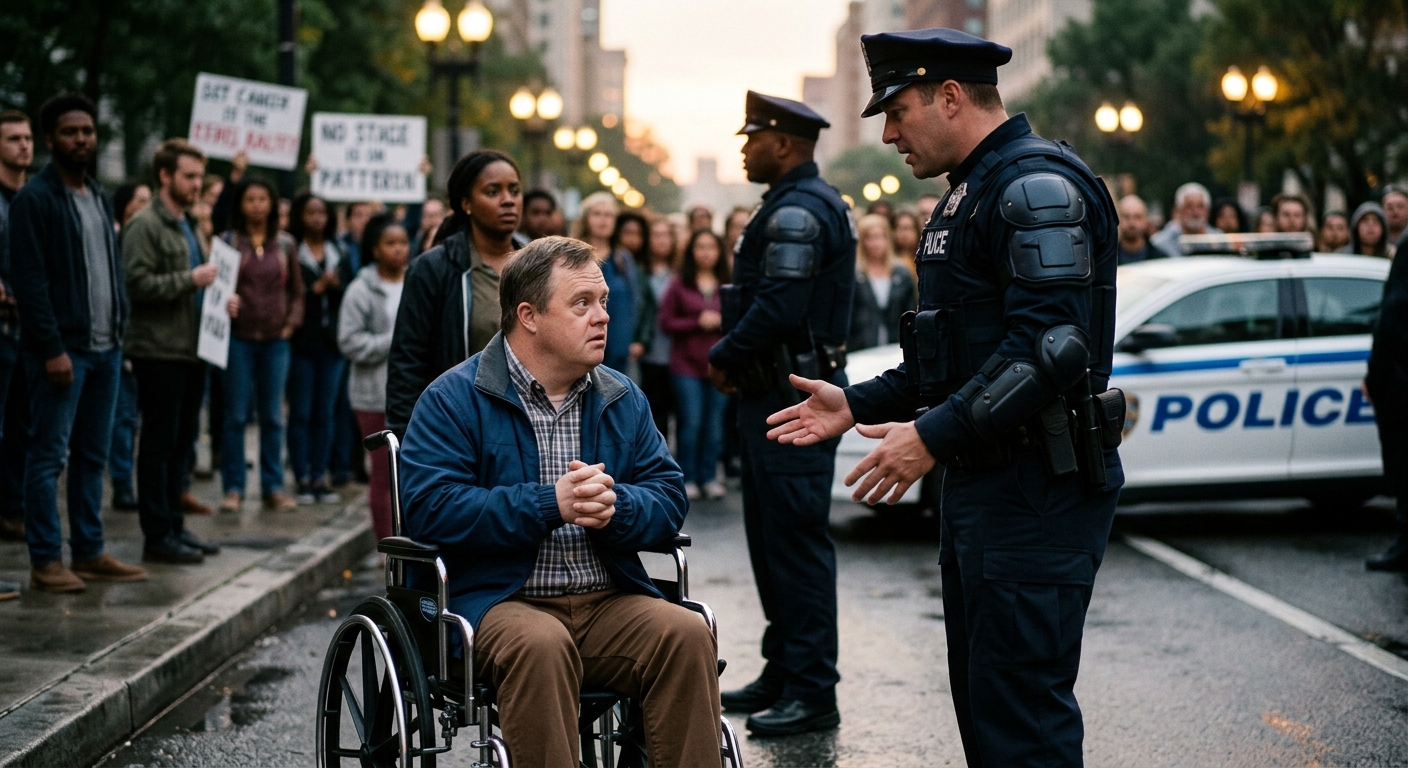
Across the United States, a recurring and devastating narrative unfolds when law enforcement officers are dispatched to handle behavioral health crises or incidents involving vulnerable populations. From tragic altercations in group homes to fatal encounters during routine wellness checks, the evidence is mounting that the traditional policing model is structurally incompatible with the needs of individuals living with physical, developmental, or psychiatric disabilities. Recent incidents—including a highly publicized case in Arizona where a vulnerable quadruple-amputee teenager in a residential care facility was physically pinned and traumatized by an armed deputy—serve as grim reminders of an institutional crisis. When minor infractions or behavioral outbursts are met with overwhelming physical force, the consequences can be catastrophic.
This reality is not the result of a few isolated mistakes. Rather, it exposes a deep-seated law enforcement culture that prioritizes rapid physical compliance over de-escalation, empathy, and medical understanding. The militarization of police forces, combined with inadequate training in mental health and disability accommodations, has created an environment where vulnerable citizens are routinely criminalized for their symptoms. To truly protect marginalized communities, society must critically examine the disproportionate risks faced by disabled individuals, scrutinize the failures of the conventional “command and control” policing strategy, enforce the civil rights protections enshrined in the Americans with Disabilities Act, and aggressively invest in alternative, health-first response models.
The Intersection of Disability and Excessive Force
The statistical reality regarding police interactions with disabled individuals is staggering. Individuals with physical and mental disabilities are vastly overrepresented in incidents involving police use of force, arrests, and incarcerations. While disability rights advocates have long sounded the alarm regarding the dangers of police encounters, modern empirical research paints a sobering picture of systemic inequity.
According to academic and government analyses, people with untreated mental illnesses or serious disabilities are significantly more likely to be subjected to police violence than the general population. In fact, research published in peer-reviewed medical journals indicates that individuals with serious mental illness are over 11 times more likely to experience police use of force and subsequent injury compared to individuals without such conditions . Furthermore, a landmark study frequently cited in congressional legislative efforts notes that up to half of all fatal law enforcement encounters involve an individual with a disability .
This heightened risk is compounded when disability intersects with race, age, and socioeconomic status. Youth of color with disabilities face compounding prejudices, frequently resulting in their actions being perceived as inherently dangerous or aggressive rather than symptoms of a medical or psychological crisis. When an armed officer is dispatched to a group home for a teenage resident experiencing a traumatic flashback or sensory overload, the presence of uniforms, weapons, and loud commands can exacerbate the individual’s distress, creating a deadly feedback loop of panic and punitive force.
Disproportionate Risks: Disability and Law Enforcement
| Metric | Statistic / Finding | Implication for Public Safety |
|---|---|---|
| Risk of Excessive Force | 11.6 times higher for individuals with serious mental illnesses . | Standard patrol tactics are disproportionately escalating encounters with disabled individuals. |
| Fatal Encounters | Estimated 33% to 50% of use-of-force incidents involve a disability . | Systemic failure to identify disabilities prior to deploying lethal or physical force. |
| Arrest Disparities | Disabled individuals account for a vast percentage of the jail population . | Medical and behavioral crises are being criminalized instead of treated by healthcare professionals. |
The Danger of “Command and Control” Policing Culture
To understand why these tragedies continue to occur, one must examine the foundational training of modern law enforcement. The prevailing methodology taught in most police academies across the country is rooted in “command and control.” This tactical approach dictates that officers must immediately establish dominance upon arriving at a scene. They are trained to issue loud, authoritative verbal commands, demand instant compliance, and use escalating physical force—including takedowns, joint locks, Tasers, and firearms—if those commands are not instantly obeyed.
While this tactic may be designed for active criminal threats, it is profoundly dangerous when applied to individuals who lack the cognitive, physical, or emotional capacity to comply. For an individual who is deaf, a shouted command is meaningless. For an autistic person experiencing acute sensory overload, blinding flashlights and screaming officers will likely trigger an involuntary “fight or flight” response. For an amputee or someone with a mobility impairment, demands to place hands behind their back or drop to the ground may be physically impossible to execute.
When an officer interprets a biological inability to comply as willful defiance, the situation deteriorates rapidly. The officer’s training pushes them to escalate force to gain control, while the disabled individual is left terrified, confused, and vulnerable to physical trauma. In incidents involving youth in state care or residential facilities, deploying armed officers to handle broken furniture or emotional outbursts essentially guarantees that a behavioral health issue will be transformed into a violent, potentially life-altering criminal justice encounter.
The Legal Framework: The Americans with Disabilities Act in Policing
The systemic failure to protect disabled individuals during crisis interventions is not just a moral issue; it is a legal one. Title II of the Americans with Disabilities Act (ADA) explicitly prohibits discrimination against people with disabilities in all services, programs, and activities of state and local governments. This sweeping civil rights legislation applies unequivocally to law enforcement agencies and emergency response systems .
Under the ADA, police departments are legally obligated to make “reasonable modifications” to their standard operating procedures when interacting with disabled citizens. This means that a “one size fits all” policing strategy is legally insufficient. If an officer knows, or reasonably should know, that an individual has a disability, they must adjust their tactics. This could involve lowering their voice, turning off flashing sirens, allowing the presence of a caregiver, or providing additional time for the individual to process information and respond.
Recently, the United States Department of Justice (DOJ) has taken a firmer stance on the intersection of the ADA and crisis response. The DOJ has issued guidance and findings indicating that municipalities may violate the ADA’s integration mandate when they rely exclusively on law enforcement to respond to mental health crises, especially when safety does not mandate an armed police presence . By failing to provide appropriate health-based emergency responses, cities are effectively denying disabled citizens equal access to emergency services, subjecting them instead to the trauma of the criminal justice system.
Alternative Crisis Response Models
Recognizing the inherent dangers of sending armed police to health crises, a growing movement of advocates, healthcare professionals, and progressive lawmakers is demanding a paradigm shift. The most effective way to eliminate police violence against individuals with disabilities is to remove police from the equation whenever possible. Several alternative crisis response models have proven highly successful in jurisdictions across the country.
- Mobile Crisis Teams (Civilian Response Models): Pioneered by programs like CAHOOTS (Crisis Assistance Helping Out On The Streets) in Eugene, Oregon, these models dispatch unarmed teams consisting of a medic and a crisis worker to non-violent behavioral health or welfare calls. These professionals are trained specifically in trauma-informed care, harm reduction, and de-escalation, entirely bypassing the criminal justice system.
- Co-Responder Models: In situations where there is a genuine concern for physical safety, the co-responder model pairs a specially trained law enforcement officer with a mental health clinician. The clinician takes the lead in communicating with the individual in crisis, while the officer remains in a supportive role to ensure the safety of the environment. This approach bridges the gap between public safety and public health.
- Crisis Intervention Teams (CIT): For departments that cannot immediately transition to civilian models, implementing rigorous CIT training is a critical baseline. CIT programs provide officers with intensive education on mental illnesses, developmental disabilities, and advanced de-escalation tactics. While not a replacement for unarmed health responders, CIT has been shown to reduce the likelihood of arrest and physical force .
- 988 Integration: The implementation of the 988 Suicide & Crisis Lifeline offers a critical infrastructure upgrade. By diverting mental health calls away from traditional 911 dispatch centers and directly to behavioral health call centers, communities can ensure that a health professional triages the situation before an armed officer is ever notified.
The Path Forward: Policy Reforms and Community Investment
Transitioning away from a punitive policing model requires robust political will and substantial financial investment. State legislatures and municipal governments must prioritize funding for community-based mental health services, affordable housing, and accessible healthcare. When societies underfund public health, the burden inevitably falls onto law enforcement, creating a dangerous and inefficient cycle of criminalization.
Furthermore, stringent accountability mechanisms must be established for law enforcement agencies. Qualified immunity—a legal doctrine that frequently shields officers from personal liability when they violate a citizen’s constitutional rights—must be reformed to ensure that victims of police violence have a viable path to justice. Departments must mandate the use of body-worn cameras, enforce strict duty-to-intervene policies, and maintain transparent, publicly accessible data on use-of-force incidents broken down by demographic and disability status.
Finally, the voices of disabled individuals and their advocates must be centered in any conversation regarding police reform. For too long, policies have been drafted behind closed doors by those who have never experienced the terror of an armed intervention during a medical crisis. True reform requires establishing community oversight boards with meaningful subpoena power and diverse representation, ensuring that the policies governing emergency response are dictated by the communities most impacted by them.
Conclusion
The abuse of disabled youth and adults at the hands of those sworn to protect them is an agonizing symptom of a broken emergency response system. The traditional “command and control” policing model is not merely ineffective for individuals experiencing behavioral health crises; it is an active catalyst for trauma and violence. By fully enforcing the civil rights protections of the Americans with Disabilities Act, funding unarmed crisis response teams, and dismantling the culture of immediate physical compliance, society can build a public safety infrastructure that truly protects all its members. The time for incremental adjustment has passed; an urgent, systemic overhaul is required to ensure that a cry for help is never again answered with violence.
Frequently Asked Questions
Why are individuals with disabilities at a higher risk during police encounters?
Individuals with disabilities often display behaviors that can be misinterpreted by improperly trained officers as non-compliance, defiance, or aggression. For example, a deaf individual may not follow verbal orders, or an autistic person might avoid eye contact and physically pull away due to sensory overload. Because standard police training emphasizes rapid physical compliance, these medical or biological realities can quickly escalate into violent force.
How does the Americans with Disabilities Act (ADA) apply to law enforcement?
Title II of the ADA requires state and local governments, including police departments, to ensure that people with disabilities have equal access to services and programs. This legally obligates officers to make reasonable modifications in their interactions, such as providing sign language interpreters, modifying tactical approaches to avoid triggering mental health crises, and utilizing appropriate de-escalation techniques rather than standard use-of-force protocols.
What is a Co-Responder Model?
A co-responder model is a collaborative approach to emergency dispatch where a mental health clinician or social worker is paired with a law enforcement officer. When a call involves a behavioral health crisis, the clinician takes the lead in assessing and de-escalating the situation using medical and psychological expertise, while the officer ensures the physical safety of the scene. This reduces unnecessary arrests and hospitalizations.
Can civilian response models completely replace police?
For a vast majority of non-violent behavioral health, substance use, and welfare checks, unarmed civilian response teams (such as medics and crisis workers) are safer and more effective than armed police. While law enforcement may still be required for incidents involving active violence or weapons, civilian models successfully divert thousands of calls away from the justice system and directly into the healthcare system.
References
- Policing Under Disability Law — Stanford Law Review. 2021-03-15. https://www.stanfordlawreview.org/
- Casey Introduces Bipartisan Suite of Police Reform Legislation to Prevent Violence Towards People with Disabilities — Senate Committee On Aging. 2023-05-17. https://www.aging.senate.gov/
- Commonly Asked Questions About the ADA and Law Enforcement — ADA.gov (U.S. Department of Justice). 2020-02-28. https://www.ada.gov/resources/law-enforcement-faq/
- Guidance for Emergency Responses to People with Behavioral Health or Other Disabilities — Department of Justice and Department of Health & Human Services. 2023-03-16. https://www.justice.gov/
- Measuring disparities in police use of force and injury among persons with serious mental illness — BMC Psychiatry / PubMed. 2021-10-12. https://pubmed.ncbi.nlm.nih.gov/34641838/
Similar Articles








Read full bio of Sneha Tete




