Vehicle history reports are valuable tools when you buy or sell a used car, but scammers increasingly misuse them to steal money and personal information. Understanding how these schemes work, and how to safely check a car’s past, can help you avoid becoming a victim.
Why Vehicle History Reports Matter
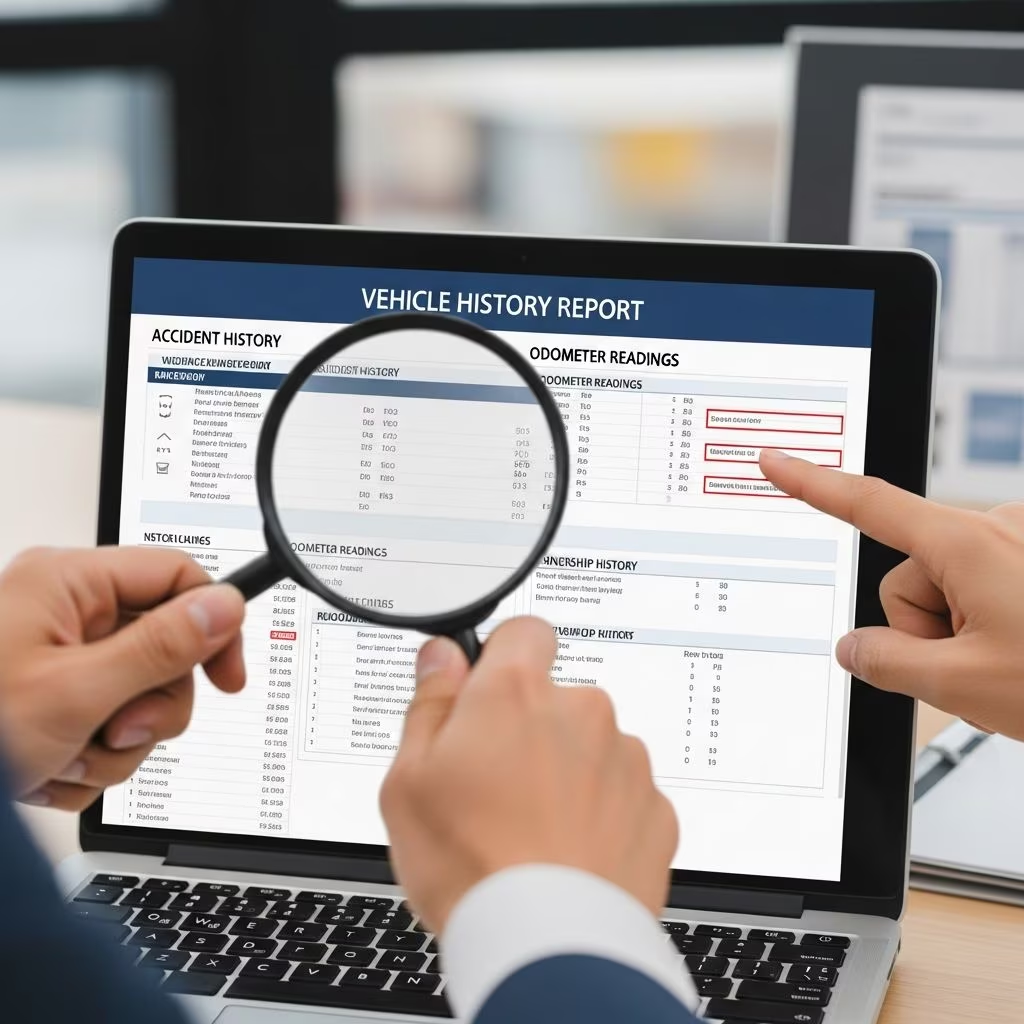
A vehicle history report summarizes key events in a car’s life tied to its Vehicle Identification Number (VIN), such as title status, odometer readings, and certain damage or theft records. Reliable reports can help you:
- Confirm that the title is legitimate and not marked as salvage, junk, or flood-damaged.
- Spot potential odometer rollbacks or inconsistent mileage.
- See if the vehicle has been reported as stolen or irreparably damaged.
- Review some past registration and brand history across states.
However, not every type of damage or repair will appear in every report, especially when work is done without insurance claims or official documentation. That gap gives scammers an opening to exploit buyers and sellers.
How Vehicle History Report Scams Usually Work
Fraud involving vehicle history reports typically focuses on two goals: collecting your payment and harvesting your personal data. In many cases, the scammer is not actually interested in the car at all.
Common Scam Scenario Targeting Sellers
A frequent pattern reported to consumer protection agencies looks like this:
- You list your car for sale on a popular online marketplace.
- A supposed buyer contacts you by text, email, or messaging on the platform.
- They insist that you must provide a vehicle history report from a specific website before they will continue the conversation.
- The link leads to an unfamiliar site that asks for your VIN, personal details, and payment card information, often charging around $20 or more.
- Once you pay and send the report link or file back, the “buyer” disappears, and you never hear from them again.
In this scheme, the crook makes money from the fee, gains your card data, and may also sell your contact information to marketers or other fraudsters.
Scams Targeting Buyers
Buyers can also be targeted when they are searching for used cars or trying to do due diligence.
- Fake report offers: Search results or ads may claim to provide cheap or free history reports but instead deliver nothing useful after you pay.
- Misleading domains: Some fraudulent sites use domain names designed to look official or related to VINs to appear trustworthy.
- Pressure from sellers: A seller may push you to rely on a specific site or a report they provide instead of letting you choose a reputable provider.
In both buyer- and seller-focused scams, the fraudster is trying to control which website you use, rather than letting you choose a known, trusted source.
Red Flags That Signal a Vehicle History Report Scam
Certain warnings are especially important if you are buying or selling a used car online.
- Insistence on a single, unknown website: The other party demands that you use one specific report site, often one you have never heard of.
- Unfamiliar or odd web addresses: The link may use unusual domains or slightly misspelled versions of legitimate services to look official.
- Refusal to accept reputable reports: A buyer or seller refuses to use or even consider reports from well-known, trusted providers or from sites listed by the U.S. Department of Justice.
- High-pressure tactics: You are told you must act immediately or risk losing the deal if you do not use the suggested site.
- Requests for excessive personal data: The website asks for more than your payment and VIN, such as your Social Security number or images of ID, which are not normally needed for a basic report purchase.
- Strange payment methods: The site pushes prepaid cards, cryptocurrency, or wire transfers instead of standard card payments protected by your bank.
Trusted Sources for Vehicle History Information
One effective way to avoid scams is to start with officially recognized or widely established sources when obtaining a report.
The National Motor Vehicle Title Information System (NMVTIS)
The U.S. Department of Justice oversees the National Motor Vehicle Title Information System (NMVTIS), which is designed to combat title fraud and reduce the sale of unsafe, previously damaged vehicles. NMVTIS-approved providers offer reports that focus on key fraud-related indicators:
- Current state of title and historical title data.
- Brand history such as salvage, junk, flood, or rebuilt labels.
- Odometer readings reported by states, insurance, or other data contributors.
- Total-loss vehicle records from insurance companies.
- Information on whether the vehicle was reported as junk, salvage, or insurance total loss.
Consumers can visit the official NMVTIS portal to find a list of approved report providers rather than relying on links sent by strangers.
Other Reputable Reporting Services
There are private companies that compile vehicle history information from insurance claims, repair facilities, and other data sources. Some of these services may include additional details such as accident history or maintenance records beyond what NMVTIS provides.
If you choose one of these providers, confirm that you are on the company’s official website and not a look-alike page created by scammers. Type the address directly into your browser or use a trusted search engine result rather than clicking links sent by unknown parties.
| Feature | NMVTIS-Based Reports | Some Private Report Services |
|---|---|---|
| Title data from states | Yes, core focus | Yes, often included |
| Junk/salvage/total loss records | Yes, required by law to be reported | Often included |
| Odometer readings | Yes | Often included |
| Detailed accident/repair history | Limited or not always available | Sometimes more extensive |
| Who manages the system | U.S. Department of Justice–backed program | Private companies |
Best Practices for Sellers: Staying Safe When Listing Your Car
If you are selling your car privately, you can reduce your risk by controlling how and where you obtain vehicle history information.
Steps Sellers Should Take
- Get your own report from a trusted source: Before listing the car, obtain a report yourself from an NMVTIS-approved provider or a well-known reporting service.
- Share the report safely: Provide a PDF or printed copy to legitimate buyers, but avoid posting full documents publicly that include your address or other personal details.
- Refuse unfamiliar links: If a buyer sends a link to a site you do not recognize, decline and offer to provide a report from a reputable source of your choice instead.
- Be wary of one-time, urgent buyers: If someone appears only interested in having you purchase a report from a particular site, treat that as a major warning sign.
- Limit personal data shared in messages: Use the platform’s messaging system where possible, and avoid sending payment information or sensitive details over text or email.
Additional Safety Tips for Sellers
Because vehicle history report scams often appear alongside other fraud attempts, it is wise to adopt general online selling precautions:
- Verify payment methods and be cautious about accepting overpayments or complex arrangements.
- Meet in well-lit, public places for test drives and finalize transactions at your bank when possible.
- Keep your car keys and title secure until you have verified that funds have cleared.
Best Practices for Buyers: Verifying a Car’s Past Without Being Scammed
For buyers, vehicle history reports are only one piece of the evaluation puzzle. They should be combined with inspections and other checks to build a more complete picture of the car.
Steps Buyers Should Take
- Choose the report provider yourself: Do not rely solely on a link given by the seller. Instead, obtain your own report through a provider you have researched, ideally one listed on the official NMVTIS page or a well-established commercial service.
- Compare any seller-provided report: If the seller gives you a report, use it as a starting point but verify with your own report if you have any doubts.
- Have the car inspected: Arrange a pre-purchase inspection with a qualified mechanic. Professional inspections can reveal issues that never show up in databases, such as hidden frame damage or poor-quality repairs.
- Check for recalls: Use official government tools to confirm whether the car has unresolved safety recalls, which may not always be highlighted in third-party reports.
- Research the seller and dealer: Look up reviews, complaints, and ratings through trusted sources such as consumer protection agencies or established review platforms.
Limitations of Vehicle History Reports
Even a report from a reputable provider is not perfect. According to industry experts and consumer guidance, reports may not include:
- Accidents that were never reported to insurance or law enforcement.
- Repairs handled privately without official documentation.
- Some out-of-state or older records if data was not properly transmitted.
Because of these limits, buyers should treat history reports as an important screening tool, not a complete guarantee of a vehicle’s condition.
What to Do If You Are Caught in a Vehicle History Report Scam
If you realize you have paid for a questionable report or given information to a suspicious website, acting quickly can reduce harm.
Immediate Steps
- Contact your bank or card issuer: Report the charge and ask about reversing the payment or reissuing your card.
- Monitor accounts: Keep a close eye on statements for unauthorized transactions over the next weeks and months.
- Watch for identity theft: If you shared details such as your driver’s license or other personal identifiers, consider using resources from identity theft assistance organizations and monitoring your credit reports.
Report the Scam
- File a complaint with federal authorities: In the United States, you can report online fraud involving vehicle sales and history report scams to the Federal Trade Commission.
- Notify state agencies: Your state attorney general or motor vehicle department may also accept complaints related to title fraud and used-car scams.
- Warn the platform: If the contact came through an online marketplace, use its reporting tools so it can investigate and protect other users.
Practical Checklist: Safe Use of Vehicle History Reports
Whether you are buying or selling, you can use this quick checklist to reduce your risk.
- Always choose the report provider yourself, starting from official or well-known sources.
- Never click on links to report sites sent by strangers or unknown buyers/sellers.
- Confirm you are on a legitimate website before entering payment details.
- Use history reports alongside, not instead of, a professional inspection and test drive.
- Be suspicious of anyone who pressures you to use a single, unfamiliar site or refuses reputable reports.
- Report suspected scams to appropriate consumer protection agencies.
Frequently Asked Questions (FAQs)
Q1: Is it normal for a buyer to ask for a vehicle history report?
Yes. Serious buyers often want to see a vehicle history report before committing to a purchase. The warning sign is when a buyer demands that you use one specific, unfamiliar website instead of allowing you to choose a reputable provider.
Q2: Are free vehicle history report sites safe?
Some free tools provide limited information, but many ads offering free or very cheap full reports are used to attract clicks, harvest data, or distribute malware. To stay safe, use providers you find through official channels such as the NMVTIS-approved list or widely recognized reporting companies.
Q3: Can I rely only on a vehicle history report when buying a used car?
No. Because reports may not capture unreported accidents, private repairs, or all mechanical problems, you should also have the vehicle inspected by a qualified mechanic and take it for a test drive.
Q4: How can I tell if a report site is legitimate?
Look for clear contact information, secure payment processing, and a track record of operation. Cross-check the provider against the official NMVTIS list or other reputable sources, and avoid any site reached only through unsolicited links.
Q5: What government resources can help me check a used car?
In the United States, the NMVTIS program and its official portal provide links to approved providers of title-focused reports and information designed to prevent fraud. Consumer advice pages from federal agencies also offer guidance on checking for recalls, understanding salvage titles, and recognizing online vehicle scams.
References
- Vehicle History Report Scams and How to Avoid Them — NerdWallet. 2022-06-29. https://www.nerdwallet.com/auto-loans/learn/vehicle-history-report-scams
- Buyer and Seller Beware! How Vehicle History Report Scams Work. — Enterprise Bank & Trust. 2023-08-10. https://www.epnb.com/insights/buyer-and-seller-beware-how-vehicle-history-report-scams-work/
- Steering clear of vehicle history report scams — Federal Trade Commission. 2018-10-23. https://consumer.ftc.gov/consumer-alerts/2018/10/steering-clear-vehicle-history-report-scams
- Understanding an NMVTIS Vehicle History Report — VehicleHistory.gov (U.S. DOJ/BJA). 2023-05-12. https://vehiclehistory.bja.ojp.gov/nmvtis_understandingvhr
- VehicleHistory: Home — VehicleHistory.gov (National Motor Vehicle Title Information System). 2023-05-12. https://vehiclehistory.bja.ojp.gov/
- Be alert for car scams — Better Business Bureau. 2023-02-14. https://www.bbb.org/all/auto/car-problems-and-scams
- Fraud Awareness Tips — Autotrader. 2022-04-01. https://www.autotrader.com/legal/fraud-awareness