
Protecting Yourself From Deceptive Auto Ads and Sales Tactics
Learn how to spot misleading car ads, avoid junk fees at the dealership, and keep your wallet safe when shopping for a vehicle.
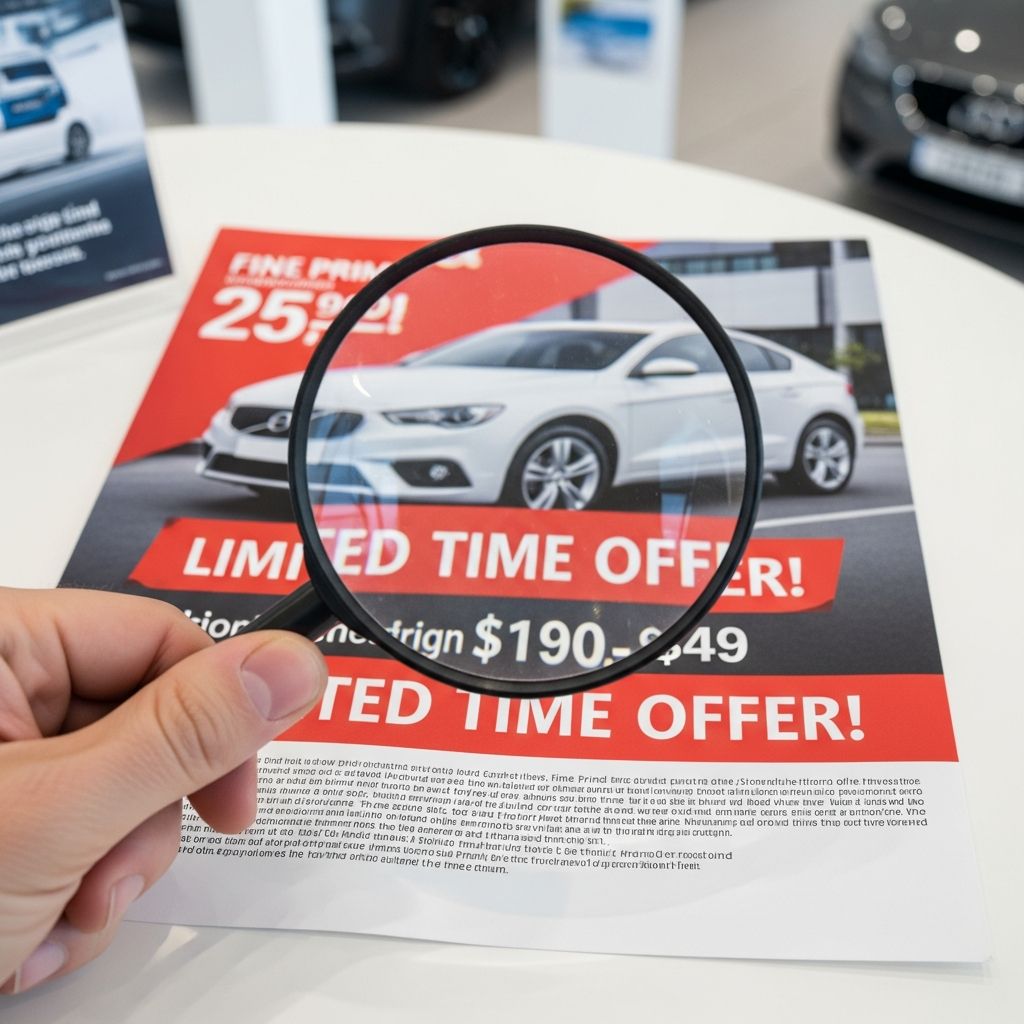
Buying a car is one of the biggest purchases many people ever make. The mix of glossy advertisements, limited-time offers, and fast-talking sales pitches can make it hard to know what is real and what is just clever marketing. Understanding how deceptive auto advertising and sales tactics work can help you keep control of your money and avoid being pushed into a bad deal.
This guide explains the most common tricks in auto ads and at dealerships, the basic legal protections that apply, and the practical steps you can take to protect yourself when shopping for a vehicle.
1. Why Auto Ads Require Extra Skepticism
Car ads often promise huge savings, ultra-low payments, or guaranteed approval. Some offers are legitimate, but others cross the line into deception. U.S. consumer protection laws prohibit unfair or deceptive acts or practices, including misleading advertising about prices, financing, and key terms of a car purchase.
When you see an ad that looks too good to be true, pause and ask:
- Is this price truly available to most buyers? Or is it tied to narrow conditions?
- Are all required costs included? Or will fees and options be added later?
- Is the fine print changing the deal? Or contradicting the big headline?
Approaching every ad with these questions in mind is your first line of defense.
2. Common Deceptive Auto Advertising Tactics
Misleading auto advertising takes many forms. Here are some patterns to watch for and what they may really mean.
2.1 Unrealistic Price Claims
Some dealers advertise a rock-bottom price that very few, if any, customers can actually get. The problem is not offering a low price; it is when the ad hides conditions or limitations that materially change the deal.
- Price only for a specific buyer: An ad might assume that you qualify for multiple rebates at once (for example, military, recent graduate, loyalty, or conquest rebates), even though only a small number of people qualify for all of them.
- Required trade-in or high down payment: The headline price may assume you trade in a vehicle of a certain value or pay a very large cash down payment, but this is buried in fine print.
- Excludes mandatory dealer fees: Some ads omit doc fees, dealer prep, or other non-optional charges, making the car appear cheaper than it really is.
2.2 Bait-and-Switch Offers
Bait-and-switch occurs when a dealer advertises a car or price to attract customers, then pushes them toward a different, more expensive deal when they arrive.
- Vehicle “just sold” when you arrive: The advertised vehicle is unavailable, but the dealer quickly offers a more expensive alternative.
- Refusal to sell at the ad price: The dealer claims you do not qualify for the advertised terms for vague reasons not mentioned in the ad.
- Pressure to upgrade: The salesperson downplays the advertised car as inadequate and steers you toward a pricier model or trim.
2.3 Confusing Financing and Lease Promotions
Financing and lease offers can be especially confusing. Ads sometimes highlight a very low monthly payment but omit or downplay the required down payment, length of contract, or balloon payments at the end.
- Teaser payments: A short-term, low payment period is advertised, but later payments are much higher.
- Hidden balloon payment: A large final payment is required to keep the car, but this is not clear in the main ad.
- Lease vs. purchase confusion: An ad may look like a loan offer, but it is actually a lease, with mileage limits and wear-and-tear charges.
Federal truth-in-lending and leasing laws require that when key financing or lease terms are advertised, certain other terms must also be clearly disclosed.
2.4 Misleading Claims About Credit Approval
Some dealers promote offers like “no credit refused” or “everyone approved.” In reality, lenders can and do deny applications or offer far more expensive terms based on your credit profile. Advertising guaranteed or near-guaranteed approval can be deceptive if it suggests that anyone can qualify for favorable terms regardless of their credit history.
2.5 Add-Ons and Junk Fees Hidden Until Late
Another pattern is to advertise an attractive price, but then add expensive products or services at signing without clear, advance disclosure. Recent enforcement cases show regulators targeting hidden or misrepresented add-ons.
- Unwanted service contracts and protection packages (extended warranties, gap coverage, paint and fabric sealants) that are pre-checked on forms or slipped into the deal.
- Non-optional “protection” items already installed on the vehicle (VIN etching, nitrogen in tires) that the dealer claims you must pay for.
- Duplicate or inflated fees labeled as documentation, processing, or dealer services, which may far exceed actual costs.
3. Key Consumer Protection Laws That Apply to Auto Sales
Several federal and state laws apply to auto advertising and sales practices. The Federal Trade Commission (FTC) and state agencies enforce many of these rules.
| Protection | What It Addresses | How It Helps You |
|---|---|---|
| FTC Act (Unfair or Deceptive Practices) | False or misleading claims in advertising or sales. | Bars dealers from misrepresenting price, financing, or key terms. |
| Truth in Lending Act (TILA) | Disclosure of credit terms when financing a vehicle. | Requires clear disclosure of APR, total payments, and key loan terms. |
| Consumer Leasing Act | Disclosure of terms in auto leases. | Requires clear terms on mileage limits, payments, and end-of-lease options. |
| State Unfair/Deceptive Acts and Practices (UDAP) Laws | Broad bans on unfair or deceptive business conduct. | Allow state enforcers (and sometimes consumers) to challenge misleading conduct. |
Regulators have used these laws to bring cases against dealers for hidden fees, discriminatory pricing practices, and false claims about add-ons and financing.
4. Smart Steps Before You Visit a Dealership
The best protection is preparation. Before you respond to any auto ad or visit a dealership, take these steps to strengthen your position.
4.1 Set Your Budget and Financing Plan
- Check your credit reports from each of the major credit reporting agencies so you know what lenders will see.
- Shop for financing from banks, credit unions, or online lenders before going to the dealer, so you can compare their offers to dealer financing.
- Focus on total price, not just monthly payment. A low payment can hide a long term or high interest costs.
4.2 Research the Vehicle and Realistic Pricing
- Use trusted pricing guides and manufacturer information to find typical prices for the make, model, year, and trim you want.
- Compare prices from several dealers; beware of one quote that is much lower than all the others without a clear explanation.
- Check for manufacturer rebates or incentives on official manufacturer websites, not just dealer claims.
4.3 Evaluate Advertisements Critically
When you see a tempting advertisement:
- Read the fine print carefully. Look for conditions related to credit score, down payment, trade-in, or limited quantities.
- Print or save the ad. Bring it with you and ask the dealer to identify exactly how you can qualify for the terms.
- Be skeptical of pressure language like “today only” or “last chance,” especially if there is no clear end date.
5. Protecting Yourself During the Dealership Visit
Once you are at the dealership, it is easy to feel rushed. Slow the process down and keep the focus on the total cost and written terms.
5.1 Separate the Negotiations
If possible, negotiate each part of the transaction independently:
- Vehicle price first: Agree on the price of the car before discussing financing, trade-in, or add-ons.
- Trade-in next: Get a firm offer for your trade-in separately so you can see its true value.
- Financing last: Compare dealer financing with your pre-approval and choose the better deal.
5.2 Ask Direct Questions About Fees and Add-Ons
Do not assume every line item is required. Ask:
- “Is this fee required by law or by the dealer? If by the dealer, can it be reduced or removed?”
- “Is this add-on optional? What happens if I decline it?”
- “Is this product provided by the manufacturer or by a third party? What are the total costs over the life of the loan?”
Say clearly if you do not want extras like extended warranties, maintenance plans, or protection packages. Make sure they do not appear on the contract.
5.3 Review Every Document Before Signing
- Take your time. Do not let anyone rush you through the paperwork.
- Compare the contract to the ad. Confirm that the price, rate, term, and any promised incentives match what you agreed to.
- Check for yo-yo financing risk. Avoid taking the car home before financing is final; some dealers later claim the financing “fell through” and try to change the deal.
6. Red Flags That Should Make You Walk Away
Certain behaviors should lead you to end the conversation and look elsewhere.
- Refusal to show you a written breakdown of price, fees, and add-ons before you sign.
- Contradictions between the ad and the salesperson’s explanation without a clear, lawful reason.
- High-pressure tactics such as saying you must sign immediately or that another buyer is ready to take the car.
- Requests to sign blank or incomplete documents.
- Misrepresentations about your credit or threats that your rate will skyrocket unless you accept add-ons.
If something feels wrong, you can always leave. There will be other vehicles and other dealers.
7. What To Do If You Suspect Deception or Fraud
Even careful shoppers can encounter deceptive practices. If you believe an auto ad or dealership misled you, act quickly.
7.1 Collect and Preserve Evidence
- Save copies or screenshots of advertisements, emails, and texts.
- Keep all contracts, finance documents, and any written promises.
- Write down the dates, names, and details of conversations as soon as possible.
7.2 Contact the Dealership in Writing
Sometimes a written complaint to the dealership’s management can resolve misunderstandings or errors. Be specific about:
- What was promised in the ad or by the salesperson.
- What you actually received or were charged.
- The correction or refund you are seeking.
7.3 Report the Problem to Authorities
If the dealership does not resolve the issue, consider reporting it to enforcement agencies. The Federal Trade Commission collects reports about unfair or deceptive practices and shares them with law enforcement partners.[10]
- Federal Trade Commission (FTC): You can report fraud, deceptive ads, or unfair fees through the FTC’s complaint tools.[10]
- State attorney general or consumer protection office: Many states enforce their own unfair and deceptive practices laws and can investigate local dealerships.
- State motor vehicle dealer licensing board: Some states have specialized agencies overseeing auto dealers.
Reporting your experience helps authorities spot patterns and may lead to enforcement actions that protect other consumers.
8. Frequently Asked Questions (FAQs)
Q1: Are dealers allowed to charge any fees they want?
Dealers may charge fees that are clearly disclosed, truthful, and not misleading. However, they cannot misrepresent fees as government-required when they are not, or advertise a low price and then add mandatory dealer charges that were not disclosed. Unfair or deceptive fees may violate federal and state consumer protection laws.
Q2: If the ad price is different from the contract price, which one controls?
The contract you sign is generally the binding agreement. That is why it is critical to review it carefully before signing. However, if an ad was deceptive or misleading, enforcement agencies may take action against the dealer, and in some cases consumers may have remedies under state law.
Q3: Am I guaranteed a cooling-off period to cancel a car purchase?
For most in-dealership car purchases, there is no automatic federal cooling-off period that lets you cancel just because you changed your mind. Some states or dealers may offer return policies, but these are limited and must be clearly stated. Always assume that once you sign and take delivery, the deal is final unless a written return policy says otherwise.
Q4: How can I know if a lease or loan ad follows the law?
When an ad promotes specific credit terms (like a low monthly payment), federal truth-in-lending and leasing rules require that other key terms—such as the annual percentage rate (APR), length of the contract, total payments, or required upfront costs—also be clearly disclosed. If you see a big number in the headline but little or no detail, that is a warning sign.
Q5: Where can I get reliable information about car buying and my rights?
Official consumer protection agencies provide free, reliable guidance. The FTC’s consumer and business guidance resources explain auto-related rights and recent enforcement actions. Many state attorneys general and legal aid organizations also publish car-buying tips tailored to local laws.
References
- Enforcement — Federal Trade Commission. 2024-05-01. https://www.ftc.gov/enforcement
- Bureau of Consumer Protection — Federal Trade Commission. 2024-04-10. https://www.ftc.gov/about-ftc/bureaus-offices/bureau-consumer-protection
- Consumer Protection — Federal Trade Commission. 2025-06-15. https://www.ftc.gov/consumer-protection
- Rules — Federal Trade Commission. 2024-07-08. https://www.ftc.gov/legal-library/browse/rules
- File a Complaint — Federal Trade Commission. 2023-11-20. https://www.ftc.gov/media/71268
- Federal Trade Commission: Protecting America’s Consumers — Federal Trade Commission. 2025-03-01. https://www.ftc.gov
- Business Guidance — Federal Trade Commission. 2024-09-12. https://www.ftc.gov/business-guidance
Similar Articles








Read full bio of Sneha Tete


