
Protecting Your Card From Skimmers at Gas Pumps
Learn how card skimming works at gas pumps, how to spot tampering, and practical steps to keep your money and data safe.
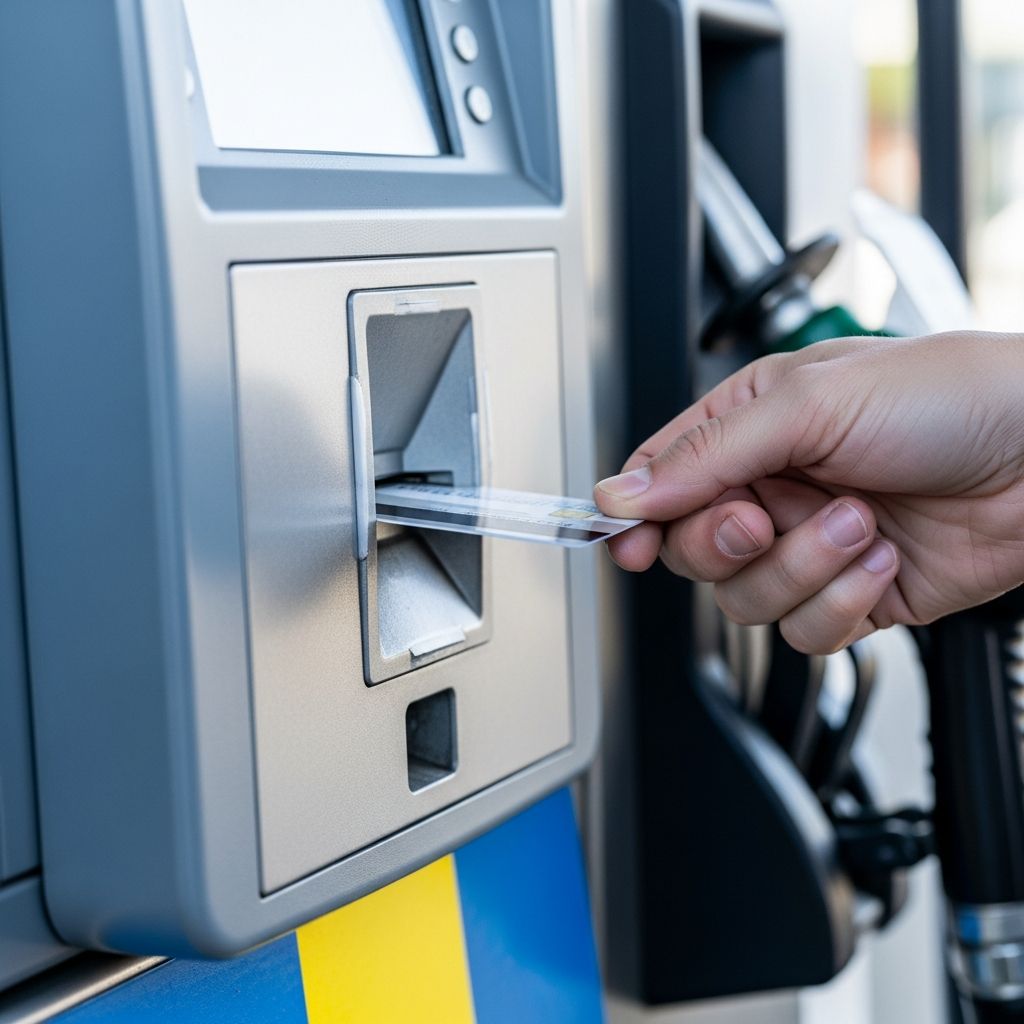
Paying at the pump is fast and convenient, but it also creates an opportunity for criminals who attach hidden devices to steal payment card information. By learning how card skimming works and what signs to look for, you can drastically cut the risk that your debit or credit card will be compromised.
What Is Card Skimming and Why Gas Pumps Are Targeted
Card skimming is a type of payment card fraud where a device captures data from the magnetic stripe of your card when you insert or swipe it. The information is then used to clone your card or make unauthorized purchases.
Gas pumps are especially attractive to scammers because:
- They often sit outside, away from staff, making tampering easier without being noticed.
- Some pumps use older technology that relies heavily on magnetic-stripe data.
- Customers expect to pay quickly and may not inspect the machine before inserting their card.
How Skimming Devices Work at the Pump
Criminals can install skimming tools in two main ways at fuel dispensers:
- External skimmers that fit over or inside the visible card slot, often designed to look like a normal reader.
- Internal skimmers hidden inside the pump cabinet, connected directly to the wiring that carries card data.
In many cases, thieves also use hidden cameras or fake keypads to capture PINs typed by customers using debit cards.
Top Warning Signs a Gas Pump May Be Compromised
While not every skimmer can be spotted from the outside, you can reduce your risk significantly by looking for basic signs of tampering each time you fuel up.
1. Damaged or Missing Security Seals
Many gas stations place tamper-evident tape or security labels on the pump cabinet door that houses internal electronics.
- If the label is broken, peeling, or reads “void,” it may indicate the pump was opened.
- A label that looks different from the ones on other pumps at the same station can also be a red flag.
2. Unusual Card Reader Appearance
Compare the card reader on your pump to the others nearby.
- A reader that sticks out further, looks bulkier, or uses different colors or materials could hide an external skimmer.
- Sticky residue, misaligned parts, or loose plastic around the slot may indicate something was added.
3. Loose or Wiggling Card Slot
Before inserting your card, gently tug or wiggle the reader:
- If the entire reader moves, shifts, or feels like it could pull off, do not use that pump.
- Report the issue to the station attendant and choose a different dispenser.
4. Isolated or Poorly Lit Pumps
Criminals prefer pumps that draw the least attention.
- Pumps far from the station entrance and out of the line of sight are more likely targets.
- Bad lighting and lack of visible security cameras raise your risk.
Safer Ways to Pay for Fuel
Your choice of payment method can greatly affect how vulnerable you are to skimming schemes.
| Payment Method | Skimming Risk | Key Advantages | Main Drawbacks |
|---|---|---|---|
| Credit card at pump | Moderate | Better fraud protections; does not pull from checking immediately. | Still vulnerable if skimmer is installed. |
| Debit card as debit (with PIN) | Higher | Pulls directly from checking; useful if you avoid credit. | PIN can be captured; money leaves account right away. |
| Debit card as credit (no PIN) | Lower than PIN debit | PIN stays private; extra time to dispute fraudulent transfers. | Card number can still be skimmed. |
| Mobile wallet / contactless | Low | Uses tokenized or encrypted data, not the full card number. | Not available at every pump; requires compatible phone or card. |
| Paying inside with card | Lower | Indoor terminals are under better surveillance; harder to tamper with. | Less convenient; may require waiting in line. |
| Cash inside | Very low | No card data to steal; avoids electronic skimming altogether. | Inconvenient and requires carrying cash. |
Practical Steps to Reduce Your Risk
You do not need technical expertise to protect yourself from skimmers. Adopting a few consistent habits can make a big difference.
Choose Safer Pumps
- Pick pumps closest to the store entrance or in direct view of staff whenever possible.
- Avoid isolated pumps at the far end of the lot or areas with poor lighting.
Inspect Before You Pay
- Check for damaged or missing security seals on the pump cabinet.
- Compare the card reader to others at the same station and look for physical differences.
- Gently wiggle the card slot and keypad; if either feels loose, choose another pump.
Use Safer Payment Options
- When you must use a debit card, run it as credit so you do not enter your PIN at the pump.
- Prefer contactless payments (tap-to-pay cards or mobile wallets) where available.
- If you are especially concerned, pay inside or use cash instead of paying at the pump.
Protect Your PIN
- Cover the keypad with your hand or wallet when entering your PIN to block hidden cameras.
- Decline to use a pump if you notice anything unusual near the keypad, such as an extra plate or overlay.
Monitoring Accounts and Responding to Fraud
Even careful consumers can become victims. Acting quickly when fraud occurs can limit the damage.
Watch Your Statements Closely
- Review bank and credit card statements regularly for charges you do not recognize.
- Set up transaction alerts by text or email so you are notified of purchases in real time if your bank or card issuer offers this feature.
Know Your Rights and Protections
U.S. federal law gives consumers certain protections when card fraud occurs.
- Unauthorized credit card charges are generally limited in liability if reported promptly, and many issuers offer zero-liability policies.
- For debit cards, your liability can increase if you delay in reporting unauthorized transfers, and stolen funds come directly from your bank account.
Because of these differences, many consumer protection experts recommend using a credit card rather than a debit card at risky locations like unattended pumps or outdoor ATMs.
What to Do If You Suspect Skimming
- Contact your bank or card issuer immediately to report suspicious transactions and request a new card.
- Ask your financial institution about placing a temporary hold on the account if needed.
- Notify the gas station so they can check the pump and alert other customers.
- Consider reporting the incident to your state consumer protection agency or attorney general if broader fraud is suspected.
Extra Tips for Long-Term Peace of Mind
Combining good habits at the pump with general account security practices gives you the best protection against card skimming and related fraud.
- Use strong, unique passwords for online banking and card-management apps.
- Enroll in two-factor authentication when offered by your bank or card issuer.
- Regularly check your credit reports to spot accounts opened without your permission.
- Stay informed about new fraud tactics through updates from trusted sources, such as government consumer agencies and your financial institution.
Frequently Asked Questions (FAQs)
Q1: Can I always tell if a pump has a skimmer?
No. Some devices are hidden inside the pump and leave no visible trace. However, checking for broken security seals, loose equipment, or mismatched card readers can still prevent many incidents.
Q2: Is it safer to use credit or debit at the pump?
From a consumer-protection standpoint, credit cards generally offer stronger safeguards and do not pull money from your bank account immediately. If you use a debit card, running it as credit (no PIN) is typically safer than entering your PIN directly at the pump.
Q3: Are mobile wallets really more secure?
Yes, in many situations. Mobile wallets and contactless payments typically rely on encryption or unique tokens instead of transmitting your actual card number, which limits how useful stolen data would be to a criminal.
Q4: What should I do first if I see a suspicious pump?
Do not use that pump. Go inside the station, tell an employee what you observed, and choose a different pump or pay inside. If you already used the suspicious pump, monitor your accounts closely and contact your card issuer at the first sign of unauthorized charges.
Q5: How often should I check my bank and card statements?
Reviewing your accounts at least once a week helps you spot fraud early, and enabling instant alerts for new transactions lets you react even faster if something looks wrong.
References
- Watch out for card skimming at the gas pump — Federal Trade Commission. 2018-08-16. https://consumer.ftc.gov/consumer-alerts/2018/08/watch-out-card-skimming-gas-pump
- 7 Ways to Avoid Getting “Skimmed” at the Gas Pump — Westex Federal Credit Union (citing FBI and FTC guidance). 2021-06-10. https://westexfcu.com/7-ways-to-avoid-getting-skimmed-at-the-gas-pump/
- Stay Safe at the Pump: Card Skimming, Shimming, and Gas Station Safety — Listerhill Credit Union. 2025-07-01. https://listerhill.com/blog/2025/07/stay-safe-at-the-pump
- How a 20¢ Label Can Stop Gas Station Skimmers — NovaVision Inc. 2020-03-05. https://www.novavisioninc.com/articles/how-a-20-cent-label-can-stop-gas-station-skimmers/
- How to Help Prevent Card Skimming — City National Bank. 2022-04-15. https://www.cnb.com/personal-banking/insights/card-skimming-prevention.html
- Protect yourself from credit card skimming – Tap the App at the pump — Texas Department of Licensing & Regulation. 2022-11-30. https://www.tdlr.texas.gov/fmq/protectthepump.htm
- Ten Tips to Prevent Card Skimming Fraud — 1st United Credit Union. 2021-08-20. https://www.1stunitedcu.org/more-for-you/financial-wellness/ten-tips-to-prevent-card-skimming-fraud
Similar Articles








Read full bio of Sneha Tete


