The convergence of the COVID-19 pandemic and the American criminal justice system laid bare a stark reality: public health and public safety are inextricably linked. When the novel coronavirus began its rapid spread across the globe in early 2020, epidemiologists immediately identified prisons, jails, and detention centers as potential epicenters for catastrophic viral outbreaks. Within these hyper-dense, heavily regulated environments, social distancing is a physical impossibility, and adequate hygiene is notoriously difficult to maintain. Faced with this unprecedented crisis, the machinery of the legal system was forced to reckon with its historical overreliance on incarceration.
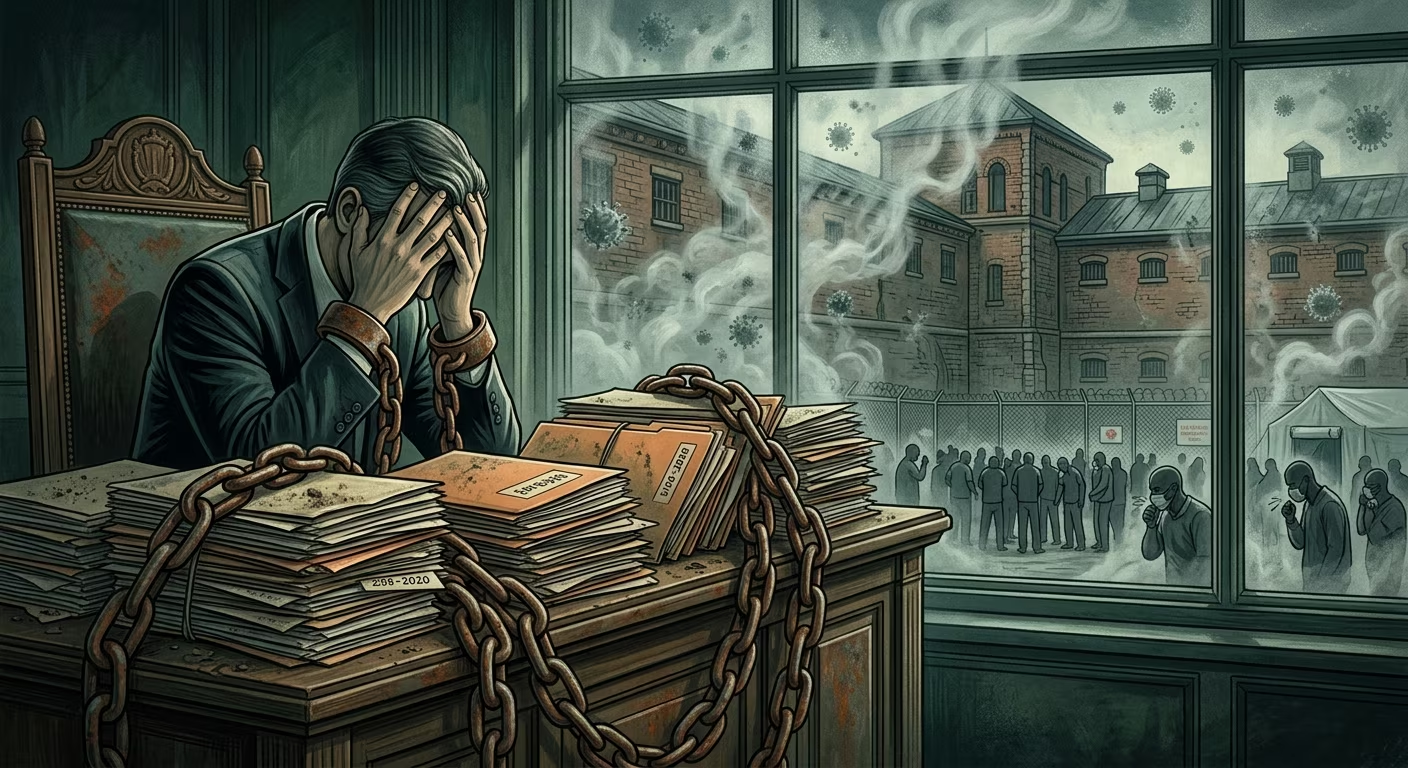
At the center of this institutional machinery sits the prosecutor—an official endowed with vast discretionary power over who enters the justice system, who stays behind bars prior to trial, and who ultimately serves a prolonged sentence. However, a retrospective analysis of the criminal justice response during the pandemic’s critical first waves reveals a profound systemic disappointment. Rather than seizing a historic moment to embrace decarceration and actively mitigate a humanitarian disaster, a significant portion of prosecutors defaulted to deeply ingrained punitive traditions. They continued to pursue low-level charges, requested exorbitant cash bail amounts that kept unconvicted individuals trapped in viral hot zones, and fiercely contested defense motions for compassionate release.
The Unique Vulnerability of Incarcerated Populations
To fully understand the gravity of prosecutorial inaction during this era, one must first recognize the sheer physical vulnerability of confined populations during an airborne viral pandemic. The Centers for Disease Control and Prevention (CDC) repeatedly warned that congregate settings—specifically correctional and detention facilities—presented significantly elevated risks for the rapid transmission of infectious diseases. Incarcerated individuals are often housed in cramped dormitories or double-bunked cells with chronically poor ventilation. They are forced to share communal dining halls, bathrooms, and recreational areas. The recommended mitigation strategies for COVID-19, such as maintaining six feet of distance and frequent hand washing with alcohol-based sanitizers, were fundamentally incompatible with carceral realities.
The statistical toll resulting from these conditions was devastating. According to an exhaustive 2022 report published by the Bureau of Justice Statistics (BJS), the crude mortality rate from COVID-19 in state and federal prisons reached 1.5 deaths per 1,000 prisoners between March 2020 and February 2021. During that first year alone, nearly 2,500 people held in these state and federal facilities died of COVID-19-related causes, with the vast majority being medically vulnerable individuals aged 55 or older. The infection rates inside correctional facilities routinely eclipsed those of the general public by massive margins, essentially transforming short-term sentences into potential death sentences.
The Discretion of the Prosecutor: A Powerful Lever Unpulled
In the American legal system, the prosecutor holds unparalleled sway. While judges hand down sentences and lawmakers draft penal codes, it is the prosecutor who serves as the ultimate gatekeeper to the carceral system. They possess the unilateral authority to decide whether an arrest results in formal charges, what specific offenses will be alleged, and what the terms of a plea agreement will entail. Most importantly, in the context of the pandemic, prosecutors heavily influence pretrial detention by making initial recommendations regarding cash bail.
During a public health emergency, this sweeping discretion could have been rapidly repurposed to thin out dangerous crowding in jails. Prosecutors had the legal latitude to immediately implement the following life-saving measures:
- Declining Minor Charges: Refusing to prosecute non-violent, low-level misdemeanors, such as simple drug possession, loitering, or minor property crimes.
- Eliminating Cash Bail: Agreeing to release individuals held pretrial on their own recognizance without demanding cash bail, particularly for those who posed no physical threat to the community.
- Supporting Medical Furloughs: Endorsing motions for the compassionate release of elderly inmates and those with severe pre-existing respiratory or autoimmune conditions.
- Expanding Diversion: Shifting resources toward community-based diversion programs rather than formal incarceration for individuals struggling with substance abuse or mental health crises.
While a minority of progressive district attorneys did implement such triage protocols, proving that mass decarceration could be executed safely, these proactive measures were the exception rather than the rule. Countless offices stubbornly adhered to a “business as usual” approach, paralyzed by a fear of political backlash or entrenched in a punitive operational culture.
Analyzing the Shortfalls: Where the System Failed
The reluctance of prosecutors to adapt to the pandemic’s realities manifested in several distinct policy failures that exacerbated the crisis behind bars.
Maintaining High Bail Requests
Pretrial detention accounts for a massive portion of the jail population in the United States. These are individuals who have not been convicted of a crime but are legally presumed innocent, remaining incarcerated simply because they cannot afford to buy their freedom. During the height of the COVID-19 outbreaks, many prosecutors continued to request high cash bail for non-violent offenses. This stubborn adherence to wealth-based detention meant that poverty became a dangerous comorbidity. Poor defendants were forced to await trial in cramped, unventilated holding cells where the virus ran rampant, while wealthier defendants facing the exact same charges were able to isolate safely in the comfort of their own homes.
Relentless Pursuit of Low-Level Offenses
Despite court closures, massive case backlogs, and the acute danger of bringing new individuals into jails, many prosecutorial offices refused to halt the pursuit of petty offenses. Arrests for minor drug possession, trespassing, and technical parole violations continued to flow into the system. Every new admission required processing, booking, and housing, continuously introducing new vectors for the virus into already overwhelmed facilities. By failing to issue blanket declination policies for these minor infractions, prosecutors unnecessarily fueled the systemic churn that drove infection spikes.
Blocking Compassionate Release
Perhaps the most egregious failure of prosecutorial discretion was the active opposition to compassionate release motions. Defense attorneys and public defenders filed thousands of emergency petitions pleading for the release of immunocompromised, pregnant, and elderly inmates who posed no danger to society. In numerous jurisdictions, prosecutors aggressively fought these petitions in court, arguing on strict procedural grounds or claiming that the individuals still required punitive isolation. This adversarial posture prioritized abstract concepts of retribution over the immediate preservation of human life.
Data Snapshot: The Illusion of Sustained Decarceration
While there was a noticeable drop in jail and prison populations in the early months of 2020, data suggests this was a fleeting anomaly rather than a sustained policy shift. Research from the Vera Institute of Justice revealed that the number of people incarcerated in state and federal prisons and local jails dropped approximately 14% from around 2.1 million in 2019 to 1.8 million by late 2020. However, much of this was driven by a temporary reduction in police encounters and court shutdowns, not deliberate, permanent prosecutorial reform.
The following table illustrates the glaring disparity between expert public health recommendations and the actual realities of the criminal justice response during the height of the pandemic:
| Public Health Recommendation | Prosecutorial Reality |
|---|---|
| Reduce population density immediately | Opposed mass release efforts and maintained high jail rosters |
| Isolate vulnerable and elderly individuals | Fought defense motions for emergency compassionate release |
| Halt unnecessary facility intake | Continued prosecuting minor offenses and technical violations |
| Minimize vectors for community spread | Maintained high pretrial cash bail detention rates |
Systemic Ramifications: Public Health and Racial Disparities
The failure to decarcerate did not merely harm those behind bars; it had profound systemic ramifications that rippled through broader society. Prisons and jails are not sealed environments. Thousands of guards, medical staff, food service workers, and administrative personnel cross the threshold of these facilities every day. By allowing the virus to spread uncontrollably within incarcerated populations, the criminal justice system effectively created epidemiological pumps that accelerated community transmission in surrounding counties.
Furthermore, the burden of these policy failures was not distributed equally. The American criminal justice system has long been defined by stark racial disparities, with Black, Indigenous, and Hispanic individuals disproportionately targeted by policing and subjected to harsher sentencing. Because these same demographic groups were also experiencing higher rates of severe illness and mortality from COVID-19 due to systemic healthcare inequities, the refusal to decarcerate acted as a devastating force multiplier. Prosecutorial inaction essentially weaponized the virus against marginalized communities, compounding generations of systemic racial injustice.
A Blueprint for the Future: Reimagining the Prosecutorial Role
The catastrophic collision of the pandemic and mass incarceration must serve as a permanent wake-up call for the criminal justice system. If the role of the prosecutor is truly to protect public safety, then the definition of “safety” must be expanded to encompass public health. The lessons of the pandemic demand a fundamental reimagining of prosecutorial duties.
Moving forward, jurisdictions must institutionalize the emergency measures that proved successful in the few areas that embraced them. This includes the permanent elimination of cash bail for non-violent offenses, the expansion of pre-arrest diversion programs, and the establishment of independent medical review boards that can expedite compassionate release without prosecutorial obstruction. Prosecutors must be trained to view incarceration not as a default setting, but as a severe last resort that carries massive, and potentially lethal, collateral consequences. Only by embracing a more holistic, health-centric view of justice can the system adequately prepare for the inevitable crises of the future.
Frequently Asked Questions (FAQs)
Why are prisons and jails considered high-risk environments for infectious diseases?
Prisons and jails are highly congested, poorly ventilated congregate settings where social distancing is physically impossible. Shared bathrooms, dining halls, and living quarters facilitate the rapid transmission of airborne viruses like COVID-19, while essential mitigation tools like alcohol-based hand sanitizers are often prohibited.
What exactly is prosecutorial discretion?
Prosecutorial discretion refers to the vast, legally sanctioned authority granted to prosecutors to make independent decisions about how criminal cases are handled. This includes the power to decide whether to bring charges at all, what specific charges to file, what bail amounts to request, and what plea deals to offer defendants.
How could prosecutors have safely reduced jail populations during the pandemic?
Prosecutors could have aggressively utilized their discretion to decline charges for non-violent, low-level misdemeanors. Furthermore, they could have supported the immediate release of pretrial detainees without requiring cash bail, and actively approved emergency compassionate release petitions for elderly and medically vulnerable inmates.
Did the overall prison population permanently decrease because of COVID-19?
No. While there was a temporary national decline of approximately 14% in 2020—largely due to significantly reduced arrests during societal lockdowns and widespread court closures—data indicates that jail populations quickly rebounded as the justice system resumed its standard, pre-pandemic operations.
How did the failure to decarcerate affect the general public outside of prisons?
Prisons and jails are not closed ecosystems. The uncontrolled spread of COVID-19 inside these carceral facilities inevitably spilled over into surrounding communities through correctional staff, medical workers, and facility vendors who traveled between the outbreak zones and their homes on a daily basis.
References
- Impact of COVID-19 on State and Federal Prisons, March 2020–February 2021 — Bureau of Justice Statistics. 2022-08-25. https://bjs.ojp.gov/library/publications/impact-covid-19-state-and-federal-prisons-march-2020-february-2021
- People in Jail and Prison in 2020 — Vera Institute of Justice. 2021-06-01. https://www.vera.org/publications/people-in-jail-and-prison-in-2020
- Interim Guidance on Management of Coronavirus Disease 2019 (COVID-19) in Correctional and Detention Facilities — Centers for Disease Control and Prevention. 2022-02-10. https://www.cdc.gov/coronavirus/2019-ncov/community/correction-detention/guidance-correctional-detention.html
- Prosecutors Responses to Covid-19 — Brennan Center for Justice. 2021-11-18. https://www.brennancenter.org/our-work/research-reports/prosecutors-responses-covid-19