
Prosecutorial Discretion in Public Health Crises
How prosecutorial inaction in crises demands urgent criminal justice reform.
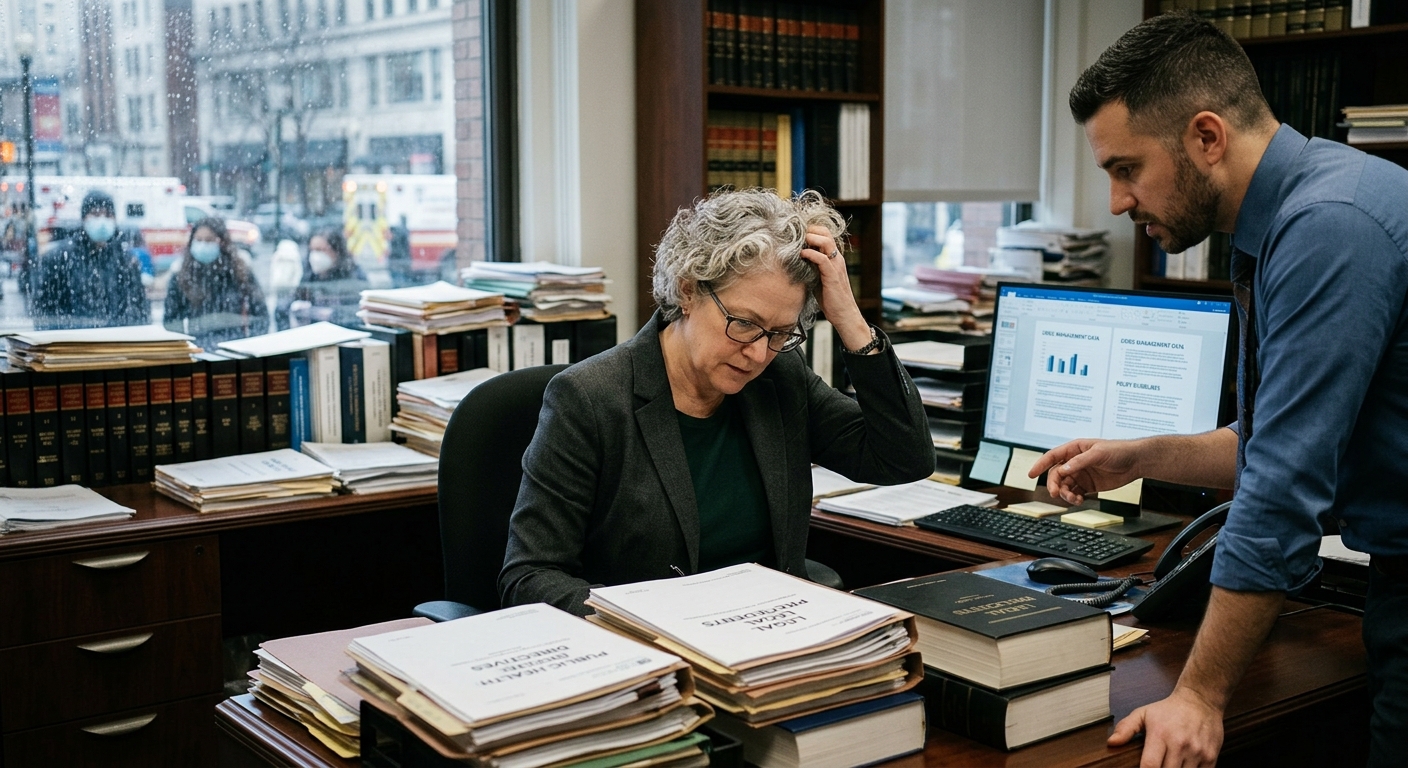
The Intersection of Legal Authority and Biological Threats
The intersection of the criminal justice system and public health is a complex frontier, often overlooked until a systemic shock forces it into the spotlight. During major health emergencies, the sprawling apparatus of incarceration transforms from a matter of legal policy into a pressing epidemiological hazard. The decisions made by legal actors—most notably prosecutors—have profound impacts not only on the civil liberties of the accused but on the public health stability of entire communities. Historically, the American legal framework has treated criminal justice and public health as distinct, unrelated spheres. However, the realities of infectious disease management have shattered this illusion, proving that carceral health is indistinguishable from community health.
This article explores the unparalleled discretionary power held by prosecutors, examines why confined populations are uniquely vulnerable to public health crises, and analyzes the systemic reluctance of legal authorities to implement proactive decarceration strategies. By dissecting the structural limitations of the justice system’s response to biological threats, we can begin to formulate a comprehensive, integrated framework that prioritizes human life and community safety in times of acute crisis.
The Expanding Scope of Prosecutorial Power
In the United States legal architecture, prosecutors hold an unparalleled concentration of discretionary authority. Unlike judges, whose decisions are often bound by rigid statutory guidelines and appellate review, or defense attorneys, who must react to the state’s initial accusations, prosecutors dictate the foundational terms of engagement in the criminal justice process. Their authority extends from the moment of arrest through sentencing, giving them the unique ability to shape the population dynamics of local jails and state prisons.
Prosecutorial discretion encompasses several critical decision-making points. First and foremost is the charging decision: prosecutors unilaterally determine whether to file criminal charges, what specific offenses to allege, and whether to divert a defendant into an alternative rehabilitation program instead of pursuing incarceration. Furthermore, prosecutors play a decisive role in pre-trial detention through their bail recommendations. A prosecutor’s request for high cash bail or remand often dictates whether an individual will be confined in a crowded local jail for months or years before a trial even commences.
By leveraging these mechanisms, prosecutors possess the functional capability to significantly reduce incarcerated populations at their own discretion, without waiting for legislative mandates or executive clemency. This immense power makes them the de facto gatekeepers of the carceral system, establishing their position as some of the most influential figures in managing a public health response within the justice sector.
Prisons and Local Jails as Amplifiers of Infectious Disease
Correctional facilities are inherently vulnerable to the rapid spread of infectious diseases. The architectural, structural, and operational realities of prisons and local jails create an optimal environment for viral transmission, making them epidemiological flashpoints during any public health crisis.
According to a comprehensive consensus report published by the National Academies of Sciences, Engineering, and Medicine (2020), carceral settings frequently suffer from severe overcrowding, aging infrastructure, poor ventilation, and inadequate sanitary resources. All of these factors act as extreme accelerants for respiratory viruses . Social distancing—the primary non-pharmaceutical intervention during an airborne pathogen outbreak—is physically impossible in most correctional environments. Inmates are forced to share cramped cells, communal dining areas, and open-bay dormitories, breathing recycled air that facilitates rapid viral spread.
Furthermore, the baseline health status of incarcerated populations drastically compounds these environmental risks. Individuals entangled within the criminal justice system disproportionately suffer from underlying chronic health conditions, such as hypertension, diabetes, and severe respiratory ailments. This is largely due to systemic socioeconomic inequities and a historical lack of access to preventive medical care in their communities. When an infectious pathogen is introduced into this medically vulnerable, densely packed population, the infection rate and subsequent morbidity and mortality rates routinely eclipse those seen in the general public. Failing to mitigate these severe health risks effectively transforms sentences for minor legal infractions into potential death sentences, fundamentally violating the core tenets of proportionate justice and basic human rights.
Evaluating the Legal System’s Response During Crisis Interventions
When the COVID-19 pandemic paralyzed the globe, it presented an unprecedented, real-time stress test for the exercise of prosecutorial discretion. Public health experts and epidemiologists universally recommended rapid and widespread decarceration to prevent catastrophic outbreaks behind bars. While some preliminary action was taken, the overall legal response was marked by systemic reluctance and bureaucratic inertia.
Data published by the Bureau of Justice Statistics reveals that local jail populations did see an initial, notable decline of approximately 18% between February and late April 2020, dropping to a low of 519,500 individuals . This reduction was primarily driven by a temporary decrease in arrests, suspended court operations, and some expedited administrative releases. However, this trend was short-lived. By mid-2020, jail populations began to steadily climb back toward pre-pandemic levels, reflecting an overarching hesitancy among prosecutors to fundamentally alter their punitive strategies long-term .
This recent phenomenon is not entirely unprecedented. Historically, during crises ranging from natural disasters like Hurricane Katrina to localized disease outbreaks, the immediate response of the criminal justice system has often been to prioritize physical containment over constitutional rights and physical safety. What made the 2020 pandemic distinct was the sheer global scale and the overwhelming consensus from the medical community demanding immediate decarceration. Despite possessing the precise legal tools required to empty crowded holding cells safely, district attorneys largely chose the path of least resistance: adhering to the status quo.
Despite a growing national discourse surrounding progressive reform—a movement advocating for the reduction of mass incarceration—many prosecutors who campaigned on reform platforms failed to utilize their discretionary powers when the stakes were highest. Petitions for mass release or the halting of low-level prosecutions were frequently met with fierce opposition from district attorneys citing generalized, often unsubstantiated public safety concerns. The failure to pivot during an existential biological threat underscores a systemic prioritization of punitive justice over human life, signaling an urgent need for structural, rather than merely rhetorical, reform.
Community Health Implications of Carceral Outbreaks
It is a dangerous, pervasive misconception that outbreaks within correctional facilities are contained strictly behind prison walls. In reality, prisons and local jails operate as highly porous institutions with constant influxes and outflows of people. The epidemiological concept of carceral health emphasizes that the medical well-being of the incarcerated population is inextricably linked to the health security of the broader surrounding community.
Local jails, in particular, function as revolving doors. Hundreds of thousands of individuals are admitted and released each week, often spending only a few days in confinement before returning directly to their neighborhoods. Additionally, correctional officers, medical staff, administrative workers, and logistics vendors cross the facility threshold daily. If a virus is allowed to spread unchecked within a jail block, these staff members inadvertently become vectors, carrying the pathogen back into their homes, local grocery stores, and community centers.
Furthermore, severe outbreaks behind bars place an immense, often unsustainable strain on local healthcare infrastructure. Prisons rarely have the intensive care capabilities required to treat severe respiratory distress or advanced viral complications. Consequently, critically ill inmates must be transported to community hospitals. In regions already facing critical bed shortages, a surge of patients from a local correctional facility can rapidly overwhelm emergency medical resources, directly depriving the broader public of necessary and life-saving care.
The financial burden of these avoidable outbreaks is also staggering. Municipalities and state governments are constitutionally obligated to provide adequate medical care to those they incarcerate. When a severe respiratory pathogen sweeps through a prison population, the ensuing costs for hospitalization, specialized treatments, and extended medical isolation are borne entirely by the taxpayer. Therefore, decarceration is not only a moral and epidemiological imperative but a fiscally responsible strategy during periods of acute economic and medical crisis.
A Framework for Future Preparedness: Integrating Health and Justice
To prevent the devastating outcomes witnessed during recent global health emergencies, the criminal justice system must undergo a structural evolution, permanently integrating public health considerations into its operational DNA. Relying solely on the ad hoc goodwill or discretion of individual prosecutors is an insufficient strategy for navigating complex epidemiological threats. A proactive, standardized framework must be established and codified.
The Centers for Disease Control and Prevention (CDC) continuously updates interim guidance on managing infectious diseases in correctional environments, consistently emphasizing that population management and intake reduction are foundational to preventing institutional outbreaks . To align with these scientific recommendations, jurisdictions must adopt actionable policy reforms that mandate decarceration under specific emergency conditions.
Key actionable reforms should include:
- Presumption of Pre-Trial Release: Implementing statutory mandates that eliminate cash bail and establish a strict presumption of pre-trial release for all non-violent offenses during declared public health emergencies. This prevents individuals from being confined simply because they cannot afford bail.
- Suspension of Low-Level Prosecutions: Establishing binding prosecutorial guidelines that automatically halt the arrest and prosecution of minor infractions, such as simple drug possession, sex work, and trespassing, to drastically minimize unnecessary jail admissions.
- Expedited Medical Parole: Streamlining the bureaucratic processes required for compassionate release, ensuring that elderly and medically vulnerable inmates are immediately transferred to safer community settings where they can isolate properly.
- Inter-Agency Data Transparency: Requiring mandatory, real-time public reporting of infection rates, testing metrics, and facility population data to ensure that legal decisions are constantly grounded in objective epidemiological evidence rather than political pressure.
Comparing Prosecutorial Approaches in Crises
To fully grasp the necessary shift in legal paradigms, we must examine the glaring differences between traditional, punitive approaches and health-aligned methodologies during a crisis.
| Operational Area | Traditional Prosecutorial Approach | Public Health-Aligned Approach |
|---|---|---|
| Bail & Pre-Trial | Requests standard cash bail; prioritizes perceived flight risk over severe health risks. | Consents to release on recognizance; heavily factors in the medical vulnerability of the defendant. |
| Charging Decisions | Maintains aggressive prosecution of all statutory violations to uphold conventional law and order. | Declines charges for non-violent, minor offenses to drastically reduce facility intake rates. |
| Post-Conviction | Opposes defense motions for early release; insists on original sentence completion regardless of health threat. | Actively identifies and recommends medically frail inmates for immediate sentence reduction or compassionate parole. |
Frequently Asked Questions (FAQ)
What exactly is prosecutorial discretion?
Prosecutorial discretion refers to the vast, legally protected authority granted to prosecuting attorneys to decide how criminal cases are handled. This includes the unilateral power to choose whether to file formal charges, what specific crimes to allege, the terms of potential plea bargains, and what bail amounts to recommend to a presiding judge. Because this power is subject to very little judicial oversight, prosecutors essentially control the front door of the criminal justice system.
Why are prisons and jails so uniquely vulnerable to infectious diseases?
Correctional facilities are typically characterized by extreme overcrowding, severely limited space for social distancing, shared communal sanitary facilities, and antiquated, poor ventilation systems. Additionally, the incarcerated population generally experiences higher rates of pre-existing, chronic health conditions compared to the outside public, making them significantly more susceptible to severe illness when a contagious virus breaches the facility.
Did the jail population drop significantly during the 2020 pandemic?
There was an initial, noticeable drop. Between February and April 2020, local jail populations decreased by about 18% as courts suspended operations and some jurisdictions expedited administrative releases . However, this trend was largely temporary. Populations began to rise again by mid-2020 as prosecutors and courts resumed normal activities, indicating a reluctance to maintain lower populations long-term.
How does an outbreak in a prison affect the general public?
Prisons are not closed ecosystems. Correctional officers, healthcare workers, administrative staff, and vendors enter and exit the facilities on a daily basis, potentially spreading the virus to their local communities. Furthermore, large outbreaks can easily overwhelm local community hospitals, drastically reducing the availability of intensive care beds and medical resources for the general public.
What role should public health play in criminal justice reform?
Public health principles should fundamentally guide legal policies to ensure that the pursuit of justice does not inadvertently cause mass illness, community outbreaks, or death. By treating criminal justice policy as an extension of public health policy, the legal system can focus on rehabilitation, harm reduction, and minimizing the societal spread of disease through smart, proactive decarceration strategies.
References
- Impact of COVID-19 on the Local Jail Population, January-June 2020 — Bureau of Justice Statistics. 2021-03-01. https://bjs.ojp.gov/content/pub/pdf/icljpjj20.pdf
- Decarcerating Correctional Facilities during COVID-19: Advancing Health, Equity, and Safety — National Academies of Sciences, Engineering, and Medicine. 2020-10-20. https://nap.nationalacademies.org/catalog/25945/decarcerating-correctional-facilities-during-covid-19-advancing-health-equity-and
- Interim Guidance on Management of Coronavirus Disease 2019 (COVID-19) in Correctional and Detention Facilities — Centers for Disease Control and Prevention. 2020-03-23. https://www.cdc.gov/coronavirus/2019-ncov/community/correction-detention/guidance-correctional-detention.html
- Mass Incarceration Trends — The Sentencing Project. 2024-04-10. https://www.sentencingproject.org/fact-sheet/mass-incarceration-trends/
Similar Articles








Read full bio of Sneha Tete


