
Prosecutor-Police Interdependence & Systemic Conflicts
Examining conflicts of interest in police misconduct investigations.
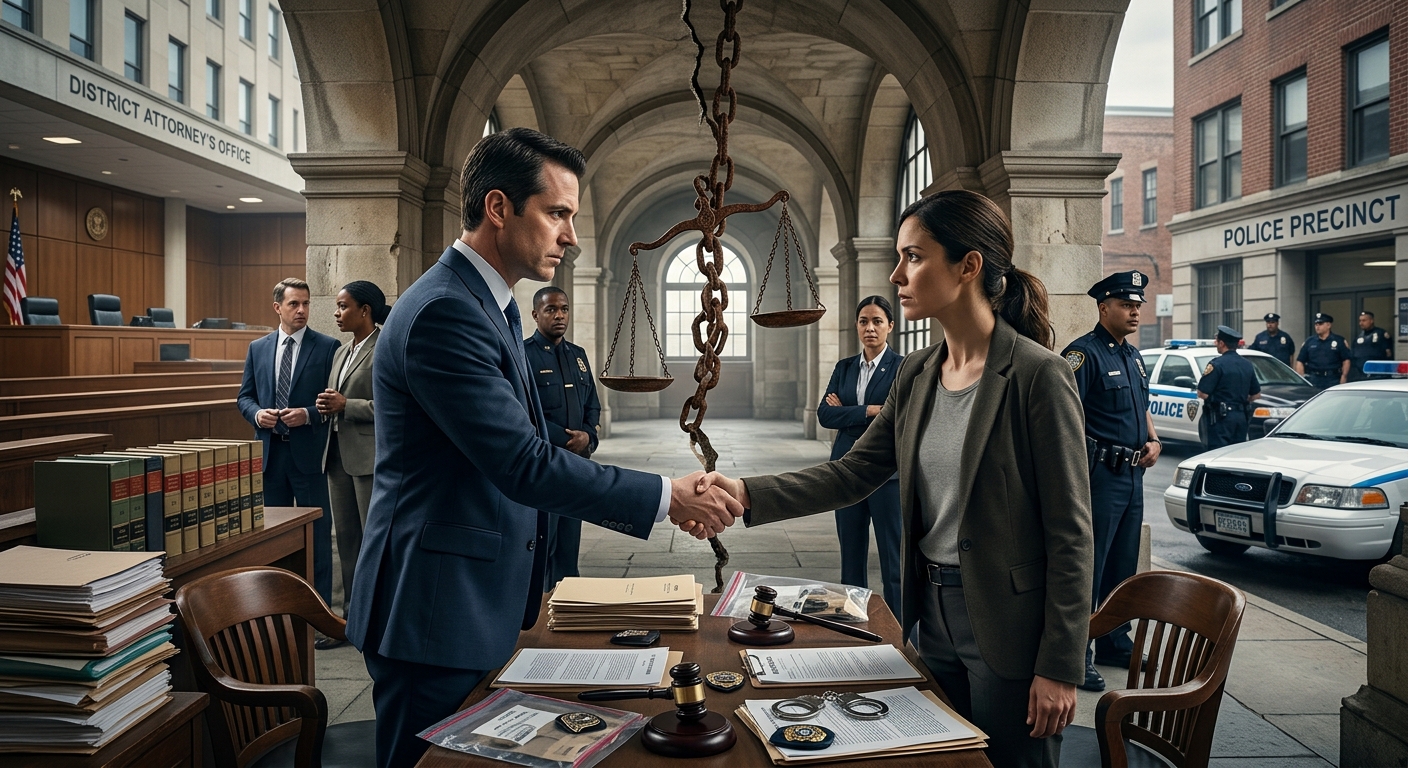
Introduction to the Criminal Justice Paradox
The American criminal justice system operates on a foundational, yet highly precarious, partnership. At the heart of this system lies an intricate web of reliance between local police departments and prosecuting attorneys. While the general public often views these two entities as separate pillars of law enforcement, their daily operations are inextricably linked. Police officers act as the frontline gatherers of evidence, the primary witnesses in courtroom trials, and the initial enforcers of state law. Conversely, prosecutors act as the legal filter, deciding which arrests warrant formal charges and relying heavily on police testimony to secure convictions.
However, this symbiotic relationship presents a profound paradox when law enforcement officers themselves become the subject of criminal investigations. When those entrusted to enforce the law are accused of violating it—whether through excessive force, corruption, or perjury—the responsibility to investigate and prosecute often falls on the very district attorneys who rely on these officers to win their everyday cases. This creates an undeniable and systemic conflict of interest, eroding public trust and complicating the pursuit of objective justice. Examining the structural friction within this partnership is critical for understanding why police accountability remains an elusive goal in many jurisdictions across the United States.
The Mechanics of Co-Dependence
To comprehend the depth of this conflict, one must first analyze the structural mechanics of local prosecution. A prosecutor’s success rate—often a metric used for re-election or career advancement—is intrinsically tied to the quality of evidence and the credibility of police testimony. The National Prosecution Standards emphasize that prosecutors have a vested interest in the training and professionalization of local law enforcement, explicitly noting that a prosecutor’s success is often crucial to their handling of a case, which requires a strong rapport with officers.
Because district attorneys and police officers work together continually, they naturally develop a collegial, team-oriented culture. Prosecutors depend on detectives to execute search warrants flawlessly, secure crime scenes, and deliver compelling testimony under cross-examination by defense attorneys. In return, police officers rely on prosecutors to validate their arrests by pursuing charges and securing convictions, which justifies the officers’ actions in the field.
This mutual reliance means that bringing criminal charges against an officer threatens the entire ecosystem. A prosecutor who aggressively pursues police misconduct may face immense backlash from police unions, a sudden drop in cooperation from local precincts, and an overall breakdown in the functional operations of the district attorney’s office. The implicit message is clear: prosecuting one’s partners can jeopardize a prosecutor’s ability to effectively do their job in all other ongoing criminal cases.
The Crisis of Objectivity in Misconduct Investigations
When an allegation of police misconduct arises, the inherent bias of the local prosecutor becomes a central issue. The State Bar of California has noted the complex ethical terrain prosecutors navigate, acknowledging that an elected prosecutor’s working relationship with police officers and reliance on law enforcement unions for political support can raise serious questions about whether those relationships materially interfere with professional judgment. Even if a prosecutor subjectively believes they can remain impartial, the appearance of impropriety is unavoidable.
The conflict of interest manifests most dangerously during the preliminary stages of an investigation. Prosecutors are often granted broad discretionary power over whether to convene a grand jury, what evidence to present, and what charges to recommend. In cases involving civilians, prosecutors routinely use their discretion to aggressively pursue the highest sustainable charges. However, when the defendant is a police officer, historical trends show a stark contrast. Prosecutors frequently extend the benefit of the doubt, scrutinize victim testimony more harshly, and present exculpatory evidence to grand juries—a practice rarely afforded to ordinary citizens.
This disparity in treatment undermines the fundamental constitutional principle of equal protection under the law. It signals to marginalized communities, who disproportionately bear the brunt of police violence, that the justice system operates with a dual standard: one designed to aggressively punish civilians and another designed to protect its own internal operations.
Brady Lists and the Battle for Transparency
A critical intersection of police misconduct and prosecutorial duty is found in the management of ‘Brady lists.’ Under the landmark Supreme Court decision Brady v. Maryland, prosecutors have a constitutional obligation to turn over any exculpatory evidence to the defense, which includes evidence that might impeach the credibility of a state witness. If a police officer has a documented history of lying, falsifying reports, or exhibiting racial bias, the prosecutor must disclose this information to defense attorneys.
However, maintaining and utilizing these lists places prosecutors directly at odds with police departments. Research from Stanford Law School highlights that when prosecutors learn of police misconduct, officers and their unions often exert immense pressure—including litigation and political maneuvering—to prevent their inclusion on Brady lists, fearing severe employment consequences and the destruction of their credibility in court. This pressure places prosecutors in a precarious position: fulfill their constitutional duty to the defendant and anger their law enforcement partners, or suppress the misconduct and risk wrongful convictions and appellate reversals.
Many jurisdictions have historically lacked a centralized, transparent system for tracking officer misconduct. The reluctance of district attorneys to aggressively audit police personnel files creates a blind spot in the justice system, allowing officers with a history of deceit or brutality to continue testifying in court, thereby jeopardizing the integrity of countless criminal convictions and undermining the overarching pursuit of fair trials.
The Role of the Grand Jury in Misconduct Cases
In many jurisdictions, prosecutors use the grand jury system to determine whether to bring criminal charges against a police officer. While the grand jury was originally conceived as a safeguard against unwarranted prosecutions, it often functions differently in cases of police misconduct. Since grand juries operate in secret and defense attorneys are not present, the prosecutor unilaterally decides what evidence to present. When presenting a case against a civilian, prosecutors typically present only the evidence necessary to secure an indictment.
However, when an officer is the target, prosecutors often present evidence that favors the officer or rigorously cross-examine their own witnesses, resulting in the grand jury declining to indict. The prosecutor can then point to this decision as an objective outcome, effectively avoiding the political fallout of dropping the case. This systemic manipulation underscores the necessity of removing misconduct cases from local oversight.
Structural Shields: Immunity and Collective Bargaining
Beyond the immediate relationship between prosecutors and police, structural shields make holding officers accountable exceptionally difficult. Qualified immunity protects government officials from civil liability unless they violated a clearly established constitutional right, insulating officers from financial consequences and creating a culture of invincibility. Furthermore, powerful police unions often negotiate collective bargaining agreements that include provisions explicitly designed to hinder misconduct investigations.
These provisions can include mandatory cooling-off periods that delay the interrogation of an officer involved in a fatal shooting, limitations on civilian oversight, and the automatic expungement of disciplinary records. When a local prosecutor attempts to build a criminal case against an officer, they frequently find the investigation stymied by these contractual roadblocks, further disincentivizing the pursuit of formal charges and solidifying the protective barrier surrounding law enforcement personnel.
Pathways to Reform: The Case for Independent Oversight
The glaring inadequacies of the current system have prompted legal scholars, civil rights advocates, and policymakers to demand structural reforms. The most widely endorsed solution is the complete removal of police misconduct investigations from the jurisdiction of local district attorneys. Legal scholarship from the University of Idaho Law argues that the lack of special or independent prosecutor appointments is a primary reason for the rarity of police prosecutions, emphasizing the inevitable link between police perjury, misconduct, and the inherent conflict of interest in the police-prosecutor relationship.
Appointing an independent prosecutor—whether it be the state Attorney General or a specialized unit specifically designed to handle officer-involved shootings and corruption—severs the cord of co-dependence. An independent prosecutor does not rely on the local police department for their daily caseload, nor do they depend on the endorsement of the local police union for their political survival. This insulation allows for a more objective, rigorous, and transparent investigation.
Another crucial reform involves the establishment of robust, adequately funded civilian oversight boards equipped with independent subpoena power. These boards can conduct parallel investigations into police misconduct, providing an external check on internal affairs divisions and ensuring that evidence of misconduct is not buried within department archives.
Comparing Oversight Models
| Metric | Local District Attorney | Independent Prosecutor |
|---|---|---|
| Jurisdiction | County or City Level | Statewide or Specialized Unit |
| Daily Police Relationship | High Co-dependence | Minimal to None |
| Conflict of Interest Risk | Severe | Low |
| Accountability Focus | Compromised by structural ties | Objective enforcement of the law |
Conclusion
The unspoken, systemic alignment between prosecutors and police officers is a structural flaw woven into the fabric of the American criminal justice system. While this partnership is fundamentally necessary for the daily administration of the law, it becomes a severe liability when law enforcement officers violate the public trust. The reluctance of local prosecutors to hold their partners accountable has fostered a culture of impunity, damaged community relations, and compromised the constitutional rights of criminal defendants.
To restore faith in the legal system, systemic reform is non-negotiable. By institutionalizing independent prosecutors, mandating transparent Brady lists, and dismantling the structural shields that protect rogue officers, society can begin to decouple police accountability from the inherent conflicts of local prosecution. Only through objective, independent oversight can the justice system truly embody the principle that no one, not even those who wear a badge, is exempt from the law.
Frequently Asked Questions
- What is the main conflict of interest between prosecutors and police?
Prosecutors rely heavily on police officers to gather evidence and provide testimony to win criminal cases. Because they work together daily, prosecutors often hesitate to charge officers with misconduct, fearing it will damage their working relationship and hinder their ability to prosecute other cases. - What is a Brady list?
A Brady list is a database maintained by prosecutors that tracks law enforcement officers who have a history of misconduct, particularly issues related to untruthfulness, bias, or criminal behavior. Under the Supreme Court ruling Brady v. Maryland, prosecutors are legally required to disclose this information to defense attorneys, as it can affect an officer’s credibility as a witness. - Why is it difficult to criminally charge a police officer?
Beyond the prosecutorial conflict of interest, officers are protected by powerful police unions, collective bargaining agreements that restrict how investigations are conducted, and a legal culture that often gives law enforcement the benefit of the doubt. - How does an independent prosecutor help solve this issue?
An independent prosecutor (such as a state Attorney General or a specially appointed lawyer) does not work with the local police department on a daily basis. This separation removes the conflict of interest, allowing the prosecutor to investigate and potentially charge officers without fear of retaliation or a breakdown in local law enforcement cooperation. - How does police misconduct affect the wider community?
When police are not held accountable, it severely erodes public trust in the justice system. It disproportionately impacts marginalized communities who experience higher rates of police interactions, and it increases the risk of wrongful convictions if officers with a history of lying are allowed to testify in court unchecked.
References
- National Prosecution Standards — National District Attorneys Association / IN.gov. 2009. https://www.in.gov/ipac/files/National_Prosecution_Standards.pdf
- November 30, 2020 To: Committee on Professional Responsibility and Conduct (COPRAC) — The State Bar of California. 2020-11-30. https://www.calbar.ca.gov/
- Brady’s Blind Spot: Impeachment Evidence in Police Personnel Files and the Battle Splitting the Prosecution Team — Stanford Law School. 2014-08-26. https://law.stanford.edu/
- The American Injustice System: The Inherent Conflict of Interest in Police-Prosecutor Relationships & How Immunity Lets Them — Digital Commons @ UIdaho Law. 2021. https://digitalcommons.law.uidaho.edu/
Similar Articles








Read full bio of medha deb




