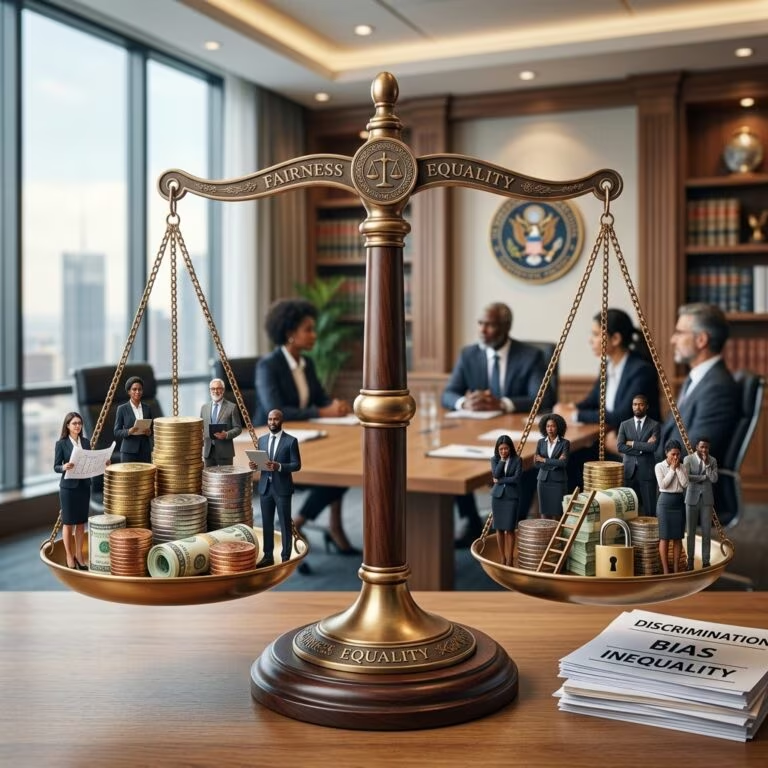
In the United States, employment is predominantly governed by the ‘at-will’ doctrine, allowing employers to end working relationships without notice or cause in most cases. However, this flexibility has critical exceptions. Dismissing an employee for certain reasons violates federal and state protections, exposing businesses to lawsuits, fines, and reputational damage. Understanding these boundaries is vital for both employers aiming to comply with the law and workers seeking to defend their rights.
Understanding At-Will Employment and Its Limits
At-will employment means termination can occur for any non-illegal reason, but statutes like Title VII of the Civil Rights Act of 1964 and the Americans with Disabilities Act (ADA) carve out protections. Nearly all states except Montana follow this model, yet illegal firings persist as common litigation triggers. Employers must document legitimate causes, such as poor performance or policy breaches, to avoid claims of pretextual motives.
For instance, firing for economic downturns or restructuring is generally permissible if applied uniformly, but targeting specific individuals based on protected traits crosses into illegality. Courts scrutinize patterns, like disproportionate impacts on older workers, to uncover discrimination.
Discrimination: A Core Prohibition
One of the most enforced bans involves terminating based on inherent characteristics. Federal law prohibits adverse actions motivated by race, color, religion, sex (including pregnancy, sexual orientation, and gender identity), national origin, age (40+), or disability. The Equal Employment Opportunity Commission (EEOC) oversees these claims, reporting thousands annually.
- Race and Ethnicity: Discharging someone due to skin color or ancestry violates Title VII, even subtly through stereotypes.
- Gender and Pregnancy: Firing women for maternity leave or men for caregiving roles is unlawful under the Pregnancy Discrimination Act.
- Age Bias: The Age Discrimination in Employment Act (ADEA) shields workers over 40 from decisions favoring younger staff without justification.
- Disability: The ADA mandates reasonable accommodations; termination without them, if qualified, is illegal.
State laws often expand these, like California’s protections for marital status. Evidence such as disparate treatment or statistical disparities strengthens cases.
Retaliation: Punishing Protected Activities
Employers cannot retaliate against employees exercising legal rights. This includes firing after complaints about discrimination, wage theft, or unsafe conditions. Retaliation claims comprise a significant portion of EEOC filings, often succeeding even if the original grievance lacks merit.
Protected actions encompass:
- Filing internal or agency complaints.
- Participating in investigations.
- Requesting accommodations for disabilities or religious practices.
- Opposing unlawful employer conduct.
A classic scenario: an employee reports harassment, then faces sudden dismissal. Proximity in timing raises ‘causation’ inferences, shifting the burden to prove unrelated reasons.
Immigration Status and Citizenship Barriers
The Immigration Reform and Control Act (IRCA) forbids discrimination based on citizenship status or national origin for authorized workers. Firing U.S. citizens over immigrants or vice versa, absent business necessity, invites penalties. Employers must verify eligibility via Form I-9 but cannot use it pretextually.
Whistleblowing and Public Policy Exceptions
Terminating for reporting violations—termed whistleblowing—is barred under laws like the Occupational Safety and Health Act (OSHA) and Sarbanes-Oxley Act. Employees exposing fraud, safety hazards, or illegal practices enjoy safeguards. Public policy doctrines in most states prevent firings for refusing immoral or unlawful tasks, such as falsifying records.
For example, declining to participate in environmental violations or patient endangerment qualifies as protected refusal.
Contractual and Union Protections
Unionized workers follow collective bargaining agreements requiring ‘just cause.’ Non-union employees with contracts specifying termination grounds cannot be fired arbitrarily. Implied contracts from handbooks promising progressive discipline bind employers similarly.
Family and Medical Leave Violations
The Family and Medical Leave Act (FMLA) grants 12 weeks unpaid leave for serious health issues or family care. Retaliatory firing post-leave, or denying reinstatement, violates this law for eligible firms (50+ employees).
Comparing Legal vs. Illegal Termination Reasons
| Legal Reasons | Illegal Reasons |
|---|---|
| Poor performance with documentation | Based on race, gender, or age |
| Policy violations like theft | Retaliation for complaints |
| Excessive absenteeism (non-FMLA) | Whistleblowing on safety issues |
| Business restructuring | Refusing illegal acts |
| Misconduct (harassment by employee) | Citizenship status |
This table highlights safe practices versus pitfalls, emphasizing documentation’s role.
State Variations and Broader Protections
Federal baselines yield to stricter state rules. New York bans marital status discrimination; Colorado protects off-duty marijuana use. Employers must navigate these mosaics, consulting local counsel.
Steps for Employers to Avoid Liability
- Implement clear policies and train managers.
- Document performance issues progressively.
- Conduct impartial investigations for complaints.
- Audit terminations for disparate impacts.
- Seek legal review for borderline cases.
Consistent enforcement prevents ‘pretext’ accusations.
Remedies for Wrongfully Terminated Employees
Victims can pursue EEOC charges (within 180-300 days), state agencies, or lawsuits seeking back pay, reinstatement, and punitive damages. Unemployment benefits often follow illegal firings.
Frequently Asked Questions
Can an employer fire me without a reason?
Yes, under at-will employment, but not for illegal reasons like discrimination or retaliation.
What evidence proves wrongful termination?
Emails, witness statements, timing of events, and comparator treatment (similarly situated employees retained).
How long do I have to file a claim?
Typically 180 days for EEOC; varies by state and law.
Does at-will mean no protections?
No—numerous federal and state laws override it for specific motives.
Can small businesses discriminate?
Protections apply variably; Title VII covers 15+ employees, ADA 15+, ADEA 20+.
Navigating Modern Workplace Challenges
Remote work and gig economies introduce nuances, like firing for social media posts on protected topics. Gig platforms must adhere if classifying as employers. AI hiring tools risk disparate impact claims if biased.
Post-pandemic, vaccine mandates sparked retaliation suits, resolved via undue hardship defenses under ADA/Title VII.
In summary, while flexibility exists, prohibited grounds demand vigilance. Employers fostering inclusive cultures mitigate risks; employees knowing rights empower action.
References
- Termination guidance for employers — USAGov. 2023-10-01. https://www.usa.gov/termination-for-employers
- Termination — U.S. Department of Labor. 2024-05-15. https://www.dol.gov/general/topic/termination
- Illegal Reasons For Firing An Employee — The Checkett Law Firm. 2023-08-20. https://www.checkett-law.com/blog/illegal-reasons-for-firing-an-employee
- Illegal Firing & Wrongful Termination: Understand Your Rights — business.com. 2024-02-12. https://www.business.com/articles/illegal-reason-to-fire-someone/
- 6 Justified Reasons for Employee Termination — ScoutLogic Screening. 2023-11-05. https://www.scoutlogicscreening.com/blog/justified-reasons-for-employee-termination/