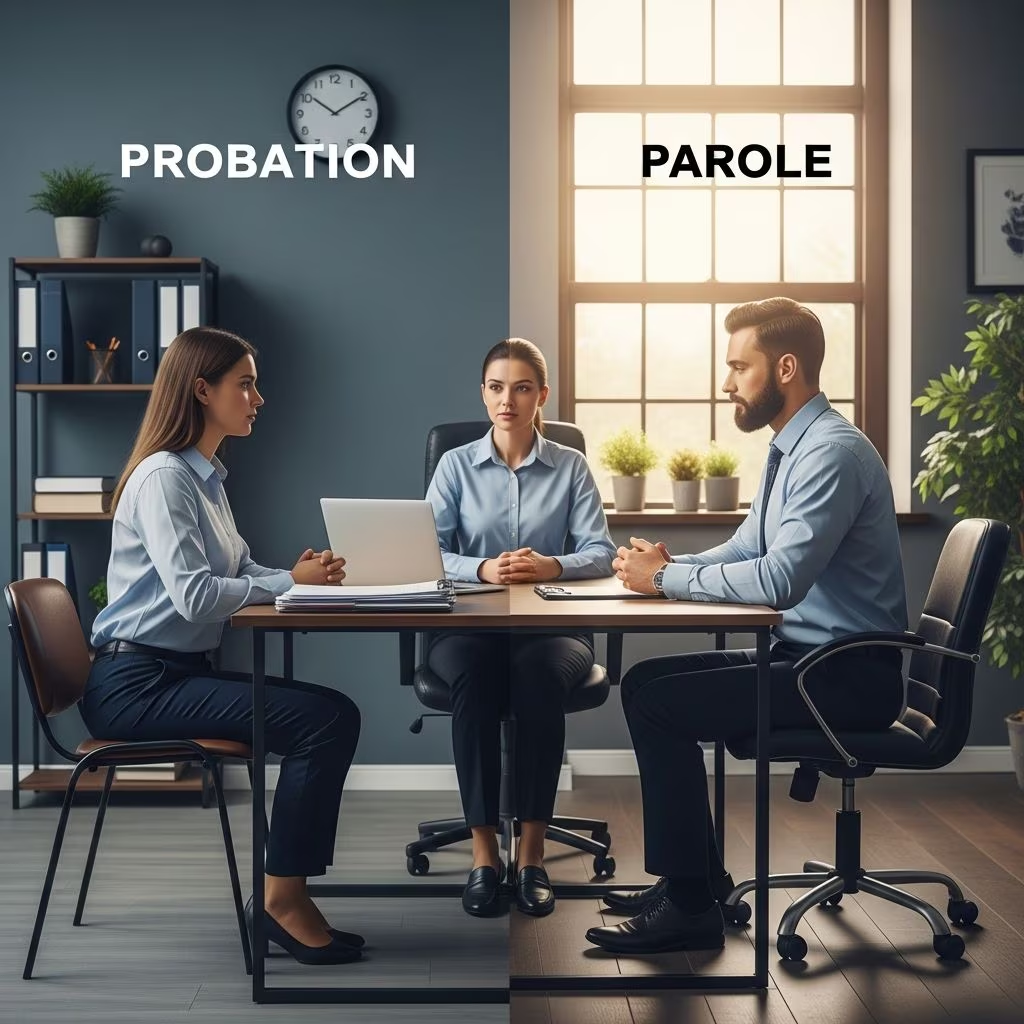
Probation and parole represent two vital alternatives to full incarceration in the U.S. criminal justice system, each serving to balance public safety with offender rehabilitation. While both involve community supervision, they differ fundamentally in timing, authority, and application.
Foundational Concepts in Community Supervision
Community supervision forms the backbone of modern sentencing practices, allowing courts and correctional boards to monitor offenders outside prison walls. This approach prioritizes reintegration over prolonged isolation, fostering accountability through structured oversight.
At its core, such supervision mandates adherence to behavioral guidelines, regular check-ins, and lifestyle restrictions designed to prevent recidivism. Understanding these mechanisms empowers individuals navigating legal challenges to make informed decisions.
Defining Probation: An Alternative to Prison
Probation emerges directly from the sentencing phase, where a judge opts for supervised release over immediate jail time. This option suits offenses where the court deems community placement viable, often for misdemeanors or less severe felonies.
Offenders receive a suspended sentence, meaning incarceration looms as a potential outcome for non-compliance. The probation officer acts as the primary enforcer, conducting home visits, employment verifications, and progress assessments to ensure rehabilitation progress.
Typical duration spans one to five years, tailored to offense gravity and offender history. Success hinges on consistent compliance, which can lead to early termination and a cleaner record.
Understanding Parole: Early Release from Incarceration
Parole activates post-imprisonment, granting conditional freedom after serving part of a sentence. A dedicated parole board evaluates eligibility based on institutional conduct, program participation, and release plans.
Unlike probation, parole shortens overall confinement but maintains stringent controls. Parolees must demonstrate low reoffending risk, often through good behavior credits or mandatory minimums met.
Supervision mirrors probation in intensity but emphasizes post-prison adjustment, with officers focusing on employment stability and substance avoidance to support societal reentry.
Core Differences: Timing, Authority, and Application
The most striking divergence lies in deployment stage: probation precedes jail, while parole follows it. Judges impose probation during trials; parole boards decide releases after hearings.
| Aspect | Probation | Parole |
|---|---|---|
| Timing | At sentencing | After prison time |
| Authority | Judge | Parole board |
| Prison required? | No | Yes, partial |
| Offense types | Misdemeanors/felonies | Serious felonies |
This table highlights how probation offers upfront leniency, whereas parole rewards in-prison improvement.
Shared Elements: Conditions and Oversight
- Regular reporting: Weekly or monthly meetings with officers to review compliance.
- Travel restrictions: Permission needed for out-of-area movement to maintain monitoring.
- Substance testing: Random drug/alcohol screens to enforce sobriety.
- No new crimes: Arrests trigger immediate review and potential revocation.
- Program mandates: Counseling, education, or community service for rehabilitation.
These parallels underscore both systems’ rehabilitative intent, with officers wielding revocation authority for breaches.
Violation Consequences: Revocation Processes
Breaches invoke hearings where evidence of non-compliance is weighed. Probation violations may activate the full suspended sentence, potentially harsher due to judicial discretion.
Parole revocations return individuals to prison for remaining time, without new sentencing. Both processes prioritize swift accountability to protect communities.
State Variations and Modern Reforms
Implementation differs across states; California mandates parole for certain felonies, while Florida emphasizes officer distinctions. Recent reforms focus on reducing revocations through risk assessments and support services, aiming for equity.
Federal guidelines align closely but adapt to circuits. Offenders should consult jurisdiction-specific rules for precise expectations.
Roles of Supervising Officers
Probation officers integrate enforcement with guidance, aiding job placement and therapy access. Parole officers prioritize risk management, given higher-stakes backgrounds.
Both professions demand vigilance, blending law enforcement with social work to curb recidivism rates.
Impact on Recidivism and Rehabilitation
Studies affirm supervision’s role in lowering reoffense rates when paired with resources. Probation excels in early intervention; parole aids long-term adjustment.
Success metrics include employment gains and family reunification, validating these systems’ efficacy.
Frequently Asked Questions
Can probation include some jail time?
Yes, ‘split sentences’ combine short incarceration with extended probation for balanced punishment.
Who decides parole eligibility?
Parole boards review applications, considering behavior and plans post-release.
What happens if I miss a meeting?
Missed check-ins count as violations, prompting warnings or hearings.
Is travel allowed on supervision?
Limited, with prior officer approval required.
Can supervision end early?
Yes, for exemplary compliance via petition.
Seeking Professional Guidance
Navigating these systems demands expert advice. Attorneys specializing in criminal defense can advocate during hearings, negotiate terms, and mitigate violations for optimal outcomes.
References
- Probation vs. Parole: Understanding the Differences — LN Legal. 2023. https://lnlegal.com/appeals/probation-vs-parole-understanding-the-difference/
- Probation And Parole: Meaning, Conditions And Differences — Napoli Law. 2023. https://www.napolilaw.com/en/article/what-is-the-difference-between-probation-and-parole/
- What Is the Difference Between Probation and Parole? — YouTube (Legal Explanation). 2023. https://www.youtube.com/watch?v=YsZiKM-NkJg
- Probation vs. Parole in California: Similarities and Differences — Brownstein Law Group. 2023. https://www.brownsteinlawgroup.com/blog/probation-vs-parole-in-california-similarities-and-differences/
- Understanding the Difference between Probation and Parole in Illinois — Attorney at Law Magazine. 2023. https://attorneyatlawmagazine.com/public-articles/criminal-defense/understanding-the-difference-between-probation-and-parole-in-woodridge-il
- Parole and Probation Law — Justia. 2023. https://www.justia.com/criminal/parole-and-probation/