
Proactive Democracy: 6 Vital Steps to Protect Voting Rights
Empower your community and safeguard the electoral process with these steps.
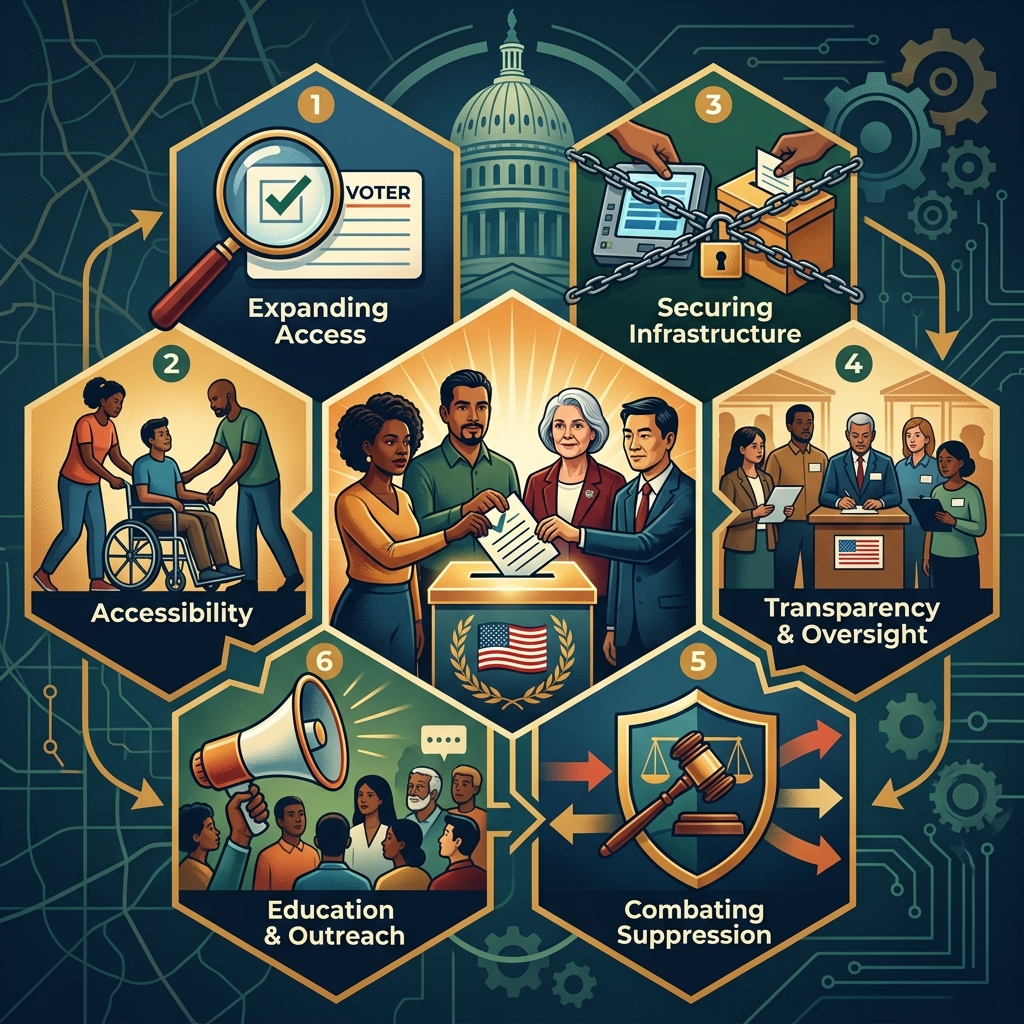
Participation in the democratic process is the foundational bedrock of any representative republic. While casting a ballot is the most visible expression of civic duty, true engagement requires a much deeper, year-round commitment to safeguarding the infrastructure of elections. The mechanics of voting in the United States are highly decentralized, meaning that the rules, deadlines, and resources available to citizens can vary wildly from one county to the next. In the 2024 presidential election, approximately 65.3% of the voting-age population cast a ballot, and 73.6% were officially registered to vote . While these statistics highlight a robust electorate, they also reveal that millions of eligible citizens remain completely disconnected from the democratic process due to administrative hurdles, lack of information, or systemic barriers.
Protecting the franchise is not merely a theoretical exercise; it demands proactive, continuous action from ordinary citizens. Whether you are a first-time voter navigating the complexities of local election boards or a seasoned activist looking to deepen your community impact, understanding the multifaceted nature of voting rights is essential. This comprehensive guide outlines six concrete, actionable strategies you can implement right now to fortify electoral integrity, expand access for your neighbors, and ensure that every eligible voice is heard at the ballot box.
1. Master the Complexities of Voter Registration and Deadlines
The first and most critical hurdle in the democratic process is the voter registration system. Unlike many other advanced democracies that automatically register eligible citizens, the United States places the burden of registration primarily on the individual. Because election administration is handled at the state and local levels, there is no single national standard for registration deadlines, identification requirements, or maintenance of voter rolls . This decentralized approach means that citizens must remain vigilant about their registration status.
Voter rolls are frequently updated and purged by local election officials to remove individuals who have moved, passed away, or become ineligible. Unfortunately, these routine maintenance processes can sometimes incorrectly sweep up active voters, leaving them disenfranchised on election day. To prevent this, it is imperative to check your registration status well in advance of any impending deadlines. If you have recently moved across town, changed your legal name, or simply haven’t voted in the last few election cycles, your status may be flagged as inactive .
Do not wait until October to verify your information. Visit your state’s official Secretary of State website or a verified federal resource to confirm that your current address matches your voter file perfectly. Furthermore, understanding your state’s specific deadlines is non-negotiable. Some jurisdictions allow same-day voter registration at the polling place, while others require citizens to be fully registered up to 30 days before an election. By mastering these timelines, you not only secure your own ballot but also position yourself to accurately guide friends and family through the bureaucratic maze.
2. Address the Critical Poll Worker Shortage in Your Community
Elections do not run themselves; they are powered by a massive, temporary workforce of dedicated citizen volunteers. Poll workers are the unsung heroes of democracy, responsible for everything from setting up voting machines and verifying identities to troubleshooting technical glitches and ensuring that polling locations remain accessible to individuals with disabilities. Despite their critical importance, the United States faces a chronic, severe shortage of these essential workers.
According to the U.S. Election Assistance Commission (EAC), while over 772,000 poll workers served during the 2024 general election, a staggering 48% of jurisdictions reported having a “very or somewhat difficult time” recruiting enough staff to adequately manage polling locations . When voting precincts are understaffed, the consequences are immediate and damaging: polling places are forced to consolidate, lines stretch for hours, and the potential for administrative errors skyrockets. Long lines disproportionately deter hourly workers, elderly citizens, and parents without childcare from casting their ballots.
Stepping up to serve as a poll worker is one of the most direct, impactful ways you can defend voting rights. By volunteering, you are literally holding the door open for your neighbors. Most jurisdictions offer paid stipends for election day service and provide mandatory training sessions to ensure you are fully prepared to handle the legal and technical aspects of the job. Younger citizens and bilingual individuals are especially needed to replace an aging poll worker demographic and to assist voters who may face language barriers. Reach out to your county board of elections today to submit an application and become the frontline defense for democratic access.
3. Track and Respond to Shifting State Election Laws
The legal landscape governing how, when, and where Americans can vote is in a constant state of flux. Following every major election cycle, state legislatures routinely introduce hundreds of bills designed to either restrict or expand voting access. Staying informed about these legislative shifts is crucial for anyone who cares about protecting the franchise, as these laws dictate the very rules of engagement for civic participation.
The pace of legislative change is staggering. Research from the Brennan Center for Justice indicates that as of October 2025, 16 states had enacted 29 restrictive voting laws, while simultaneously, 30 expansive voting laws were passed across the country . Restrictive measures often include shortening the window to apply for absentee ballots, limiting the number and availability of ballot drop boxes, or imposing stricter voter identification mandates. Conversely, expansive legislation might guarantee early voting days, streamline online registration, or restore voting rights to formerly incarcerated individuals.
To effectively protect voting access, you must understand the rules of the game as they currently stand in your specific state. Follow reputable, non-partisan legal organizations and local civic groups that track election legislation. If a proposed bill in your state threatens to unnecessarily complicate the voting process, utilize your voice by contacting your state representatives, submitting public comments, or attending legislative hearings. A well-informed electorate that actively monitors and responds to legislative changes is the strongest bulwark against systemic disenfranchisement.
4. Formulate an Airtight Personal Voting Strategy
Good intentions do not cast ballots; well-executed plans do. Relying on the assumption that you will simply find time to vote on a Tuesday in November is a risky strategy that leaves you vulnerable to unexpected life events, sudden illnesses, or localized administrative failures. To ensure your voice is counted, you must formulate a concrete, multi-step voting strategy well before election season begins.
Start by determining exactly which voting method best suits your lifestyle and risk tolerance. Will you be utilizing early in-person voting to avoid the election day rush? Are you planning to request a mail-in absentee ballot because of travel or work commitments? If you must vote on election day, what exact time will you go, and how will you get to your designated precinct? Mapping out these logistical details transforms voting from an abstract duty into a manageable task.
If you choose to vote by mail, pay microscopic attention to the instructions. Many states require specific signatures, witness attestations, or secrecy envelopes; failure to follow these rules to the letter can result in a rejected ballot. Track your ballot online if your state provides that service, ensuring it moves from “sent” to “received” to “counted.” By building an airtight personal strategy, you insulate yourself against the friction designed to lower voter turnout, guaranteeing your participation regardless of external circumstances.
5. Educate and Mobilize Your Immediate Network
Individual participation is necessary, but collective mobilization is where true political power resides. Once you have secured your own registration and formulated your voting plan, your next responsibility is to look outward. Misinformation regarding election dates, polling locations, and eligibility requirements spreads virally across social media, often targeting historically marginalized communities to suppress turnout.
You can serve as a trusted node of accurate civic information within your own social circles. Start small: ask your family members, friends, and coworkers if they have verified their registration status. Offer to help them navigate the official state portals to request an absentee ballot. Host a casual get-together to research down-ballot candidates, local judges, and complex ballot initiatives, transforming a solitary chore into a collaborative community event.
Combat misinformation by gently correcting false narratives when you encounter them online, always providing links directly to your local county election board or state secretary of state. When you amplify verified, official information, you neutralize the confusion that leads to voter apathy. Remember that people are significantly more likely to vote if they are personally encouraged by someone they know and trust. Your direct outreach can be the deciding factor for dozens of potential voters in your network.
6. Assert Your Legal Protections at the Ballot Box
Voter intimidation and administrative errors, while illegal, do occasionally occur at polling places. Knowing your legal rights is the ultimate shield against disenfranchisement on election day. Federal and state laws strictly prohibit any form of coercion, aggressive questioning, or intimidation targeting voters. If you experience or witness anyone attempting to block access to a polling location or harass voters in line, report it immediately to the local election supervisors and non-partisan voter protection hotlines.
Furthermore, you have specific administrative rights designed to ensure you can cast a ballot even if an issue arises. For example, if you arrive at your polling place and your name is mysteriously missing from the voter roll, or if you lack the specific identification required by your state, do not simply walk away. You have the federally protected right to request and cast a “provisional ballot.” Provisional ballots are set aside and counted once your eligibility can be officially verified by election officials after the polls close.
Another crucial protection is the right to remain in line. Across the United States, if you are physically standing in line at your designated polling location when the official closing time arrives, the law dictates that you must be allowed to cast your ballot. Do not let anyone tell you otherwise. Empowering yourself with this legal knowledge ensures that administrative hiccups or bad actors cannot separate you from your constitutional rights.
Comparing Common Voting Modalities
Understanding the different ways to cast your ballot can help you build the most resilient voting plan. Below is a comparison of standard voting methods available across various jurisdictions.
| Voting Method | Primary Advantages | Important Considerations |
|---|---|---|
| Early In-Person Voting | Reduces wait times; offers flexibility over several days or weeks; avoids election day emergencies. | Not universally available in all states; polling locations may differ from your usual election day precinct. |
| Mail-In / Absentee Voting | Maximum convenience; allows time to research down-ballot races at home; highly accessible. | Requires strict adherence to instruction details (signatures, witness rules); subject to postal delays. |
| Election Day Voting | Traditional experience; immediate confirmation of ballot casting via tabulator machines. | Highest risk of long lines; strict polling hours; vulnerable to unexpected personal schedule conflicts. |
Frequently Asked Questions (FAQ) About Voting Rights
Can I still vote if I have a prior criminal conviction?
Voting rights for individuals with past convictions vary drastically depending on the state in which you reside. In some states, individuals never lose their right to vote, even while incarcerated. In others, rights are automatically restored upon release, or after parole and probation are completed. A few states require a specific pardon or application process. Always check your state’s current legal statutes, as laws frequently change in this area.
What should I do if I am turned away at the polls?
Never leave the polling place without casting a ballot. If a poll worker claims you are not on the rolls or lack the proper ID, politely but firmly request a provisional ballot. By federal law, they are required to provide one. You can follow up with the election board in the days following the election to ensure your provisional ballot is verified and counted.
Do I have to vote for every single office on the ballot?
No. This is a common misconception known as “undervoting.” You are completely free to leave any race or ballot initiative blank if you do not feel informed enough to make a decision, or if you choose not to support any listed candidate. The votes you do cast for other offices will still be fully counted and valid.
Why does my polling location keep changing?
Local election boards occasionally change polling locations due to redistricting, budget constraints, ADA compliance issues, or the unavailability of a previous venue (like a school or church). This is why it is critical to verify your specific precinct address online 24 to 48 hours before you plan to vote, rather than assuming it will be in the same location as the last election.
References
- 2024 Presidential Election Voting and Registration Tables Now Available — U.S. Census Bureau. 2025-04-30. https://www.census.gov/newsroom/press-releases/2025/2024-presidential-election-voting-and-registration-tables.html
- Who can and cannot vote — USAGov. 2026-02-23. https://www.usa.gov/who-can-vote
- The EAC Calls on Americans to Become Poll Workers Ahead of 2026 Midterms on Help America Vote Day — U.S. Election Assistance Commission. 2026-01-27. https://www.eac.gov/news/2026/01/27/eac-calls-americans-become-poll-workers-ahead-2026-midterms-help-america-vote-day
- State Voting Laws Roundup: October 2025 — Brennan Center for Justice. 2025-10-21. https://www.brennancenter.org/our-work/research-reports/state-voting-laws-roundup-october-2025
Similar Articles








Read full bio of Sneha Tete


