
The Hidden World of Private Police Departments
How legal loopholes allow private entities to wield full police powers.
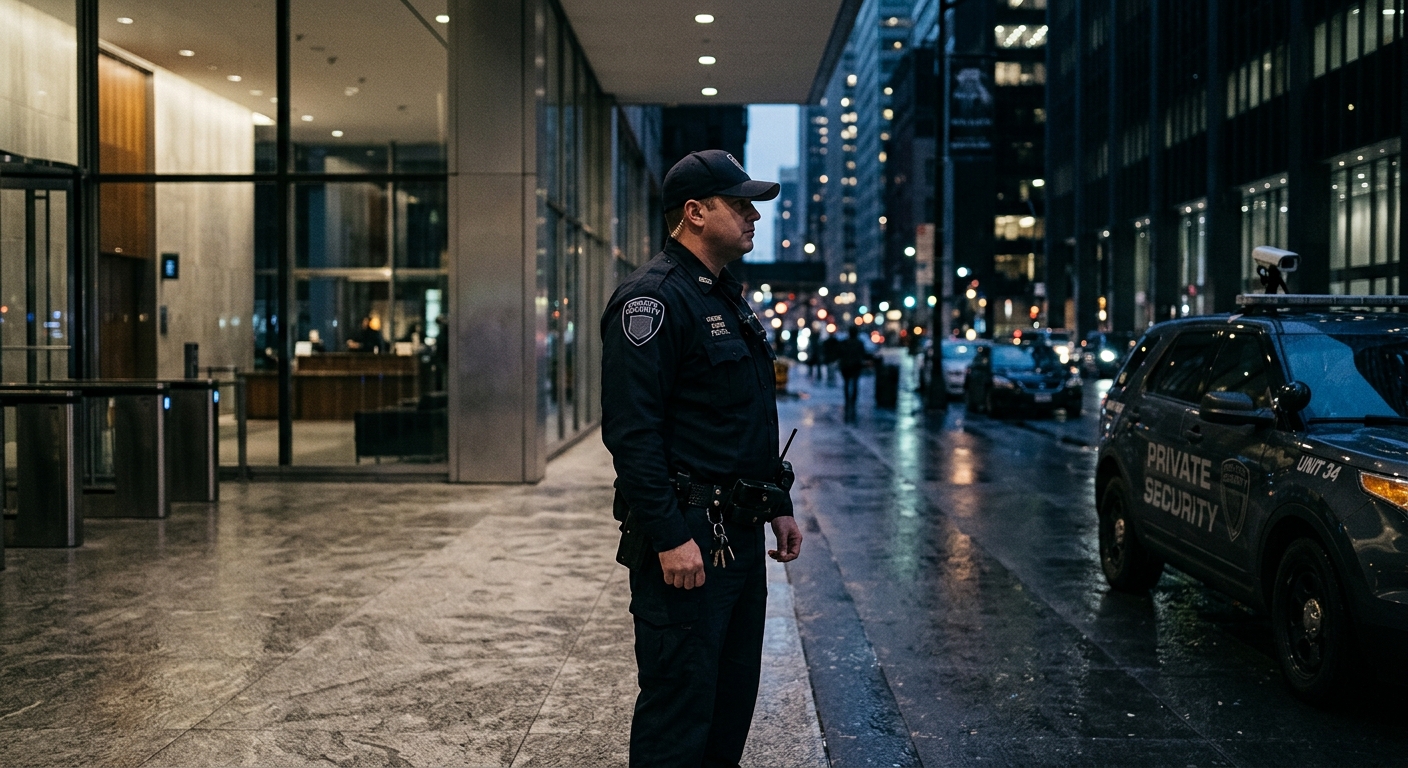
Imagine walking through a busy commercial district, a sprawling university campus, or a private housing development, and being stopped by a uniformed officer. The officer carries a firearm, a metal badge, and a pair of handcuffs. They possess the authority to detain you, search your belongings, and initiate a formal arrest. Most citizens intuitively assume that this individual is a public servant—accountable to a local mayor, bound by the strict transparency of public records laws, and constrained by the full weight of the United States Constitution.
However, across the United States, this assumption is frequently incorrect. The reality of modern law enforcement includes a vast, parallel shadow system: private police departments. Operating under obscure state statutes and “special jurisdiction” laws, private corporations, transit agencies, hospitals, and universities are frequently granted the legal authority to form their own sworn police forces. While they wear the trappings of state authority, their core allegiance often lies with the private boards and corporate entities that sign their paychecks.
This intersection of private interest and public power raises profound and alarming questions about civil liberties, democratic oversight, and the very definition of policing. The philosophical cornerstone of modern democratic governance is that the state retains a strict monopoly on the legitimate use of physical force. When that sovereign power is franchised out to non-governmental actors, it fragments justice and creates dangerous regulatory blind spots. Understanding how these private forces operate, the legal loopholes that allow them to exist, and the severe lack of accountability they enjoy is absolutely essential for protecting the civil rights of all citizens.
The Rise of the Corporate Force
In the United States, the concept of private security is not a novel phenomenon. During the late 19th and early 20th centuries, organizations like the Pinkerton National Detective Agency famously served as heavily armed private security for railroads and industrial titans, often wielding significantly more functional power than local county sheriffs. Today, the landscape of private enforcement has evolved from union-busting mercenaries into highly sophisticated corporate security apparatuses, but the numerical dominance of private forces remains absolutely staggering.
According to demographic analyses of the law enforcement labor market, there are well over 1.2 million individuals employed as private security guards and private police personnel in the United States. This vast private workforce effectively outnumbers traditional, taxpayer-funded public police officers by nearly a two-to-one margin. They patrol massive shopping malls, guard critical commercial infrastructure, secure private gated communities, and aggressively police private university campuses across the country.
Crucially, one must clearly distinguish between a standard private security guard and a sworn “special jurisdiction” private police officer. A standard security guard typically possesses no more legal authority than an ordinary civilian. They can observe, report, ask individuals to leave private property, and perhaps perform a basic citizen’s arrest if a felony is committed directly in their presence. Conversely, a commissioned private police officer possesses actual state-sanctioned law enforcement powers. Depending on the specific state jurisdiction, these sworn private officers can pull over vehicles on public roads, execute search warrants, and make formal, state-sanctioned arrests. Furthermore, they are authorized to use lethal force in the line of duty under the exact same legal standards applied to municipal police. Because they operate in a liminal space between public authority and private enterprise, these specialized forces present uniquely troubling challenges.
The Transit Authority Loophole
How exactly does a private, for-profit entity or a small non-profit organization acquire the extraordinary power to police the public? The answer lies in a fragmented patchwork of state laws that were originally designed decades ago to protect critical state infrastructure. Many state legislatures passed specialized statutes allowing railroads, public utility companies, and mass transit authorities to commission their own law enforcement personnel to protect remote assets. While originally intended for legitimate, large-scale logistical operations, these laws often feature dangerously loose definitions, creating massive loopholes that can be easily exploited by individuals with minimal oversight.
Perhaps no incident illustrates this regulatory blind spot more vividly than the bizarre and highly publicized case of the San Gabriel Valley Transit Authority in California during the mid-2000s. The saga began when a local auto shop owner traded several motorcycles for a bus and formed a tiny, privately run non-profit transit organization operating entirely out of a commercial garage. The organization’s publicly stated goal was entirely noble: providing transportation for the disabled and elderly in the community. However, the founder quickly discovered a fascinating and dangerous quirk in the state’s utility and transit regulations. Because his tiny organization was technically categorized as a transit agency, the state law seemingly permitted him to establish his own independent police department.
Without the stringent oversight, community vetting, or municipal city council approval required to launch a legitimate city police force, the “police department” was rapidly born. The founder formed the agency partially to bypass slow background check systems for his volunteers, but it quickly spiraled out of control. He began issuing official police badges, law enforcement credentials, and incredibly, even created an “anti-terrorism division.”
The absolute absurdity of the situation peaked when a rare, million-dollar Ferrari Enzo crashed at over 160 miles per hour on the Pacific Coast Highway in Malibu. The driver, a foreign businessman deeply involved in a web of international financial scandals, presented responding county sheriff deputies with an official badge, boldly claiming to be the deputy commissioner of the San Gabriel Valley Transit Authority Police’s anti-terrorism division. Shortly after the violent crash, two other individuals arrived at the scene flashing matching badges and falsely claiming to be from “homeland security.”
While this specific, highly sensationalized case eventually resulted in police raids, multiple arrests, and the permanent dismantling of the rogue transit police force, it served as a massive, glaring wake-up call to lawmakers across the nation. It graphically demonstrated that the bureaucratic barriers to acquiring state-sanctioned policing powers were alarmingly low, and the mechanisms for actively monitoring these privately formed agencies were virtually non-existent.
Civil Liberties in the Constitutional Gray Area
Beyond the sensational examples of blatant exploitation, the everyday existence of private police forces poses a severe, systemic threat to American civil liberties. The foundational framework of American civil rights—specifically the vital protections outlined in the Bill of Rights—was explicitly designed to protect citizens strictly from government overreach, not corporate malfeasance. The Fourth Amendment protects individuals against unreasonable searches and seizures conducted by the state. The Fifth Amendment protects citizens against self-incrimination when detained and questioned by state actors, forming the legal basis for the famous Miranda warnings.
But what exactly happens to your constitutional rights when the officer interrogating you or searching your vehicle works for a private corporation? Legal scholars refer to this massive loophole as the “state action doctrine” problem. United States courts have historically held that constitutional limits apply almost exclusively to government entities. If a public municipal police officer searches your backpack illegally without probable cause, the exclusionary rule mandates that a presiding judge must throw out the illegally obtained evidence in court. However, if a private security officer conducts that exact same illegal search, the Fourth Amendment may not directly apply unless the private officer is explicitly deemed an “instrument of the state” by the courts. This deep legal ambiguity leaves citizens highly vulnerable, potentially stripped of their fundamental constitutional rights simply because of the corporate logo printed on the arresting officer’s uniform.
Furthermore, the lack of transparency in private policing is nothing short of staggering. Public police departments are legally subject to the federal Freedom of Information Act (FOIA) and state-level open public records laws. Journalists, civil rights activists, and ordinary citizens can formally demand access to an agency’s use-of-force reports, internal affairs investigations, body camera footage, and departmental training policies. Private corporations and private universities, however, are fundamentally exempt from these vital transparency laws. A private university police force or a corporate transit police department can effectively shield its disciplinary records from public view indefinitely, hiding safely behind the legal veil of corporate privacy. This creates a deeply dangerous, opaque environment where severe officer misconduct, racial profiling, and excessive use of force can be quietly swept under the corporate rug without any public accountability or media scrutiny.
Accountability: Public vs. Private Policing Models
To truly understand the massive disparities in oversight, it is incredibly helpful to carefully examine the structural and legal differences between public and private policing models.
| Feature | Public Law Enforcement | Private / Special Jurisdiction Police |
|---|---|---|
| Employer | Taxpayer-funded government entity (city, county, or state level). | Private corporation, non-profit organization, or private university. |
| Primary Mission | Public safety, community policing, and general law enforcement. | Protecting the employing entity’s specific physical assets and financial interests. |
| Constitutional Limits | Strictly bound by the Fourth and Fifth Amendments. | Application is often blurred; depends heavily on the judicial interpretation of the state action doctrine. |
| Transparency | Subject to public records laws (FOIA) and routine media scrutiny. | Frequently completely exempt from open records requests and external independent audits. |
| Oversight Mechanism | Elected officials, mayors, and civilian review boards. | Corporate boards of directors, company shareholders, and civil tort litigation. |
The primary mechanism for holding private police forces accountable is the overarching threat of civil litigation—specifically, suing the parent company for torts like assault, battery, or false imprisonment. While heavy financial liability is undeniably a powerful deterrent for profit-driven corporations, it is a strictly reactive measure rather than a proactive safety mechanism. Relying on lawsuits requires a victim to first suffer significant harm, secure expensive legal representation, and navigate a hostile, multi-year judicial process against well-funded corporate defense lawyers. Civil litigation completely fails to provide the systemic, day-to-day community oversight that a civilian review board, a vigilant free press, or an elected city council provides for a standard public police department.
Additionally, operational training standards for private police vary wildly across different state jurisdictions. While some progressive states strictly mandate that any sworn officer—whether public or private—must successfully complete the exact same Peace Officer Standards and Training (POST) academy, other states possess dangerous loopholes. These legislative loopholes allow private officers to actively operate with significantly fewer hours of formal instruction in critical areas such as de-escalation techniques, constitutional law, implicit bias, and mental health crisis intervention.
Reforming the Private Police Landscape
Addressing the profound risks associated with private law enforcement requires immediate, aggressive legislative action and a fundamental rethinking of exactly how the state delegates its sovereign police powers. Legal experts, civil rights advocates, and government oversight committees have proposed several crucial reforms aimed at permanently closing the existing statutory loopholes and protecting the public at large:
- Closing the Statutory Loopholes: State legislatures must tightly redefine what legally constitutes an entity capable of forming a police force. Obscure historical laws allowing tiny non-profits or private transit companies to casually commission armed officers without strict municipal and state approval must be repealed entirely.
- Mandating Public Transparency: Any private organization that is granted the extraordinary, state-sanctioned power to arrest, detain, or use physical force against citizens must be legally compelled to comply fully with state and federal public records laws. If a private officer is acting under the color of state law, their actions, body camera footage, and internal disciplinary records should be exactly as accessible to the public as those of a municipal police officer.
- Universal Certification Standards: There must be absolutely no distinction in the basic training requirements for public and private police personnel. Every single individual wielding state police powers must pass rigorous, state-certified training academies and be fully subject to strict state decertification if they commit misconduct or violate a citizen’s civil rights.
- Independent Oversight: Private police forces should be legally required by state law to report all use-of-force incidents, formal arrests, and civilian complaints directly to a centralized state law enforcement oversight body. This ensures that corporate interests and profit margins do not successfully override public safety and constitutional rights.
Conclusion
The delegation of police power is arguably one of the most serious and consequential actions a democratic government can possibly take. When that immense power is casually handed over to private entities with minimal oversight, the foundational principles of justice and democratic accountability are deeply compromised. The bizarre historical story of a tiny transit authority creating a heavily armed anti-terrorism division out of an auto repair shop serves as a stark, unforgettable reminder of exactly what happens when regulatory frameworks fail the public. As the private security industry continues to aggressively expand its footprint across the nation, lawmakers must act decisively to ensure that the police badge remains a trusted, untarnished symbol of public service, fully bound by the United States Constitution and strictly accountable to the people it is meant to serve, rather than operating as a corporate asset shielding private interests.
Frequently Asked Questions
Can any private business create its own police force?
No. While standard unarmed or armed security guards can be hired by virtually anyone, formally commissioning a sworn police department requires specific state statutory authority. These specific laws usually restrict this extraordinary power to universities, hospitals, railroads, and transit authorities, though as noted, dangerous loopholes frequently exist.
Do private police officers have the right to arrest people?
Yes. If an individual is formally commissioned as a “special jurisdiction” or private police officer under state law, they possess full, state-sanctioned arrest powers. These powers are often functionally identical to those of public municipal police officers within their legally designated geographical jurisdiction.
Are private police subject to the Freedom of Information Act (FOIA)?
Generally, no. Private entities, including private universities and corporations, are usually completely exempt from federal FOIA and state open records laws. This wide legal exemption allows private police forces to shield their internal operating policies, use-of-force reports, and officer disciplinary records from vital public and media scrutiny.
Can you sue a private police officer for violating your civil rights?
Yes, but the legal pathway is incredibly complex. If the officer is considered to be acting “under color of state law” due to their commissioned status, they can potentially be sued for civil rights violations under federal statutes like 42 U.S.C. § 1983. Alternatively, victims can pursue traditional tort claims such as battery, assault, or false imprisonment directly against the officer and the parent corporation. However, overcoming massive corporate legal defenses and legally proving “state action” can make these lawsuits incredibly difficult, lengthy, and expensive.
References
- Private security, public protection — Duke University School of Law. 2025-11-04. https://law.duke.edu/news/private-security-public-protection/
- Managing the Boundary Between Public and Private Policing — Office of Justice Programs (OJP) / National Institute of Justice. 2013-05-13. This foundational government report provides essential historical and structural context regarding the civil liberty risks of private policing. https://www.ojp.gov/ncjrs/virtual-library/abstracts/managing-boundary-between-public-and-private-policing
- Cops for Hire: Reforming Regulation of Private Police in Washington State — Seattle University Law Review. 2018-04-14. This peer-reviewed legal analysis remains the authoritative breakdown of regulatory failures and Fourth Amendment issues surrounding private police forces. https://digitalcommons.law.seattleu.edu/sulr/vol41/iss2/5/
- Another Turn in Ferrari Saga — Los Angeles Times. 2006-03-08. This historical news report is uniquely authoritative as the primary factual record of the San Gabriel Valley Transit Authority scandal discussed as a central case study. https://www.latimes.com/archives/la-xpm-2006-mar-08-me-ferrari8-story.html
Similar Articles








Read full bio of medha deb




