
Private Gun Sales: Legal Rules Explained
Navigate the complexities of private firearm transactions under federal and state laws to stay compliant and avoid penalties.
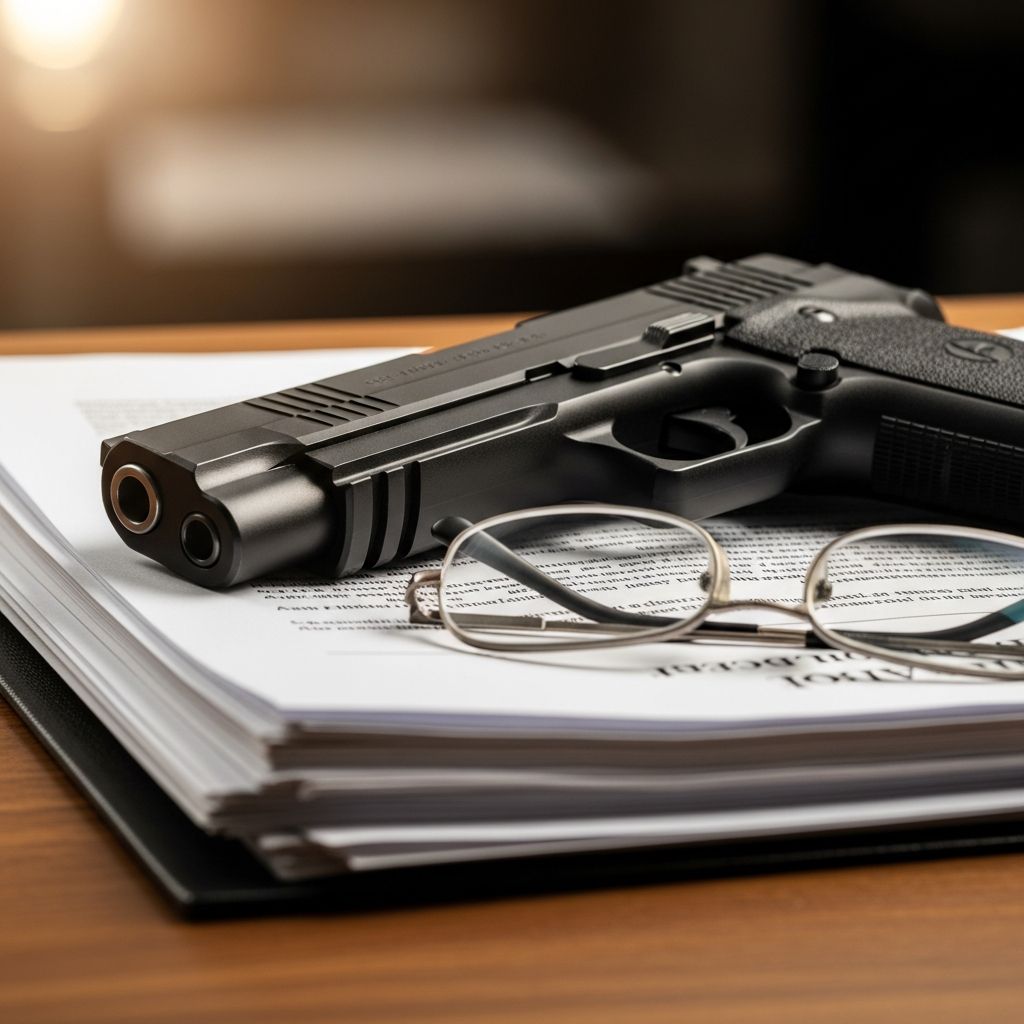
Private gun sales allow individuals without a federal firearms license to transfer firearms directly to other residents, bypassing some federal requirements imposed on licensed dealers. However, these transactions must adhere to strict federal prohibitions and varying state laws to remain lawful.
Defining Private Firearm Transactions
A private firearm sale occurs when a non-licensed individual transfers ownership of a gun from their personal collection to another person, typically without involving a commercial entity. Unlike sales by Federal Firearms License (FFL) holders, federal law does not mandate background checks for these transfers if both parties reside in the same state and the seller is not operating as a business. This distinction stems from the Gun Control Act of 1968, which targets commercial dealings while exempting occasional personal sales.
Key characteristics include infrequency—selling a few guns from one’s collection annually is generally permissible, but repeated sales for profit could classify the seller as “engaged in the business,” requiring an FFL. Platforms like online marketplaces or gun shows often facilitate these exchanges, though federal rules still apply universally.
Federal Framework Governing Transfers
Federal regulations set the baseline for all gun sales, prohibiting certain actions regardless of licensing status. Under 18 U.S.C. § 922, it is illegal to sell or transfer a firearm to individuals in prohibited categories, even in private deals. Prohibited persons include:
- Convicted felons or those under indictment for crimes punishable by over one year in prison.
- Fugitives from justice.
- Illegal drug users or addicts.
- Individuals adjudicated as mentally defective or committed to mental institutions.
- Undocumented immigrants or non-immigrant visa holders without hunting permits.
- Those under domestic violence restraining orders.
- Dishonorably discharged military personnel.
Sellers bear responsibility: if they know or have reasonable cause to believe the buyer is prohibited, the transfer constitutes a federal crime punishable by fines and imprisonment. No background check duty exists federally for private sellers, but ignorance is not a defense against willful violations.
Interstate sales pose another federal barrier. Private individuals cannot directly transfer firearms across state lines; the transaction must route through an FFL in the buyer’s state for a background check and compliance with local laws (18 U.S.C. § 922(a)(5)). Online purchases follow similar rules—firearms ship to an FFL, not directly to buyers.
State-Level Variations and Requirements
While federal law provides a minimum standard, 21 states plus the District of Columbia impose universal background checks, requiring private sales to go through an FFL. These states include California, New York, Colorado, and others, where even family transfers may need verification.
In contrast, 29 states permit private sales without checks for long guns, and fewer for handguns, creating a patchwork. The table below summarizes key differences:
| State Type | Background Check for Private Sales | Examples |
|---|---|---|
| Universal Check States (21 + DC) | Required for all firearms via FFL | CA, NY, IL, WA |
| Handgun-Only Check States | Required for handguns only | MD, NJ |
| No Additional Checks | Federal rules only | TX, FL, AZ |
Some states add waiting periods, registration, or bans on assault weapons, amplifying federal rules. For instance, in universal check states, private sellers deliver the gun to an FFL, who runs a National Instant Criminal Background Check System (NICS) query. Always verify local statutes, as violations can lead to state felony charges.
Navigating the Gun Show Exemption
Often called the “gun show loophole,” this refers to federal permission for private sales at gun shows without background checks, provided the seller is not an FFL. The term gained prominence post-1993 Brady Act, which mandated checks for dealer sales but exempted private ones.
Critics argue this enables trafficking, with Department of Justice reports noting unlicensed sellers as sources of crime guns. Proponents view it as protecting Second Amendment rights for non-commercial transfers. Regardless, federal prohibitions on sales to restricted persons apply at shows, and many states close the loophole via universal checks.
Risks of Unlicensed Dealing
Private sellers risk reclassification as unlicensed dealers if patterns suggest business activity: high-volume sales, advertising, or profit motive. The ATF defines “engaged in the business” by factors like repetition and intent to profit, per recent rules. Penalties include up to five years in prison and $250,000 fines (18 U.S.C. § 922(a)(1)(A)).
To stay legal:
- Limit to personal collection sales.
- Avoid public ads implying business.
- Document transactions privately.
- Route interstate or high-risk sales through FFLs.
Best Practices for Compliant Sales
To minimize liability, private sellers should:
Verify Buyer Eligibility: Ask direct questions about criminal history, drug use, and residency. Request ID and note any red flags.
Use FFL for Safety: Voluntary background checks via FFL provide records and peace of mind, especially in non-mandatory states.
Handle Online/Interstate Properly: Ship to buyer’s FFL; never mail directly.
Keep Records: Though not federally required, log sale details including date, buyer info, and serial number.
Consult Professionals: Attorneys specializing in firearms law can review specific scenarios.
Recent Developments and Enforcement Trends
ATF rules updated in 2024 tightened definitions of unlicensed dealing, targeting frequent online sellers. States continue expanding checks; by 2026, more may join universal mandates amid public safety debates. Enforcement focuses on straw purchases and trafficking links to private sales.
Frequently Asked Questions
Can I sell a gun to a family member privately?
In most states, yes, if no state law requires checks and the relative is not prohibited federally. Some states like California mandate FFL involvement even for gifts.
Do I need a background check for gun show private sales?
Federal law: No. But 21 states require it via FFL.
Is selling my personal handgun online legal?
You can list it, but transfer only in-state without FFL or ship to buyer’s FFL for interstate.
What if I accidentally sell to a felon?
If you knew or should have known, it’s a federal crime. Willful blindness doesn’t protect.
How do universal background check states work?
Seller takes gun to FFL, who checks buyer via NICS and completes transfer.
Conclusion: Stay Informed and Compliant
Private gun sales offer flexibility but demand vigilance against federal pitfalls and state rules. Research your jurisdiction, prioritize safety, and consider FFL facilitation to avoid legal troubles.
References
- Is it Legal to Buy or Sell a Gun Privately? — H&P Law. 2023. https://courtroomproven.com/blog/is-it-legal-to-buy-or-sell-a-gun-privately/
- Understanding Private Firearm Sales: Legal Limits For Non-FFL Holders — TPA Trial Attorneys. 2024. https://www.tpatrialattorneys.com/understanding-private-firearm-sales-legal-limits-for-non-ffl-holders/
- Private Gun Sales: Are They Legal? — Super Lawyers. 2023. https://www.superlawyers.com/resources/criminal-defense/private-gun-sales-are-they-legal/
- Gun show loophole — Wikipedia (citing US DOJ). 2024-10-15. https://en.wikipedia.org/wiki/Gun_show_loophole
- NEW ATF Rule: You Can Go To Jail For Selling A Gun — Gun Owners of America. 2024. https://gunnowners.org/new-atf-rule-you-can-go-to-jail-for-selling-a-gun-at-your-local-store-with-a-background-check/
- Interstate & Online Gun Sales — Giffords Law Center. 2025. https://giffords.org/lawcenter/gun-laws/policy-areas/background-checks/interstate-online-gun-sales/
- What a Difference a Law Makes: Online Gun Sales — Third Way. 2024. https://www.thirdway.org/report/what-a-difference-a-law-makes-online-gun-sales-in-states-with-and-without-background-checks
Similar Articles








Read full bio of medha deb




