
Primary vs. Secondary Leaseholders: Rights, Risks, and Key Differences
Understand how primary and secondary leaseholder status affects your legal rights, financial risks, and day-to-day control over a rental home.
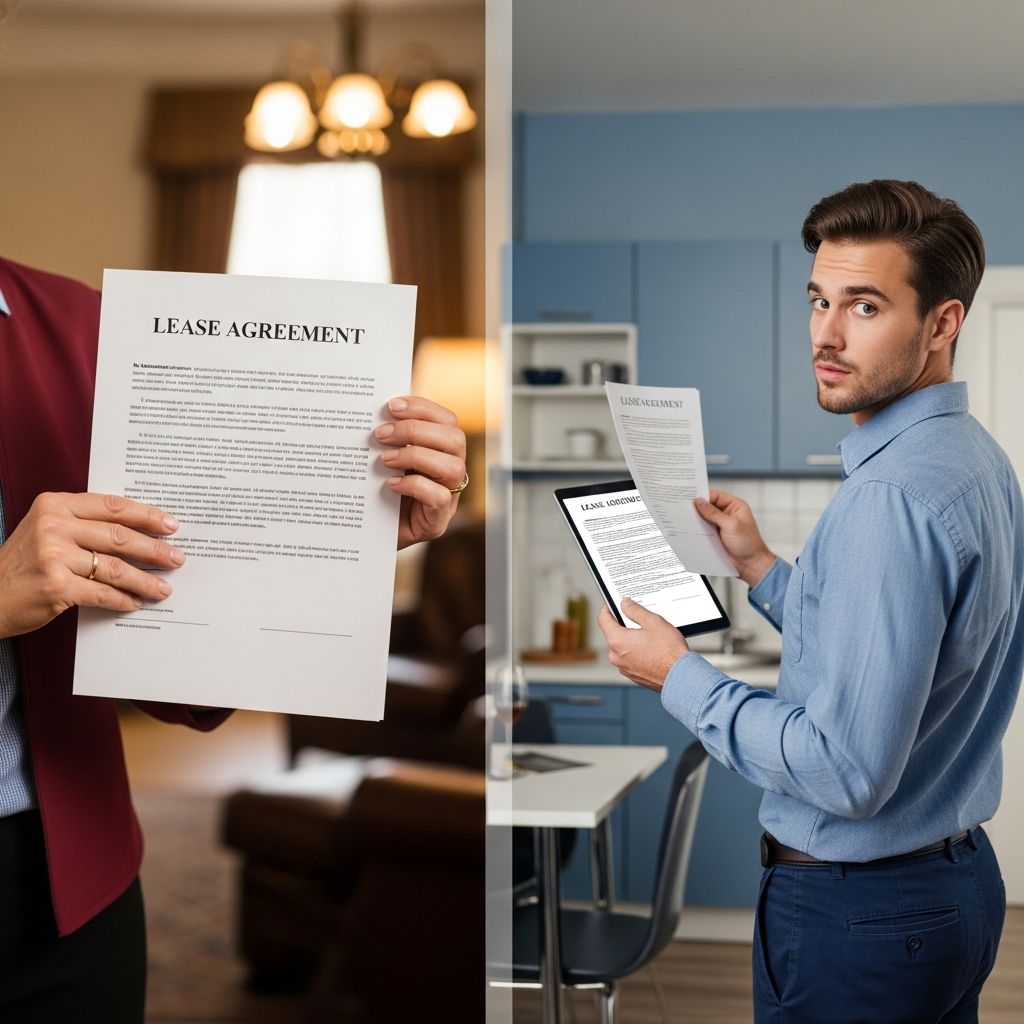
When more than one person is living in a rental home, the terms used in the lease matter a great deal. Labels such as primary leaseholder, secondary leaseholder, co-tenant, and subtenant each describe different sets of rights and responsibilities. Understanding these roles before you sign can prevent expensive disputes, surprise bills, and even eviction problems later on.
Core Definitions: Who Is Who on a Lease?
While exact terminology can vary by state and by lease, most arrangements involving more than one occupant fall into a handful of recognizable categories.
Primary Leaseholder (Master Tenant)
A primary leaseholder is the person whose name is on the main rental agreement with the landlord. This tenant has a direct legal relationship with the owner or property manager and is often called the master tenant.
- Signs the lease directly with the landlord.
- Is fully responsible for rent and for complying with lease terms.
- Controls who may legally live in the unit, subject to lease and local law.
- May be allowed to sublet to others, if the lease or law permits.
Secondary Leaseholder (Co-Tenant or Additional Tenant)
A secondary leaseholder is usually a person whose name is also listed on the lease with the landlord, sometimes referred to as a co-tenant or additional tenant.
- Signs the same lease as the primary leaseholder and has a direct contract with the landlord.
- Holds equal rights to occupy the rental during the lease term.
- Shares legal responsibility for rent and damages, often on a joint-and-several basis.
- May not have independent authority to sublet unless permitted under the lease.
Subtenant
A subtenant rents from a primary tenant, not from the landlord.
- Signs a sublease with the primary tenant, not the owner.
- Usually pays rent to the primary tenant, who then pays the landlord.
- Has no direct lease with the landlord unless local law creates limited rights.
- Relies on the primary tenant to maintain good standing with the landlord.
Occupant or Permitted Resident
An occupant or permitted resident lives in the rental but is not a party to the lease.
- Has permission to live in the unit but has no direct contract with the landlord.
- Must follow house rules but generally cannot be held liable for rent under the lease.
- May have to move out if the named tenants are evicted or the lease ends.
Key Legal Differences Between Primary and Secondary Leaseholders
From a legal perspective, the most important distinction is who has a direct, enforceable contract with the landlord and on what terms. The answers determine who can be sued for unpaid rent, who can be evicted, and who can negotiate changes to the tenancy.
| Issue | Primary Leaseholder | Secondary Leaseholder (Co-Tenant) |
|---|---|---|
| Direct contract with landlord | Yes, main lease party | Yes, on same lease if listed |
| Right to occupy the unit | Full right for lease term | Equal right for lease term if on lease |
| Responsibility for rent | Typically 100% responsible to landlord | Usually jointly and severally liable for 100% |
| Control over subletting | Often must request landlord consent; can sublet within legal limits | Dependent on lease terms; may need primary and landlord consent |
| Power to terminate lease | Can give required notice or negotiate end of lease, subject to law | May need to act jointly with other tenants, depending on lease language |
| Liability for damage | Can be held liable for all damage to the unit | Shares liability; landlord may pursue any leaseholder for full amount |
Financial Liability and “Joint and Several” Responsibility
Most multi-tenant residential leases create joint and several liability, a legal concept that allows the landlord to seek the entire amount owed from any one tenant listed on the lease.
- If three co-tenants sign the lease and one disappears, the others can be held responsible for the full rent, not just their “share.”
- The landlord does not have to chase each person equally; they may sue whichever tenant is easiest to collect from.
- As between themselves, tenants can later seek reimbursement, but that is a separate dispute from what the landlord is owed.
This structure is common in state landlord–tenant laws and is recognized in many lease forms and property codes.
Security Deposits and Who Gets Money Back
Security deposits are another source of confusion when primary and secondary leaseholders are involved.
- Landlords are usually required by state law to return the deposit to the tenant(s) named on the lease, minus lawful deductions.
- If only the primary tenant paid the deposit but both tenants are on the lease, the landlord may still return the entire deposit to any or all named tenants. How it is shared is often a private matter between them.
- Subtenants normally must look only to the primary tenant for return of deposits they paid to that primary tenant.
To avoid disputes, co-tenants commonly use a written side agreement that explains who contributed what and how any refund will be divided.
Control Over the Rental: Who Decides What?
Control over the unit—who can move in, when guests may stay, whether improvements can be made—depends heavily on whose name appears on the lease and how the lease is worded.
Primary Leaseholder’s Typical Powers
- Communicates directly with the landlord about repairs, rule changes, and renewals.
- Requests permission to add or remove occupants or subtenants, where allowed by law.
- May set the terms of any sublease, subject to local regulations and the main lease.
Secondary Leaseholder’s Influence
- As a co-tenant, usually has equal rights to use common areas and enjoy the home.
- Can often contact the landlord directly to request repairs or raise concerns.
- May need the primary leaseholder’s cooperation to change key terms such as rent or lease end date.
Risks for Tenants in Each Role
Both primary and secondary leaseholders face meaningful risks, especially if roommates fall out, move unexpectedly, or damage the property.
Risks for Primary Leaseholders
- Full liability to the landlord if a subtenant or roommate does not pay.
- Risk of eviction if any occupant’s behavior violates the lease or law.
- Possible legal exposure if they illegally overcharge subtenants where rent rules apply.
- Administrative burden of managing subleases, collecting room shares, and handling deposit splits.
Risks for Secondary Leaseholders and Co-Tenants
- Joint responsibility for the entire rent, not just “their half.”
- Credit and legal risk if other tenants default and the landlord sues or sends the debt to collections.
- Limited control over major lease decisions if the landlord negotiates mostly with the original primary tenant.
Risks for Subtenants
- May lose housing if the primary tenant is evicted, even when the subtenant has paid on time.
- Might have fewer protections because they lack a direct contract with the landlord, though some local laws afford partial rights.
- Could have difficulty recovering a deposit if the primary tenant disappears or refuses to pay.
Checklist Before Agreeing to Be a Primary or Secondary Leaseholder
Because state and local rules vary, renters should carefully review their documents and, when in doubt, seek legal advice or tenant counseling from reputable organizations such as legal aid societies or bar association referral services.
- Read the entire lease and identify everyone listed as “tenant,” “resident,” or “occupant.”
- Look for joint and several liability language describing how rent and damages are shared.
- Clarify the security deposit: who paid it, who will receive any refund, and how it will be split.
- Ask about subletting: whether it is allowed, what approvals are needed, and if there are rent caps for subtenants.
- Decide in writing how roommates will share costs, including utilities, internet, furniture, and cleaning.
- Check local tenant laws on issues such as notices, entry rights, and anti-retaliation protections.
Best Practices for Landlords Dealing with Multiple Leaseholders
Landlords also benefit from clearly assigning roles and responsibilities in the lease. Strong documentation can reduce disputes and support consistent enforcement.
- Name every adult occupant on the lease as a tenant if you expect them to share full responsibility for rent and damages.
- Define occupants vs. tenants so it is clear who has contractual liability and who does not.
- State the rules for roommate changes, including approval procedures and screening for replacements.
- Explain deposit handling in detail, especially when there are multiple tenants leaving at different times.
- Follow state landlord–tenant statutes on notices, repairs, and return of deposits to avoid legal penalties.
When to Seek Legal Advice
Because landlord–tenant law is heavily state-specific, key details such as notice periods, subletting rules, and maximum deposit amounts depend on where the property is located.
- If you are being added to a lease mid-term as a “secondary” tenant and the original tenant is leaving.
- If you plan to sublet rooms and charge more than a simple split of the rent.
- If a landlord is demanding full payment from you for a roommate’s unpaid share.
- If you are facing eviction because of another tenant’s conduct.
In those situations, consider consulting a local landlord–tenant attorney, a legal aid office, or a tenant advocacy clinic for guidance tailored to your jurisdiction.
Frequently Asked Questions (FAQs)
Q1: Does being a secondary leaseholder mean I am less responsible for rent?
No. If your name is on the lease as a tenant, you are typically just as responsible for the full rent as the primary leaseholder. Many leases create joint and several liability, allowing the landlord to seek the entire amount from any tenant named on the agreement.
Q2: Is a secondary leaseholder the same as a subtenant?
Not usually. A secondary leaseholder or co-tenant signs the lease directly with the landlord and shares equal rights and obligations. A subtenant signs a separate sublease with the primary tenant and has no direct rental contract with the landlord.
Q3: Can a primary leaseholder evict a secondary leaseholder or co-tenant?
In most cases, no. When both people are tenants under the same lease, the primary leaseholder cannot unilaterally evict a co-tenant. Only the landlord (or a court through formal eviction proceedings) can end a co-tenant’s right to occupy, subject to local law.
Q4: Who gets the security deposit back if there are multiple leaseholders?
Landlords generally return the deposit to the tenant or tenants named on the lease, after lawful deductions. If several tenants are on the lease, the landlord may issue one check, and it is up to the tenants to divide it according to their own agreement.
Q5: How can I protect myself before agreeing to be added as a secondary tenant?
Ask to see the full lease, confirm in writing what your rent share will be, clarify deposit arrangements, and request a written roommate agreement. If the original tenant is leaving, speak directly with the landlord so everyone understands whether you will become the sole tenant or one of several co-tenants.
References
- Master Tenant and Subtenant Rights and Responsibilities — Rocket Lawyer. 2024-01-10. https://www.rocketlawyer.com/real-estate/tenants/move-or-find-roommates/legal-guide/master-tenant-and-subtenant-rights-and-responsibilities
- What Is a Secondary Tenant? — CountyOffice.org (YouTube explanation). 2023-08-14. https://www.youtube.com/watch?v=gCdf1-VcUmE
- Tenant vs Occupant: Clarifying Leasehold Terms — Azibo. 2023-05-22. https://www.azibo.com/blog/tenant-vs-occupant
- Tenant vs. Occupant: Key Differences Landlords Should Know — RentSpree. 2023-07-05. https://www.rentspree.com/blog/what-is-the-difference-between-tenant-vs-occupant
- Texas Property Code, Chapter 92: Residential Tenancies — Texas Legislature. 2023-11-01. https://statutes.capitol.texas.gov/Docs/PR/htm/PR.92.htm
Similar Articles








Read full bio of Sneha Tete


