
A Practical Guide to Electronic Service of Legal Documents
Understand how electronic service works, when it is allowed, and how to use it safely and effectively in modern litigation.
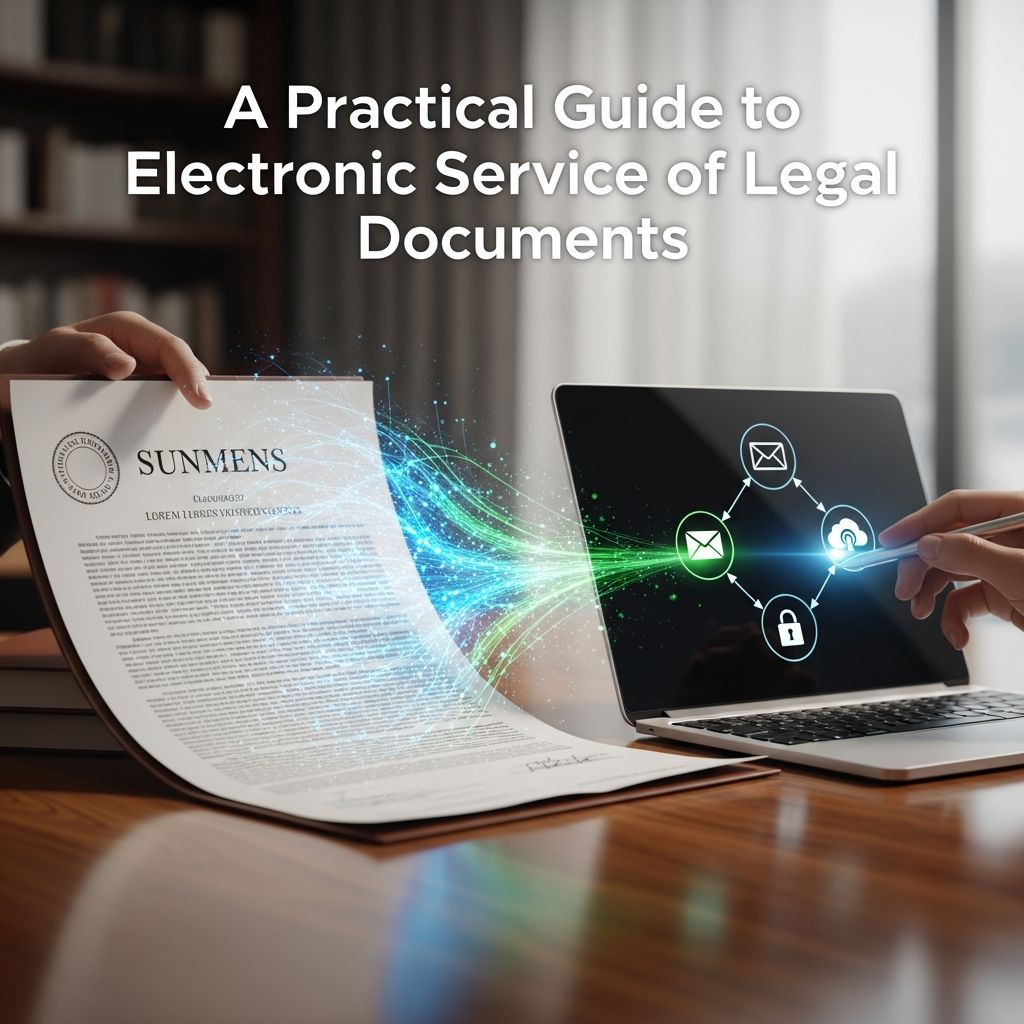
Electronic service (commonly called eService) has transformed how lawyers, courts, and litigants exchange documents. Instead of relying on paper, mail, or couriers, many jurisdictions now permit (and sometimes require) service by electronic means such as email or secure online platforms.
This guide explains what electronic service is, where the rules come from, how it works in practice, and what law firms need to know to use it efficiently and safely.
1. What Is Electronic Service?
Electronic service is the delivery of legal documents to other parties in a case using electronic methods rather than physical delivery. Typical methods include:
- Emailing documents to the recipient’s designated electronic address.
- Sending an electronic notification that documents are available on a secure service platform, usually via a hyperlink to a stored file.
- Other electronic channels expressly allowed by rule or court order, such as court-managed portals.
The core idea is that the receiving party gains timely, reliable access to the documents without the need for paper copies or in-person delivery.
2. Legal Foundations and Recognition
Electronic service is not merely a convenience; it is grounded in formal procedural rules at both federal and state levels in the United States and in many other jurisdictions.
2.1 Federal Rules of Civil Procedure
In U.S. federal court, Rule 5 of the Federal Rules of Civil Procedure governs service of pleadings and other papers. The rule allows service by electronic means so long as the person being served has consented in writing.
- Electronic service is one of several permitted methods of serving papers after the initial summons and complaint.
- Consent must be express; a party cannot be forced into eService without a clear agreement or rule-based requirement.
- Once properly agreed to, eService is treated as valid service under the rule, subject to any specific timing or technical provisions.
2.2 State Court Rules (Example: California)
Many states mirror the federal approach but include additional detail. California, for instance, has a specific rule addressing electronic service: California Rule of Court 2.251.
- Electronic service is permitted whenever service by mail, express mail, overnight delivery, or fax would otherwise be allowed.
- Service can be by direct electronic transmission (such as email) or by electronic notification that the document is available at a secure address.
- Consent can be given by filing and serving a notice of electronic service address or by registering for eFiling in courts where that registration implies consent.
Other jurisdictions adopt similar frameworks, often tying eService to participation in electronic filing systems or local court orders.
3. When Is Electronic Service Allowed?
Whether and how you can use electronic service depends on:
- The rules of the court where the case is pending.
- Any standing orders of the judge.
- The parties’ agreements and consent to electronic methods.
3.1 Initial Papers vs. Subsequent Documents
Most rules differentiate between serving initiating documents (such as the summons and complaint) and serving later filings.
| Type of Document | Typical Service Requirement | Common Role of eService |
|---|---|---|
| Summons, complaint, or petition | Often must be personally served or served by a traditional method specified in statute or rule. | Electronic service is usually not permitted as the first method unless specifically authorized by rule or court order. |
| Subsequent pleadings and motions | May be served by multiple methods, including electronic, if permitted by rule and consented to. | Electronic service is commonly used for most later filings and routine exchanges. |
| Discovery documents | Generally can be served by methods authorized for other papers, subject to discovery rules or orders. | Frequently exchanged using eService to manage volume and timing. |
3.2 Consent and Designation of Addresses
A recurring requirement in electronic service regimes is consent.
- Federal courts require written consent to electronic service under Rule 5.
- State rules often treat registration with an electronic filing system, or filing a document that lists an electronic service address, as consent to be served that way.
- Some specialized statutes, such as those involving criminal matters, may impose stricter consent requirements.
Practically, law firms should maintain a clear record of each party’s designated electronic address and the date consent was given.
4. How Electronic Service Works in Practice
The specific workflow varies by jurisdiction and by service provider, but most implementations share common steps.
4.1 Typical eService Workflow
- Prepare the document
Draft, finalize, and convert the document to an acceptable electronic format (often PDF). Ensure compliance with any technical formatting rules set by the court.
- Select service recipients
Identify all parties and attorneys who are entitled to receive the document. Confirm that you have correct electronic addresses or accounts for each.
- Send by email or upload to a platform
Depending on local practice, you may:
- Serve directly via email using the authorized addresses, or
- Upload the document to an electronic service platform that sends notifications and secure links.
- Receive delivery confirmation
A good system will provide time-stamped records indicating when the message or notification was sent, and often when documents were accessed.
- Prepare proof of service
Complete a proof of electronic service that includes required details (described below) and file or retain it as required by rule.
4.2 Proof of Electronic Service
Proof of service requirements mirror those for traditional methods, with added focus on electronic details. Rules such as California Rule of Court 2.251 specify that proof of electronic service should identify:
- The name and electronic address of the person making service.
- The name and electronic address of each person served.
- The date and time the document was transmitted or the electronic notification was sent.
- A description of the document served.
Some courts allow the proof itself to be electronically filed, while others may require a version suitable for inspection in the event of dispute.
5. Key Advantages of Electronic Service
Adoption of eService is driven by several operational and strategic benefits for law firms, courts, and litigants.
5.1 Speed and Efficiency
- Instant transmission: Documents can be delivered almost immediately, eliminating postal delays and courier schedules.
- Shorter turnaround times: Faster service supports tighter briefing schedules and more agile litigation strategies.
- Integrated with eFiling: In jurisdictions where eFiling is available, service can often occur immediately after filing through the same interface.
5.2 Cost Reduction
- Lower spending on printing, copying, and physical storage of large volumes of paper.
- Reduced reliance on postage, overnight delivery, and in-person messengers for routine filings.
- Less administrative time spent tracking physical packages and updating mailing lists.
5.3 Convenience and Flexibility
- Lawyers and staff can serve documents from any location with internet access, supporting remote and hybrid work arrangements.
- Multiple team members may access the same electronic repository to review filings, improving collaboration.
- Clients can be updated efficiently when appropriate copies or notifications are shared electronically.
5.4 Traceability and Compliance
- Electronic systems can maintain detailed logs showing what was served, when, and to whom, which helps resolve disputes about notice.
- Automated reminders and notifications help ensure compliance with procedural deadlines.
- Centralized electronic records simplify audits and quality control within the firm.
5.5 Environmental and Space Savings
- Reducing paper use lowers the environmental footprint of litigation, aligning with sustainability initiatives.
- Less physical storage is required, freeing office space and reducing records-management costs.
6. Risks, Limitations, and Common Pitfalls
Despite its benefits, electronic service is not risk-free. Missteps can jeopardize deadlines and raise questions about due process.
6.1 Technical Failures
- Emails can be filtered as spam, blocked by security settings, or rejected due to attachment size limits.
- System outages or connectivity problems can temporarily prevent sending or receiving documents.
- Corrupted files or incompatible formats may render documents unreadable for the recipient.
6.2 Incomplete or Defective Consent
- Serving a party electronically without proper consent, where consent is required, may result in service being deemed invalid.
- Changing email addresses or account details without updating the official service list can produce missed notifications.
6.3 Confidentiality and Security Concerns
- Unencrypted email is susceptible to interception, misdirection, or unauthorized access.
- Using personal or unsecured devices for eService may expose client data to additional risks.
- Rules of professional conduct typically require reasonable steps to safeguard confidential information, which may include using secure platforms or encryption when appropriate.
6.4 Jurisdictional Variability
- What is permissible in one jurisdiction may be prohibited or treated differently in another.
- Local rules, standing orders, and practice guidelines can change, making ongoing compliance monitoring essential.
7. Best Practices for Law Firms Implementing eService
To gain the advantages of electronic service while managing risk, law firms should adopt structured policies and workflows.
7.1 Establish a Firm-Wide eService Policy
- Identify which courts and matter types the firm will handle using electronic service.
- Document procedures for obtaining and documenting consent from other parties.
- Define standard electronic addresses to be used for service (e.g., role-based litigation inboxes).
7.2 Use Reliable Platforms and Tools
- Where available, rely on certified or court-approved electronic filing and service systems to take advantage of built-in tracking and compliance features.
- Consider secure document portals or encrypted email solutions for sensitive materials.
- Implement calendar and reminder integrations that link service events with deadlines.
7.3 Maintain Accurate Service Lists
- Designate a responsible staff member or team to maintain up-to-date electronic service lists for all active matters.
- Immediately record any changes in opposing counsel, contact information, or consent status.
- Review service lists before every significant filing to ensure accuracy.
7.4 Document Everything
- Retain copies of all proofs of electronic service in both the case file and any central document management system.
- Keep system-generated logs and delivery receipts, particularly for high-stakes filings and deadlines.
- When feasible, export or back up service records from third-party platforms in case of vendor changes.
7.5 Train Lawyers and Staff
- Provide regular training on relevant rules (such as Federal Rule 5 and state analogs) and on any platform the firm uses.
- Conduct simulations of critical deadlines to reinforce workflows and identify weaknesses.
- Update training content when rules, systems, or providers change.
8. Frequently Asked Questions (FAQs)
Q1: Is electronic service valid in all courts?
Electronic service is widely recognized but not universally permitted in the same way. Many U.S. federal and state courts allow service by electronic means for documents other than the initial summons and complaint, provided consent requirements and rule-based conditions are met. Practitioners must consult the specific rules and local orders governing the case.
Q2: Do I still need to personally serve the summons and complaint?
In most jurisdictions, the first service of process—such as a summons and complaint—must be accomplished through personal service or another method authorized by statute or rule. Electronic service is generally used for subsequent pleadings and motions unless a court order or specific rule allows it for initial service.
Q3: How is the timing of service calculated when using eService?
Timing rules for electronic service vary. Some jurisdictions treat electronic service as complete upon transmission, while others treat it similarly to service by mail by adding extra days to response deadlines. Always review the applicable rule set and any case-specific scheduling orders before calculating due dates.
Q4: What happens if the recipient says they never received the email?
If electronic service was made in accordance with the governing rules and to a properly designated address, service may still be considered effective even if the message was filtered or overlooked. However, to avoid disputes and sanctions, firms should use systems with delivery tracking, verify addresses regularly, and consider follow-up communication when serving time-sensitive materials.
Q5: Can I withdraw consent to electronic service?
Many rules that allow consent to electronic service also permit parties to change or withdraw that consent, usually by serving notice and updating contact information on the record. The exact procedure depends on local rules, and parties should provide clear, written notice of any change to avoid confusion.
References
- Rule 5. Serving and Filing Pleadings and Other Papers — Legal Information Institute, Cornell Law School. 2022-12-01. https://www.law.cornell.edu/rules/frcp/rule_5
- Rule 2.251. Electronic service — Judicial Council of California. 2023-01-01. https://courts.ca.gov/cms/rules/index/two/rule2_251
- What is electronic service (eService)? — One Legal. 2024-01-15. https://www.onelegal.com/blog/eservice-what-is-it-and-what-do-you-need-to-know/
- Electronic Service (eService) — Clio Legal Dictionary. 2023-06-10. https://www.clio.com/resources/legal-dictionary/electronic-service/
- Speed Up Your Cases With Electronic Service — 360 Legal, Inc. 2023-03-21. https://360legal.net/blog/speed-up-your-cases-with-electronic-service/
Similar Articles








Read full bio of Sneha Tete


