
Practical Classroom Activities for Youth Financial Learning
Engaging, ready-to-use ideas to help young people build real-world money skills, confidence, and healthy financial habits.
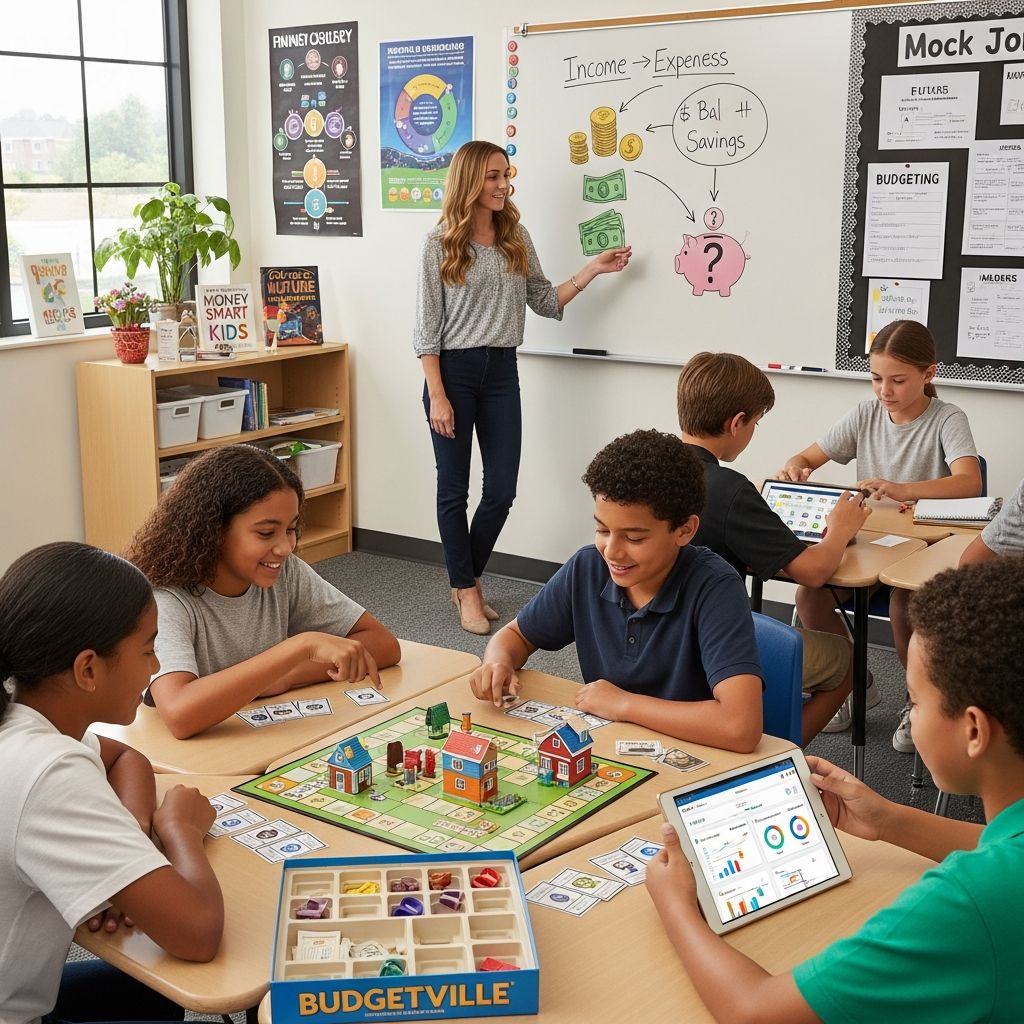
Financial education gives young people the tools to navigate earning, spending, saving, and borrowing throughout their lives. Research from the Consumer Financial Protection Bureau (CFPB) and others shows that well-designed, age-appropriate activities can help students build both knowledge and positive money habits that persist into adulthood.
This guide offers a set of classroom-friendly ideas and structures that educators can adapt for different grade levels. It is inspired by existing youth financial education resources but presents completely new explanations, examples, and activity designs.
Why Hands-On Financial Activities Matter
Young people often learn about money by watching adults or from trial and error, not from structured lessons. Classroom activities can fill these gaps by:
- Making abstract ideas concrete: Students practice with realistic examples instead of memorizing definitions.
- Building habits, not just facts: Repeated activities help students form routines like tracking spending or setting savings goals.
- Connecting school to real life: Students see how choices today affect options for education, work, and future goals.
- Providing a safe place to make mistakes: Simulations let students learn consequences without risking real money.
Core Themes to Cover with Youth
Many national and state standards organize financial education around a small set of recurring themes.
| Theme | What Students Learn | Typical Topics |
|---|---|---|
| Earning & Income | How people get paid and how work connects to money and choices. | Jobs, paychecks, taxes, benefits, careers. |
| Saving & Investing | How setting money aside helps reach short- and long-term goals. | Savings accounts, interest, emergency funds, basic investing. |
| Spending & Budgeting | How to plan and track where money goes. | Needs vs. wants, budgets, trade-offs, price comparison. |
| Borrowing & Credit | How loans and credit can help or hurt your finances. | Credit cards, student loans, interest, credit reports, debt. |
| Risk & Protection | How to manage financial risk and avoid scams. | Insurance, fraud, scams, consumer protections. |
Design Principles for Effective Youth Money Activities
Before choosing or adapting any specific activity, consider these evidence-based principles drawn from education research and financial literacy programs.
- Age-appropriate content: Match tasks to developmental stages (for example, simple choices in elementary, complex trade-offs and credit in high school).
- Progress over time: Revisit core concepts in more depth as students grow, instead of one-time exposure.
- Realistic scenarios: Use examples tied to students’ lives—allowances, part-time jobs, mobile phones, or college decisions.
- Active learning: Favor simulations, role plays, and decision-making over lectures alone.
- Opportunities to reflect: Have students write or talk about what they would do differently in real life based on what they learned.
Activity Ideas by Grade Band
The ideas below are flexible outlines. You can adjust timing, materials, and complexity to fit your setting.
1. Elementary School: Building Early Habits and Vocabulary
At younger ages, focus on simple decisions, routines, and language around money. According to national curriculum frameworks, early financial education should emphasize distinguishing needs from wants, understanding that money is limited, and recognizing the value of saving for future goals.
Activity: The Goal Jar Challenge
Purpose: Help students connect saving with personal goals.
- Step 1 – Introduce goals: Ask students to think of something realistic they might want in the next few months (for example, a book, game, or art supplies).
- Step 2 – Estimate cost: Have students guess the cost and discuss how prices differ for small vs. big goals.
- Step 3 – Create “jars” on paper: Students draw three labeled circles or boxes: Spend Now, Save for Goal, and Share/Give.
- Step 4 – Practice decisions: Give each student a set amount of play money and a list of pretend situations (birthday money, money from small chores). Students decide how much to put in each jar for each situation.
- Step 5 – Reflect: Ask what would happen to their goal if they put all money into “Spend Now.” Discuss patience and trade-offs.
Activity: Needs vs. Wants Sorting Game
Purpose: Build the habit of thinking before spending.
- Materials: Pictures or word cards showing items such as food, toys, rent, electricity, candy, medicine, bus fare.
- Task: Have students sort items into need, want, or depends. Encourage discussion where there is disagreement.
- Extension: Ask students to design one new “need” card and one “want” card from their own life and explain why.
2. Middle School: Planning, Trade-Offs, and Consumer Skills
Middle school students can handle more complex choices and are beginning to manage small amounts of money on their own. Curriculum guidelines for this age emphasize planning, comparison shopping, and understanding basic financial products like bank accounts.
Activity: One-Week Spending Snapshot
Purpose: Increase awareness of how small, frequent purchases add up.
- Step 1 – Explain tracking: Discuss why people track spending and how tools like apps or notebooks can help keep a budget on track.
- Step 2 – Simulated log: Provide students with a fictional profile (for example, a teenager who gets a weekly allowance and does occasional chores) and a list of possible expenses.
- Step 3 – Daily entries: Over several class days, present short scenarios (buying snacks, saving for a field trip, transportation). Students record choices in the log and update the remaining balance.
- Step 4 – Analyze: At the end, students total how much went to needs, wants, and savings. They write a short paragraph on what they would change and why.
Activity: Comparing Payment Options
Purpose: Introduce different ways to pay and their pros and cons.
- Discussion: Ask students what payment methods they know (cash, debit card, credit card, mobile payments, online payments).
- Group task: Assign each group one method. They research benefits, risks, and situations where it is most useful using reliable consumer resources (such as federal banking or consumer protection websites).
- Poster or slide: Groups create a simple visual explaining how their method works and one tip for staying safe (for example, protecting PINs, reviewing statements).
3. High School: Complex Decisions, Credit, and the Future
High school is a critical time to learn about income, credit, major purchases, and education or career pathways. Organizations such as the Federal Reserve and CFPB recommend that high school financial education include decision-making tools for budgeting, credit, and postsecondary choices.
Activity: Life After Graduation Budget Lab
Purpose: Connect career choices, income, and living costs.
- Step 1 – Pick a role: Students choose a realistic path for the first year after high school (full-time work, apprenticeship, community college, or four-year college).
- Step 2 – Estimate income: Using official sources such as the U.S. Bureau of Labor Statistics or state workforce data, students look up starting wages for a relevant job.
- Step 3 – List expenses: Provide a worksheet with categories like housing, transportation, food, phone, insurance, student loan payment, and savings.
- Step 4 – Build a budget: Students allocate monthly income across categories. If expenses exceed income, they must adjust categories or reconsider their path.
- Step 5 – Reflection: Students write about what surprised them and one action they can take now (such as exploring scholarships or learning about financial aid).
Activity: Understanding Credit and Interest
Purpose: Show how credit can be helpful or harmful depending on how it is used.
- Concept mini-lesson: Review credit basics—credit reports, scores, interest, minimum payments, and the idea of borrowing against future income.
- Scenario comparison: Give students two sample credit card statements with different interest rates and balances. Ask them to calculate how much interest one person will pay if they only make minimum payments versus larger payments.
- Group discussion: Have students list strategies for using credit responsibly (for example, paying on time, keeping balances low, checking statements for errors).
Cross-Cutting Skill: Making Informed Financial Choices
Financial literacy is not just about content; it is also about decision-making skills. National frameworks highlight setting goals, gathering information, weighing options, and planning next steps as essential competencies.
Decision-Making Framework Students Can Apply
Teach a simple, repeatable process students can use whenever they face a money choice:
- Define the decision: What exactly do I need to decide?
- Clarify the goal: What outcome do I want, both now and later?
- List options: What different choices do I have?
- Weigh pros and cons: How does each option affect my goals, costs, and risks?
- Choose and plan: Which option fits best, and what steps will I take?
- Review results: Did it work out as expected? What would I do differently next time?
Integrating Financial Education Across Subjects
Financial concepts can be woven into many different classes, not only economics or personal finance courses. Education agencies encourage cross-curricular approaches so that students see how money connects to math, language arts, social studies, and even science.
- Math: Use percentage and ratio problems based on discounts, interest, and taxes.
- Language arts: Have students write persuasive essays on topics like saving versus spending or renting versus owning.
- Social studies: Examine how economic policies or historical events affected family finances and opportunities.
- Technology: Evaluate financial apps, online banking features, or digital payment tools, discussing security and privacy.
Tips for Adapting Activities to Your Classroom
No single lesson works for every group. Consider these strategies when tailoring financial activities:
- Start with students’ realities: Ask about their experiences—allowances, part-time work, saving for something important—and build from there.
- Respect diverse backgrounds: Recognize that students may have very different experiences with money, including financial stress at home.
- Use local data: When possible, include local wages, prices, and community resources (libraries, credit unions, workforce programs).
- Connect to trusted resources: Show students where to find reliable information on consumer protections, student loans, or bank accounts from official websites.
- Revisit key ideas: Return to saving, budgeting, and decision-making in multiple units and grades to reinforce learning;
Frequently Asked Questions (FAQs)
How early should financial education begin?
Many frameworks suggest that basic financial ideas can be introduced in the early elementary years, using simple concepts like saving for a small goal and recognizing that money is limited. Activities should be short, concrete, and connected to daily life.
Do I need a stand-alone personal finance course?
Dedicated courses can be highly effective, especially at the high school level, but they are not the only option. You can also embed financial lessons into math, social studies, advisory periods, or after-school programs.
How much time should I spend on financial education?
Research on curricula suggests that multiple sessions over several weeks or months are more effective than a single one-time lesson. Even short units, if repeated across grade levels, can build strong foundations.
What if I am not a finance expert?
You do not need to be a specialist to guide students in basic money skills. Many public agencies and nonprofit organizations provide free, classroom-ready materials aligned with standards, along with background notes to support educators.
How can I keep students engaged with a topic like money?
Use scenarios that mirror students’ lives, allow them to make choices with realistic consequences, and give them chances to talk, debate, and reflect. Simulations, role plays, and projects such as creating a budget or planning a purchase usually feel more relevant than lectures alone.
References
- Youth Financial Education — Consumer Financial Protection Bureau. 2023-05-01. https://www.consumerfinance.gov/consumer-tools/educator-tools/youth-financial-education/
- Youth Financial Education Curriculum Review — Consumer Financial Protection Bureau. 2015-09-01. https://files.consumerfinance.gov/f/201509_cfpb_youth-financialeducation-curriculum-review.pdf
- Financial Literacy Curriculum — Federal Reserve Bank of Cleveland. 2022-03-15. https://www.clevelandfed.org/financial-literacy-curriculum
- Money Smart for Young People — Federal Deposit Insurance Corporation (FDIC). 2022-10-01. https://www.fdic.gov/consumer-resource-center/money-smart-young-people
- Financial Literacy for Youth — The Annie E. Casey Foundation. 2021-06-10. https://www.aecf.org/blog/financial-literacy-for-youth
- Financial Education Resources — Office of Superintendent of Public Instruction, Washington State. 2023-02-20. https://ospi.k12.wa.us/student-success/resources-subject-area/financial-education/financial-education-resources
Similar Articles








Read full bio of Sneha Tete


