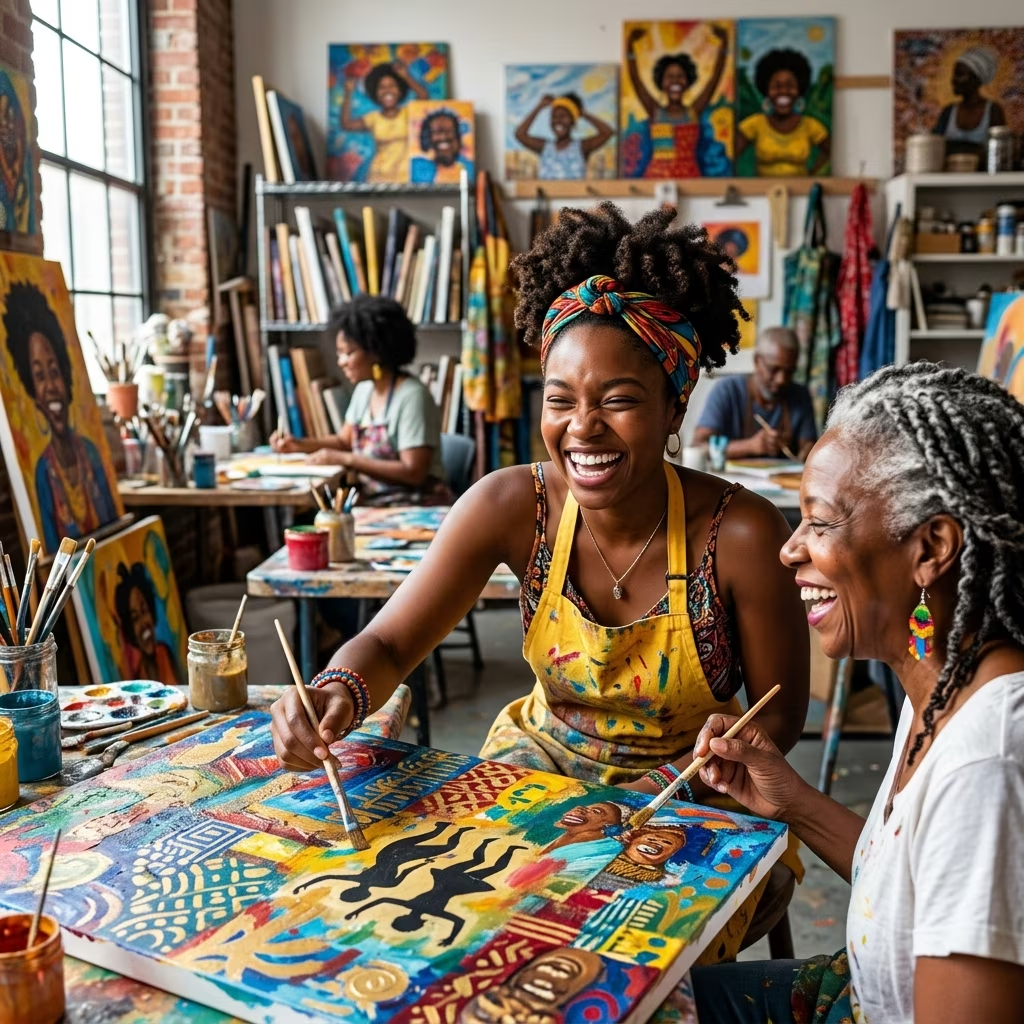
The Vital Role of Joy in Modern Advocacy
The intersection of racial justice and the visual arts has long been a fertile ground for societal transformation. However, a profoundly impactful movement has taken center stage in recent years, deliberately shifting the narrative lens from systemic trauma to a vibrant celebration of existence: the embodiment of Black joy. While the realities of oppression, discrimination, and inequality remain stark and demand unwavering attention, an exclusive focus on these elements results in a fragmented and often exhausting portrayal of the African American experience. Artists, cultural strategists, and sociologists increasingly recognize that painting a holistic picture of life means bringing everyday moments of happiness, rest, and community to the forefront.
Black joy is not merely a fleeting emotion; it is an enduring act of defiance against systems historically designed to marginalize and diminish. By deliberately choosing to depict triumph, laughter, and tranquility, contemporary visual creators are completely redefining what it means to advocate for equity. They are weaving a narrative where humanity is not defined solely by its struggles but is equally illuminated by its vibrant, unbreakable spirit. This shift explores the deep cultural, sociological, and psychological significance of Black joy in visual art and its profound role in the ongoing pursuit of social and racial justice.
Understanding the Root of Black Joy
To fully comprehend the magnitude of Black joy in contemporary art, one must first dismantle the misconception that joy is a passive, apolitical, or superficial state of being. Within the context of racial equity, Black joy is a deeply rooted, highly intentional practice of resilience. Educational theorists describe it as the conscious celebration of reclaiming one’s identity and recognizing that coming from a lineage of survivors instills both grit and an undeniable capacity to thrive.
Historically, mainstream media and historical curricula have disproportionately emphasized Black suffering, inadvertently framing the Black experience almost exclusively around trauma, enslavement, and civil rights struggles. This relentless inundation of distress can lead to “Racial Battle Fatigue,” a clinical and sociological framework used to describe the severe emotional, psychological, and physical toll that systemic racism takes on individuals. In response to this fatigue, the assertion of joy becomes a vital survival mechanism. It is an internal and external shift—a refusal to let white supremacy or systemic prejudice dictate the emotional boundaries of an entire demographic.
When artists visualize Black joy, they are actively pushing back against the erasure of their community’s humanity. They highlight that despite the architectural structures of oppression, Black people have always fallen in love, raised families, cultivated gardens, laughed freely, and celebrated their milestones. Recognizing this duality—the presence of profound, quiet happiness existing right alongside the fight for justice—is absolutely essential for any comprehensive understanding of modern civil rights movements.
Art as a Vessel for Social Change
Visual art has always served as a mirror reflecting society’s most pressing issues, but it also acts as a blueprint for the future we wish to build. In the realm of racial justice, art is a powerful vessel that can circumvent the intellectual defenses that often block difficult conversations, speaking directly to the viewer’s emotional core. For decades, protest art was synonymous with images of raised fists, crowded marches, and visceral depictions of state violence. While these images were and remain crucial for mobilizing outrage and demanding immediate legislative action, they represent only one side of the coin.
Today’s contemporary artists are expanding the visual lexicon of resistance. By showcasing Black individuals in moments of leisure, creativity, and unapologetic rest, creators are challenging the commodification of Black pain. This artistic pivot asks a critical, forward-looking question: If the ultimate goal of the racial justice movement is equity, freedom, and the right to live peacefully, shouldn’t we visualize what that freedom actually looks like? Art that centers on joy provides that necessary visualization. It offers a glimpse into the liberated state of being that activists are fighting so hard to achieve.
Moreover, the integration of Black joy in galleries, public murals, and digital spaces serves to democratize access to positive representation. When a young person sees an expansive, colorful mural depicting figures that look like them engaged in peaceful, joyous activities, it alters their internal landscape. It validates their fundamental right to experience the world without the constant weight of societal expectations or racialized trauma. This form of visual activism is subversive precisely because it dares to envision a world where Black people are allowed to simply exist.
Dimensions of Joy in Contemporary Art
The visualization of Black joy in art is characterized by specific thematic and stylistic choices that diverge significantly from traditional protest art. These dimensions are highly intentional, layered, and deeply communicative:
- Vibrant Color Palettes: Artists often utilize rich, saturated colors to convey warmth, energy, and vitality. Bright yellows, deep blues, and radiant oranges replace the monochromatic or somber tones typically associated with struggle, directly symbolizing the vibrant pulse of the community.
- The Aesthetics of Rest: Depicting figures sleeping, lounging, reading, or gazing peacefully is a radical departure from the hyper-vigilant or labor-centric portrayals of Black bodies. It reclaims the right to rest as a fundamental human entitlement rather than a luxury.
- Celebration of Natural Beauty: Much of this art emphasizes natural hair textures, varied skin tones, and diverse body types, actively pushing back against Eurocentric beauty standards and fostering deep self-acceptance.
- Community and Interconnectedness: Scenes of family gatherings, shared meals, neighborhood interactions, and collective celebrations highlight the communal bonds that have historically served as the bedrock of Black resilience.
Contrasting Visual Narratives
To further understand this pivotal shift, it is helpful to contrast the traditional trauma-centric approach with the emerging joy-centric narrative in the visual arts.
| Feature | Trauma-Centric Art | Joy-Centric Art |
|---|---|---|
| Primary Emotion Evoked | Anger, Grief, Urgency | Happiness, Peace, Contentment |
| Visual Focus | Conflict, Protest, Violence | Leisure, Community, Nature |
| Color Scheme | Stark, Monochromatic, High Contrast | Vibrant, Warm, Saturated |
| Core Message to Viewer | Demand for immediate action and awareness | Affirmation of humanity, healing, and hope |
| Role of the Subject | Victim or actively fighting against oppression | Thriving, existing, resting, and enjoying life |
This comparison illustrates that both forms of art are necessary, yet they serve entirely different psychological and strategic functions within the broader movement for equity.
The Psychological Impact of Positive Representation
The impact of viewing Black joy extends far beyond simple aesthetic appreciation; it has profound, scientifically documented effects on mental health and psychological well-being. Chronic exposure to images of violence and discrimination consistently triggers the body’s stress response, leading to heightened anxiety, depression, and a pervasive sense of helplessness. In sharp contrast, engaging with art that reflects joy, community, and success acts as a psychological balm.
When individuals see themselves represented positively, it reinforces a concept known in psychology as “possible selves”—the idea that one’s future can be bright, successful, and unencumbered by societal limitations. For Black youth, in particular, visual art that normalizes happiness is a critical intervention against the pervasive negative stereotypes found in mainstream media. It actively fosters self-esteem, encourages positive identity exploration, and builds long-term cognitive resilience.
Furthermore, joy-centric art cultivates a shared cultural pride that is entirely decoupled from the gaze of the oppressor. It allows the community to define its own narrative entirely on its own terms. Academic institutions that study the sociology of well-being have noted that the minority experience of happiness is often undercut by external societal pressures. Reclaiming that happiness through visual mediums is a highly restorative process. It provides a visual sanctuary where the mind can momentarily detach from the rigors of activism and systemic navigation.
This psychological healing is not an abandonment of the fight for racial justice; rather, it is the exact sustenance required to maintain it. Activism is a marathon, not a sprint. Without the restorative power of joy, burnout is inevitable. Therefore, artists who create spaces of visual euphoria are actively contributing to the longevity and health of the social justice movement. They are providing the emotional fuel needed to persist, reminding everyone that the ultimate goal of justice is not merely the absence of oppression, but the abundant presence of life, liberty, and happiness.
Frequently Asked Questions (FAQ)
What is the core definition of Black Joy?
Black joy is the conscious, intentional celebration of Black life, humanity, and culture, often practiced as a form of resistance against systemic racism. It is a refusal to be defined solely by historical or contemporary trauma, emphasizing instead the community’s profound resilience, creativity, and capacity for deep happiness.
How does visual art contribute to racial justice?
Art contributes to racial justice by shaping public consciousness and challenging entrenched historical narratives. Visual art can bypass intellectual defenses to evoke genuine empathy and understanding. By depicting Black joy, art challenges the commodification of Black pain, humanizes marginalized communities, and visualizes the equitable, liberated future that activists are striving to achieve.
Why is joy considered an act of resistance?
In a society where systemic oppression actively attempts to diminish the quality of life and emotional well-being of Black individuals, experiencing and expressing joy is a radical act of defiance. It demonstrates that the oppressor does not have ultimate control over the community’s spirit. Joy as resistance is about claiming the undeniable right to thrive, rest, and celebrate despite ongoing adversity.
Can focusing on joy detract from the urgency of social justice issues?
No, focusing on joy does not detract from the urgency of justice; it actively sustains the movement. A relentless focus on trauma leads to burnout and racial battle fatigue. Joy provides the essential psychological healing and emotional stamina necessary for activists and communities to continue their long-term fight for equity and systemic change.
Conclusion: A Canvas of Hope
The visualization of Black joy in contemporary art is a profound cultural shift that transcends simple aesthetics. It is a necessary intervention in a world that has historically and disproportionately documented the pain of marginalized communities while frequently ignoring their triumphs. By deliberately painting, illustrating, and sculpting moments of peace, love, and unrestrained happiness, artists are actively dismantling harmful stereotypes and offering a deeply healing counter-narrative. This visual joy is inextricably linked to the fight for racial justice—it is both the armor that protects the community’s mental health and the ultimate goal of their activism. As society continues to navigate the complexities of systemic change, it is vital to elevate and support the creators who remind us that at the heart of every revolution is the fundamental human desire to live a joyous, liberated life.
References
- Restoring resilience through joy: The pursuit of happiness in the midst of unprecedented times — National Center for Biotechnology Information (NCBI). 2021-08-11. https://www.ncbi.nlm.nih.gov/pmc/articles/PMC8363024/
- A Short History of Black Happiness — Greater Good Science Center at UC Berkeley. 2024-02-14. https://greatergood.berkeley.edu/article/item/a_short_history_of_black_happiness
- Resistance Through Joy: Fullerton Organization Brings Dancing to Protests — California State University, Fullerton News. 2021-02-12. https://news.fullerton.edu/2021/02/resistance-through-joy/
- Visual Activism: Favianna Rodriguez — Arts Research Center, UC Berkeley. 2023-09-15. https://arts.berkeley.edu/visual-activism-favianna-rodriguez/