
Building a Profitable Reselling Business on Poshmark
Master the essentials of launching and scaling your reselling venture on Poshmark's thriving marketplace.
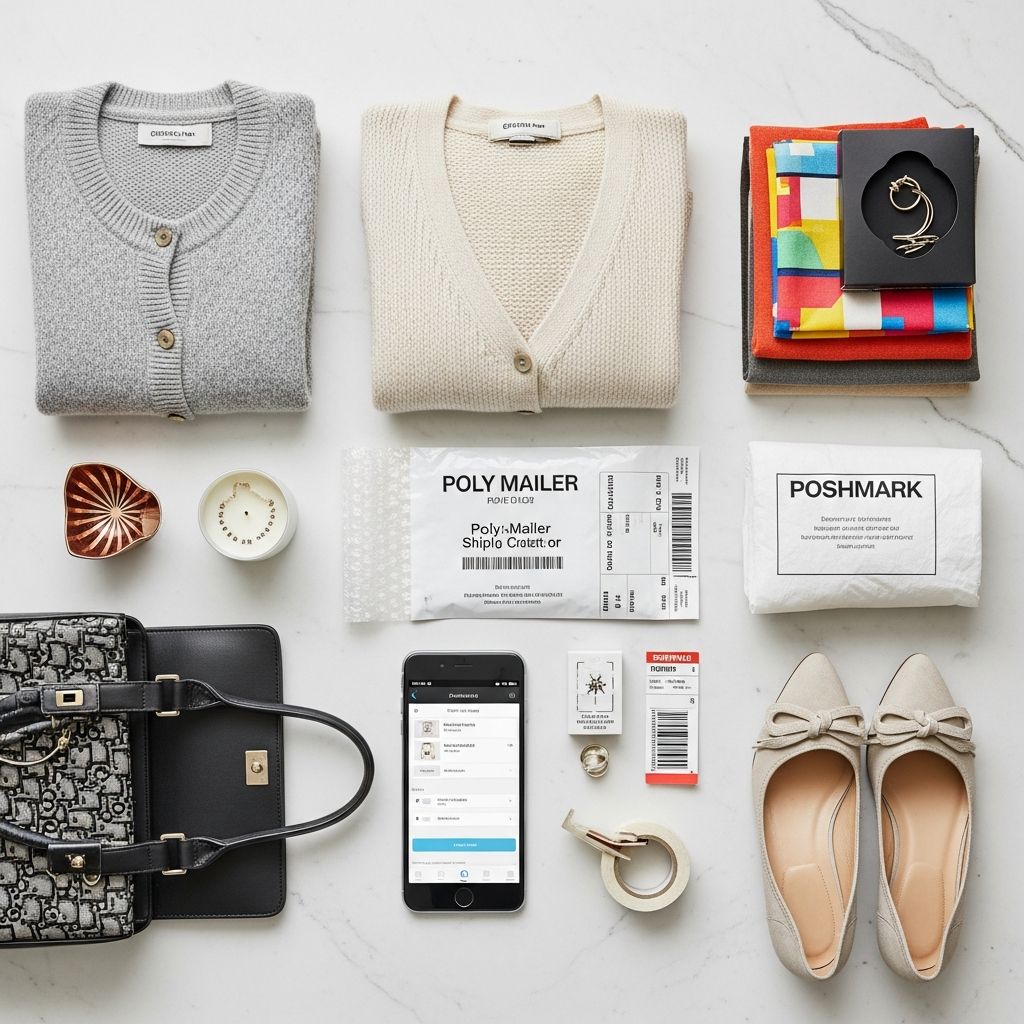
Getting Started as a Poshmark Reseller: Foundations of Success
The secondary fashion market has experienced explosive growth over the past decade, and Poshmark stands as one of the most accessible platforms for entrepreneurs looking to enter the reselling space. Whether you’re interested in clearing items from your own closet or building a full-scale inventory-based business, understanding the fundamentals is essential to establishing a sustainable operation. The platform has evolved significantly in recent years, introducing new features and policies designed to protect both buyers and sellers while fostering a vibrant community of merchants.
Beginning your reselling journey requires more than simply uploading photographs and hoping for sales. Success demands strategic planning, attention to marketplace dynamics, and a commitment to understanding Poshmark’s operational environment. The platform’s economics differ substantially from traditional retail, requiring sellers to adapt their expectations regarding profit margins and customer interaction patterns.
Creating Your Reseller Account and Profile Setup
Establishing your presence on Poshmark begins with account creation, but transforming a basic account into a professional reseller presence involves several deliberate steps. Your profile serves as the first impression potential buyers will have of your operation, influencing their willingness to engage with your listings and purchase from your closet.
Consider your account name carefully, as it will appear on all your listings and communications. Many successful resellers choose names that reflect their specialization or brand identity rather than generic usernames. Your profile bio should communicate your reselling focus, whether you specialize in vintage designer items, contemporary activewear, luxury accessories, or general mixed inventory. Including information about your sourcing practices, shipping speed, or customer service philosophy can differentiate your closet from competitors.
Your profile image should be professional and clear, helping buyers develop trust before they view your merchandise. While some resellers choose to display their own photograph, others prefer images representing their brand identity or specialty category. Consistency in branding across your profile, listings, and customer interactions strengthens your professional presence and encourages repeat customers.
Understanding Inventory Sourcing Strategies
The foundation of any reselling business rests on consistent access to quality inventory. Successful resellers employ multiple sourcing channels to ensure steady product flow and maintain competitive pricing. Understanding where to source items and how to evaluate their resale potential directly impacts profitability.
Thrift Store and Consignment Shopping: Traditional brick-and-mortar thrift stores remain a primary sourcing method for many resellers. Developing relationships with staff members, visiting during restock periods, and learning the markdown schedule can yield significant advantages. Consignment shops specializing in designer or gently-used clothing often offer higher-quality inventory than general thrift stores, though at correspondingly higher purchase prices.
Online Liquidation and Wholesale Platforms: Digital marketplaces specializing in overstock, customer returns, and wholesale lots provide scalable inventory sources. These platforms allow you to purchase in bulk, reducing per-unit costs and enabling faster inventory turnover. Familiarity with authentication standards and condition assessment becomes crucial when purchasing unseen merchandise.
Personal Wardrobe Liquidation: Many resellers begin by selling items from their own closets before scaling to inventory-based operations. This approach requires no upfront capital and allows you to learn platform mechanics with merchandise you understand intimately. As your business grows, personal closet sales often transition into occasional sourcing of items that align with your specializations.
Specialized Sourcing: Some resellers focus on specific categories such as vintage designer handbags, athletic wear, children’s clothing, or niche brands. Specialized focus requires deeper knowledge but often commands higher margins and attracts dedicated buyer communities.
Mastering Pricing and Market Research
Effective pricing balances profitability with competitiveness, requiring systematic research and strategic decision-making. Pricing too high results in prolonged shelf life and reduced velocity; pricing too low sacrifices margins and can signal low quality to discerning buyers.
Researching comparable listings should become routine practice before pricing any item. Examine completed sales of identical or similar products, noting the condition, presentation, and final sale price. Poshmark’s search functionality allows you to filter by brand, size, and color, helping you identify legitimate comparables. Pay particular attention to listings with multiple sales, indicating that pricing and presentation successfully attracted buyers.
Consider the following pricing variables: brand prestige and recognition, condition of the item, original retail price, current market demand, seasonal relevance, and your acquisition cost. Designer and luxury brands typically command higher resale percentages of original retail price compared to mass-market brands. Limited edition items and those from sought-after designers often appreciate in value over time, while basic wardrobe staples depreciate more rapidly.
Poshmark’s tiered pricing structure encourages sellers to offer quantity discounts through bundling. Customers purchasing multiple items frequently request discounts, and proactively offering bundle pricing can accelerate sales velocity. Strategic discounting on slower-moving inventory can free up closet space and capital for items with higher turnover rates.
Photography and Listing Presentation Excellence
Quality photography directly influences buyer perception and conversion rates. Items with clear, well-lit, detailed photographs receive significantly more engagement than poorly presented merchandise, even at identical price points.
Establish consistent lighting in your photography space, preferably using natural light supplemented by artificial lighting to eliminate harsh shadows. Photograph items laid flat for accurate dimension assessment and on a model or dress form when appropriate to show fit and proportion. Include close-up photographs highlighting details, texture, construction quality, and any defects or areas of wear.
Your item description should provide comprehensive information without excessive length. Include the brand, size, material composition, condition, approximate age or era, original retail price if known, and detailed notes about any wear or damage. Many resellers photograph condition labels, tags, and care instructions, providing transparency that builds buyer confidence. Descriptions should address common questions buyers might have regarding fit, quality concerns, or styling possibilities.
Titles should be keyword-optimized to appear in buyer searches while remaining descriptive and professional. Include brand name, item type, notable details, size, and color. Avoid excessive punctuation, emoji, or clickbait language, which can appear unprofessional and may actually reduce visibility in platform algorithms.
Managing Orders and Maintaining Compliance
Recent policy changes on Poshmark have introduced new requirements designed to ensure reliable order fulfillment and fast shipping. Understanding and adhering to these policies is essential for maintaining account standing and avoiding restrictions.
Poshmark has implemented a seller cancellation policy requiring attention to order fulfillment reliability. Sellers who cancel more than 3% of orders within a rolling 90-day period may see their accounts placed in restricted status. This policy excludes buyer-requested cancellations and cancellations made for combining orders, but sellers must exercise caution and fulfill orders promptly. The rolling calculation means your cancellation rate continuously updates, requiring ongoing attention to this metric.
Shipping speed remains a critical factor in buyer satisfaction and platform visibility. Poshmark encourages same-day or next-day shipping, and consistent delays may negatively impact your account performance. The platform now offers Ground Advantage packaging ordering directly within the app, streamlining the shipping supply acquisition process.
A new feature allows sellers to combine multiple purchases from the same buyer made within a 24-hour window. This optional functionality can streamline shipping logistics and reduce overall costs, particularly for sellers with repeat customers. However, sellers are not required to wait 24 hours to ship in order to accommodate potential combined orders, and the decision to use this feature remains entirely discretionary.
Stay informed about Poshmark’s prohibited items list, which includes counterfeit goods, perfumes, and certain restricted categories. Listing prohibited items risks account suspension regardless of other performance metrics. Regular review of platform policy updates ensures your inventory remains compliant with current requirements.
Building Community Engagement and Visibility
Poshmark’s business model incorporates community features designed to increase visibility and drive sales. Active engagement with the platform’s social components can substantially impact your sales velocity and customer base growth.
Sharing listings actively increases their visibility in follower feeds and recommended sections. Resellers who consistently share their inventory throughout the day typically experience higher traffic and sales compared to those who list sporadically. Many successful resellers establish sharing schedules, often sharing items multiple times daily to maintain presence during peak browsing hours.
Building a follower base creates a foundation of repeat customers who receive notifications when you list new items. Engaging authentically with other sellers and buyers—commenting on listings, making purchases from complementary closets, and participating in platform discussions—develops community relationships that translate into loyal customers. Poshmark values active, engaged participants, and those who contribute meaningfully to the community often receive algorithmic favoring in search results and recommendation feeds.
Participating in Posh Shows, the platform’s live selling feature, offers opportunities to present merchandise, interact with buyers in real-time, and negotiate sales. Sellers report that Posh Shows drive higher sales velocity compared to static listing models, particularly for items requiring demonstration of fit or styling possibilities.
Understanding Fees and Profit Structure
Poshmark’s fee structure significantly impacts profitability calculations and pricing strategy. The platform charges a flat $2.95 fee on sales under $15, and takes a 20% commission on sales $15 and above. Understanding this tiered structure helps you price items strategically to maximize net proceeds.
For example, an item priced at $14.99 results in $14.99 minus $2.95 equals $12.04 net proceeds. The same item priced at $15.00 results in $15.00 minus $3.00 (20% commission) equals $12.00 net proceeds. This mathematical reality explains why many resellers price items just under $15, capturing higher margins despite the small price difference.
Shipping costs represent the largest expense category after acquisition costs. While Poshmark provides flat-rate shipping to all buyers within the continental United States, these rates may not cover actual shipping costs for heavier items. Strategic sourcing of lightweight, high-value merchandise and careful package consolidation help optimize shipping economics.
Scaling Your Reselling Operation
Transitioning from casual seller to full-scale reseller requires strategic decisions about inventory investment, business structure, and operational systems. Many successful resellers scale gradually, reinvesting proceeds into larger inventory purchases as their business matures.
Consider establishing separate business accounts for recordkeeping purposes, tracking inventory investments, and managing tax obligations. Many experienced resellers utilize business credit cards specifically for inventory purchases, simplifying expense tracking and maintaining separation between personal and business finances.
As inventory expands, developing systematic processes for photography, listing creation, sharing, and order fulfillment becomes essential. Some resellers utilize scheduling tools to automate sharing activities, freeing time for sourcing and inventory processing. Others develop templates for descriptions and titles, reducing time spent on repetitive tasks and ensuring consistency across listings.
Adapting to Evolving Market Trends
Fashion trends evolve continuously, and successful resellers regularly assess market demand to ensure their inventory aligns with current buyer preferences. Focusing on brands and styles currently experiencing strong demand significantly improves sales velocity compared to inventory remaining stocked with previously popular items.
Monitor what’s selling through research on completed listings and buyer search patterns. Items that sold quickly likely indicate current demand, while items languishing in closets may reflect outdated trends or oversaturation. Adjusting your sourcing focus based on these insights ensures your inventory captures market momentum rather than accumulating items buyers no longer seek.
Exploring Alternative Platforms and Diversification
While Poshmark dominates the fashion resale space, successful resellers often utilize multiple platforms to maximize reach and inventory velocity. Platforms like ThredUP, The RealReal, and Mercari serve different buyer demographics and may offer advantages for specific inventory categories.
Diversification across platforms reduces dependency on any single marketplace, mitigating risks associated with policy changes or algorithmic shifts. Some resellers develop platform-specific strategies, listing premium designer items on luxury-focused platforms while using volume-based platforms for mass-market inventory. This approach optimizes each platform’s strengths while capturing different customer segments.
Frequently Asked Questions About Poshmark Reselling
Q: How much money can I realistically earn as a Poshmark reseller?
A: Earnings vary dramatically based on inventory quality, sourcing efficiency, pricing strategy, and time investment. Casual sellers earning extra income might generate $200-500 monthly, while established resellers with optimized operations and substantial inventory can earn $2,000-5,000+ monthly. Full-time resellers with large inventories report significantly higher earnings.
Q: What items sell best on Poshmark?
A: Designer and premium-brand clothing typically sells faster than mass-market items. Popular categories include Nike and Adidas athletic wear, designer handbags, luxury brands, vintage denim, and seasonal items. Current trends significantly influence demand, so researching what’s selling recently provides valuable guidance.
Q: How quickly should I ship orders?
A: Poshmark encourages same-day or next-business-day shipping. While the platform allows up to 7 days, faster shipping improves buyer satisfaction, generates positive reviews, and positively influences your account standing and algorithmic visibility.
Q: Can I return items I’ve purchased to resell?
A: Poshmark operates as a peer-to-peer marketplace without traditional return policies. Once a sale is completed, buyers cannot return items. This makes accurate condition description and detailed photography essential for reducing disputes and maintaining positive feedback.
Q: How do I handle items that don’t sell?
A: Re-listing items periodically improves visibility. Strategic price reductions, bundle offers, or donation for tax deduction are common approaches. Analyzing why items aren’t selling helps refine your sourcing strategy for future purchases.
Q: What should I avoid as a new reseller?
A: Avoid listing counterfeit items, prohibited products, or items in poor condition. Don’t cancel orders without justification. Avoid excessive price increases on sold-out or trending items, which may result in account restrictions. Finally, don’t neglect community engagement and sharing activities.
References
- Seller Updates — Poshmark Blog. 2026-01-15. https://blog.poshmark.com/2026/01/12/seller-updates/
- The Future of Reselling on Poshmark in 2026 — YouTube Content Creator. 2026-01-12. https://www.youtube.com/watch?v=TsAnU6kvP2A
- Tips You Should Follow to Be a Better Clothing Reseller in 2026 — YouTube Content Creator. 2025-12-15. https://www.youtube.com/watch?v=xCzg1D6epqw
Similar Articles








Read full bio of Sneha Tete


