
When Bathrooms Become Crime Scenes: Porta-Potty Voyeurism and the Law
How hidden cameras in portable toilets expose the limits of privacy, consent, and criminal law in modern public spaces.
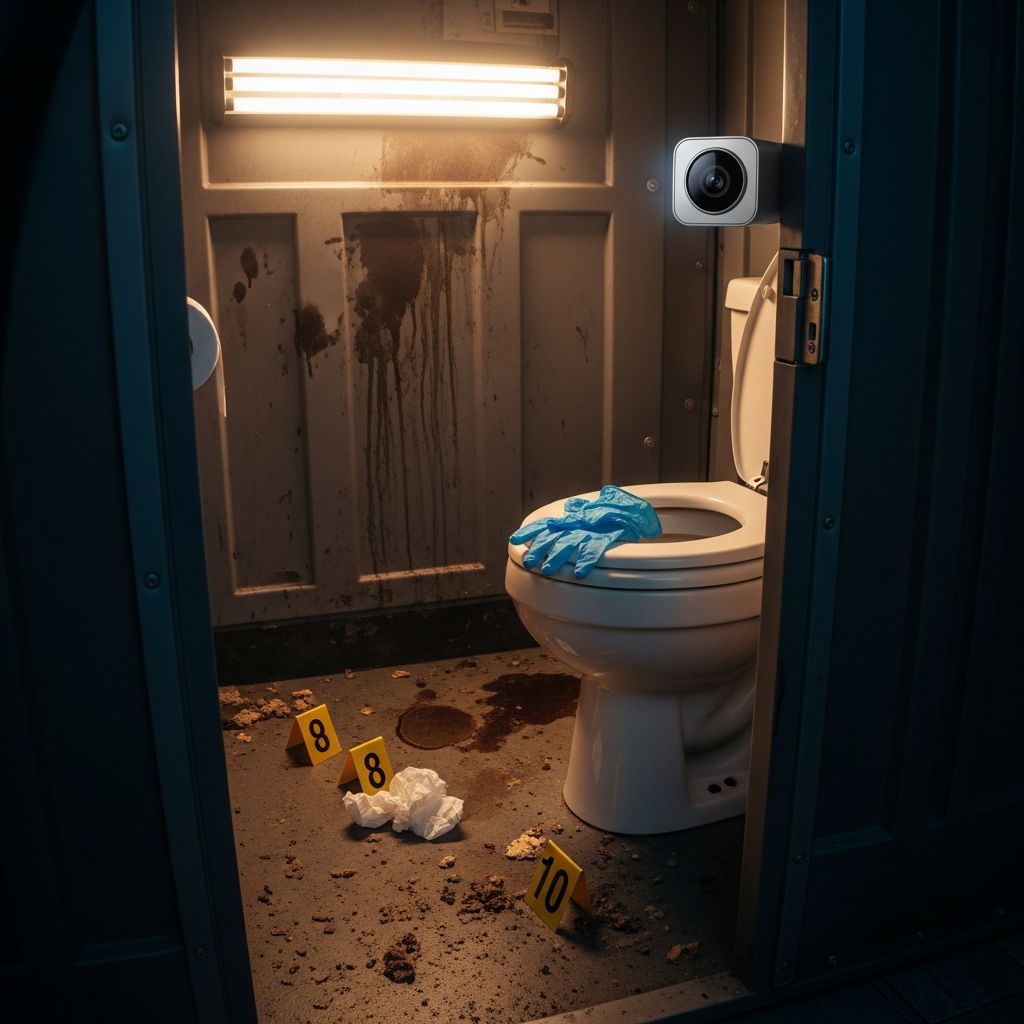
Hidden cameras in restrooms sound like the premise of a low-budget thriller, but cases involving secret recording inside portable toilets have become very real criminal matters in recent years. Reports of cameras discovered in porta-potties at races, school events, and fairs have forced courts, lawmakers, and schools to confront what privacy really means in public spaces and how harshly voyeurism should be punished.
This article uses high-profile porta-potty voyeurism incidents as a jumping-off point to explore how U.S. criminal law treats hidden-camera bathroom cases, what kinds of charges are common, how courts think about privacy, and what practical steps organizers can take to protect people using temporary restrooms.
Why Porta-Potties Raise Serious Legal Questions
On the surface, a porta-potty is flimsy plastic dropped in a field. Legally, however, it is still a private space where people have a strong expectation not to be watched or recorded while undressed or using the toilet. Courts in the United States have long recognized privacy protections for bathrooms, dressing rooms, and similar spaces, even when located in public venues like parks or campgrounds.
Porta-potty voyeurism cases raise several intertwined issues:
- Criminality of the act: Is the behavior charged as unlawful surveillance, invasion of privacy, sexual exploitation, or all of the above?
- Consent and awareness: Victims have no idea they are being recorded, which makes the conduct inherently non-consensual.
- Technology and scale: One small camera can capture dozens or even hundreds of victims in a single day at a large event.
- Minors as victims: When the event involves schools, youth sports, or family festivals, children are frequently among those recorded, triggering much more serious felony charges.
In one Iowa porta-potty case, for example, investigators uncovered nearly 100 counts tied to filming people, including minors, in temporary toilets at a cross-country meet and a community fair, underscoring how quickly the charge count can expand when police identify multiple victims from stored video.
How Voyeurism and Unlawful Surveillance Laws Work
Most U.S. states do not rely solely on old-fashioned peeping-tom statutes. Instead, they have enacted unlawful surveillance or voyeurism laws that explicitly criminalize using cameras or other electronic devices to secretly record people where they reasonably expect privacy.
| Legal Element | Typical Requirement in Voyeurism / Unlawful Surveillance Laws |
|---|---|
| Location | Place where a person has a reasonable expectation of privacy (e.g., bathroom, changing area, private room). |
| Conduct | Intentionally viewing, recording, or photographing another person without consent. |
| State of victim | Typically when the person is nude, partially undressed, or in a sexually private situation. |
| Device | Use of camera, cell phone, or other imaging technology; some laws also cover direct peeping. |
| Intent | Knowing or intentional conduct; in some states, sexual gratification or prurient intent increases the penalty. |
In New York, for example, the crime of unlawful surveillance in the second degree covers secretly recording a person in a bathroom, changing room, or bedroom without consent, particularly when they are dressing or undressing. A recent appellate decision in a campground shower case illustrates how carefully courts scrutinize evidence and procedure in such prosecutions, sometimes ordering a new trial if the jury is exposed to prejudicial information about prior voyeuristic conduct.
Common Charges in Porta-Potty Camera Cases
Prosecutors often stack multiple charges in porta-potty voyeurism cases, reflecting both the number of victims and the variety of statutes implicated. Some of the most frequent charges include:
1. Invasion of Privacy or Unlawful Surveillance
Invasion of privacy statutes generally punish non-consensual observation or recording in a private place. In some states, this is framed as unlawful surveillance or video voyeurism. Each victim—every person captured on camera—can support a separate count. When dozens of runners or fairgoers use the same porta-potty where a hidden camera sits, the defendant’s exposure multiplies quickly.
- Charges are often misdemeanors for adults, but can be upgraded to felonies under certain conditions.
- Recording in a restroom or similar space is especially likely to be charged harshly given the strong privacy interest.
2. Sexual Exploitation of Minors
When minors are recorded in a state of nudity or partial undress, many states treat the images as sexual exploitation or child sexual abuse material, even if there was no physical contact. Federal law and state statutes broadly define sexually exploitative images of children to include lascivious depictions of genital or pubic areas, which restroom camera footage often captures.
- Each image of a minor can be a separate felony count of sexual exploitation or production of exploitative material.
- Convictions commonly require sex offender registration, long prison sentences, and stringent post-release supervision.
3. Possession and Distribution of Illegal Images
If investigators find that recordings were stored, transmitted, or shared online, suspects can also face:
- Possession of child sexual abuse material (for minors recorded).
- Distribution or attempted distribution, if files were uploaded or sent to others.
- Additional charges under computer crime or cybercrime laws.
Law enforcement agencies frequently emphasize that digital evidence can expand the scope of the case well beyond the initial discovery of a single hidden camera.
Privacy Expectations in Temporary Restrooms
Courts evaluating voyeurism cases regularly focus on whether the victim had a reasonable expectation of privacy. While people might not expect luxury in a portable toilet, they absolutely expect not to be filmed. This expectation is supported by a long line of U.S. decisions holding that bathrooms and changing rooms are among the most highly protected spaces for privacy.
Key factors that support a strong privacy expectation in porta-potties include:
- Enclosure: The door closes and locks, physically blocking observers.
- Purpose: The space is specifically designated for using the toilet and often for changing clothes.
- Social norms: Society overwhelmingly views it as offensive, humiliating, and dangerous to be recorded in a restroom without consent.
As a result, defendants rarely succeed in arguing that porta-potties are too “public” for privacy laws to apply. Instead, the legal disputes tend to center on evidence handling, search and seizure questions, and whether prosecutors properly balanced probative value against prejudice when introducing prior bad acts or digital evidence.
How Investigations Typically Unfold
Porta-potty camera cases usually begin with an accidental discovery by a member of the public—a student, parent, athlete, or worker—who notices a device that seems out of place. From there, investigations move quickly because of the sensitive nature of the potential footage.
Step-by-Step Investigative Pattern
- Discovery and initial report: A person finds the camera or lens inside the portable toilet and notifies event staff or police.
- Securing the scene: Law enforcement collects the camera, preserves the porta-potty if necessary, and documents the placement and angle of the device.
- Image extraction: Forensics specialists copy digital files, often recovering deleted images or video.
- Identifying victims: Authorities review footage to estimate the number of people recorded and determine whether minors are involved.
- Identifying suspects: Investigators may rely on partial images reflected in mirrors, captured on the hidden camera itself, or cross-reference with surrounding surveillance cameras at the venue.
- Expanding the scope: Once a suspect is identified, police often search residences, computers, and phones for evidence of earlier incidents or additional victims, sometimes discovering an extensive history of surreptitious recording.
Because these investigations can reveal hundreds or thousands of images, prosecutors must make strategic decisions about how many counts to file and how to present the evidence without overwhelming or prejudicing a jury.
Consequences for Offenders
Defendants convicted in porta-potty voyeurism cases face a combination of criminal, civil, and social consequences. The severity depends on the number of victims, whether minors were recorded, the jurisdiction’s statutory scheme, and the defendant’s prior record.
Criminal Penalties
- Jail or prison terms: Unlawful surveillance and invasion of privacy can carry months to years of incarceration; sexual exploitation of minors can mean decades in prison for multiple counts.
- Probation and supervision: Courts frequently impose multi-year probation with strict conditions, including treatment and limits on technology use.
- Sex offender registration: When convictions involve minors or sexually exploitative imagery, registration requirements can last for decades or even a lifetime, severely limiting residence, employment, and travel.
Civil Liability and Damages
In addition to criminal charges, victims may bring civil lawsuits alleging invasion of privacy, intentional infliction of emotional distress, or negligence claims against property owners or event organizers who failed to exercise reasonable care in protecting guests.
- Victims can seek compensation for emotional harm, therapy costs, and other damages associated with the trauma of being secretly recorded.
- Insurers and venue owners may face significant payouts if a court finds inadequate security or preventative measures.
Responsibilities of Schools, Events, and Property Owners
Incidents at school cross-country meets, festivals, and public fairs have prompted institutions to rethink how they deploy temporary restrooms and what preventive protocols they should adopt. While criminals bear primary responsibility for their actions, organizers have a duty to take reasonable steps to reduce foreseeable risks.
Practical Prevention Measures
- Pre-use inspections: Before events open, staff can quickly check inside porta-potties for unusual objects, small holes, or suspicious wiring.
- Ongoing sweeps: For long events or those involving minors, periodic re-checks during the day can detect cameras placed after the initial inspection.
- Lighting and placement: Locating portable toilets in well-lit, high-visibility areas reduces opportunities for discreet tampering.
- Staff training: Teaching coaches, teachers, volunteers, and security staff what hidden devices look like improves early detection.
- Clear reporting channels: Posting signs or instructions for how to report suspicious activity helps attendees respond quickly if they see something unusual.
Some schools have updated their event protocols after porta-potty incidents, requiring designated staff to visually inspect temporary restrooms before use and periodically throughout the event.
Victims’ Rights and Support
People who discover they have been secretly filmed in a restroom often report intense embarrassment, anxiety, and a loss of trust in public spaces. When minors are involved, the psychological impact can be especially severe. Victims have specific legal rights and access to support services.
- Notification and participation: Crime victims generally have the right to be informed of charges, pleadings, and sentencing hearings, and to submit victim impact statements.
- Confidentiality protections: Courts may take steps to protect victim identities, especially for children, in line with state law and victims’ rights statutes.
- Counseling and advocacy: Many states fund victim assistance programs that provide counseling referrals, crisis intervention, and help navigating the justice system.
- Restitution: Judges may order convicted offenders to pay restitution for therapy, lost wages, or other out-of-pocket losses caused by the crime.
National resources, including organizations supported under the federal Victims of Crime Act, can connect victims of privacy and sexual exploitation offenses with trauma-informed services and legal information.
Technology, Evidence, and Evolving Law
As cameras have become smaller, cheaper, and easier to conceal, the law has had to adapt. Courts are now regularly confronted with:
- Massive digital evidence: Thousands of images or hours of video stored on phones, cloud accounts, or external drives.
- Cross-jurisdictional crimes: Offenders who travel across state lines or upload recordings to global platforms, implicating both state and federal authorities.
- Repeat patterns: Prior instances of voyeurism uncovered through device forensics and internet search histories, which may or may not be admissible at trial depending on rules governing prior bad acts.
Legal scholars and legislatures continue to refine voyeurism, cybercrime, and child exploitation statutes to ensure they capture new forms of technologically enabled abuse while respecting due process and fair trial rights. Appellate decisions in surveillance cases—such as those involving hidden cameras in showers or bathrooms—play a crucial role in clarifying evidentiary standards and the proper limits of prosecutorial strategy.
Frequently Asked Questions (FAQs)
Q: Is it always illegal to record someone in a portable toilet?
Yes. Recording someone in a porta-potty or any restroom without consent almost always violates state unlawful surveillance or invasion of privacy laws, and can lead to severe felony charges if minors are involved.
Q: Can a porta-potty company or event organizer be sued if a hidden camera is found?
Potentially. Victims may bring civil claims if they can show that an owner or organizer failed to take reasonable measures to protect privacy, though liability will depend on the specific facts and the jurisdiction’s negligence standards.
Q: What should I do if I find a camera in a restroom or portable toilet?
If safe to do so, avoid touching the device, leave the area, and immediately contact law enforcement or event security. Preserving the scene helps investigators identify the suspect and protect digital evidence.
Q: Do victims have to testify in court?
Not always, but their testimony can be important in some cases. Prosecutors may rely on digital evidence and expert testimony, and courts often permit protective measures—especially for minors—to reduce the trauma of participation.
Q: How can schools protect students at outdoor meets and events?
Schools can implement written protocols for inspecting porta-potties, train staff to recognize hidden devices, place restrooms in visible areas, and provide clear channels for students and parents to report suspicious behavior.
References
- Porta-potty peep scheme busted as man faces nearly 100 charges filming students — Fox News Digital. 2025-10-21. https://www.foxnews.com/us/porta-potty-peep-scheme-busted-man-faces-nearly-100-charges-filming-students-police
- New York Penal Law Article 250: Eavesdropping and Unlawful Surveillance — New York State Senate. (current through 2025). https://www.nysenate.gov/legislation/laws/PEN/P3TONEH250
- NY appeals court orders new trial in voyeurism case — New York Daily Record. 2025-10-23. https://nydailyrecord.com/2025/10/23/appeals-court-orders-new-trial-in-voyeurism-case/
- Child Exploitation and Obscenity—Overview — U.S. Department of Justice, Criminal Division. 2022-05-20. https://www.justice.gov/criminal-ceos/child-exploitation-and-obscenity-section
- Crime Victims’ Rights — Office for Victims of Crime, U.S. Department of Justice. 2023-03-15. https://ovc.ojp.gov/program/crime-victims-rights
Similar Articles








Read full bio of medha deb




