
Political Expression in Legal Practice: Courtroom Conduct Standards
Exploring the balance between attorney First Amendment rights and courtroom decorum obligations.
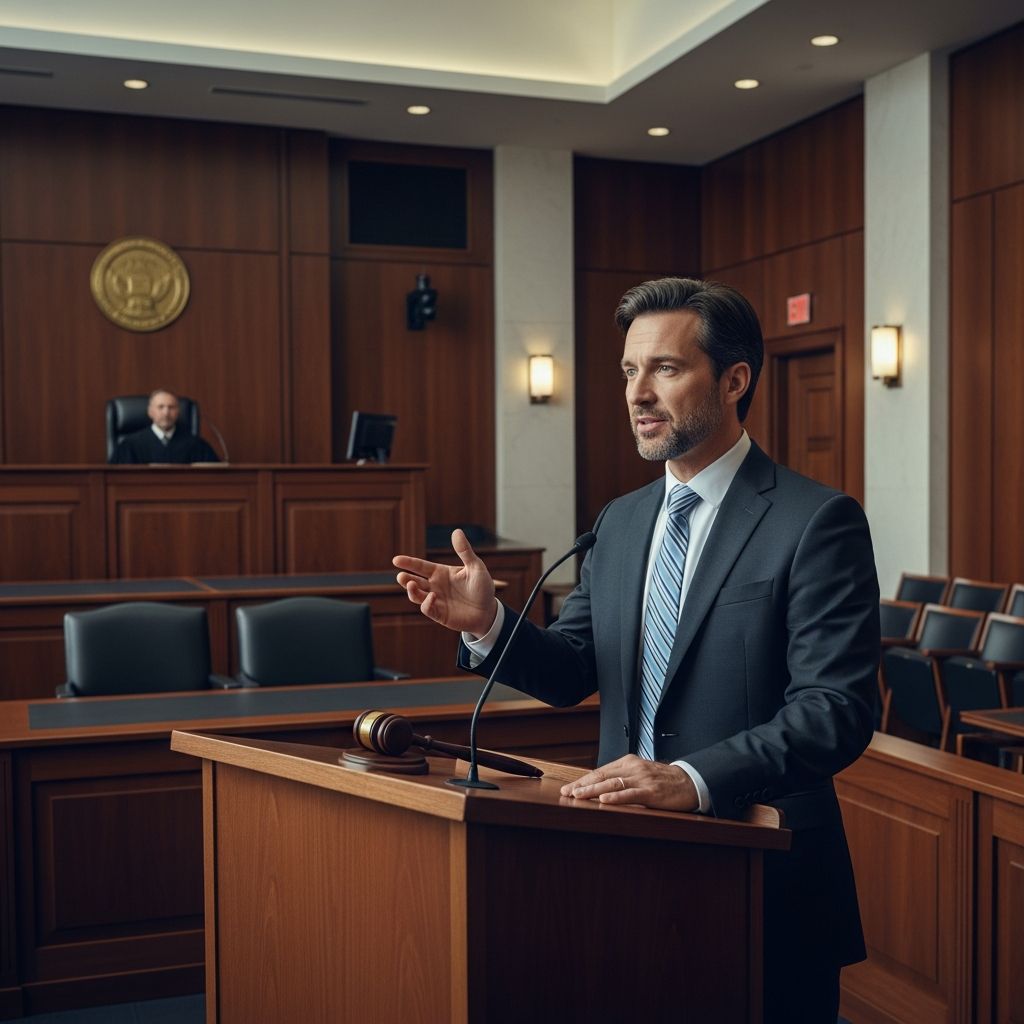
The Intersection of Professional Duty and Personal Expression in Legal Settings
Attorneys occupy a unique position within the justice system, serving simultaneously as advocates for their clients and officers of the court. This dual role creates inherent tension when personal convictions intersect with professional obligations. The question of whether lawyers may wear political symbols, such as Black Lives Matter pins, during court proceedings illustrates a fundamental conflict between individual First Amendment protections and the institutional requirements of maintaining judicial impartiality and courtroom decorum.
When legal professionals choose to display political messages through clothing or accessories within courtroom settings, they initiate a complex analysis involving constitutional law, professional responsibility rules, and judicial authority. The outcome of this analysis reveals that courts have consistently prioritized the maintenance of courtroom integrity over individual expression rights, establishing clear precedent for restricting such displays.
Understanding the Constitutional Framework Governing Attorney Speech
The First Amendment provides broad protections for political speech across numerous contexts and professions. However, these protections are not absolute, particularly within specialized environments where other compelling interests exist. Courts have long recognized that certain settings, including courtrooms, warrant heightened restrictions on expression to preserve institutional function and public confidence.
The critical distinction lies in recognizing that attorneys, while citizens with constitutional rights, have voluntarily entered a profession with established ethical codes and conduct standards. These professional commitments create enforceable limitations on speech that would be unconstitutional if applied to ordinary citizens. This framework reflects the reality that courtrooms are not public forums in the traditional sense but rather specialized judicial workplaces with unique operational requirements.
A landmark case establishing this principle involved an attorney challenging a judge’s order to remove a button expressing opposition to pending legislation. The appellate court upheld the restriction, reasoning that when attorneys inject personal political viewpoints into courtroom environments unrelated to the case at hand, they necessarily compromise the appearance of impartiality and fairness that underpins public trust in the judicial system.
The 2016 Ohio Incident: A Cautionary Example of Escalation
One highly publicized incident in 2016 demonstrates how confrontations over political symbols can spiral into significant professional consequences. An Ohio attorney appeared in court wearing a Black Lives Matter pin while representing a client in a matter unrelated to racial justice issues. When the presiding judge directed her to remove the pin, the attorney refused. Rather than accept the judicial order, she maintained her position, which resulted in her being escorted from the courtroom by bailiffs, charged with contempt of court, and temporarily relieved of her representation duties as a new attorney was appointed.
The severity of these consequences highlights several critical issues. First, it demonstrates that judges possess authority to enforce courtroom conduct standards through enforcement mechanisms. Second, it reveals the potential consequences of refusing judicial orders, which extend beyond simple removal of a symbol to include contempt charges and professional disruption. Most significantly for the affected client, the attorney’s personal stance resulted in immediate prejudicial consequences, including loss of representation by familiar counsel and disruption of ongoing proceedings.
Professional Responsibility Rules and Client Loyalty Obligations
The Model Rules of Professional Conduct establish explicit standards that directly address the scenario of attorneys displaying political symbols in courtrooms. These rules represent the ethical consensus of the legal profession regarding appropriate conduct and client protection.
Model Rule 1.7 governs conflicts of interest and establishes that attorneys must not allow their own interests to materially limit their loyalty to clients. When an attorney chooses to wear a political pin unrelated to the client’s case, this action prioritizes personal expression over client interests. The comment to this rule specifically prohibits situations where a lawyer’s own interests undermine the representation relationship. An attorney who focuses energy on maintaining a political symbol rather than advancing a client’s legal position violates this fundamental duty.
Model Rule 3.5 directly addresses conduct in relation to tribunals and specifically prohibits conduct intended to disrupt a tribunal or prejudice the administration of justice. This rule encompasses behavior that seeks to influence judges or jurors through means other than legitimate evidence and argument. Wearing a political pin can reasonably be interpreted as an attempt to influence the factfinder through a statement of personal political conviction, thereby violating this rule’s requirements.
Model Rule 3.4 establishes that lawyers must not knowingly disobey an obligation under tribunal rules. When a judge orders an attorney to remove a political pin, this constitutes a clear tribunal obligation. However, the rule does provide limited exception language allowing lawyers to refuse “for an open refusal based on an assertion that no valid obligation exists.” This exception requires that the lawyer believe in good faith that the judge lacks authority to issue such an order—a position that current case law does not support.
Judicial Authority and Courtroom Management Considerations
Courts possess inherent authority to maintain order, dignity, and fairness within their proceedings. This authority derives from the fundamental recognition that judicial proceedings require focused attention on substantive legal issues and that public confidence in the judicial system depends on perceptions of impartiality. When judges encounter political symbols worn by attorneys, they face a judgment call about whether such displays undermine these essential courtroom functions.
Lower courts have demonstrated consistent unsympathetic responses to attorney challenges regarding political symbols. Judicial reasoning emphasizes several practical concerns:
- Political messages displayed by court officers create visual distractions that may impair jurors’ ability to focus on evidence and legal instruction
- When judges tolerate such displays, it creates an appearance that the judge themselves endorse or accept the political message, compromising perceived impartiality
- Attorney displays of political symbols unrelated to pending cases serve no legitimate litigation purpose and exist purely for personal expression
- The courtroom environment demands concentrated attention on important matters, and political adornments—regardless of intent—disrupt this necessary focus
Judges may implement reasonable prophylactic measures to prevent these problems from arising. Such measures are justified not because courts deny attorneys’ constitutional rights entirely but because the special context of judicial proceedings permits reasonable time, place, and manner restrictions on expression.
Distinguishing Between Protected and Unprotected Displays
Not all symbols worn in courtrooms receive equal treatment. Courts have suggested that certain displays—such as American flag lapel pins or church emblems—represent values so broadly accepted and foundational that they do not trigger the same concerns as controversial political messages. However, this distinction itself remains contested, with some legal scholars arguing that church symbols carry equally political implications as movement-related pins.
The critical factor appears to be whether the symbol relates directly to pending litigation. An attorney defending a client in a case involving religious liberty issues might reasonably wear a cross to illustrate the personal stakes in the litigation. Similarly, an attorney in a racial justice case might wear a Black Lives Matter pin when the case directly addresses racial discrimination. In these scenarios, the symbol connects to the legal matter and arguably serves an illustrative purpose relevant to the court’s work.
Conversely, symbols displayed in cases where they have no relationship to the legal issues present precisely the problem that courts seek to prevent: personal political expression divorced from legitimate litigation purposes.
The Distinction Between Courtroom and Non-Courtroom Settings
The ethical landscape shifts considerably when attorneys move beyond courtroom walls. The same professional responsibility rules apply to conduct in other settings, but their application differs because judges lack authority to enforce orders outside courtrooms, and the pressures to maintain trial decorum do not apply.
Many attorneys engage in social media expression of political views, publicly support causes through online platforms, and participate in activism outside courtrooms. These activities exist in a grayer ethical zone compared to in-courtroom conduct. While clients and colleagues may observe such expression, the immediate courtroom-specific concerns about disruption and appearance of bias diminish significantly.
Nevertheless, attorneys must exercise judgment about political expression even outside courtrooms. Social media posts revealing strong political positions, particularly on issues potentially arising in future litigation, may influence potential clients’ decisions to retain particular attorneys or create adverse perceptions among opposing counsel and judges. The line remains less clear than in courtroom settings, but professional judgment suggests considering whether personal expression might materially affect client relationships or professional standing.
Practical Guidance for Attorneys Facing Judicial Orders
Attorneys who encounter judicial directives to remove political symbols face genuine professional dilemmas. The emotionally charged nature of symbols like Black Lives Matter pins makes compliance feel like betraying personal convictions. However, legal analysis clearly supports judicial authority in these situations.
The most professionally responsible approach involves immediate compliance with judicial orders regarding courtroom attire and conduct. Refusing orders escalates conflicts, creates contempt exposure, and—most significantly—directly harms clients through interrupted representation and damaged attorney-judge relationships that may affect the case.
If an attorney believes a judge’s order exceeds constitutional or legal bounds, appropriate remedies exist through appellate channels rather than direct courtroom defiance. An attorney could request that the judge provide written explanation of the order, preserve the record for appeal, and comply while challenging the order’s legality in a higher court. This approach protects both the client’s interests and the attorney’s ability to pursue principled constitutional challenges without immediate professional consequences.
Implications for Professional Culture and Advocacy
The prohibition on political symbols in courtrooms does not prevent attorneys from advancing social justice causes or expressing political convictions. Rather, it requires attorneys to channel such expression through legitimate professional avenues: compelling legal arguments, zealous client advocacy, bar association participation, and professional development of jurisprudence supporting desired change.
Some argue that permitting political symbols would enhance courtroom authenticity and acknowledge that judges and attorneys maintain personal convictions. Others contend that professional norms requiring suppression of personal expression enhance public confidence by suggesting that courtroom participants focus exclusively on legal merits rather than personal beliefs.
The legal consensus currently favors the latter approach, reflecting institutional priorities that may or may not align with evolving social perspectives on identity and authenticity in professional contexts.
Frequently Asked Questions
Q: Can a lawyer be punished for wearing a political pin in court?
A: Yes. Judges may order removal of political symbols and can enforce such orders through contempt sanctions if the attorney refuses. The attorney may also face disciplinary proceedings under professional responsibility rules governing courtroom conduct and client loyalty.
Q: Does the First Amendment protect attorney speech in courtrooms?
A: The First Amendment provides constitutional protection for attorney speech, but courts have consistently held that reasonable restrictions on such speech are permissible in courtroom settings due to the compelling interests in maintaining impartiality, decorum, and judicial function.
Q: What should a lawyer do if ordered to remove a pin?
A: The attorney should comply with the judicial order immediately. If the attorney believes the order is legally invalid, the appropriate remedy is appellate review rather than courtroom defiance, which risks contempt charges and harms the client.
Q: Does the rule apply to all political symbols equally?
A: Courts have suggested some symbols, such as American flags, raise fewer concerns. However, the critical distinction appears to be whether the symbol relates to the pending litigation rather than the symbol’s subject matter.
Q: Can attorneys wear political symbols outside of courtrooms?
A: Attorney conduct outside courtrooms is not subject to direct judicial control, but professional responsibility rules still apply. Attorneys should exercise judgment about whether personal expression might adversely affect client relationships or professional standing.
Q: What professional rules govern this conduct?
A: Model Rules 1.7 (conflicts of interest), 3.4 (illegal conduct), and 3.5 (impartiality and decorum) establish the primary ethical framework for evaluating political expression in courtrooms.
References
- Listen to Your Grandma: Steer Clear of Politics at Work — Attorney at Work. 2016. https://www.attorneyatwork.com/listen-to-your-grandma-steer-clear-of-talking-about-politics-at-work/
- In the Courtroom, Personal Political Views Must Take a Backseat to Client Interests — Zavieh Law. Originally published on Lawyerist, September 21, 2016. https://zaviehlaw.com/blog/in-the-courtroom-personal-political-views-must-take-a-backseat-to-client-interests/
- Attorney Speech Inside a Courtroom — First Amendment @ MTSU (Middle Tennessee State University). https://firstamendment.mtsu.edu/article/attorney-speech-inside-a-courtroom/
- Model Rules of Professional Conduct — American Bar Association. 2020. https://www.americanbar.org/groups/professional_responsibility/publications/model_rules_of_professional_conduct/
- The Public Defender’s Pin: Untangling Free Speech Regulation in the Judiciary — Northwestern University Law Review. https://scholarlycommons.law.northwestern.edu/cgi/viewcontent.cgi?article=1334&context=nulr
Similar Articles








Read full bio of medha deb


