
Police Stop and Frisk: Your Rights Explained
Understand when police can legally stop and frisk you, the standards required, and how to protect your constitutional rights on the street.
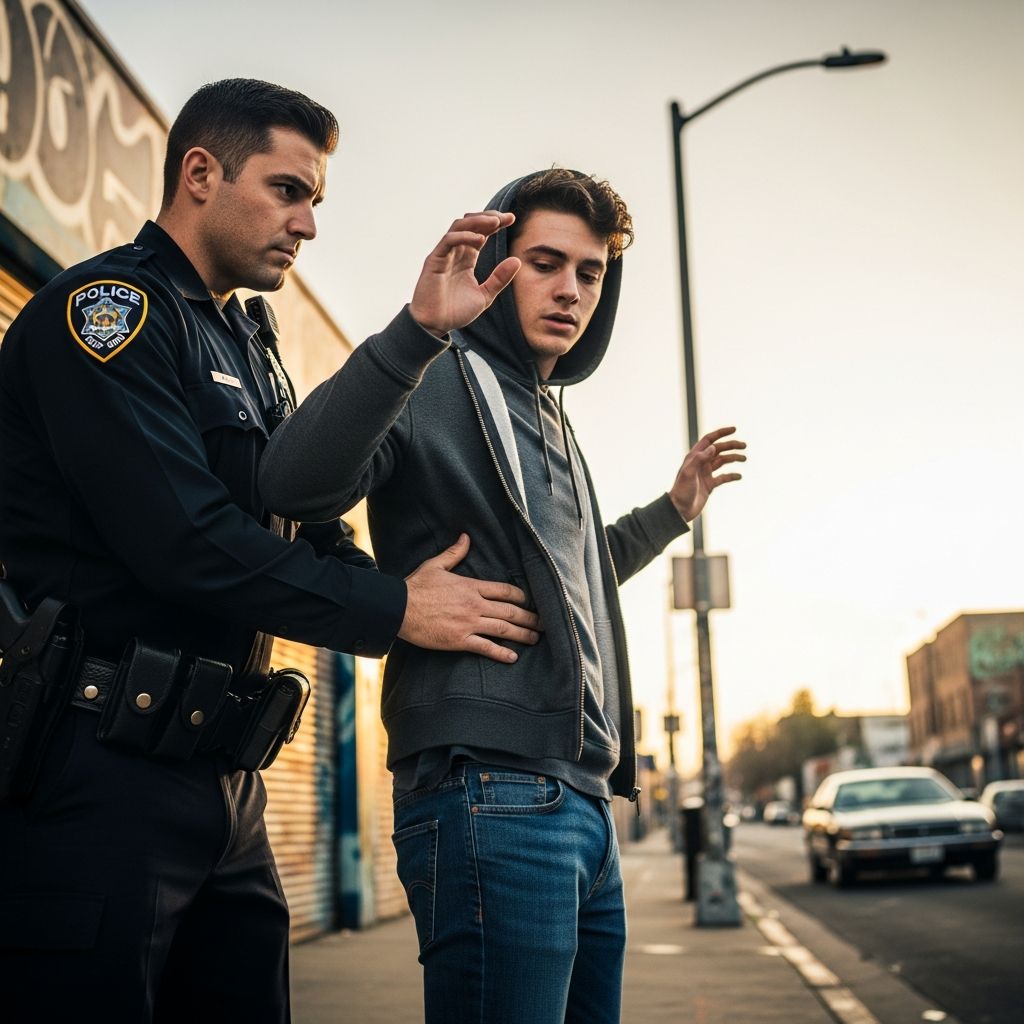
Police encounters on public streets often raise questions about personal freedoms versus officer safety. Stop and frisk practices allow law enforcement to briefly detain individuals based on specific legal thresholds, balancing public security with constitutional safeguards. This article explores the origins, requirements, limitations, and real-world implications of these interactions.
Foundations of Street-Level Police Encounters
At the heart of stop and frisk authority lies the Fourth Amendment, which guards against unreasonable searches and seizures. Unlike full arrests requiring probable cause, these brief detentions demand only reasonable suspicion—a lower but still objective standard. Officers must point to specific, articulable facts suggesting criminal activity, not mere hunches.
Historical precedents shaped this framework. Before modern rulings, common law and statutes like the Uniform Arrest Act permitted limited stops for questioning and protective frisks if weapons were suspected. These evolved into standardized procedures ensuring both police effectiveness and citizen protections.
The Landmark Terry v. Ohio Decision
The Supreme Court’s 1968 ruling in Terry v. Ohio established the core principles governing stop and frisk. In this case, officers observed suspects casing a store for robbery and approached them. The Court upheld the stop and subsequent pat-down, deeming it reasonable under the circumstances.
Chief Justice Warren’s opinion clarified that stops constitute seizures and frisks are searches, both subject to Fourth Amendment scrutiny. However, warrants are impractical for fleeting street situations, so reasonableness governs. For a frisk, officers need particularized suspicion that the person is armed and dangerous.
- Key Elements from Terry: Investigatory stops must be brief and based on observable behaviors indicating crime.
- Frisk Limitations: Limited to outer clothing pats for weapons; no deep searches unless contraband is felt.
- Duration: Must not extend beyond time needed to resolve the suspicion.
Defining Reasonable Suspicion in Practice
Reasonable suspicion requires more than a vague feeling but less than probable cause. Courts evaluate the totality of circumstances: time of day, location, nervous behavior, proximity to a crime scene, or evasive actions. High-crime areas alone do not suffice; officers must articulate why this individual stands out.
For example, fleeing upon seeing police might contribute if combined with other factors, but running alone does not always trigger a seizure. The Court has ruled that mere presence in a suspicious context, without more, fails the test.
| Factor | Supports Reasonable Suspicion | Insufficient Alone |
|---|---|---|
| High-crime area | Contextual, with other signs | Yes |
| Evasive maneuvers | If directed at police | No |
| Bulge in clothing | Plus safety concerns | Sometimes |
| Time of night | Combined with behavior | Yes |
Scope and Boundaries of Frisk Searches
A valid frisk protects officer safety by checking for weapons only. Officers may pat outer clothing and, if they feel a weapon’s outline, reach inside. Plain feel discoveries of drugs might justify further intrusion, but only if immediately apparent.
Expanding beyond this risks unconstitutionality. Prolonged detentions or unrelated questioning violate limits, as affirmed in Rodriguez v. United States (2015). There, extending a traffic stop without new suspicion invalidated evidence.
Vehicle Stops and Passenger Rights
Stop and frisk principles extend to traffic contexts. After lawful vehicle stops, officers can order drivers and passengers out for safety, then frisk if reasonable suspicion of danger exists. This applies regardless of initial violation type.
- Mimms (1977): Drivers must exit post-stop.
- Wilson (1997): Same for passengers.
- Johnson (2009): Frisks for those deemed potentially armed.
These rulings prioritize officer protection during inherently risky encounters.
Attenuation and Evidence Admissibility
Not all flawed stops suppress evidence. In Utah v. Strieff (2016), the Court held that discovering a valid arrest warrant during an otherwise illegal stop attenuates the taint, allowing evidence use. This exception hinges on warrant independence from the violation.
Controversies and Racial Disparities
High-profile challenges highlight stop and frisk pitfalls. New York City’s program faced scrutiny for disproportionately targeting minorities. In 2013, a federal court deemed it unconstitutional, citing Fourth Amendment violations and racial profiling patterns.
Statistics showed overwhelming stops of Black and Latino individuals yielding few weapons or arrests, raising bias concerns. Reforms followed, emphasizing data collection and training.
Your Rights During a Stop
Knowing your rights empowers safe navigation of encounters:
- Remain calm and compliant: Do not resist physically; verbal assertion is key.
- Ask if free to leave: Silence implies detention.
- Limits on search: Frisk only for weapons; refuse consent beyond that.
- Document details: Note badge numbers, times, reasons given.
- Seek counsel post-incident: Challenge legality if rights violated.
Consenting to searches waives protections—always clarify if questioned.
Frequently Asked Questions
Can police stop me without any reason?
No. They need reasonable suspicion of criminal activity. Mere curiosity or profiling does not qualify.
What if I feel the frisk went too far?
Frisks must be limited to weapons. Evidence from improper searches may be suppressed in court.
Does running from police justify a stop?
Not automatically. Context matters; unprovoked flight in high-crime areas might contribute, but courts scrutinize.
Are stops in cars different from street stops?
Similar standards apply, but vehicle specifics like exit orders enhance safety measures.
What happens if a stop uncovers a warrant?
Evidence remains admissible if the warrant predates and is unconnected to the stop.
Recent Developments and Ongoing Reforms
Post-2013 NYC rulings, departments nationwide adopted body cameras, stop data tracking, and bias training. Supreme Court cases continue refining boundaries, ensuring practices align with constitutional mandates.
Advocates push for stricter oversight, arguing volume-driven stops erode trust. Balancing tools against abuses remains critical.
In summary, stop and frisk serves legitimate needs when applied judiciously. Citizens benefit from awareness, fostering accountability.
References
- Stop and frisk rule and the Supreme Court — EBSCO Research Starters. 2023. https://www.ebsco.com/research-starters/law/stop-and-frisk-rule-and-supreme-court
- Stop and Frisk — Office of Justice Programs (OJP). N/A. https://www.ojp.gov/ncjrs/virtual-library/abstracts/stop-and-frisk-0
- On this day, a win for ‘stop and frisk’ — National Constitution Center. 2023. https://constitutioncenter.org/blog/this-week-in-supreme-court-history-a-win-for-stop-and-frisk
- stop and frisk — Legal Information Institute (Cornell LII). 2023. https://www.law.cornell.edu/wex/stop_and_frisk
- NYPD’s Infamous Stop-and-Frisk Policy Found Unconstitutional — Leadership Conference on Civil and Human Rights. 2013-08-19. https://civilrights.org/edfund/resource/nypds-infamous-stop-and-frisk-policy-found-unconstitutional/
- Detention Short of Arrest: Stop and Frisk — Justia Law. 2023. https://law.justia.com/constitution/us/amendment-04/14-detention-short-of-arrest-stop-and-frisk.html
Similar Articles








Read full bio of medha deb


