
Can Police Search For Marijuana Odor? What To Know In 2025
Unraveling whether the scent of marijuana grants police authority for warrantless vehicle and personal searches amid evolving state laws.
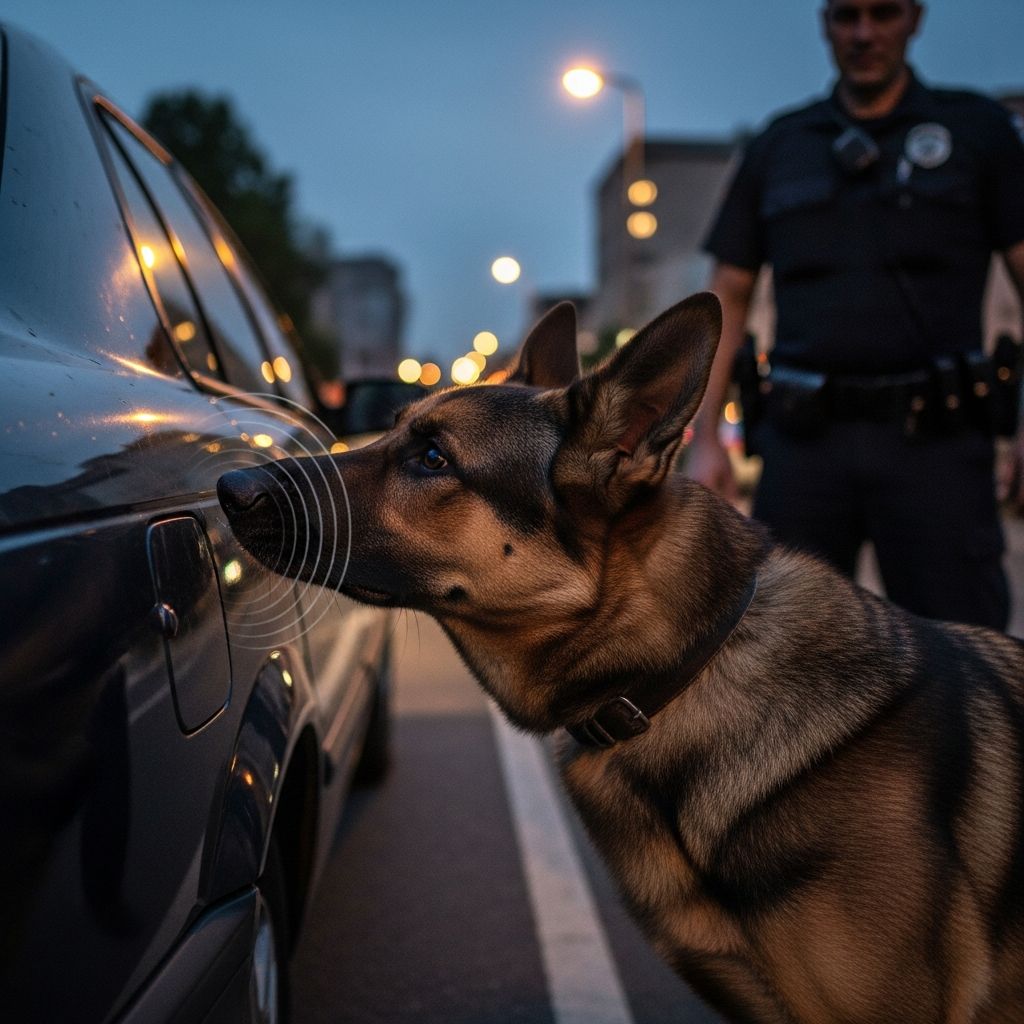
The rapid shift toward marijuana legalization across the United States has fundamentally altered how law enforcement approaches the familiar scent of cannabis. Once a straightforward indicator of criminal activity, the smell of marijuana now navigates a patchwork of state-specific regulations, challenging traditional probable cause standards. This article delves into the evolving jurisprudence, highlighting how courts interpret odor evidence in the context of legal possession, driving under the influence concerns, and Fourth Amendment protections. As of 2026, understanding these nuances is crucial for drivers and citizens encountering police during routine stops.
Historical Foundations of Odor-Based Searches
Under the Fourth Amendment, searches and seizures must be reasonable, typically requiring a warrant supported by probable cause. Historically, the “plain smell doctrine”—an extension of the plain view principle—allowed officers to act on sensory evidence like marijuana odor without prior judicial approval. This doctrine gained traction in cases predating widespread legalization, where the scent unequivocally signaled contraband possession.
Courts upheld warrantless vehicle searches under the automobile exception, established in Carroll v. United States (1925), permitting searches if probable cause exists due to a vehicle’s mobility. Pre-legalization, marijuana’s uniform illegality made its odor sufficient probable cause. However, as states decriminalized or legalized cannabis, this logic eroded, prompting reevaluation.
Shifting Legal Landscape Post-Legalization
Marijuana laws vary dramatically: 24 states plus D.C. permit recreational use, 39 allow medical access, while federal law maintains Schedule I status. This dichotomy complicates enforcement. In fully prohibitionist states like Idaho, the smell remains potent probable cause for searches. Conversely, legalization states demand more than odor alone.
Key factors influencing legality include:
- State Legal Status: Recreational legality often nullifies odor as sole justification.
- Odor Type: Burnt vs. raw cannabis may imply consumption vs. possession.
- Contextual Evidence: Impairment signs, visible paraphernalia, or excess quantities bolster claims.
- Vehicle vs. Home: Automobile exception applies more readily to cars.
Courts now emphasize the “totality of circumstances,” weighing odor against legal allowances. Mere possession within limits (e.g., 1-2 ounces) isn’t criminal, diluting the scent’s evidentiary weight.
State-by-State Breakdown of Court Rulings
Divergent judicial interpretations create a fragmented map. The following table summarizes approaches in select states:
| State | Recreational Legal? | Odor Alone Sufficient? | Key Ruling/Law |
|---|---|---|---|
| Virginia | Yes | No | Va. Code § 4.1-1302: Bans searches solely on odor |
| Maryland | Yes | No | Md. Crim. Proc. Code Ann. § 1-211: Prohibits odor-based stops/searches |
| Minnesota | Yes | No | Minn. Stat. § 626.223; Supreme Court ruling |
| Michigan | Yes | Totality | Courts require additional factors |
| Illinois | Yes | Pending/Debated | Supreme Court reviewing smell’s role |
| Wisconsin | No (Medical CBD) | Yes | Supreme Court allows odor searches |
| Florida | No (Medical) | Often Yes | Appellate rulings support odor |
| Pennsylvania | No (Medical) | No | Supreme Court rejects odor alone |
This table illustrates the split: explicit bans in some legalized states, permissive stances where cannabis remains largely illegal. In California, post-Proposition 64, courts scrutinize burnt odor claims, requiring corroboration like smoke residue or impairment.
Distinctions Between Odor Types and Scenarios
Not all marijuana smells are equal. Raw cannabis odor suggests legal possession, while burnt scent hints at recent use, potentially violating open-container or smoking-in-vehicle bans. California courts, for instance, ruled that stale burnt odor lacks probable cause absent fresh evidence.
Vehicle searches invoke the automobile exception, but officers must articulate specific, articulable facts beyond odor. Incriminating statements, visible paraphernalia, or impairment indicators (e.g., field sobriety test failures) combine to form probable cause. Exigent circumstances, like suspected child endangerment, further justify action.
For homes or persons, warrant requirements are stricter; odor alone rarely suffices post-legalization, as seen in evolving plain smell applications.
Your Rights During a Traffic Stop
Knowledge empowers. If pulled over:
- Remain Calm: Politely ask if you’re free to go.
- Decline Consent: You can refuse searches; “I do not consent to searches” is key.
- Avoid Admissions: Don’t confirm marijuana presence or use.
- Refuse Field Tests (Where Possible): In states like Arizona, refusal won’t always lead to arrest but may invite scrutiny.
- Document: Note officer details, badge number, and circumstances.
Consent overrides warrant needs, so clarity matters. Post-arrest inventory searches of impounded vehicles are standard and non-consensual.
Recent Court Decisions and Legislative Trends
2024-2025 saw pivotal rulings. Minnesota codified that odor alone doesn’t justify vehicle searches. Illinois’ Supreme Court grappled with a case involving a gram of cannabis found post-odor search, balancing road safety against rights. New Jersey and Pennsylvania high courts aligned against sole-odor reliance.
Legislatures responded: Virginia and Maryland enacted explicit prohibitions. Trends favor protecting legal users from pretextual stops, though enforcement against trafficking persists via quantity or packaging cues.
Implications for Law Enforcement Training
Officers receive updated training on post-legalization protocols, emphasizing totality assessments over reflexive odor responses. Departments stress documenting impairment (e.g., via Drug Recognition Experts) rather than scent alone, reducing litigation risks.
Frequently Asked Questions (FAQs)
What if marijuana is legal in my state—can police still search based on smell?
In most legalized states, no—odor alone isn’t probable cause. Courts require additional evidence like impairment or illegal amounts.
Does burnt marijuana smell justify a search more than raw?
Potentially yes, as it may indicate recent consumption violating use laws, but corroboration is needed.
Can I refuse a vehicle search during a traffic stop?
Yes, politely decline consent. Without probable cause or exception, they can’t proceed.
What happens if illegal items are found after an improper search?
Motions to suppress evidence can lead to dismissal; consult a criminal defense attorney immediately.
Are federal properties different?
Yes, federal law prohibits marijuana everywhere, so odor suffices regardless of state law.
Protecting Yourself: Practical Strategies
Beyond stops, store cannabis legally (sealed, out of reach while driving). Avoid smoking in vehicles. If charged, challenge the search’s basis—many convictions hinge on odor claims now vulnerable to suppression.
In summary, while odor once ruled, legalization demands nuance. Stay informed on your state’s stance to safeguard rights amid change.
References
- Can The Police Search Your Vehicle If They Smell Marijuana — Arja Shah Law. 2023. https://arjashahlaw.com/blog/police-search-your-vehicle-smell-marijuana/
- Does Marijuana Smell Alone Give Police the Right to Search? — Nolo. 2025. https://www.nolo.com/legal-encyclopedia/does-marijuana-smell-alone-give-police-the-right-to-search-what-you-need-to-know.html
- Ill. Supreme Court to decide if smell of marijuana justifies vehicle searches — Police1. 2023. https://www.police1.com/policing-era-legal-marijuana/ill-supreme-court-to-decide-if-smell-of-marijuana-justifies-vehicle-searches
- State Legalization of Marijuana Is Changing Search and Seizure Jurisprudence — State Court Report. 2023. https://statecourtreport.org/our-work/analysis-opinion/state-legalization-marijuana-changing-search-and-seizure-jurisprudence
- Legalities of Vehicle Searches in Los Angeles When Police Claim to Smell Marijuana — Los Angeles Criminal Lawyer. 2023. https://www.losangelescriminallawyer.pro/legalities-of-vehicle-searches-when-law-enforcements-smells-mari.html
Similar Articles








Read full bio of medha deb




