
Mastering Photo Release Forms: Legal Essentials
Unlock the legal secrets of photo release forms to safeguard your photography business from disputes and enable safe image publishing.
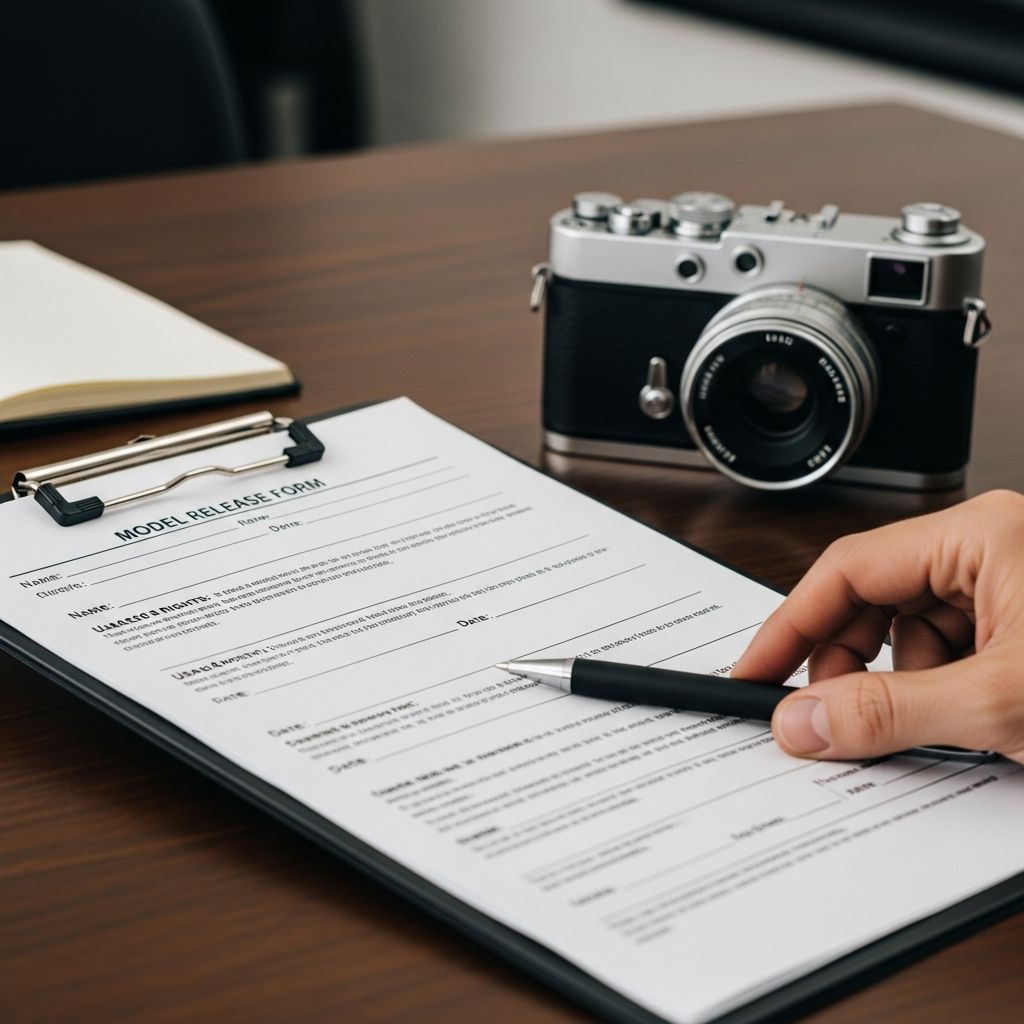
Photo release forms serve as critical legal tools that grant photographers and content creators the right to use images of individuals, minors, animals, or private property for commercial, promotional, or public purposes. These documents protect against claims of privacy invasion or unauthorized use, ensuring smooth operations in photography, marketing, and media industries.
Understanding the Core Purpose of Image Permission Documents
At their heart, these agreements distinguish between capturing an image—which generally requires no permission in public spaces—and distributing or monetizing it. While anyone can snap photos in open areas for personal use without repercussions, sharing them online, in ads, or for sale demands explicit consent to mitigate risks like right of publicity lawsuits.
These forms explicitly outline usage terms, preventing misunderstandings that could lead to costly litigation. For instance, businesses photographing customers for social media campaigns rely on them to avoid demands for compensation or image removal.
Key Scenarios Requiring Signed Permissions
Professionals must secure approvals before any commercial application. Common triggers include:
- Posting portraits on professional websites or portfolios to attract clients.
- Featuring customer testimonials with their images in promotional materials.
- Selling stock photos through online platforms that mandate proof of consent.
- Using event snaps in newsletters, brochures, or advertisements.
- Publishing pet or property shots in real estate listings or product catalogs.
Editorial uses, such as news articles, often bypass this need due to First Amendment protections, but commercial intent always necessitates documentation.
Distinguishing Between Major Form Categories
Customizing the document type to the subject ensures comprehensive coverage. Here’s a breakdown:
| Type | Applies To | Signer | Primary Use |
|---|---|---|---|
| Adult Model Permission | Recognizable individuals over 18 | The person themselves | Commercial shoots, ads, social media |
| Minor Consent Agreement | Children under 18 | Parent or legal guardian | Family portraits, school events, youth modeling |
| Property and Pet Authorization | Homes, vehicles, animals, private structures | Owner or authorized representative | Real estate, product endorsements, pet calendars |
Selecting the correct variant prevents invalidation; for example, minor forms must include guardian details and sometimes witness signatures for added enforceability.
Essential Clauses Every Form Must Include
To hold up in court, agreements require precise language covering:
- Subject Identification: Full legal name, address, and sometimes ID verification for adults.
- Scope of Usage: Detailed permissions for media types (print, digital, video), platforms (web, TV, billboards), and purposes (non-exclusive, perpetual worldwide rights).
- Compensation Waiver: Statement confirming no payment is expected unless specified.
- Alteration Rights: Allowance for editing, cropping, or enhancing images.
- Liability Release: Indemnification against claims from third parties.
- Termination and Revocation: Conditions under which rights can end, if any.
- Signatures and Dates: From all parties, often notarized for high-stakes uses.
Notarization bolsters credibility, particularly for international distribution or high-value commercial projects.
Navigating Legal Boundaries: Public vs. Private Spaces
Privacy expectations vary by location. Public venues like streets or parks allow unrestricted photography for editorial purposes, but private properties demand owner approval even for initial capture if privacy is expected.
In the U.S., states enforce varying right of publicity laws; for example, California protects deceased personalities’ likenesses indefinitely, while others limit to living individuals. Always research jurisdiction-specific rules.
Common Pitfalls and How to Avoid Them
Many creators err by:
- Overlooking unrecognizable crowd shots—zoom-ins on faces still require consent.
- Using verbal agreements alone; written proof is indispensable.
- Ignoring perpetual vs. limited rights—specify durations to match project needs.
- Forgetting updates for evolving uses, like repurposing wedding photos for stock sales.
Pro tip: Digitize forms via apps for instant signing and cloud storage, ensuring accessibility during shoots.
Building Your Custom Template: Step-by-Step
Craft a robust template adaptable to scenarios:
- Header with your business name, contact info, and document title.
- Subject details section.
- Permission grant paragraph with checkboxes for usage types.
- Waiver and release language.
- Consideration clause (even “$1” nominal fee strengthens enforceability).
- Signature blocks for photographer, subject, witness, and notary.
Consult an attorney to tailor for your state, as templates from generic sites may lack nuance.
Special Considerations for Minors and Vulnerable Subjects
Photographing children amplifies risks due to protective parental rights. Forms should:
- Require both parents’ signatures where possible.
- Detail session specifics to assure no surprises.
- Include clauses for ongoing supervision.
For celebrities or public figures, standard forms suffice unless endorsements are implied.
Print and Stock Photography Specifics
Clients requesting prints from your files need separate print licenses limiting copies and sizes. Stock sites like Shutterstock demand uploaded releases for every human or property image, rejecting submissions without them.
International Variations and Best Practices
EU’s GDPR imposes stricter data protections, treating images as personal data requiring explicit opt-in consents. Always include territorial clauses for global use.
Best practices:
- Discuss terms pre-shoot to build trust.
- Provide copies to subjects immediately.
- Archive digitally with metadata links.
- Pair with insurance covering defamation or privacy claims.
Frequently Asked Questions About Photo Releases
Do I need a release for photos taken at public events?
Generally no for editorial use, but yes for any commercial promotion featuring identifiable people.
Can I use a photo without a release if I alter it heavily?
No—alterations don’t negate likeness rights if the person remains recognizable.
What if the subject later regrets signing?
Perpetual releases are binding unless fraud is proven; include revocation options for flexibility.
Is a release needed for my own property or family?
Not for personal use, but recommended for commercial applications to preempt disputes.
How do I handle group photos?
Obtain individual releases or a blanket group form with listed names.
Empowering Your Creative Workflow with Solid Legal Foundations
Integrating these forms into your routine transforms potential liabilities into assets, allowing unfettered creativity. Photographers who prioritize them report fewer disputes and smoother client relationships, fostering long-term success in competitive markets.
References
- When to Use a Photo Release Form — LegalZoom. 2023-05-15. https://www.legalzoom.com/articles/when-to-use-a-photo-release-form
- Photo Release: Overview, Definition, and Example — Cobrief. 2024-02-10. https://www.cobrief.app/resources/legal-glossary/photo-release-overview-definition-and-example/
- What is a Photo Release Form? — Superscript. 2023-11-20. https://gosuperscript.com/news-and-resources/what-is-a-photo-release-form/
- Photo Release Forms 101 — Thimble. 2024-01-05. https://www.thimble.com/blog/photo-release-form-explained
- Model Release Form vs Photo Release Form — StudioBinder. 2023-08-12. https://www.studiobinder.com/blog/model-release-form-vs-photo-release-form/
- Release Forms — Florida Atlantic University. 2024-03-01. https://www.fau.edu/university-communications/photography/release-forms/
- Model Release — Wikipedia (citing primary legal sources). 2025-01-15. https://en.wikipedia.org/wiki/Model_release
Similar Articles








Read full bio of medha deb


