
Phishing Simulations: Legal and Effective Employee Training
Navigate the legal landscape of phishing tests while implementing best practices to strengthen your workforce against cyber threats.
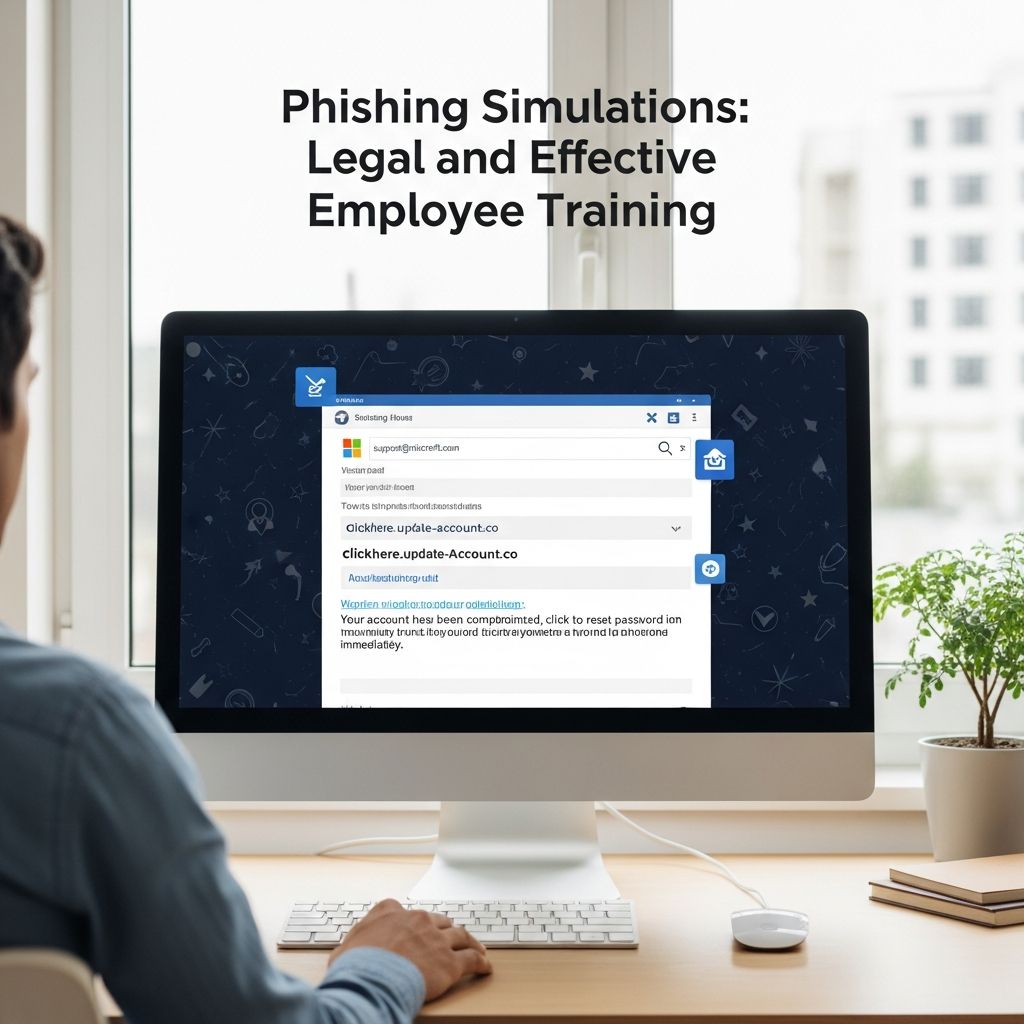
Phishing simulations involve sending controlled fake emails to employees to gauge their ability to spot cyber threats. When executed properly, these tests bolster organizational defenses without crossing legal boundaries.
Understanding the Purpose of Phishing Simulations
Organizations deploy phishing simulations to mimic real-world cyber attacks, helping employees recognize suspicious communications. These exercises reveal vulnerabilities, promote vigilance, and foster a culture of security awareness. Unlike passive training, simulations provide practical experience, allowing staff to practice responses in a risk-free setting.
Key objectives include identifying at-risk individuals, measuring baseline awareness, and tracking improvement over time. Regular testing ensures skills remain sharp amid evolving threats like business email compromise and spear-phishing.
Legal Framework for Conducting Employee Tests
While no blanket federal law prohibits phishing simulations in the U.S., employers must navigate privacy statutes, wiretap laws, and employment regulations. The Electronic Communications Privacy Act (ECPA) generally permits monitoring on company systems with notice, but simulations could implicate state-specific rules on deceptive practices.
Courts have upheld such programs when employees receive prior disclosure. For instance, transparent policies in employee handbooks establish consent. Failure to disclose can lead to claims of invasion of privacy or constructive discharge if tests cause undue stress.
- Obtain explicit or implied consent through onboarding documents.
- Limit simulations to business hours and company devices.
- Avoid personal email addresses or off-duty access.
Essential Steps to Launch a Compliant Program
Begin with a clear policy outlining the program’s scope, frequency, and consequences. Communicate via all-hands meetings and updates to reinforce that tests aim to educate, not punish.
- Assess your organization’s risk profile to tailor scenarios.
- Select ethical templates from reputable platforms.
- Schedule tests in waves to prevent collusion.
- Deliver immediate, constructive feedback post-simulation.
Documentation is crucial: log participation, results, and remedial actions to demonstrate due diligence in audits or litigation.
Designing Ethical and Realistic Scenarios
Effective simulations mirror genuine threats without manipulation. Base emails on industry-specific attacks, such as invoice fraud for finance teams or support tickets for IT staff.
Steer clear of high-emotion triggers like fake terminations or family emergencies, which erode trust and invite backlash. Instead, use professional pretexts: urgent policy updates, vendor alerts, or credential resets.
| Role | Recommended Scenario | Rationale |
|---|---|---|
| Executives | CEO fraud/BEC | Targets high-value decisions |
| Finance | Fake invoices | Common financial lure |
| HR | Resume submissions | Job-related phishing |
| General Staff | IT support requests | Broad applicability |
Personalize using public data like LinkedIn profiles for spear-phishing realism, but never access private information.
Frequency and Timing Strategies
Test every 4-6 weeks per employee to balance retention and fatigue. Stagger sends across groups to avoid alerts spreading via informal channels. Monitor metrics like click rates and complaints to adjust cadence dynamically.
Adaptive approaches increase difficulty for proficient users and simplify for repeat clickers, promoting growth without discouragement.
Providing Feedback and Remediation
Instant feedback upon interaction explains red flags—odd URLs, urgent language, unexpected attachments—and links to training modules. Frame results as learning opportunities: celebrate reporters and coach vulnerable staff privately.
Amnesty policies encourage real-phish reporting without fear, boosting the ‘human firewall’ effect where employees proactively hunt threats.
Measuring Success and ROI
Track phishing-prone percentage, reporting rates, and policy adherence pre- and post-campaigns. Studies show well-run programs lift reporting from 7% to over 20%.
Departmental leaderboards (anonymous) gamify engagement, while ROI justifies budgets: reduced incidents equate to millions in averted losses.
Common Pitfalls and How to Avoid Them
- Mass blasts: Employees share intel instantly—stagger instead.
- Punitive culture: Public shaming kills trust; focus on positives.
- Overly tricky tests: Impossible scenarios frustrate; start simple.
- Ignoring multi-channel: Simulate email-SMS chains ethically.
Role of Technology in Modern Simulations
Platforms automate personalization via AI and OSINT, crafting role-aligned lures. Features like adaptive difficulty and multi-channel support (vishing, smishing) enhance realism while ensuring compliance.
Integrate with awareness training for seamless reinforcement, turning tests into ongoing education.
Building a Security-First Culture
Simulations succeed when embedded in broader initiatives: regular drills, executive buy-in, and cross-departmental challenges. Transparency transforms tests from ‘gotchas’ to team efforts, yielding sustained vigilance.
University research underscores empathy-driven programs outperform punitive ones, maintaining morale while cutting risks.
Frequently Asked Questions
Are phishing simulations legal for private companies?
Yes, with proper disclosure and consent via policies. Consult legal counsel for state-specific rules.
How often should we run tests?
Every 4-6 weeks individually, staggered organization-wide to prevent fatigue.
What if an employee gets upset?
Provide private debriefs, emphasize education, and offer support. Avoid manipulative scenarios.
Can we test personal devices?
No—stick to company systems to respect privacy boundaries.
Do simulations replace other training?
No; combine with interactive modules for comprehensive defense.
Advanced Tactics for High-Risk Environments
In regulated sectors like finance or healthcare, align simulations with compliance mandates (e.g., NIST frameworks). Incorporate vishing by following up emails with scripted calls, teaching verification protocols.
For remote teams, test collaboration tools like Slack or Teams with tailored lures. Geographic personalization—local holidays, vendors—heightens relevance.
Post-simulation analytics pinpoint trends: if sales clicks spike on mobile, prioritize device-specific training. Longitudinal data proves program efficacy to stakeholders.
Ethical AI tools scan public sources for hyper-realistic spear-phishing, mirroring attacker recon without overstepping. Always debrief promptly to reinforce lessons.
Case Study: Successful Implementation
A tech firm faced rising industry-targeted phishing. They announced tests transparently, used role-specific scenarios, and followed with workshops. Click rates dropped 35%, reporting rose, and staff praised the approach. This model—communicate, challenge fairly, educate—drives results.
References
- 7 Phishing Simulation Best Practices: The 2025 Guide — Brightside AI. 2025-01-01. https://www.brside.com/blog/7-phishing-simulation-best-practices-the-2025-guide
- A Guide to Responsible Phishing Simulations — Hook Security. 2024-06-15. https://www.hooksecurity.co/blog/responsible-phishing-simulations
- Phishing Simulation Best Practices: 2026 Playbook — Hoxhunt. 2026-01-01. https://hoxhunt.com/blog/phishing-simulation-best-practices
- The Modern Phishing Awareness Training Guide for Employees — Defendify. 2024-03-20. https://www.defendify.com/blog/phishing-awareness-training-for-employees/
- A Comprehensive Guide to Phishing Simulations — TitanHQ. 2024-11-10. https://www.titanhq.com/security-awareness-training/phishing-simulations-guide/
Similar Articles








Read full bio of medha deb




