
Pfizer, Off-Label Marketing, and Record U.S. Criminal Fines
How Pfizer’s $2.3 billion case reshaped health care fraud enforcement and corporate criminal accountability in the United States.
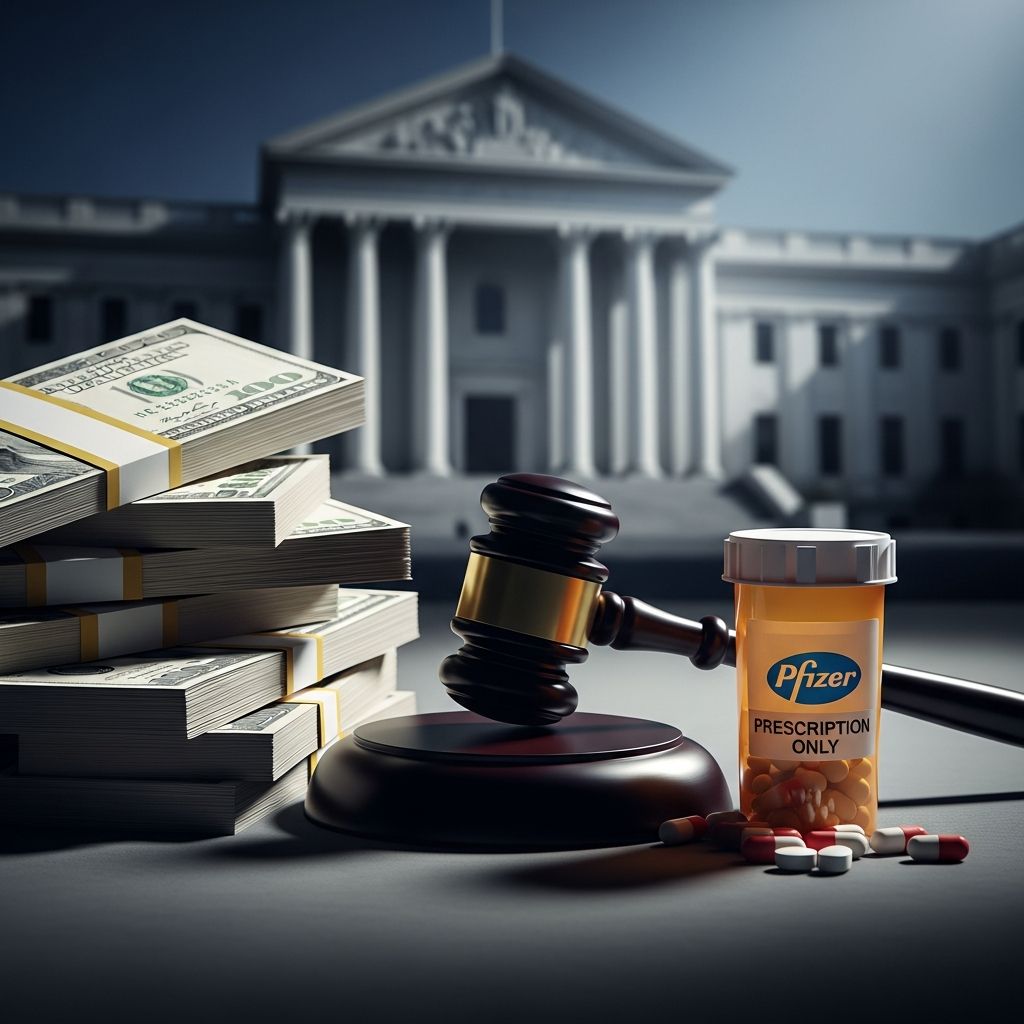
In the late 2000s, the U.S. Department of Justice (DOJ) announced a health care fraud settlement that broke every previous record in the pharmaceutical sector. At the center was Pfizer Inc., one of the world’s largest drug manufacturers, accused of illegally marketing several prescription medications and paying improper financial incentives to prescribers.
This case combined a historic criminal fine with sweeping civil penalties and corporate compliance obligations. It did not just punish one company; it sent a message to the entire industry about the legal limits of promotion, the power of whistleblowers, and the government’s willingness to pursue corporate crime in health care.
Background: Why Pharmaceutical Marketing Is So Heavily Regulated
Prescription drugs in the United States are tightly controlled because patients and insurers rely heavily on the integrity of medical information. The U.S. Food and Drug Administration (FDA) must approve:
- Specific uses of each drug (the diseases or conditions it can treat).
- Dosages and formulations proven safe and effective in clinical trials.
- Labeling and promotional claims describing benefits, risks, and appropriate patients.
Once a drug is approved, physicians may legally prescribe it “off label” for uses not described in the FDA-approved label. However, manufacturers are not allowed to promote those unapproved uses as if they were approved indications. Doing so can transform aggressive marketing into criminal misbranding and health care fraud.
The Pfizer Case in Context
Before the DOJ’s action against Pfizer, several large pharmaceutical companies had already paid substantial sums for unlawful marketing practices. But Pfizer’s settlement set a new benchmark in both size and scope.
The government alleged that Pfizer and certain subsidiaries:
- Promoted drugs for unapproved indications and patient populations.
- Distributed promotional materials that misrepresented safety and efficacy.
- Provided kickbacks such as speaker fees, travel, and entertainment to influence prescribers.
These actions were treated not as mere regulatory missteps but as felony-level misconduct, especially because some conduct occurred while Pfizer was already subject to prior compliance agreements for earlier violations.
Key Drugs at the Heart of the Allegations
The DOJ’s announcement focused on several high-profile drugs that were widely prescribed. While details vary by product, the overarching theory was that Pfizer sought to expand sales beyond what FDA had approved, and used financial incentives to accelerate that growth.
| Drug (Brand Name) | Therapeutic Area | Core Allegation |
|---|---|---|
| Bextra (valdecoxib) | Pain / anti-inflammatory | Promoted for uses and dosages not approved by FDA and despite significant safety concerns. |
| Geodon | Antipsychotic | Alleged promotion for unapproved psychiatric conditions and age groups. |
| Lyrica | Neuropathic pain / seizures | Alleged off-label marketing for pain-related uses beyond approved indications. |
| Zyvox | Antibiotic | Claims of superiority over competing antibiotics not supported by adequate evidence. |
Other widely recognized products, such as Lipitor, Zyrtec, and Viagra, were also mentioned in allegations regarding improper inducements related to prescribing.
The $2.3 Billion Resolution: Criminal and Civil Components
The enforcement action against Pfizer was structured as a combination of criminal prosecution and civil False Claims Act (FCA) liability. The total bill reached approximately $2.3 billion, covering different types of misconduct and harms.
Criminal Fine and Forfeiture
A Pfizer subsidiary, Pharmacia & Upjohn Company, Inc., pleaded guilty to a felony violation of the Food, Drug, and Cosmetic Act (FDCA) for misbranding Bextra with intent to defraud or mislead.
- Criminal fine: approximately $1.195 billion – at the time, the largest criminal fine ever imposed in the United States for any type of case.
- Criminal forfeiture: about $105 million, representing proceeds traceable to the offense.
This record-setting criminal component was central to the DOJ’s claim that the case marked a turning point in corporate criminal enforcement.
Civil False Claims Act Settlements
In addition to the criminal plea, Pfizer settled civil allegations that it caused federal health programs to pay for prescriptions driven by unlawful promotion and kickback schemes.
- Approximately $1 billion in civil payments under the FCA.
- Funds distributed to Medicare, Medicaid, and other federal health care programs that reimbursed claims tied to the misconduct.
- Multiple whistleblowers (relators) who filed qui tam suits received a share of the government’s recovery, as provided under the False Claims Act.
This civil component underscored the idea that off-label promotion can translate into false or fraudulent claims when federal programs are billed for improperly induced or non-covered uses.
Corporate Integrity Agreements and Compliance Overhauls
Massive fines are only part of the story. The Pfizer settlement also required long-term structural changes inside the company. The Office of Inspector General (OIG) of the U.S. Department of Health and Human Services negotiated a Corporate Integrity Agreement (CIA) with Pfizer.
Typical CIA obligations include:
- Establishing or strengthening independent compliance offices with direct access to corporate leadership.
- Implementing comprehensive training for sales, marketing, and medical affairs personnel.
- Revising policies on interactions with health care professionals, including limits on gifts, travel, and speaking fees.
- Creating mechanisms for monitoring field activity, such as audits and review of promotional materials.
- Reporting certain types of potential violations to the government and cooperating with follow-up investigations.
Pfizer had previously entered a federal compliance agreement in 2004 regarding off-label promotion of another drug, which raised questions about whether successive large penalties were effectively discouraging repeat misconduct.
Why Prosecutors Treated the Case as Criminal, Not Just Civil
Many health care fraud matters are resolved through civil settlements alone. Pfizer’s case was notable because prosecutors insisted on a felony plea by a corporate subsidiary and a record criminal fine.
Factors that typically influence a decision to pursue criminal charges against a corporation include:
- Evidence that conduct was knowing and willful, rather than accidental or purely negligent.
- Risk of patient harm, especially when promotion downplays safety issues.
- History of prior enforcement actions or CIAs involving the company.
- Scale of the impact on federal health programs and overall financial loss.
Prosecutors emphasized that criminal pleas and large fines are meant to send a deterrent signal to corporate boards and executives, making it clear that compliance failures can have serious legal and financial consequences.
Comparing Pfizer’s Fine to Other Record Corporate Penalties
Pfizer’s criminal fine was the largest of its kind at the time, but not the only historic corporate penalty on the books. For example, in a separate context, energy company BP faced a record criminal fine in connection with the Deepwater Horizon disaster, and later liability for tens of billions in costs and penalties.
| Company | Sector | Approx. Amount (USD) | Primary Misconduct |
|---|---|---|---|
| Pfizer | Pharmaceuticals | $2.3 billion total (about $1.3 billion criminal) | Off-label marketing, misbranding, kickbacks in health care fraud case. |
| BP | Oil & Gas | $4.5 billion criminal settlement; $1.26 billion criminal fine component | Deepwater Horizon oil spill and related environmental crimes. |
These cases highlight a trend: corporate criminal fines have steadily grown as governments seek penalties proportionate to the size and resources of large multinational firms.
Do Huge Fines Change Corporate Behavior?
Critics and scholars have questioned whether even multi-billion-dollar penalties are enough to deter repeat violations in highly profitable industries. Analyses of pharmaceutical enforcement actions note that for some companies, legal payouts may be treated as a cost of doing business rather than an existential threat.
Concerns include:
- Shareholders, not individual executives, often bear the financial burden.
- Corporate structures may place criminal liability on subsidiaries that can be dissolved later.
- Revenue from aggressively marketed drugs can exceed the eventual fines and settlements.
In response, policymakers and commentators have suggested measures such as tougher individual accountability for executives, more frequent use of exclusion from federal health programs, and stricter oversight of repeat offenders.
Lessons for Patients, Providers, and Compliance Professionals
The Pfizer case offers a concrete set of lessons for different stakeholders across the health care system.
For Patients
- Ask why a drug is being prescribed and whether it is FDA-approved for your condition.
- Discuss risks and benefits openly, especially for new or heavily advertised medicines.
- Be cautious of direct-to-consumer messages that sound like guarantees rather than balanced information.
For Prescribers
- Recognize that off-label prescribing can be clinically appropriate, but should not be driven by sales pressure or incentives.
- Review independent evidence and guidelines instead of relying solely on promotional material.
- Understand that accepting certain payments or benefits can create conflicts of interest and legal risk.
For Compliance and Legal Teams
- Build robust processes to review all promotional claims for consistency with FDA-approved labeling.
- Monitor speaker programs, consulting arrangements, and educational grants for potential kickback issues.
- Encourage a culture where employees can report concerns internally without retaliation, potentially reducing whistleblower filings.
Frequently Asked Questions (FAQs)
Q1: What made Pfizer’s case “the largest health care fraud settlement” at the time?
The settlement combined an approximately $1.3 billion criminal component with about $1 billion in civil False Claims Act recoveries, producing a total resolution of roughly $2.3 billion, which DOJ described as the largest health care fraud settlement in its history when announced.
Q2: Was Pfizer convicted of a crime, or was it only a civil case?
A Pfizer subsidiary, Pharmacia & Upjohn Company, Inc., pleaded guilty to a felony misbranding offense under the Food, Drug, and Cosmetic Act. This plea supported the record criminal fine, while the parent company resolved separate civil allegations without admitting criminal liability.
Q3: What exactly is “off-label marketing,” and why is it illegal for companies?
Off-label marketing occurs when a manufacturer promotes a drug for a use, dose, or population that the FDA has not approved. Physicians can legally prescribe off-label based on their judgment, but companies cannot market those unapproved uses because doing so bypasses the FDA’s safety and efficacy review process and can mislead payers and patients.
Q4: How did whistleblowers play a role in the Pfizer case?
Multiple former employees filed qui tam lawsuits under the False Claims Act, alleging unlawful promotion and kickbacks. These whistleblowers provided inside information that helped the government build its case and, under the statute, received a share of the civil recovery for their role in exposing the misconduct.
Q5: Did Pfizer change how it operates after the settlement?
As part of the resolution, Pfizer entered into a multi-year Corporate Integrity Agreement requiring enhanced compliance programs, monitoring, and reporting obligations. The company has since emphasized internal controls and training around promotional activities, although critics still debate how fully such agreements transform corporate culture over the long term.
References
- Justice Department Announces Largest Health Care Fraud Settlement in Its History — U.S. Department of Justice, Office of Public Affairs. 2009-09-02. https://www.justice.gov/archives/opa/pr/justice-department-announces-largest-health-care-fraud-settlement-its-history
- Tough on Crime? Pfizer and the CIHR — Joel Lexchin, Open Medicine (via PubMed Central, U.S. National Library of Medicine). 2010-05-11. https://pmc.ncbi.nlm.nih.gov/articles/PMC2875889/
- Pfizer Enters Largest Healthcare Fraud Settlement in U.S. History — LV Criminal Defense (summarizing DOJ action). Accessed 2025. https://www.lvcriminaldefense.com/pfizer-enters-largest-healthcare-fraud-settlement-in-u-s-history/
- Big Penalties for Big Pharma: Just Another Cost of Doing Business — Project On Government Oversight (POGO). 2009-09-08. https://www.pogo.org/analysis/big-penalties-for-big-pharma-just-another-cost-of-doing-business
- Largest corporate fine — Guinness World Records (BP Deepwater Horizon criminal fine). Accessed 2025. https://www.guinnessworldrecords.com/world-records/358880-largest-corporate-fine
- Who Paid the Largest Criminal Fine in History and Why? — HowStuffWorks. 2021. https://money.howstuffworks.com/largest-criminal-fines-in-history.htm
Similar Articles








Read full bio of Sneha Tete




