
Petitioning for Your Child’s Green Card: Complete Guide
Navigate the I-130 petition process to sponsor your child for permanent residency in the United States.
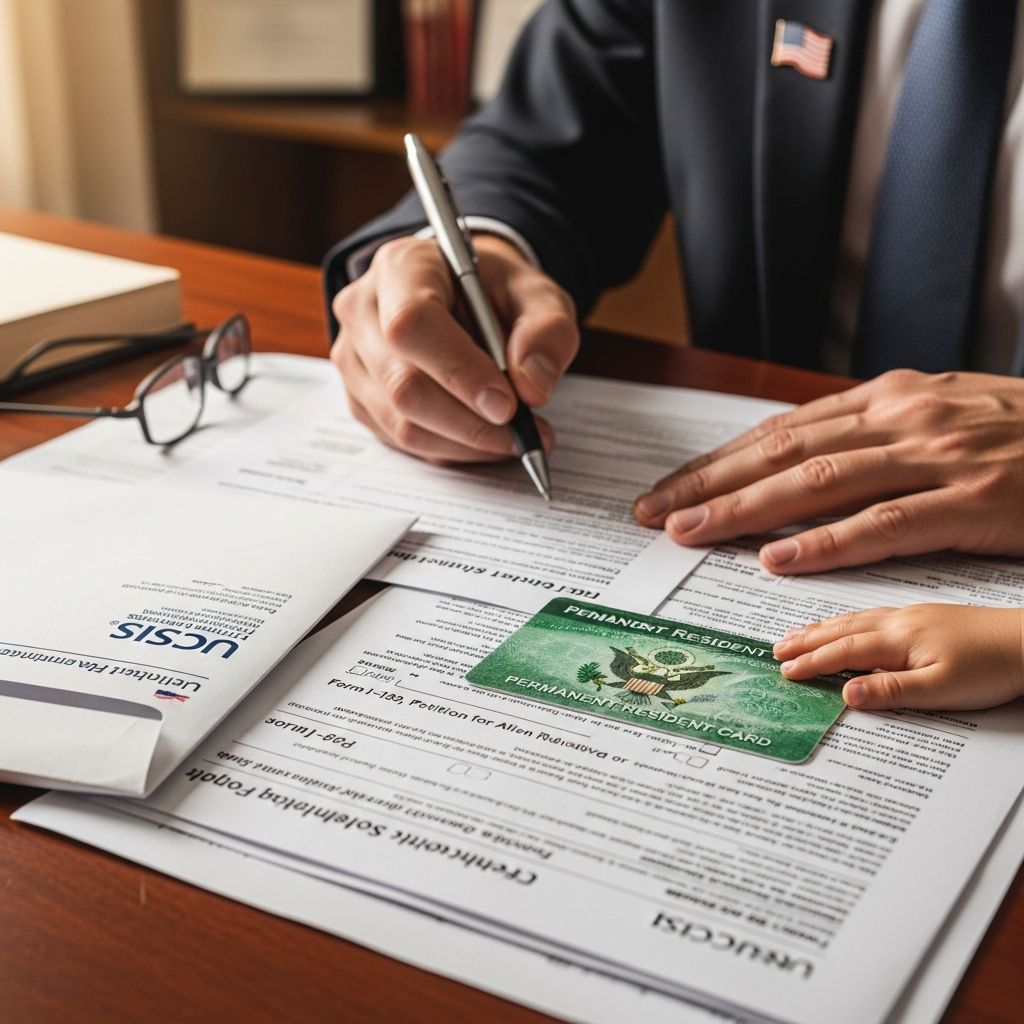
Understanding the I-130 Petition for Your Child
The journey to bring your child to the United States as a permanent resident begins with Form I-130, officially known as the Petition for Alien Relative. This fundamental immigration document establishes the familial relationship between you as the sponsoring parent and your child seeking permanent residency status. Whether you are a U.S. citizen or a lawful permanent resident, filing the I-130 represents the critical first step in initiating the green card application process on behalf of your child.
The I-130 petition serves as the legal foundation upon which all subsequent immigration proceedings are built. USCIS (U.S. Citizenship and Immigration Services) uses this form to verify that a legitimate parent-child relationship exists and that you meet the eligibility requirements to sponsor your child. Understanding what this form accomplishes and how it connects to later stages of the process will help you navigate the immigration system more effectively.
Who Qualifies as Your Sponsorable Child
Before initiating the petition process, it is essential to understand which family relationships qualify for I-130 sponsorship. The definition of “child” under immigration law is more specific than everyday usage and varies depending on your marital status, the child’s marital status, and the circumstances of birth.
A biological child qualifies for sponsorship if you are their biological parent and they have not yet reached their 21st birthday at the time of petition filing. For unmarried children of any age, both U.S. citizens and lawful permanent residents can file I-130 petitions. However, if your child is married, eligibility depends on your immigration status: U.S. citizens can sponsor married adult children, but lawful permanent residents cannot sponsor married children under any circumstances.
Stepchildren and adopted children may also qualify, though special requirements apply. A stepchild qualifies if the marriage that created the step relationship occurred before the child reached 18 years of age. Similarly, for adopted children, the adoption must have been finalized before the child turned 16 years old, and the child must have been in your legal custody for a minimum of two years following the adoption.
Conversely, certain relatives cannot be sponsored through the I-130 process, regardless of your citizenship status. These excluded relationships include grandchildren, grandparents, nieces, nephews, cousins, aunts, uncles, and parents-in-law. Additionally, you cannot petition for a biological parent if you obtained your own green card or citizenship through adoption, nor can you sponsor a stepchild if the marriage creating the relationship occurred after the child turned 18.
Eligibility Requirements for the Sponsoring Parent
Your ability to petition for your child depends directly on your immigration status. The United States permits only two categories of individuals to file I-130 petitions: U.S. citizens and lawful permanent residents (green card holders). No other immigration status qualifies you to sponsor a family member.
If you are a U.S. citizen, you enjoy broader sponsorship rights. You can petition for unmarried children of any age, married adult children, stepchildren, and adopted children, subject to the relationship requirements discussed above. U.S. citizens also benefit from shorter processing times and immediate relative status for their unmarried children under 21, which bypasses the employment-based visa categories and allows for faster green card acquisition.
Lawful permanent residents face more restrictions. You can petition only for unmarried children; married children cannot be sponsored if you hold a green card rather than citizenship. Additionally, the visa category for your child falls under Family Preference classifications, which means longer wait times compared to immediate relative categories available to citizens. If your financial situation or circumstances change after filing, you may add a joint sponsor—another U.S. citizen or lawful permanent resident who meets income requirements—to help satisfy the financial sponsorship obligations.
Documentation Requirements: Establishing Your Status
USCIS must verify that you possess the legal standing to file an I-130 petition. Providing clear, authentic documentation of your immigration status is non-negotiable and forms the foundation of your petition package.
For U.S. citizens, acceptable proof includes an original or certified copy of your U.S. birth certificate, a valid U.S. passport, or a naturalization certificate if you obtained citizenship through the naturalization process. Any of these documents sufficiently demonstrates your citizenship status, and you should submit the document that most clearly shows your full name and citizenship.
Lawful permanent residents must provide evidence of green card status. This requires submitting a copy of both the front and back sides of your Permanent Resident Card (Form I-551), or alternatively, other official documentation confirming your lawful permanent resident status. If your green card is expired, the expired card still serves as valid proof of your status, as permanent residency does not expire even if the physical card does.
Additionally, you should include your government-issued photo identification, such as a driver’s license or passport, along with a certified copy of your birth certificate. These documents collectively establish your identity and confirm your eligibility to sponsor a family member.
Documenting Your Relationship with Your Child
Perhaps the most critical component of your I-130 petition is proving that a legitimate parent-child relationship exists between you and your beneficiary. The specific documentation required depends on how the child was born and which parent is filing the petition.
For Biological Children: Mothers Filing the Petition
When a mother files the petition, the birth certificate typically serves as sufficient proof of the parent-child relationship. The birth certificate must be a long-form or certified copy that clearly shows the child’s name, date of birth, and the mother’s name. This document legally establishes the biological mother-child connection recognized by U.S. immigration law.
For Biological Children: Fathers Filing the Petition
Fathers must provide more extensive documentation than mothers due to legal presumptions regarding parentage. When filing for a child whose birth certificate lists both the father and mother, the father should submit the child’s birth certificate along with a marriage certificate demonstrating that he was married to the child’s mother. He must also provide proof that any prior marriages have been legally terminated, such as divorce decrees or annulment papers.
If the father’s name does not appear on the birth certificate or if the child was born outside of wedlock, additional proof becomes necessary. USCIS accepts a DNA test as definitive proof of biological paternity when processed through accredited laboratories with proper chain-of-custody documentation. Alternatively, fathers can provide evidence of a continuous, documented parent-child relationship spanning before the child reached 21 years of age. Acceptable evidence includes photographs showing the father and child together over an extended period, financial records such as wire transfers or child support payments, school enrollment forms, medical records listing the father, or correspondence demonstrating ongoing parental involvement.
For Adopted Children
Parents who adopted their children must submit a certified copy of the final adoption decree. This legal document conclusively establishes the adopted parent-child relationship and must show that the adoption became final before the child reached 16 years of age. Some adoptions may require additional documentation from the adoption agency or social services records to fully establish the legitimacy of the adoption.
Your Child’s Documentation Package
Your beneficiary child must also provide comprehensive documentation to support the I-130 petition. This includes their original or certified birth certificate (long-form version), which should be in English or accompanied by an official English translation. The child’s valid passport, even if expired, demonstrates their identity and citizenship of origin.
If your child has previously entered the United States, documentation of that entry becomes important. You should include copies of their I-94 arrival record and visa pages from any previous visits. If your child currently holds an Employment Authorization Document (EAD) or work permit, copies of these documents should be included as well.
Any legal name changes your child has undergone must be documented through court orders or official government records. Additionally, translations must accompany any documents originally issued in a language other than English. These translations must be certified by a qualified translator who attests to their accuracy and their fluency in both languages.
Additional Supporting Documentation
Beyond the core identifying and relationship documents, USCIS may request or benefit from additional evidence depending on your specific circumstances. If you or your child has legally changed names at any point, provide certified court orders documenting these changes. If you have been married multiple times, submit evidence of the legal termination of all prior marriages through divorce decrees, annulments, or death certificates of previous spouses.
For cases involving stepchildren or adopted children, ensure all relevant family law documents are included. Photos of you and your child together over an extended period can supplement the petition, particularly in cases where establishing an ongoing relationship is important. Financial records showing your support of the child may strengthen your petition if there are any questions about the legitimacy of the relationship.
Processing Timeline and What Happens After Filing
Once you submit your complete I-130 petition package, USCIS will issue an acknowledgment receipt confirming receipt of your application. This receipt does not indicate approval; rather, it confirms that your package is under review. Processing times vary significantly based on your child’s age, marital status, and whether they are located within the United States or abroad.
If your child is under 21 and unmarried, and you are a U.S. citizen, they qualify as an immediate relative, which typically results in faster processing. If your child is married or you are a lawful permanent resident sponsoring an unmarried child over 21, the case falls into Family Preference visa categories with longer wait times. For children abroad, your case will eventually transfer to the National Visa Center (NVC) for visa interview scheduling. For children already in the United States, the process may involve filing Form I-485 (Application to Register Permanent Residence or Adjust Status) to complete the green card application.
Special Circumstances and Complications
If your financial situation changes after filing the I-130, this does not necessarily derail your petition. You can add a joint sponsor—another U.S. citizen or lawful permanent resident—who meets the income requirements to co-sponsor your child. The joint sponsor must complete Form I-864 (Affidavit of Support) and demonstrate sufficient income to meet the poverty guidelines for a household of the required size.
If you are filing for multiple children, you must file a separate I-130 form for each child. While the supporting documentation may overlap, each child requires an individual petition form and formal application. Additionally, if your child is born to a foreign national after your I-130 is approved but before the child’s visa interview or green card approval, that newly born child may potentially be added to the existing family sponsorship petition under certain circumstances.
Common Documentation Mistakes to Avoid
The most frequent reason for I-130 petition delays or denials involves incomplete or inadequate documentation. Ensure all documents are certified copies when required, not photocopies. Birth certificates must be long-form versions showing parentage information, not short-form certificates. All non-English documents must include certified English translations with translator certification statements. Original signatures must appear on Form I-130 itself; unsigned or photocopied signatures may result in requests for resubmission.
Outdated or expired documents may still be acceptable for certain purposes (such as expired passports), but verify current USCIS requirements. Avoid submitting documents that are difficult to read or missing critical information. When in doubt about document requirements, consult USCIS’s official Form I-130 instructions or seek assistance from an immigration attorney.
Frequently Asked Questions
Q: Can a lawful permanent resident sponsor a married child?
A: No. Only U.S. citizens can sponsor married adult children. Lawful permanent residents can petition only for unmarried children, regardless of the child’s age.
Q: What if the child’s father is not listed on the birth certificate?
A: The father can provide a DNA test from an accredited laboratory, or provide documented evidence of an ongoing parent-child relationship before the child turned 21, such as photographs, financial records, or school documents naming the father.
Q: How long does the I-130 petition process typically take?
A: Processing times vary. Immediate relatives of U.S. citizens typically see faster processing (several months), while Family Preference categories for lawful permanent resident-sponsored children may take several years due to visa availability quotas.
Q: Can I add my stepchild to an I-130 petition?
A: Yes, if the marriage creating the stepchild relationship occurred before the child turned 18 years old. The stepchild must be under 21 or unmarried (depending on whether you are a citizen or permanent resident) to qualify.
Q: What happens if my income is too low to sponsor my child?
A: You can add a joint sponsor—another U.S. citizen or lawful permanent resident who meets income requirements—to co-sponsor your child and complete the Form I-864 Affidavit of Support.
Q: Are expired documents acceptable in an I-130 petition?
A: Some expired documents, such as passports, remain acceptable for identity verification purposes. However, check USCIS guidelines for specific document types, as requirements vary.
References
- Form I-130, Petition for Alien Relative — U.S. Citizenship and Immigration Services (USCIS). 2025. https://www.uscis.gov/form-i-130
- Immigrant Visa Process: Step 1 – Submit a Petition — U.S. Department of State, Bureau of Consular Affairs. 2025. https://travel.state.gov/content/travel/en/us-visas/immigrate/the-immigrant-visa-process/step-1-submit-a-petition.html
- Family-Based Immigration: Relative Sponsorship Requirements — USCIS. 2025. https://www.uscis.gov/family/family-based-petitions-and-visas
- Affidavit of Support (Form I-864) — USCIS. 2025. https://www.uscis.gov/form-i-864
- Green Card Categories and Who Can Be Sponsored — USCIS. 2025. https://www.uscis.gov/greencard/eligible-immigrants
Similar Articles








Read full bio of medha deb


