
The Perilous Path to Protection: The Reality of Seeking Asylum at the U.S. Border
Uncovering the systemic hurdles, digital walls, and physical dangers that confront asylum seekers at the US-Mexico border.
Introduction: The Illusory Sanctuary
The fundamental right to seek asylum, enshrined in both domestic and international law, was established in the aftermath of global conflict to ensure that those fleeing persecution could find a safe haven. Yet, for thousands of individuals and families arriving at the southern border of the United States, the promise of sanctuary is rapidly replaced by systemic bureaucratic barriers, prolonged limbo, and direct exposure to violence. Rather than encountering a process centered on humanitarian protection, many discover a labyrinthine system seemingly designed to deter, deflect, and delay.
The journey to the U.S.-Mexico border is often just the beginning of a grueling ordeal. Migrants leaving behind extortion, political persecution, and gang violence in countries across Central America, South America, and beyond arrive exhausted, only to find themselves effectively walled off—not just by physical barriers, but by digital and administrative ones. They came seeking protection from immediate peril, but what they find is often a new, equally life-threatening kind of danger. This article delves into the harsh realities facing asylum seekers today, exploring the policies that trap them, the conditions they are forced to endure, and the urgent need for a more humane approach to border management.
The Evolving Legal Landscape of Exclusion
For decades, the United States maintained a legal framework that nominally recognized the right of any individual physically present on U.S. soil to request asylum, regardless of how they arrived. However, recent administrations have increasingly relied on executive actions and deterrence-based strategies to fundamentally alter this landscape. The architecture of asylum has been reshaped by policies that prioritize rapid expulsion over due process.
A prominent example was the invocation of Title 42, a public health order activated during the COVID-19 pandemic . While ostensibly a health measure, public health experts and human rights advocates widely criticized Title 42 as a politically motivated tool used to bypass standard immigration laws. Under this directive, border agents expelled hundreds of thousands of migrants back to Mexico or their home countries without affording them the opportunity to present their asylum claims to a judge. Even with the eventual termination of the Title 42 public health order, the Department of Homeland Security (DHS) introduced sweeping new actions intended to manage regional migration, transitioning back to Title 8 authorities . These decades-old rules carry steep consequences for unlawful entry, including five-year bans on reentry and potential criminal prosecution.
Furthermore, deterrence strategies like the Migrant Protection Protocols (MPP), widely known as the “Remain in Mexico” policy, forced asylum seekers to wait outside U.S. territory for the duration of their immigration court proceedings. These overlapping policies have created an environment where the legal right to seek asylum is heavily conditional and practically inaccessible for those in the most desperate circumstances. The result is a system that filters out not those who lack valid claims, but those who lack the resources, technological access, or sheer luck to navigate its complex rules.
The Digital Wall: Technology and Systemic Delays
As physical enforcement and expulsion policies evolved, so too did the methods of managing the flow of migrants, leading to the implementation of what advocates call a “digital wall.” The most significant manifestation of this is the CBP One mobile application. Introduced by U.S. Customs and Border Protection, the app was designated as the primary mechanism for asylum seekers to schedule appointments to present themselves at a designated port of entry.
In theory, a digital scheduling system might sound like a step toward order and efficiency. In practice, it has formalized a system of digital metering that leaves thousands stranded. The CBP One app has been widely criticized for its technical glitches, language limitations, and the severe mismatch between the staggering number of users and the meager number of daily appointments available. For an asylum seeker fleeing imminent violence, the requirement to secure an appointment via a smartphone presents an insurmountable hurdle.
Many migrants arrive at the border having been robbed of their belongings, including their phones. Others lack access to stable internet connections or electricity in the makeshift camps where they reside. By making an app the de facto gatekeeper for asylum, the system discriminates against the poorest and most vulnerable. Those unable to secure an appointment are faced with an impossible choice: wait indefinitely in dangerous border towns, or risk crossing between ports of entry, thereby subjecting themselves to harsh penalties and potential disqualification under new asylum transit bans.
Trapped in Danger: The Humanitarian Crisis in Mexico
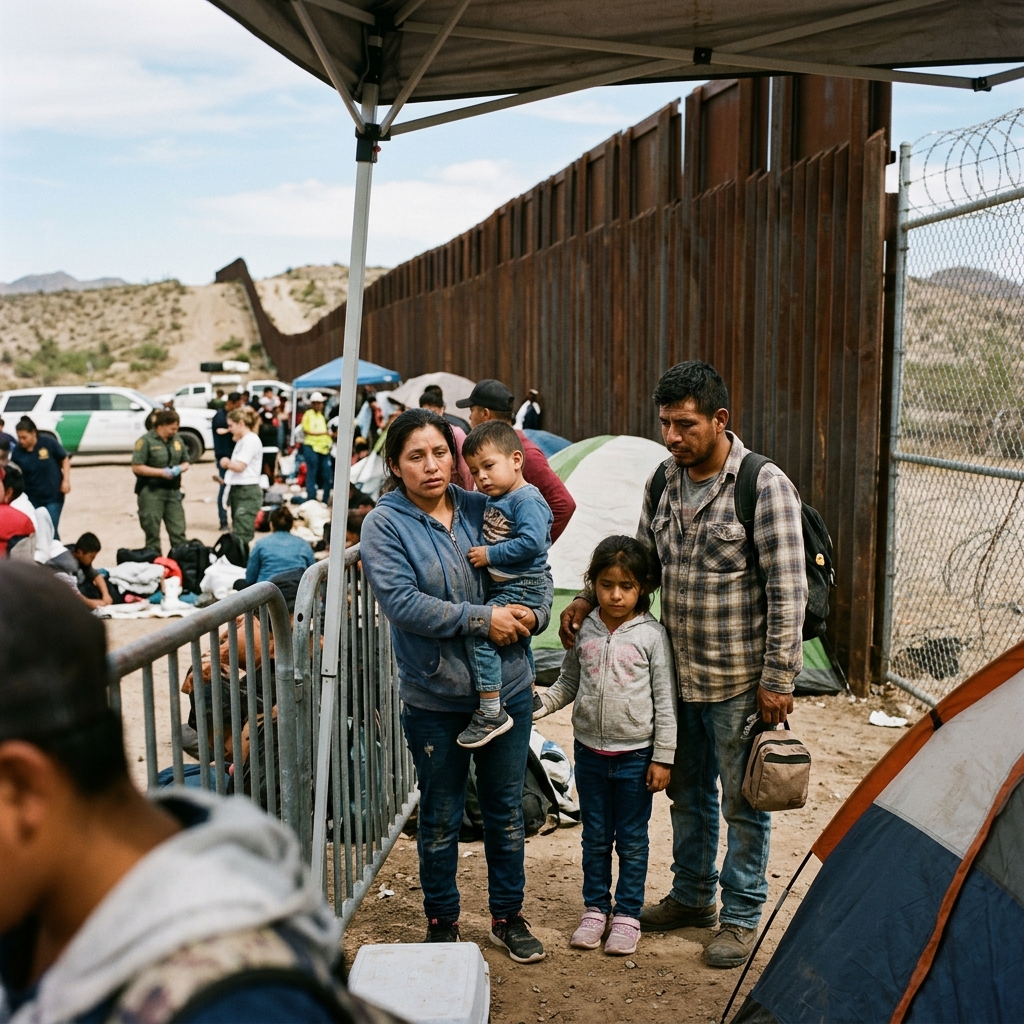
When asylum seekers are pushed back, expelled, or forced to wait for months for a digital appointment, they are not waiting in safety. They are relegated to border cities in northern Mexico, areas often controlled by powerful cartels and organized crime syndicates. For these criminal organizations, stranded migrants represent a highly lucrative commodity. Extortion, kidnapping for ransom, human trafficking, and sexual violence are rampant.
Individuals who arrived hoping to find refuge instead find themselves targeted precisely because of their vulnerable status. They cannot legally work, have no permanent shelter, and often stand out as foreigners, making them easy prey. Human Rights Watch and other monitoring organizations have extensively documented the targeted violence against asylum seekers expelled to Mexico, noting the abuses suffered by those blocked at the border . There are countless reports of families being abducted just hours after being turned back by U.S. border agents. In many cases, Mexican authorities are either unable to provide protection or are complicit in the abuses.
The United Nations High Commissioner for Refugees (UNHCR) has repeatedly raised alarms about the humanitarian crisis facing unaccompanied children and families in these regions . Shelters are chronically overcrowded, leading to the proliferation of informal encampments. In places like Matamoros or Reynosa, thousands of people live in tents without adequate access to clean water, sanitation, or medical care. Preventable diseases spread rapidly, and the lack of prenatal care for pregnant women or nutritional support for infants creates a slow-moving public health disaster.
The Psychological Toll on Migrant Families
The physical dangers of the border are matched only by the profound psychological trauma inflicted on those who are trapped there. Asylum seekers inherently represent a population that has already endured significant hardship. They carry the trauma of the persecution or violence that forced them to flee, coupled with the deep distress of leaving their homes and loved ones behind. The journey itself is often marked by violence, extortion, and the constant fear of death.
Arriving at the U.S. border only to face rejection, indefinite waiting, and continued exposure to cartel violence creates a compounding effect that mental health professionals describe as complex trauma.
The Stages of Trauma for Asylum Seekers
| Stage of Journey | Source of Trauma | Psychological Impact |
|---|---|---|
| Pre-Flight (Home Country) | Gang violence, political persecution, systemic poverty, domestic abuse. | PTSD, chronic anxiety, loss of trust in authorities. |
| Transit | Smuggler abuses, treacherous terrain (e.g., Darien Gap), extortion. | Physical exhaustion, acute stress, grief over lost companions. |
| Border Limbo | CBP One delays, turnbacks, cartel kidnappings, squalid camp conditions. | Hopelessness, depression, suicidal ideation, complex trauma. |
For children, the developmental consequences are devastating. Prolonged exposure to toxic stress in border camps can lead to long-term cognitive and emotional detriments. Parents, stripped of their ability to protect or provide for their children, often suffer from severe depression and a crippling sense of helplessness. The mental health crisis at the border is an invisible epidemic, completely unaddressed by the current border processing infrastructure.
The Path Forward: Restoring Humanity to the Border
Addressing the crisis at the border requires a fundamental shift in how the United States views its legal and moral obligations to those fleeing persecution. Deterrence policies have consistently failed to stop migration; they have only succeeded in making the journey more deadly and enriching the smuggling networks that exploit the resulting desperation. True reform must begin with the restoration of the legal right to seek asylum at ports of entry without the prerequisite of a smartphone app or the threat of immediate expulsion.
Advocates and legal experts argue for a system that emphasizes community-based reception and processing rather than militarized enforcement and mass detention. Such a system would involve:
- Resourcing Ports of Entry: Deploying trained asylum officers and humanitarian professionals to ports of entry to screen and process individuals efficiently and safely, minimizing the need for border detentions.
- Ending Digital Exclusion: While technology can aid processing, it must never be a mandatory barrier. Walk-in processing must be maintained to ensure equity for the most vulnerable people who cannot access or operate mobile applications.
- Collaborative Regional Solutions: Working with regional partners not to outsource border enforcement and deportations, but to build genuine capacity for refugee integration, employment, and protection across the Americas.
- Expanding Legal Pathways: Creating robust, accessible visas and humanitarian parole programs that allow people to seek safety from their home countries without undertaking the perilous overland journey.
Only by moving away from punitive measures and embracing a protection-centered approach can the United States honor its commitment to human rights and restore dignity to a fundamentally broken system.
Frequently Asked Questions (FAQs)
What is the legal basis for seeking asylum in the U.S.?
The right to seek asylum is established under both the 1951 Refugee Convention, which the U.S. ratified via the 1967 Protocol, and the U.S. Refugee Act of 1980. It allows individuals physically present in the U.S. to request protection if they have a well-founded fear of persecution based on race, religion, nationality, membership in a particular social group, or political opinion.
How did Title 42 affect asylum seekers?
Title 42 was a public health order invoked during the COVID-19 pandemic that allowed U.S. border authorities to rapidly expel migrants, including asylum seekers, without hearing their claims. It effectively paused the legal asylum process for millions, forcing them back into dangerous conditions in Mexico or their home countries.
Why is the CBP One app controversial?
While intended to streamline processing at ports of entry, the CBP One app is heavily criticized because it acts as a digital barrier. Migrants often lack smartphones, internet access, or the technical literacy required to use it. Furthermore, the number of available appointments is vastly insufficient compared to the demand, leaving vulnerable people stranded in dangerous border towns for months.
What happens to migrants waiting in northern Mexico?
Migrants forced to wait in Mexican border towns face severe risks, including targeted kidnappings, extortion, and assault by organized crime syndicates. They often live in overcrowded, unsanitary encampments with limited access to basic healthcare, legal counsel, or reliable food sources.
References
- Not in Our Name: The Disingenuous Use of ‘Public Health’ as Justification for Title 42 Expulsions in the Era of the Migrant Protection Protocols — Health and Human Rights Journal (PMC). 2022-06-01. https://www.ncbi.nlm.nih.gov/pmc/articles/PMC9245638/
- Mexico: Asylum Seekers Face Abuses at Southern Border — Human Rights Watch. 2022-06-06. https://www.hrw.org/news/2022/06/06/mexico-asylum-seekers-face-abuses-southern-border
- U.S. Government Announces Sweeping New Actions to Manage Regional Migration — Department of Homeland Security. 2023-04-27. https://www.dhs.gov/news/2023/04/27/us-government-announces-sweeping-new-actions-manage-regional-migration
- Children on the Run: Unaccompanied Children Leaving Central America and Mexico — UNHCR US. 2014-03-12. https://www.unhcr.org/us/about-unhcr/who-we-protect/children/children-run
Similar Articles








Read full bio of medha deb


