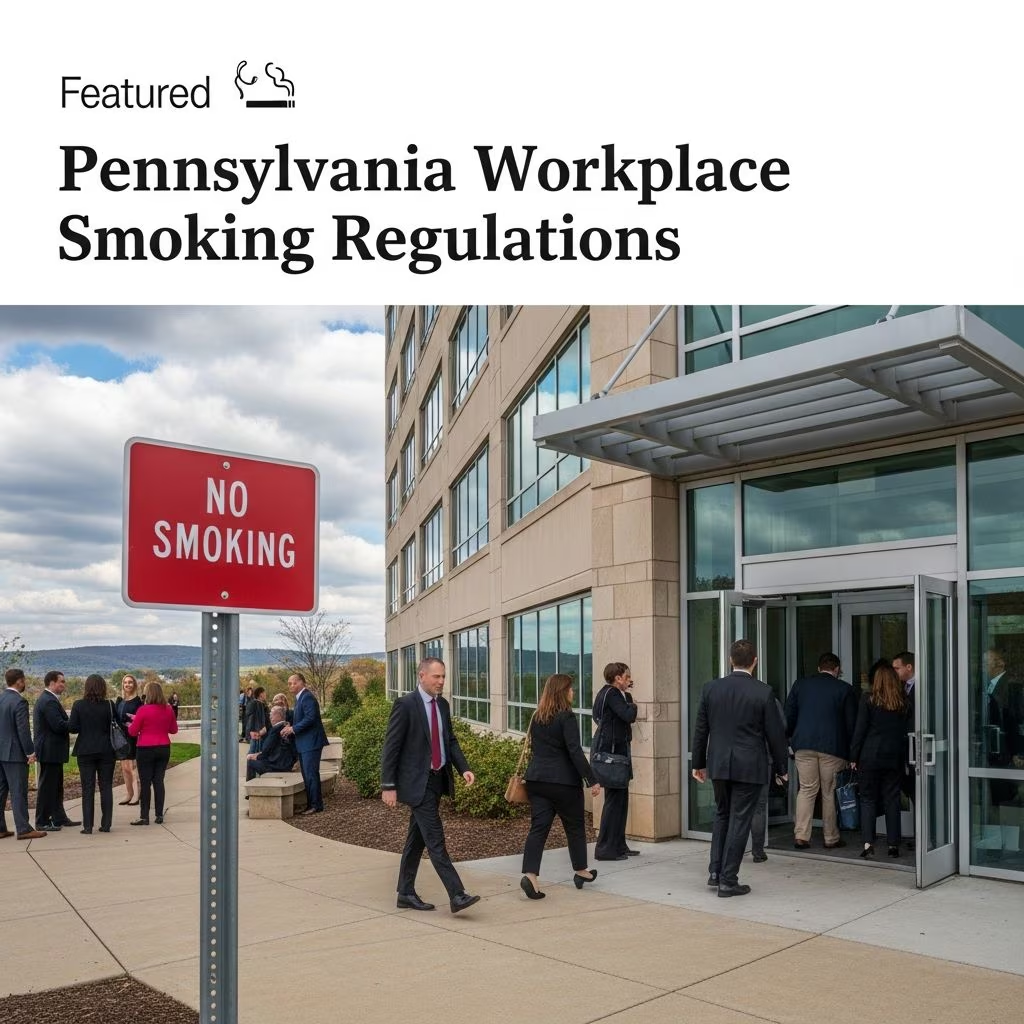
Pennsylvania enforces strict rules on smoking in workplaces through the Clean Indoor Air Act, mandating smoke-free environments in most enclosed public and work areas to shield employees from secondhand smoke hazards.
Foundations of Pennsylvania’s Smoke-Free Policies
The Clean Indoor Air Act, enacted in 2008, forms the backbone of Pennsylvania’s efforts to create healthier indoor spaces. This legislation prohibits smoking in enclosed workplaces, commercial venues, and public facilities, prioritizing worker safety and public health. While comprehensive for many settings, it includes targeted exemptions that have sparked debate.
Secondhand smoke poses significant risks, including respiratory issues, heart disease, and cancer, driving these regulations. Employers must comply to avoid penalties and foster safe environments. Public support remains strong, with polls indicating majority favor for expanded bans.
Core Prohibitions and Employer Responsibilities
Under state law, smoking is banned in all enclosed workplaces and commercial establishments. This covers offices, retail stores, factories, and restaurants, ensuring nonsmokers breathe clean air. Employers bear the duty to enforce these rules, often through signage and staff training.
- Post ‘No Smoking’ signs visibly at entrances and relevant areas.
- Train employees on policy enforcement without discrimination.
- Monitor compliance, especially in shared spaces.
Public sector employers face additional oversight from the Pennsylvania Department of Labor & Industry, which mandates specific postings. Labor law posters combining federal and state requirements simplify compliance for businesses.
Key Exemptions from the Smoking Ban
Not all venues fall under the full ban. Designated exceptions balance business needs with health protections:
- Hotels and Motels: Up to 25% of rooms can be smoking-designated.
- Tobacco Businesses: Shops, manufacturers, importers, and wholesalers are exempt in their workplaces.
- Private Clubs: Allowed if members and employees vote affirmatively every two years (under proposed changes).
- Cigar Bars and Outdoor Patios: Permitted, preserving niche operations.
- Casinos: Up to 50% of gaming floors can allow smoking, a controversial loophole.
These carve-outs protect certain industries but leave hospitality workers vulnerable, prompting reform calls.
Casinos and Hospitality: Persistent Challenges
Pennsylvania’s 17 casinos represent a major exemption, with up to half the gaming floor smoke-permitted. This exposes dealers, servers, and staff to high toxin levels, among the worst indoor air qualities recorded. Advocacy groups highlight elevated risks for chronic conditions like COPD and cancer, especially among Black workers and women.
Parx Casino’s voluntary smoke-free shift post-COVID reduced healthcare costs and boosted morale, countering industry fears of revenue loss. Yet, opposition from casino operators and some Republicans cites job and tax impacts, stalling bans.
| Venue Type | Smoking Allowed? | Conditions |
|---|---|---|
| Casinos | Yes (up to 50% floor) | Gaming areas only |
| Bars/Clubs | Limited | Cigar bars exempt; others restricted |
| Hotels | Partial | ≤25% rooms |
| Offices | No | Full ban, including home offices under proposals |
E-Cigarettes and Emerging Products
The 2008 Act predates vaping’s rise, creating gaps. Recent bills like HB 880 explicitly include e-cigarettes in bans, recognizing aerosol risks akin to traditional smoke. This closes a loophole, protecting against nicotine and chemical exposure.
Marijuana smoke poses future concerns as legalization advances. Experts urge comprehensive bans on all combusted products to maintain air quality.
Enforcement Mechanisms and Penalties
Compliance is monitored via complaints to the Pennsylvania Department of Health. Violations incur fines:
- First offense: Warning or $250 fine.
- Repeat: Up to $1,000 per incident.
- Business closures for egregious cases.
Local governments can enact stricter rules where not preempted, though state law limits stronger measures in many areas. Philadelphia’s robust policies exemplify local innovation.
Employees can report anonymously, empowering whistleblowers without retaliation fears. Employers should document efforts to mitigate liability.
Legislative Momentum for Stronger Protections
As of 2026, HB 880—the Protecting Workers from Secondhand Smoke Act—advances reforms. Passed by the House Health Committee 22-4 in 2025, it eliminates casino exemptions, covers e-cigarettes, bans bus stop smoking, and requires private club votes. Companion Senate bill by Sen. Jay Costa gains traction.
Bipartisan support underscores equity: casino workers deserve office-level protections. With the 2026 session underway, full passage could transform thousands of jobs.
Employee Rights and Health Implications
Workers in exempt venues face heightened risks, but rights include requesting accommodations or reporting hazards. OSHA complements state law by addressing ventilation failures as safety violations.
Health data links secondhand exposure to 41,000 annual U.S. deaths. Pennsylvania’s gaps leave hospitality staff behind, fueling coalitions like Breathe Free Pennsylvania with 156 endorsers.
Best Practices for Compliant Workplaces
- Adopt clear no-smoking policies beyond minimums.
- Invest in ventilation and air purifiers.
- Educate on vaping and alternatives.
- Monitor legislative updates via state resources.
- Engage employees in policy input.
Proactive steps enhance morale, cut costs, and attract talent, as seen in smoke-free pioneers.
Frequently Asked Questions
Can employers in Pennsylvania allow smoking in outdoor work areas?
Yes, outdoor patios and open spaces are generally exempt, though local rules may apply.
Does the smoking ban cover electronic cigarettes?
Not explicitly under current law, but HB 880 proposes inclusion. Many employers ban them voluntarily.
What happens if an employee smokes in a banned area?
Employers enforce via discipline; state fines apply for non-compliance.
Are private homes or home offices affected?
Home offices are exempt unless part of a public business. Proposals may change this.
How can businesses stay updated on changes?
Subscribe to labor law services or check the PA Department of Labor & Industry site.
Navigating Preemption and Local Variations
Pennsylvania’s law preempts stronger local ordinances, hindering progress except in places like Philadelphia. Repealing preemption, as in Delaware and Illinois, could spur comprehensive protections.
With public opinion at 69% favoring full bans, pressure mounts for statewide reform.
References
- Pennsylvania Labor Laws – The Complete Guide for 2026 — EmployerPass. 2026. https://www.employerpass.com/employer-insights/pennsylvania-labor-laws
- Frankel bill to protect workers from secondhand smoke clears … — PA House of Representatives (Rep. Dan B. Frankel). 2025-09-30. https://www.pahouse.com/Frankel/InTheNews/NewsRelease/?id=140379
- Pa. House committee passes bill that would ban smoking at casinos … — Union Progress. 2025-10-01. https://www.unionprogress.com/2025/10/01/pa-house-committee-passes-bill-that-would-ban-smoking-at-casinos-bus-stops/
- Pennsylvania – Bridging the Gap — SmokeFreeGaps.org. Accessed 2026. https://smokefreegaps.org/gaps-pennsylvania/
- Will Pennsylvania Casino Smoking Be Extinguished in 2026? — Casino.org. 2026. https://www.casino.org/news/will-pennsylvania-casino-smoking-be-extinguished-2026/
- Bill tracking in Pennsylvania – HB 880 (2025-2026 legislative session) — FastDemocracy. 2025-2026. https://fastdemocracy.com/bill-search/pa/2025-2026/bills/PAB00037377/