
The Paradox of the Unlawful Combatant Label
Unpacking the flawed legal architecture of Guantanamo Bay.
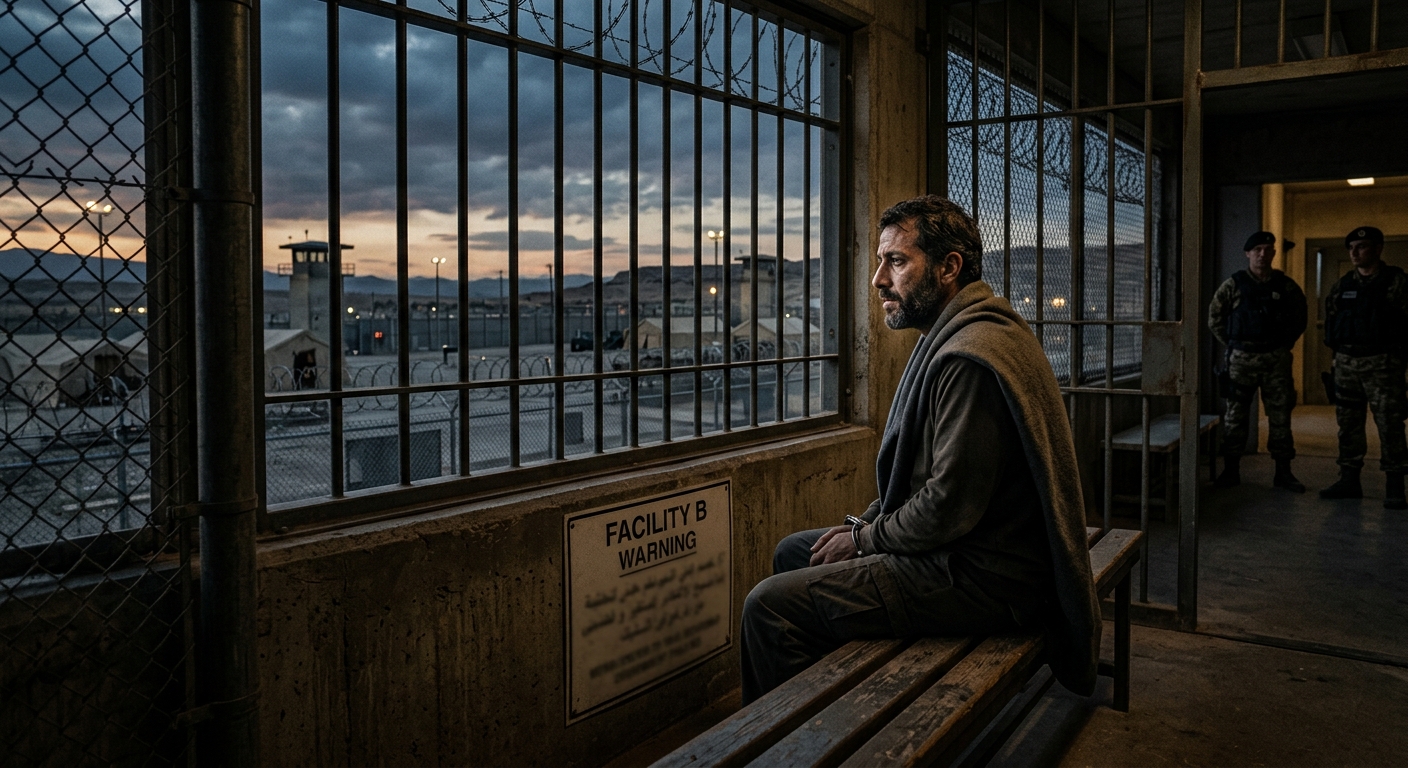
The Illusion of Justice: Re-examining the Unlawful Enemy Combatant Designation
In the aftermath of the September 11 attacks, the United States faced an unprecedented national security crisis that prompted a radical reimagining of military and legal frameworks. Among the most controversial developments was the establishment of a detention facility at Guantanamo Bay, Cuba, which effectively became a testing ground for a parallel system of justice, operating deliberately outside the traditional boundaries of both federal and military law. Central to this newly constructed system was the creation of ad-hoc legal categories that sidestepped the established federal court system and the well-trodden military justice framework historically utilized by the United States.
One of the most fiercely debated concepts to emerge from this era was the “unlawful enemy combatant” designation. This label was not merely an administrative classification; it was a profound shift in how the United States interacted with international law and constitutional due process. By placing individuals into newly invented categories, policymakers in the executive branch sought to handle the complexities of the “War on Terror” outside the rigorous confines of the Geneva Conventions and domestic criminal law. However, relying on flawed mechanisms like the Combatant Status Review Tribunals (CSRTs) to apply these labels created profound legal paradoxes. Instead of ensuring justice, attempting to repurpose administrative procedures to validate these detentions merely underscored the inherent contradictions in stripping away fundamental legal protections.
The Post-9/11 Legal Architecture
Following the authorization of military force in the autumn of 2001, U.S. armed forces detained hundreds of individuals across the globe, funneling many to the isolated naval base at Guantanamo Bay . The executive branch’s initial stance was remarkably aggressive: they argued that because these detainees were held on leased land outside the ultimate sovereign territory of the United States, they were completely beyond the jurisdiction of U.S. federal courts. This calculated legal maneuvering was specifically intended to maximize executive flexibility and bolster intelligence-gathering capabilities without the burdensome constraints of standard evidentiary rules, speedy trial requirements, or traditional habeas corpus petitions.
Traditionally, the framework for wartime detention was largely binary. Individuals captured in an armed conflict were categorized as either prisoners of war (POWs) under the Geneva Conventions or ordinary criminals subject to domestic penal law. POWs are afforded robust and specific protections, including humane treatment, shielding from public curiosity, and guaranteed release at the end of hostilities . Conversely, criminals are guaranteed stringent due process under the U.S. Constitution. By introducing the highly ambiguous status of “enemy combatant,” the government attempted to forge a controversial third path. This approach aimed to allow for indefinite, preventative detention without the comprehensive rights afforded to POWs or the rigorous trial protections granted to criminal defendants. The enduring consequences of this aggressive policy shift ripple through the U.S. justice system to this day, as courts continually grapple with the murky limits of executive power during seemingly endless wartime.
Enter the Combatant Status Review Tribunals
As international outcry and domestic legal criticism mounted over the perpetual legal limbo of Guantanamo detainees, the government implemented the Combatant Status Review Tribunals (CSRTs) in the summer of 2004. These administrative hearings were ostensibly designed to provide a structured mechanism to determine whether a detainee was properly classified as an enemy combatant. However, legal scholars, human rights advocates, and even some internal military whistleblowers heavily criticized the tribunals’ underlying structure, mandate, and execution.
Unlike a traditional court of law overseen by an impartial judge, or a standard court-martial governed by the Uniform Code of Military Justice, CSRTs offered extremely limited protections for the accused. Detainees were not granted access to independent legal counsel; instead, they were assigned a military officer acting merely as a “personal representative” who lacked attorney-client privilege. Furthermore, the tribunals explicitly permitted the use of classified evidence that the detainee could neither view nor adequately refute. Crucially, and most controversially, the rules governing these proceedings allowed for the admission of evidence obtained through severe coercion or physical pressure—practices that would be immediately thrown out of any civilian court .
The burden of proof in these tribunals was also strikingly low. The government only needed to establish combatant status by a preponderance of the evidence, and the government’s evidence was accompanied by a rebuttable presumption of validity. Consequently, the CSRTs were widely perceived not as a meaningful or independent judicial review, but as a bureaucratic exercise specifically designed to ratify prior detention decisions. Critics powerfully argued that running individuals through a system designed to invariably confirm their guilt or status merely replaced one rubber stamp with another, rendering the entire process fundamentally flawed and inherently unjust.
The Flawed Mechanics of the Military Commissions Act of 2006
The legal foundation of the Bush administration’s detention policies suffered a monumental blow in 2006 when the U.S. Supreme Court delivered its ruling in Hamdan v. Rumsfeld . In a striking rebuke of unchecked executive power, the Court found that the military commissions established by presidential order to try Guantanamo detainees lacked essential congressional authorization. Moreover, the Court ruled that these tribunals violated both the established Uniform Code of Military Justice and Common Article 3 of the Geneva Conventions, which rigorously requires that any tribunal passing sentence be a “regularly constituted court affording all the judicial guarantees which are recognized as indispensable by civilized peoples.”
In a rapid and highly politicized response to the Hamdan ruling, Congress swiftly passed the Military Commissions Act (MCA) of 2006 . The MCA sought to provide the explicit legislative backing that the Supreme Court found lacking, but it simultaneously codified some of the most deeply controversial aspects of the entire detention regime. The Act established a stark, novel legal division between “lawful” and “unlawful” enemy combatants. Under this new framework, an unlawful enemy combatant was defined as someone engaged in hostilities against the United States who was not a lawful combatant (such as a uniformed member of a state’s regular armed forces).
Crucially, the MCA stripped federal courts of jurisdiction to hear habeas corpus petitions from aliens detained as enemy combatants. It authorized military commissions to try these individuals using rules of evidence and procedure that deviated significantly from standard legal norms. For example, it permitted the widespread introduction of hearsay evidence and, under certain conditions, statements obtained through coercion. By cementing the “unlawful enemy combatant” category into federal statutory law, the MCA aggressively attempted to legitimize a two-tiered system of justice that fundamentally contradicted the core American principles of due process.
The Illusion of Do-Over Tribunals and Semantics
The passage of the MCA created a bizarre and convoluted legal predicament for government prosecution teams. Many detainees currently held at the naval base had already been processed through the heavily criticized CSRTs, which categorized them simply as “enemy combatants” under the older, broader definition. The newly minted MCA, however, specifically targeted the narrower “unlawful enemy combatants” for its military commissions. This semantic discrepancy led to intense debates among military lawyers and Justice Department officials regarding how to proceed legally with the pending cases.
Some commentators and former justice officials suggested a seemingly simple, if highly cynical, fix: subject the detainees to a brand new round of CSRTs specifically designed to formally append the word “unlawful” to their current status. This proposed solution illuminated the absurdity and intellectual bankruptcy of the overarching legal framework. Subjecting individuals to a second round of hearings that maintained the exact same structural deficiencies—lack of independent representation, total reliance on classified evidence, and a heavy presumption in favor of the government—would not magically cure the severe legal defects of their detention.
It would merely be a hollow administrative maneuver designed to satisfy the exact wording of the new statute while completely bypassing the substantive requirements of true justice. The futility of this “do-over” approach brilliantly highlighted the inherent danger of creating ad-hoc legal definitions merely to justify extraordinary executive actions retroactively.
Implications for Constitutional Law and Human Rights
The heavy reliance on the “unlawful enemy combatant” label and the deliberate circumvention of federal courts have left a lasting stain on the United States’ reputation regarding human rights and the international rule of law. By denying individuals the fundamental right to meaningfully challenge the factual and legal basis of their detention before an independent, Article III judiciary, the newly instituted policies aggressively undermined the Great Writ of Habeas Corpus. This writ has served as a foundational cornerstone of Anglo-American jurisprudence for centuries, specifically designed to prevent arbitrary state action, secret detentions, and unchecked sovereign power.
When the executive branch successfully claims the unilateral authority to designate individuals as entirely beyond the protection of both domestic constitutional law and established international treaties, it fundamentally disrupts the constitutional balance of powers. The prolonged legal battles over Guantanamo Bay demonstrate with stark clarity the immense difficulty of rolling back extraordinary executive powers once they are entrenched and normalized in the name of national security. The failure to provide an adequate, independent, and meaningful review of initial detentions eroded trust in the American justice system globally, providing potent fuel for critics who argued that the United States was abandoning its core constitutional principles.
The Long Shadow of Guantanamo Bay
Decades after the very first detainees arrived at Guantanamo Bay wearing now-iconic orange jumpsuits, the legacy of the legal choices made during the early years of the War on Terror continues to resonate profoundly. The facility remains a potent, highly visible symbol of the deep tension between perceived national security imperatives and foundational civil liberties. While the Supreme Court eventually pushed back on the most egregious executive overreaches—most notably restoring basic habeas corpus rights to detainees in the landmark 2008 case Boumediene v. Bush—the structural damage caused by the Military Commissions Act and the CSRT process had already been inflicted.
The aggressive attempt to invent a new, pliable category of “unlawful enemy combatant” serves as a profound cautionary tale for future administrations. It proves conclusively that justice cannot be manufactured through semantic reclassification or administrative rubber-stamping. True national security cannot be durably built on a foundation that sacrifices the very legal principles and democratic values the state is sworn to protect. As future legal and security challenges arise, the history of the CSRTs and the MCA must stand as a stark reminder that when the law is forcibly distorted to fit a policy goal, the resulting system is inherently unstable and fundamentally unjust.
Frequently Asked Questions
What is the difference between a lawful and unlawful enemy combatant?
A lawful enemy combatant is typically a recognized member of a state’s regular armed forces who adheres to the established laws of war, wears a fixed distinctive sign or uniform, and carries arms openly. Upon capture, they are legally entitled to Prisoner of War (POW) status under the Geneva Conventions. Conversely, an “unlawful enemy combatant,” a highly contested term in international legal circles, refers to an individual who engages in armed conflict but allegedly does not meet the strict criteria for lawful combatancy, thereby theoretically depriving them of the full spectrum of POW privileges and protections.
What were Combatant Status Review Tribunals (CSRTs)?
CSRTs were specific administrative hearings established by the U.S. Department of Defense in 2004 at Guantanamo Bay. Their stated purpose was to determine whether detainees were properly classified as “enemy combatants.” However, they were widely and severely criticized for lacking basic due process, heavily relying on classified or coerced evidence, and failing to provide detainees with independent legal counsel.
Why was the Military Commissions Act of 2006 controversial?
The Military Commissions Act of 2006 was deeply controversial because it authorized trial by military commission for violations of the law of war while explicitly stripping federal courts of jurisdiction to hear habeas corpus petitions from alien detainees. Furthermore, it allowed for the admission of evidence that would be strictly barred in civilian courts, such as hearsay and statements obtained through certain degrees of coercion, raising severe human rights and constitutional concerns.
References
- Hamdan v. Rumsfeld, 548 U.S. 557 — Supreme Court of the United States. 2006-06-29. https://www.loc.gov/item/usrep548557/
- Military Commissions Act of 2006 — Congress.gov. 2006-10-17. https://constitution.congress.gov/browse/essay/artII-S2-C1-1-18/ALDE_00013327/
- Closing Guantanamo? — Council on Foreign Relations. 2011. https://www.cfr.org/backgrounder/closing-guantanamo
- Judging Guantanamo: The Court, Congress, and the White House — Council on Foreign Relations. 2009-01-21. https://www.cfr.org/backgrounder/judging-guantanamo-court-congress-and-white-house
- Torture, the United States, and Laws of War — Council on Foreign Relations. 2005-11-12. https://www.cfr.org/backgrounder/torture-united-states-and-laws-war
Similar Articles








Read full bio of Sneha Tete


