
Paid Sick Leave: A Crucial Battleground for Health Equity
Why the fight for mandatory paid sick leave is a fundamental civil rights issue.
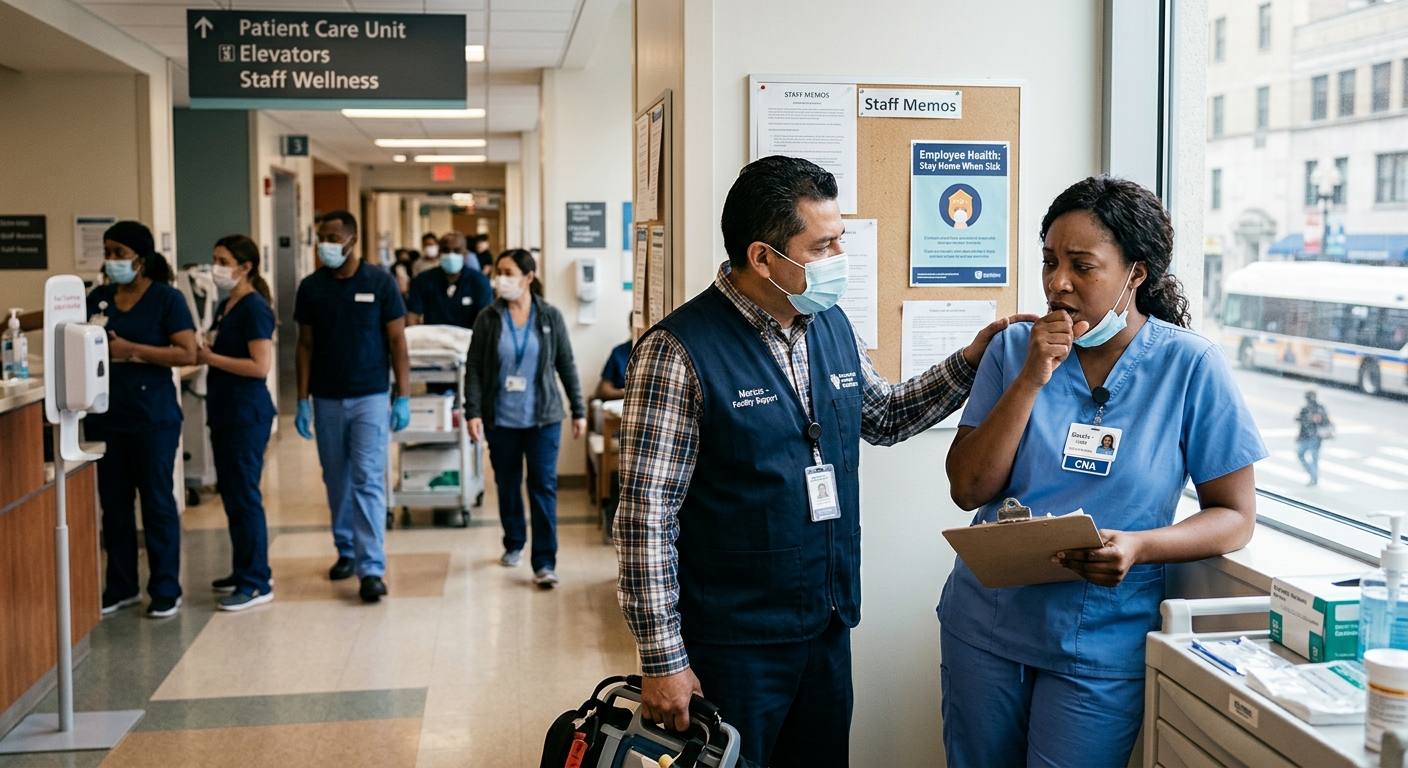
The modern workplace is characterized by a stark divide: the gap between those afforded the dignity to heal and those coerced by economic necessity to work through illness. For millions across the United States, an unexpected flu, a sudden injury, or the need to care for a sick child precipitates an immediate financial crisis. This vulnerability is not distributed equally. The absence of mandatory, universal paid sick leave transcends standard labor disputes, positioning itself squarely at the intersection of public health and systemic inequality. Rather than a mere corporate perk, paid time off is fundamentally a civil rights issue. When the legal framework permits the denial of paid sick leave, it extracts a disproportionate toll from Black, Hispanic, and Indigenous communities. Lacking the financial safety nets available to their wealthier, predominantly white counterparts, marginalized workers are continually forced to navigate an impossible choice between physical well-being and economic survival. Addressing this crisis requires reframing our collective understanding of workers’ rights. We must recognize that true racial and social justice cannot be achieved so long as essential human needs remain commodified and inequitably distributed. The fight for paid sick time is, at its core, a fight for human dignity and the dismantling of entrenched structural inequities.
The Architecture of Occupational Segregation
To grasp why the denial of paid sick leave is a racial justice issue, one must examine the historical foundations of the American labor market. Systemic racism has deeply influenced the occupational segregation characterizing today’s workforce. People of color are disproportionately concentrated in low-wage sectors, including agriculture, food service, retail, and domestic care. These are the industries where employers are least likely to offer voluntary benefits, creating a highly vulnerable workforce. This reality is the enduring legacy of deliberate policy choices made over a century ago.
During the New Deal era, landmark legislation like the Fair Labor Standards Act established baseline protections such as the federal minimum wage. However, to secure vital political support from Southern lawmakers, agricultural and domestic workers—who were overwhelmingly Black—were deliberately carved out of these foundational laws. This racially motivated exclusion codified a two-tiered labor system, embedding a framework of disadvantage that continues to profoundly shape employment standards today. Even as subsequent legal amendments slowly expanded coverage, the foundational ethos of treating service and manual labor as inherently less deserving of comprehensive benefits remained intact. Consequently, the contemporary service sector, heavily populated by marginalized groups, operates under a paradigm where fundamental benefits like paid sick time are treated as expendable. The lack of equitable leave is essentially a modern continuation of historical disenfranchisement.
Analyzing the Racial and Ethnic Divide in Benefit Access
Statistical evidence consistently highlights severe disparities in who actually has access to paid sick leave. While white-collar professionals typically receive comprehensive benefit packages, those at the lower end of the income spectrum are routinely left exposed. Data from the Bureau of Labor Statistics illustrates a vast gulf in benefit availability; while overall private industry access sits around 80 percent, this figure is heavily skewed by wage category, leaving the lowest quartile of earners severely under-protected and exposed to financial ruin.
The racial dimensions of this gap are undeniable. According to the Agency for Healthcare Research and Quality (AHRQ), Hispanic and Latino workers face some of the most severe disparities, with a recorded access rate of just 56.6 percent, the lowest among major U.S. racial and ethnic groups. Furthermore, Black and Hispanic workers are significantly less likely to report access to broader paid family and medical leave compared to White workers across virtually all major industries.
These disparities dramatically compound existing socioeconomic inequalities. When workers of color are consistently denied time to recover, their health predictably suffers. The Centers for Disease Control and Prevention (CDC) notes that barriers to healthcare, explicitly including a lack of paid sick leave, significantly contribute to poorer health management and advanced disease progression within the Hispanic community. Without paid leave, workers are far less likely to access preventive medicine or manage chronic conditions proactively. This vicious cycle directly feeds into broader national statistics on racial health disparities, translating a lack of workplace benefits into higher morbidity rates for minority populations.
The “Impossible Choice”: Economic Coercion and Health Deterioration
For workers without paid sick leave, the onset of illness triggers a draconian form of economic coercion. They are suddenly thrust into a scenario where staying home to recover equates to forfeiting critical income, or worse, risking immediate termination. This “impossible choice” is particularly devastating for single-parent households and families of color, who often live paycheck to paycheck without sufficient generational wealth to cushion a temporary loss of wages.
When staying home means sacrificing the ability to pay for rent or groceries, the decision is effectively forced upon them: they must go to work sick. This phenomenon, widely known as presenteeism, exacts a heavy toll. Illnesses that could be resolved with a few days of rest are exacerbated, potentially developing into chronic conditions requiring highly expensive emergency medical intervention. Furthermore, research from the National Institute for Occupational Safety and Health (NIOSH) highlights that paid sick leave is strongly associated with greater utilization of preventive care, fewer delayed medical visits, and notably better mental health outcomes, including significantly reduced rates of anxiety and depression. The deep anxiety of living one illness away from financial ruin generates chronic stress, a well-documented determinant of poor health.
Moreover, the financial penalties associated with taking unpaid leave rapidly strip away economic mobility. By docking pay for illness, the current employment system actively penalizes marginalized populations for their basic biological needs, functioning as a persistent poverty trap that limits financial growth.
A Broader Public Health Crisis
The severe consequences of denying paid sick leave ripple far beyond the individual worker, morphing into a widespread public health vulnerability. When employees in food processing, retail, and public transportation cannot afford to stay home when contagious, the workplace inevitably becomes an active vector for disease transmission. Coworkers, customers, and the general public are all put at elevated and entirely unnecessary risk.
The devastating COVID-19 pandemic threw this grim reality into sharp, undeniable relief. Essential workers were often the exact individuals systematically denied the fundamental right to quarantine safely. The strong correlation between occupational exposure and community spread demonstrated unequivocally that public health is only as strong as the basic protections afforded to the most vulnerable laborers. Communities of color, characterized by high densities of essential workers lacking paid leave, experienced disproportionately high infection and mortality rates. Achieving true health equity is a mathematical impossibility when significant portions of the population are economically forced to interact with the public while infectious. Universal paid sick leave must be recognized not merely as an employment benefit, but as a critical infrastructure component for national biosecurity.
Navigating the Current Legislative Framework
Internationally, the United States stands as a glaring outlier among high-income nations in its steadfast refusal to guarantee universal paid sick leave. The primary federal mechanism addressing workplace leave is the Family and Medical Leave Act (FMLA). However, the FMLA is fundamentally inadequate for everyday realities. It merely provides unpaid, job-protected leave and is laden with strict eligibility restrictions, including high firm-size thresholds and stringent minimum hours-worked requirements. Consequently, nearly half of the workforce is completely excluded from even this unpaid protection, with minority and low-wage workers disproportionately falling through the legislative cracks.
In the absence of robust federal leadership, a complex, confusing patchwork of state and local laws has emerged. Certain progressive jurisdictions have successfully mandated earned sick time, leading to tangible improvements in public health metrics and worker stability. Yet, this highly fragmented approach means a worker’s fundamental right to recover from an illness is dictated almost entirely by arbitrary geographic location. Relying on state-by-state advocacy leaves millions of vulnerable laborers in regions historically hostile to workers’ rights without any legal recourse. A comprehensive federal mandate is the only viable mechanism capable of standardizing this basic human right and eliminating the geographic inequities that continually disadvantage marginalized communities.
Re-framing Labor Rights as Civil Rights
The ongoing fight for paid sick leave demands a profound paradigm shift: we must integrate labor protections into the core tenets of the modern civil rights movement. Historically, civil rights advocacy focused primarily on dismantling formal, legal barriers to voting, education, and housing. While these battles remain critically important, the movement must equally confront the pervasive economic structures that quietly perpetuate systemic racism and class subjugation. An employment system that effectively punishes people of color for becoming sick is inherently discriminatory.
Advocating for universal paid leave is an essential, non-negotiable step in dismantling structural inequities. It is an explicit acknowledgment that economic justice and racial justice are inextricably linked. By championing bold policies that grant every single worker the time and financial security to care for themselves and their families, advocates can strike a powerful blow against the enduring legacy of occupational segregation. True equality is not simply the absence of overt discrimination; rather, it is the active, tangible presence of systems and safety nets that support human dignity, robust health, and economic resilience for all communities.
Frequently Asked Questions (FAQs)
- What is the primary difference between the FMLA and paid sick leave?
The Family and Medical Leave Act (FMLA) is a federal law offering eligible employees up to 12 weeks of job-protected, but strictly unpaid, leave for specific family and medical reasons. Paid sick leave refers to compensated time off that allows workers to recover from short-term illnesses without losing their necessary wages. - Why is the lack of paid sick leave viewed as a systemic racism issue?
Due to historical labor policies and ongoing occupational segregation, Black, Hispanic, and Indigenous workers are disproportionately concentrated in low-wage and service-sector jobs that typically omit voluntary paid leave. Consequently, the severe health and economic penalties of unpaid sick time fall disproportionately on communities of color. - How does providing inclusive paid sick time benefit the broader economy?
Paid sick leave directly reduces workplace contagion, which lowers overall employer healthcare costs and prevents widespread workforce disruptions. It also supports economic stability by maintaining worker purchasing power and preventing them from falling into sudden debt.
References
- Paid sick leave was available to 80 percent of private industry workers in 2025 — Bureau of Labor Statistics. 2026-02-10. https://www.bls.gov/opub/ted/2026/paid-sick-leave-was-available-to-80-percent-of-private-industry-workers-in-2025.htm
- Cancer and Hispanic or Latino People — Centers for Disease Control and Prevention. 2025-02-13. https://www.cdc.gov/cancer/health-equity/groups/hispanic-latino.html
- eNews: Volume 21, Number 13 (May 2024) — National Institute for Occupational Safety and Health. 2024-05-01. https://www.cdc.gov/niosh/enews/enewsVol21No13.html
- Racial and Ethnic Inequities in Paid Family and Medical Leave: United States, 2011 and 2017–2018 — American Journal of Public Health. 2022-07-01. https://www.ncbi.nlm.nih.gov/pmc/articles/PMC9258957/
- Paid Sick Leave Among Racial/Ethnic Groups — Agency for Healthcare Research and Quality. 2021-06-01. https://www.ahrq.gov/data/infographics/paid-sick-leave.html
Similar Articles








Read full bio of Sneha Tete




