
The Fight for Fairness: How District Attorneys Shape Civil Liberties in Orleans Parish
Understanding the prosecutor's role in ending mass incarceration.
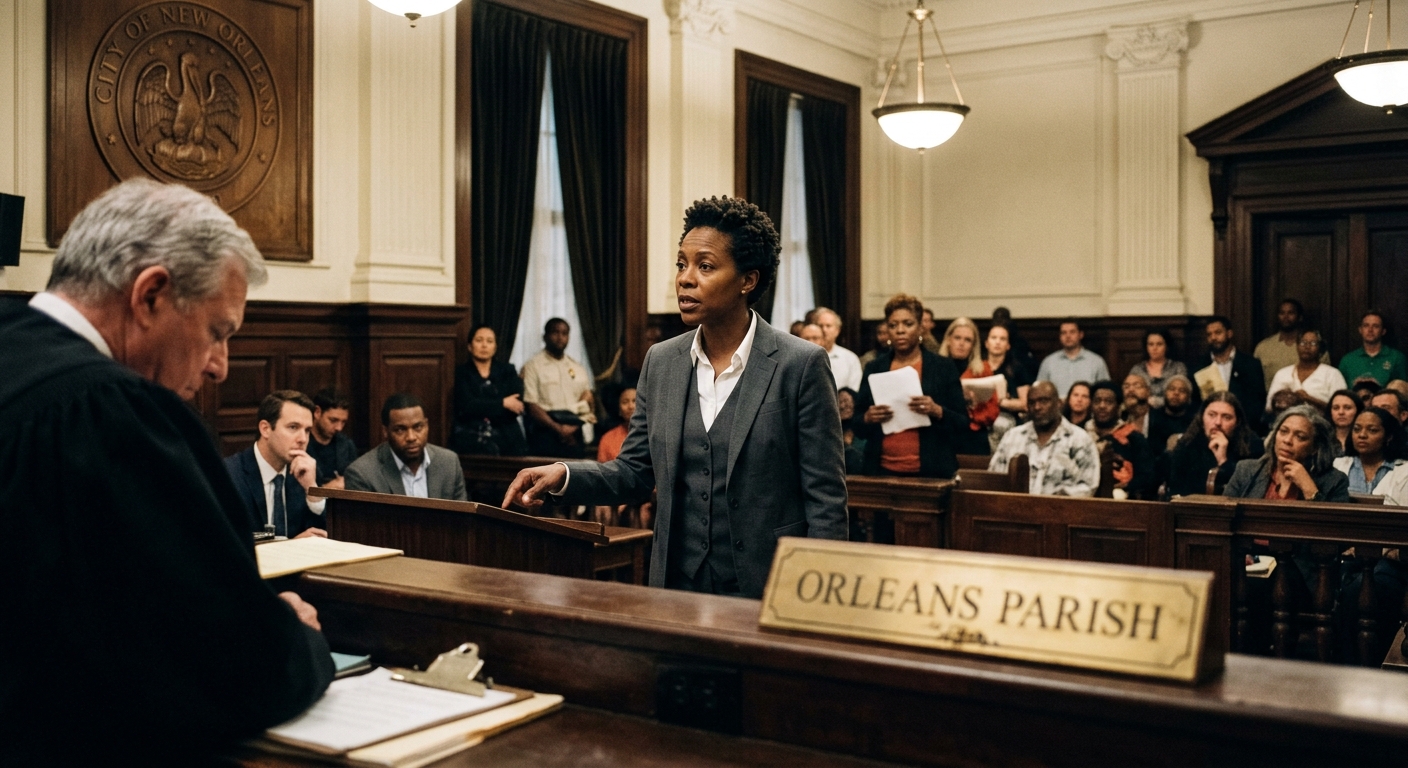
New Orleans is celebrated globally for its vibrant culture, historic architecture, and unparalleled music scene. Yet, beneath the surface of this culturally rich metropolis lies a deeply entrenched, systemic challenge: a sprawling and highly punitive criminal legal system. For decades, Louisiana—and by extension, Orleans Parish—has wrestled with the highest incarceration rates not only in the United States but frequently in the entire world. At the very epicenter of this massive judicial apparatus sits the Orleans Parish District Attorney, a local elected official vested with extraordinary discretionary power over the lives, liberties, and futures of thousands of residents.
As communities increasingly mobilize to demand civil rights protections and equitable justice, understanding the role, power, and civil liberties implications of the District Attorney becomes critically essential for every voter and engaged citizen. Local prosecutor elections are no longer sleepy, down-ballot races; they are the primary battlegrounds for civil rights in the modern era.
The Immense Power of the Local Prosecutor
When most people think of criminal justice reform, their minds immediately turn to police departments, mayors, or state legislators. While those entities are undeniably crucial, the local prosecutor often wields the most direct and unilateral influence over how justice is administered on a daily basis. The District Attorney acts as the gatekeeper of the criminal courts. After an arrest is made by law enforcement, it is entirely up to the DA’s office to decide whether to formally file charges, what specific charges to levy, or whether to dismiss the case entirely. This largely unchecked discretion shapes the trajectory of mass incarceration more than almost any other governmental function.
In Orleans Parish, the DA’s power extends into several highly impactful territories that directly intersect with civil liberties. First, there is the use of the “habitual offender” law, a state statute that allows prosecutors to seek drastically enhanced sentences—sometimes up to life in prison—for individuals with prior convictions, even if the current offense is completely nonviolent. Historically, this tool was utilized with alarming frequency in New Orleans, effectively weaponizing the law to transform minor infractions into decades-long prison terms.
Furthermore, the District Attorney sets the tone for bail recommendations. By demanding exorbitant cash bail for low-level offenses, prosecutors can effectively sentence legally innocent individuals to months of pretrial detention simply because they are too poor to purchase their freedom. By contrast, a reform-minded DA can choose to decline the prosecution of minor offenses, recommend release on recognizance, and push for restorative justice programs that treat root causes like substance abuse, mental health crises, and poverty, rather than defaulting to incarceration.
Core Civil Liberties at Stake in the DA’s Office
The intersection of civil rights and the District Attorney’s office is profound. Over recent election cycles, advocacy groups and community organizers have highlighted several core civil liberties issues that are inextricably linked to the daily prosecutorial practices of the Orleans Parish District Attorney.
Mass Incarceration and Systemic Racial Disparities
The crushing weight of the criminal legal system in Orleans Parish does not fall evenly across its population. Black and brown residents are disproportionately targeted, arrested, charged, and subjected to maximum sentencing guidelines compared to their white counterparts. A District Attorney committed to upholding civil liberties must confront these racial disparities head-on. This involves implementing rigorous, data-driven policies to track, expose, and eliminate bias at every stage of the prosecutorial process, from the initial charging decisions to the final plea bargaining negotiations.
Decarceration and the End of the Drug War
The failed approaches of the “War on Drugs” have devastated communities of color for over half a century. Modern voters are increasingly demanding that DA candidates make explicit pledges to stop prosecuting personal marijuana possession and other low-level, nonviolent drug offenses. Diverting these cases out of the criminal justice system and into public health arenas drastically reduces local jail populations. Moreover, it prevents individuals from being saddled with lifelong felony records that create insurmountable barriers to securing affordable housing, gainful employment, and higher education.
Prosecutorial Ethics and Protecting Crime Survivors
In Orleans Parish, past administrations have faced intense scrutiny and widespread national condemnation for utilizing aggressive, and in some cases unconstitutional, tactics to secure convictions at any cost. Most notoriously, this included the use of “fake subpoenas”—documents designed to look legally binding to intimidate uncooperative witnesses into submitting to private interrogations. Additionally, prosecutors previously relied on “material witness warrants” to arrest and jail survivors of domestic violence and sexual assault who were hesitant to testify against their abusers. Recognizing these coercive practices as severe civil liberties violations is an absolute prerequisite for any modern prosecuting office aiming to rebuild shattered community trust.
Reforming Juvenile Justice
Treating children as adults in the eyes of the law is a practice that civil liberties advocates and child psychologists vehemently oppose. The Orleans Parish DA has the unilateral authority to decide whether to transfer juveniles out of the specialized youth court system and into the adult criminal justice system. Research consistently demonstrates that prosecuting youths as adults drastically increases recidivism rates, subjects them to severe physical and psychological trauma in adult correctional facilities, and disproportionately targets Black youth. Progressive candidates are increasingly pledging to end this draconian practice, focusing their resources instead on rehabilitation, education, and positive youth development.
The Role of Voter Education and Civil Rights Advocacy
Given the immense stakes associated with the DA’s office, nonpartisan civil rights organizations have heavily invested in comprehensive voter education campaigns surrounding local prosecutor elections. The primary mission of these organizations is to elevate the public dialogue around civil rights, ensuring that voters know exactly where candidates stand on critical, life-altering issues before they head to the ballot box.
These crucial advocacy efforts often take the form of detailed candidate questionnaires and public scorecards. By asking candidates to clearly state “yes” or “no” to specific policy pledges—such as refusing to seek habitual offender enhancements, committing to not jailing crime survivors, establishing an independent Conviction Integrity Unit, or ensuring swift charging decisions—advocacy groups provide a transparent, easily digestible metric for the electorate. This tactical approach forces candidates to move far beyond vague, comfortable campaign rhetoric about “fairness” and “justice.” It pins them down on concrete policy commitments that can be independently monitored and audited once they take office.
In jurisdictions like New Orleans, where political establishments have historically favored punitive “tough-on-crime” mentalities, this level of intense public scrutiny is revolutionary. It actively empowers marginalized communities and everyday voters to distinguish between candidates who represent the damaging status quo and those who offer a genuine, structural paradigm shift toward decarceration and equity.
Key Distinctions: Traditional vs. Reform Approaches
When analyzing District Attorney races across progressive jurisdictions, clear dividing lines emerge between traditional prosecutorial approaches and reformist platforms. The differences are not merely philosophical; they dictate how thousands of cases are handled each year.
| Policy Area | Traditional Prosecutorial Approach | Civil Rights & Reform Approach |
|---|---|---|
| Drug Offenses | Aggressively prosecutes low-level possession to secure convictions and leverage plea deals. | Declines to prosecute personal possession; redirects individuals to public health and treatment resources. |
| Habitual Offender Laws | Frequently uses enhancements to maximize prison sentences, even for nonviolent crimes. | Pledges to rarely or never use enhancements, treating each case based on its individual merits. |
| Pretrial Detention | Routinely requests high cash bail, leading to overcrowded jails filled with legally innocent people. | Advocates for release on recognizance for nonviolent charges; supports the elimination of wealth-based detention. |
| Wrongful Convictions | Defends past convictions vigorously to protect the office’s win rate and reputation. | Establishes a robust Conviction Integrity Unit to actively investigate and overturn past miscarriages of justice. |
| Police Accountability | Relies heavily on police testimony; rarely prosecutes officers for excessive force or misconduct. | Maintains a “Do Not Call” list for untrustworthy officers; commits to independent investigations of police violence. |
The Ripple Effect: Local Elections, National Impact
The eyes of the nation frequently turn to Orleans Parish during district attorney elections. Because Louisiana has long been considered the undeniable epicenter of the American mass incarceration crisis, a fundamental shift in its largest, most influential city sends cultural and political shockwaves throughout the entire country. When a major Southern city successfully elects a prosecutor committed to dismantling the intricate machinery of over-incarceration, it provides a viable, replicable blueprint for other municipalities nationwide.
It explicitly proves that public safety is not mutually exclusive with the protection of civil liberties. In fact, by intentionally focusing the office’s limited resources on prosecuting violent crime rather than endlessly pursuing low-level, quality-of-life offenses, a reform-oriented DA can actually improve holistic community safety. Simultaneously, this approach drastically reduces the crippling fiscal and human costs associated with operating massive, overcrowded local jails. The ripple effects of New Orleans’ prosecutorial reform are eventually felt in state legislative chambers, appellate courtrooms, and communities nationwide, consistently advancing the broader American narrative toward a more equitable and humane legal system.
Frequently Asked Questions (FAQs)
What exactly does a District Attorney do?
The District Attorney is the chief prosecuting officer for a specific local jurisdiction. They possess the exclusive legal authority to decide whether to bring criminal charges against an individual arrested by the police, what specific charges to file, and whether to offer a plea bargain or take the case to trial.
How can a District Attorney help end mass incarceration?
A District Attorney can directly reduce incarceration rates by declining to prosecute minor, nonviolent offenses, refusing to seek maximum sentence enhancements, supporting the end of cash bail, and diverting individuals into mental health and substance abuse treatment programs instead of state prisons.
What is a Conviction Integrity Unit (CIU)?
A Conviction Integrity Unit is a specialized, internal division within a District Attorney’s office that is explicitly designed to review and investigate past convictions for potential errors, prosecutorial misconduct, or new exonerating evidence, with the goal of overturning wrongful convictions.
Why is the use of the habitual offender statute so controversial?
The habitual offender statute allows prosecutors to seek drastically extended prison sentences for individuals with prior convictions. It is highly controversial because it has historically been used to impose excessively harsh, decades-long sentences for minor, nonviolent crimes, and it disproportionately impacts minority communities.
How do civil rights organizations influence local DA elections without endorsing candidates?
Organizations like the ACLU influence elections through rigorous voter education. By issuing detailed questionnaires and policy scorecards, they force candidates to make public commitments on specific civil liberties issues, thereby allowing voters to make informed decisions based on concrete policy platforms rather than partisan affiliations.
Conclusion
The fight for civil liberties in the criminal justice system is not fought solely in the Supreme Court; it is waged every day in local courthouses across the nation. The Orleans Parish District Attorney holds the key to either perpetuating a legacy of mass incarceration or charting a new course toward equity, fairness, and true community safety. By understanding the immense power of the prosecutor and holding candidates accountable through informed voting and sustained community advocacy, residents can fundamentally transform the landscape of justice. A reformed DA’s office in New Orleans does more than just alter local statistics—it serves as a beacon of hope and a catalyst for systemic legal reform across the United States.
References
- What You Need to Know About Orleans Parish District Attorney Candidates — American Civil Liberties Union. 2020-10-14. https://www.aclu.org/news/civil-liberties/what-you-need-to-know-about-orleans-parish-district-attorney-candidates
- The Next Orleans Parish DA Will Have Enormous Power. We Asked the Candidates How They’d Govern — ACLU of Louisiana. 2020-12-05. https://www.laaclu.org/en/news/next-orleans-parish-da-will-have-enormous-power-we-asked-candidates-how-theyd-govern
- Deliver Justice — Orleans Parish District Attorney. 2021-01-11. https://orleansda.com/deliver-justice/
- Criminal Justice Coordination – About — City of New Orleans. 2021-02-16. https://nola.gov/office-of-criminal-justice-coordination/about/
Similar Articles








Read full bio of Sneha Tete


