
Navigating Orlando Courthouses: A Practical Guide
Understand how Orlando’s state, federal, and specialized courts work so you can prepare and appear with confidence.
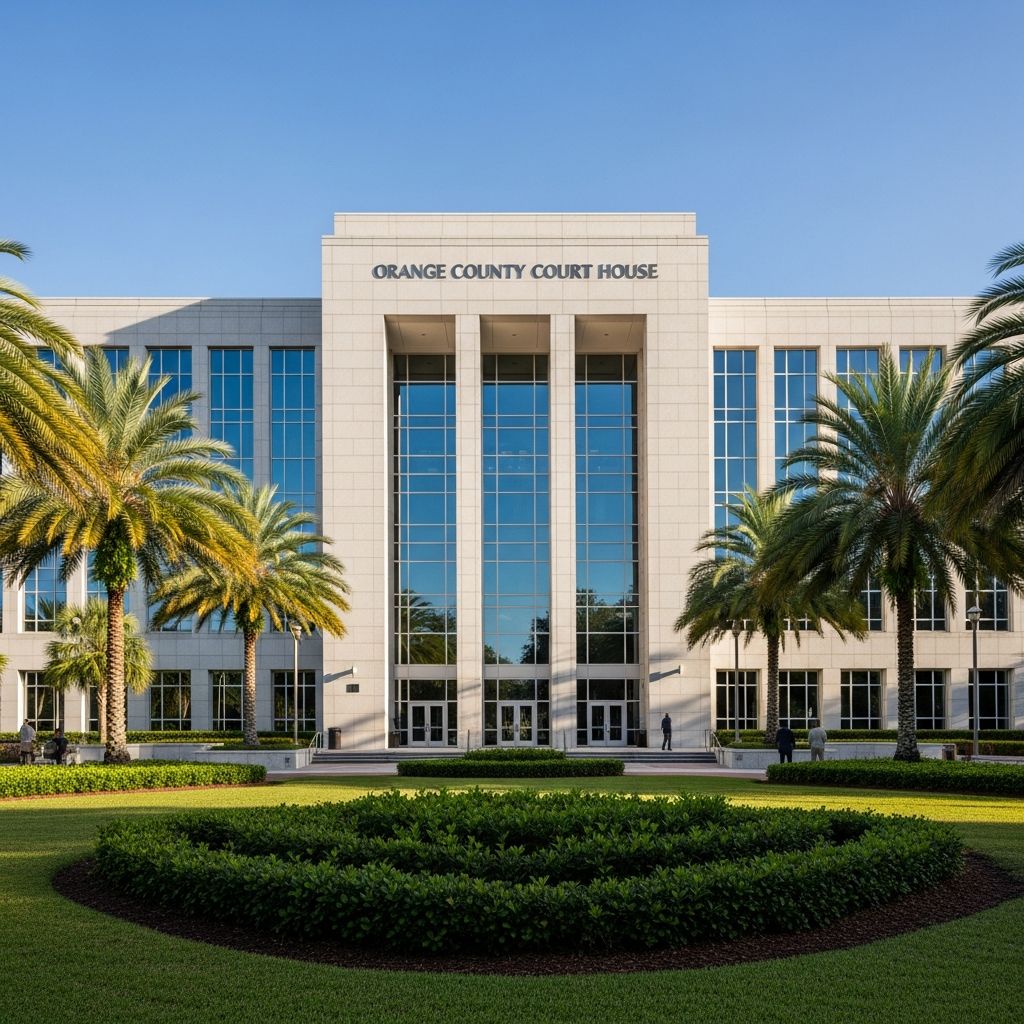
Orlando is home to several different courthouses, including state trial courts, a federal district court location, and an immigration court. Understanding which building you need, what happens there, and how Florida’s court system is organized can save you time, stress, and costly mistakes.
This guide explains how the court systems that serve Orlando are structured, what types of cases each courthouse handles, and how to prepare for a court date or legal errand in the city.
1. How Florida’s Courts Are Organized (And Where Orlando Fits)
Before looking at specific Orlando courthouses, it helps to know the basic structure of Florida’s state courts and how they interact with federal and immigration courts.
1.1 Florida’s state court ladder
Florida’s unified state court system has four main levels.
- Florida Supreme Court – The state’s highest court, based in Tallahassee, reviews certain appeals and issues authoritative interpretations of Florida law.
- District Courts of Appeal (DCAs) – Six regional appellate courts review decisions from circuit and county courts in their districts.
- Circuit Courts – Twenty judicial circuits act as major trial courts for felonies, larger civil disputes, family law, probate, and appeals from county courts.
- County Courts – Sixty-seven county courts (one per county) handle misdemeanors, traffic, ordinance violations, and smaller civil cases.
Orlando sits in the Ninth Judicial Circuit, which serves Orange and Osceola Counties and is one of Florida’s 20 circuits.
1.2 The Ninth Judicial Circuit serving Orlando
The Ninth Judicial Circuit Court covers more than two million residents in Orange and Osceola Counties and operates multiple courthouses in and around Orlando.
- Circuit Court in the Ninth Circuit hears:
- Felony criminal cases
- Civil disputes above Florida’s circuit threshold (e.g., larger contract or injury suits)
- Family law matters such as divorce, child custody, and support
- Probate and guardianship cases
- Juvenile dependency and delinquency issues
- County Court in the Ninth Circuit hears:
- Misdemeanor crimes and local ordinance violations
- Traffic offenses
- Smaller civil disputes within county jurisdictional limits
Both circuit and county courts operate from Orlando-area courthouses, often in the same building but in different divisions.
1.3 Federal courts and immigration courts in Orlando
In addition to Florida’s state courts, Orlando residents may need to appear in federal or immigration court.
- Federal courts: Florida is divided into three federal judicial districts—Northern, Middle, and Southern.
- Orlando falls in the Middle District of Florida, where the U.S. District Court holds sessions in Orlando among other cities.
- Immigration courts: Orlando has an immigration court operated by the U.S. Department of Justice’s Executive Office for Immigration Review (EOIR), separate from both state and regular federal district courts.
2. State Courthouses in the Orlando Area
While individual building names and addresses can change or expand over time, the key for visitors is knowing which state court level they must attend and what type of case is being heard.
2.1 Typical state courthouse functions in Orlando
Most Orlando-area state courthouses affiliated with the Ninth Judicial Circuit and Orange County support both circuit and county divisions.
| Court Level | Common Case Types | Who Usually Appears |
|---|---|---|
| Circuit Court | Felonies, major civil suits, family, probate, juvenile | Defendants in serious criminal cases, parties in divorces, estates, complex civil disputes |
| County Court | Misdemeanors, traffic, landlord-tenant, small to mid-size civil claims | Drivers with tickets, tenants and landlords, people in minor criminal cases |
2.2 Common reasons to visit a state courthouse in Orlando
People go to Orlando’s state courthouses for a wide range of legal tasks, including:
- Attending a criminal arraignment, hearing, or trial
- Responding to a traffic citation or ordinance violation
- Filing or answering a lawsuit
- Seeking a protective injunction (often called a restraining order)
- Participating in divorce, custody, or child support proceedings
- Handling probate matters after a death
- Attending mediation sessions arranged by the court
Always consult your summons, notice, or lawyer to verify the exact courthouse building, floor, and room number.
3. Federal Courts Serving Orlando
Many legal disputes never leave state court, but some cases must be heard in the federal system. Orlando is served by the U.S. District Court for the Middle District of Florida, one of three federal districts in the state.
3.1 Structure of the federal court system
Nationwide, the federal judiciary has three main levels:
- U.S. District Courts – Trial courts where federal civil and criminal cases start.
- U.S. Courts of Appeals – Intermediate appellate courts review district court decisions.
- U.S. Supreme Court – Final court of appeal in the federal system.
Florida’s federal district courts are divided into the Northern, Middle, and Southern Districts, each covering specific counties.
3.2 The Middle District of Florida and Orlando
The Middle District of Florida holds court in Tampa, Orlando, Jacksonville, Fort Myers, and other locations.
From an Orlando litigant’s perspective, the district court typically hears:
- Federal criminal prosecutions
- Civil rights and federal constitutional claims
- Lawsuits involving federal statutes (for example, employment discrimination or federal consumer laws)
- Diversity jurisdiction cases where parties are from different states and legal thresholds are met
Federal district courts operate under procedural rules and filing systems that differ from state courts. If your paperwork mentions the “U.S. District Court for the Middle District of Florida,” or lists a federal statute as the main basis for the case, you should assume you will appear in the federal courthouse, not a state facility.
4. Orlando Immigration Court
Immigration cases are not handled by state courts or regular federal district courts. Instead, they are heard by specialized immigration courts within the Department of Justice’s Executive Office for Immigration Review (EOIR).
4.1 Role of the Orlando Immigration Court
The Orlando Immigration Court is under the Office of the Chief Immigration Judge, part of EOIR.
According to the U.S. Department of Justice, the court is located at:
500 N. Orange Ave, Suite 1100, Orlando, FL 32801
Immigration judges in Orlando hear matters such as:
- Removal (deportation) proceedings
- Applications for asylum and related protections
- Requests to adjust status or seek certain forms of relief from removal
- Bond hearings for detained non-citizens
Because immigration law is highly complex and separate from Florida state law, individuals appearing in Orlando Immigration Court are strongly encouraged to seek legal guidance from an attorney or accredited representative familiar with EOIR practice.
4.2 Practical tips for Orlando Immigration Court visitors
- Check your Notice to Appear (NTA) or hearing notice to confirm date, time, and suite number.
- Arrive early to allow for security screening and elevator wait times.
- Bring identification and any documents listed in your hearing notice.
- If you move or change contact information, follow EOIR procedures to update your address so you do not miss future hearings.
5. Preparing for a Court Visit in Orlando
Whether you are going to a state courthouse, federal court, or immigration court in Orlando, careful preparation can minimize problems and delays.
5.1 Confirming where you must appear
Start by examining your summons, subpoena, citation, or hearing notice. Look for:
- Court name – For example, “Ninth Judicial Circuit Court in and for Orange County, Florida,” “County Court in and for Orange County, Florida,” or “U.S. District Court for the Middle District of Florida.”
- Case type – Criminal, civil, family, probate, immigration, or traffic.
- Division or judge – Some courthouses use specific floors or courtroom groupings for family, criminal, or probate matters.
- Address and room number – Many large complexes house several courts and offices; bringing the exact information avoids confusion.
5.2 Security and identification
Most Orlando courthouses have airport-style security at the entrance. You should expect:
- Metal detectors and X-ray scanning of bags
- Restrictions on weapons, sharp objects, and sometimes certain electronic devices
- Requirement to show a government-issued photo ID when entering or when requested by security
Plan to arrive early—30 to 60 minutes before your scheduled time—especially on busy mornings.
5.3 Dress and courtroom conduct
Judges and court staff in Orlando, like elsewhere in Florida, expect respectful behavior and modest attire.
- Choose business-casual or more formal clothing.
- Avoid clothing with offensive images or words.
- Turn off or silence phones before entering a courtroom.
- Stand when the judge enters or leaves, and when your case is called (unless you are physically unable).
- Address the judge as “Your Honor” and speak clearly and politely.
5.4 Documents and deadlines
Bring all documents that may be relevant to your case or purpose for visiting:
- Copies of filings, motions, or petitions
- Evidence, such as photographs, records, or written contracts
- Any notice or letter you received from the court
- Photo ID and, if needed, payment methods for fees or fines
Many state and federal courts in Florida publish local rules and administrative orders explaining filing deadlines and formatting requirements. Reviewing those rules or consulting an attorney can prevent your paperwork from being rejected.
6. Choosing the Right Orlando Courthouse for Your Issue
Because Orlando hosts multiple court systems, one of the most common mistakes is going to the wrong building. The following general guidelines can help.
6.1 When you likely need a state trial court (Ninth Circuit / County Court)
You will generally appear in an Orlando-area state courthouse if your matter involves:
- Traffic tickets or driving-related infractions
- Local ordinance violations or misdemeanors
- Most landlord-tenant disputes within Florida
- Contract, property, or injury cases that arise under state law
- Family law issues like divorce, paternity, or child custody
- Probate of a Florida resident’s estate
6.2 When you likely need a federal court in Orlando
You may need the U.S. District Court in Orlando (Middle District of Florida) if your case is based on federal law or involves out-of-state parties with federal jurisdiction.
- Criminal charges brought by the U.S. government, such as federal drug or financial crimes
- Civil rights cases based on federal statutes
- Federal employment, securities, or consumer protection claims
- Certain large disputes between citizens of different states (diversity jurisdiction)
6.3 When you likely need Orlando Immigration Court
You will normally go to Orlando Immigration Court if the government has started removal proceedings against you, or you are pursuing relief that EOIR immigration judges are authorized to grant.
- Receiving a Notice to Appear in removal proceedings
- Seeking asylum or related protection after being placed in proceedings
- Requesting certain immigration relief from an immigration judge after a denial by the Department of Homeland Security
- Attending a bond redetermination hearing
7. Frequently Asked Questions about Orlando Courthouses
Q1: How do I know if my Orlando case is in state or federal court?
Look at the heading of your summons or complaint. If it names the “Ninth Judicial Circuit Court” or “County Court in and for Orange County, Florida,” it is a state case. If it names the “United States District Court for the Middle District of Florida,” it is a federal case.
Q2: Are appeals from Orlando state courts heard in Orlando?
Appeals from Ninth Judicial Circuit and Orange County trial courts go to the appropriate District Court of Appeal, not usually to a courthouse in Orlando itself. DCAs are regional appellate courts that may be located in other Florida cities.
Q3: Can I pay traffic tickets from Orlando online instead of going to court?
Many Florida counties allow online or mail payment of certain traffic citations, but the rules and options vary. Check with the Orange County clerk of court or the information on your ticket to see if a personal appearance is required.
Q4: What happens if I miss a scheduled court date in Orlando?
Missing a court date can lead to serious consequences, including warrants in criminal cases, default judgments in civil cases, or removal orders in immigration proceedings. If you realize you will miss a hearing, contact your attorney or the clerk’s office immediately and seek legal advice about possible remedies.
Q5: Do Orlando courthouses provide interpreters?
Florida courts and EOIR immigration courts provide interpreters in many situations, especially in criminal and immigration cases. However, procedures to request language assistance differ by court, so contact the specific courthouse or consult a lawyer in advance to confirm how to request an interpreter.
References
- Florida State Courts System — Florida Supreme Court / Florida Courts. 2024-01-01. https://www.flcourts.gov
- State Courts System — Seventh Judicial Circuit Court of Florida. 2023-01-01. https://circuit7.org/state-courts-system/
- Federal and Florida Court System — Swisher Library, Jacksonville University. 2022-01-01. https://library.ju.edu/court-systems/federal-court
- Orange & Osceola Counties | Ninth Judicial Circuit Court of Florida — Ninth Judicial Circuit Court of Florida. 2024-01-01. https://ninthcircuit.org
- Orlando Immigration Court — Executive Office for Immigration Review, U.S. Department of Justice. 2024-01-01. https://www.justice.gov/eoir/orlando-immigration-court
- Federal Judicial Districts of Florida — U.S. District Court, Southern District of Florida / U.S. Courts. 2023-01-01. https://www.flsd.uscourts.gov/federal-judicial-districts-florida
Similar Articles








Read full bio of medha deb


