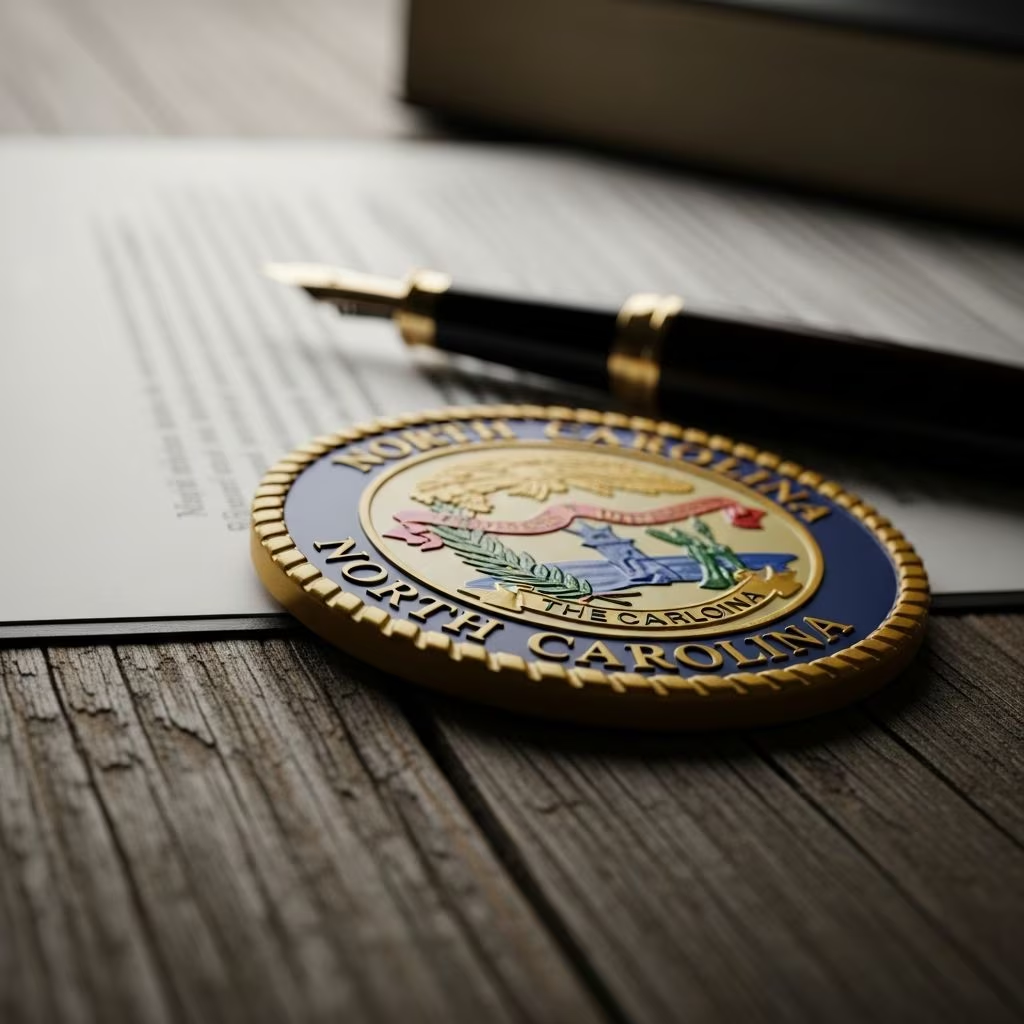
Understanding Assumed Business Names in North Carolina
Many business owners operate under a name that differs from their official legal business name. In North Carolina, this practice requires filing what is known as an assumed business name certificate, commonly referred to as a DBA or “doing business as” registration. This legal requirement applies to virtually all business structures, including sole proprietorships, partnerships, limited liability companies, and corporations that wish to conduct operations under an alternative name.
The primary purpose of registering an assumed business name is to inform the public that a business entity is operating under a designated name that is not its official legal name. This transparency requirement protects consumers and ensures that business transactions can be properly documented and traced back to the actual business owner. Whether you are launching a new venture under a creative brand name or expanding an existing business with an additional service line under a different moniker, understanding the DBA registration process is essential for legal compliance.
When You Need an Assumed Business Name Certificate
Determining whether your business requires an assumed name certificate depends on several factors related to how your business name relates to your legal entity name. Not every business operating under a different name necessarily needs to file a DBA, and understanding these distinctions can save time and unnecessary filing fees.
If you operate as a sole proprietor using your personal name as your business name, you typically do not need to file an assumed name certificate. Similarly, if your business is legally registered as a corporation or limited liability company and you operate exclusively under that registered legal name, a separate DBA filing is unnecessary. However, the moment you use any name other than your official legal business name for customer-facing purposes, a certificate becomes mandatory.
For example, if you own a roofing and siding company registered as “Three Brothers LLC” but decide to advertise window installation services under the brand “Three Brothers Complete Home Solutions,” you must register that additional name as an assumed business name. The same applies if you use a domain name as your customer-facing business identifier or if your checks are written to a name different from your legal business name.
One common scenario involves domain names. If your website domain serves merely as a technical address for your online presence but customers interact with your official business name, no DBA is required. Conversely, if customers conduct business directly with your domain name—such as writing checks addressed to the domain or marketing extensively under that domain as your brand identity—you must file an assumed name certificate.
The Registration Process and Requirements
Registering an assumed business name in North Carolina involves filing an Assumed Business Name Certificate with the appropriate county register of deeds office. North Carolina law specifies that this registration must occur in the county where the business operates, or if operations span multiple counties, registration is required in at least one of those counties.
Before initiating the filing process, you must conduct a thorough search to ensure your desired assumed name is not already in use. This search involves checking the North Carolina Assumed Business Name database maintained by county registers of deeds, as well as verifying that the name does not conflict with existing registered business entities in the Secretary of State’s business name database. This preliminary verification step prevents duplicate registrations and potential legal conflicts.
The Assumed Business Name Certificate requires specific information to be completed accurately:
- The complete assumed business name exactly as you intend to use it for business purposes
- The real legal name of the person or entity conducting business under the assumed name
- For corporations, limited liability companies, and limited partnerships, your Secretary of State identification number
- The nature of the business being conducted
- The physical address where business operations will occur
- All North Carolina counties in which the assumed name will be used
- For partnerships (other than limited liability partnerships or limited partnerships), the names of up to five general partners or all general partners if fewer than five exist
The certificate must be signed by the appropriate representative of the business entity. For sole proprietorships, this is the owner. For partnerships, at least one general partner must sign. For LLCs and corporations, an authorized manager or officer must provide the signature.
Filing Location and Multi-County Operations
North Carolina’s assumed business name system operates on a county-by-county basis, with each county’s register of deeds office maintaining its own records. This decentralized approach means that filing procedures and documentation may vary slightly between counties, though all use the same standard Assumed Business Name Certificate form.
If your business operates in multiple counties, you have flexibility in where you file. You may choose to file in any one of the counties where you conduct business, and that single filing serves as your assumed name registration across the state. However, you must ensure that the certificate clearly lists all counties where the assumed name will be used. If you later expand operations into additional counties not listed on your original certificate, you may need to file an amendment.
For businesses operating statewide or planning eventual expansion across all 100 North Carolina counties, you can list all counties on your initial certificate, providing comprehensive coverage from the outset.
Costs and Duration of Registration
Filing an assumed business name certificate in North Carolina is an affordable process with a standard fee of $26 per certificate. This one-time filing fee grants perpetual registration status, meaning your assumed name registration does not expire and does not require periodic renewal provided you continue operating under that name.
However, it is important to note that older assumed name certificates filed prior to December 1, 2017, faced different expiration rules under the previous version of North Carolina law. All such certificates expired on December 1, 2022, and businesses that filed before the December 1, 2017 transition date and wished to continue operating under their assumed names after that expiration date were required to file new certificates under the current regulations. Any business with an assumed name certificate filed on or after December 1, 2017, benefits from perpetual registration status and faces no renewal obligations.
Branding and Marketing Considerations
Once you have successfully registered your assumed business name, you can utilize it across all customer-facing channels. Your DBA may appear on your website, social media profiles, business cards, promotional materials such as branded merchandise, and advertising campaigns. You can open business bank accounts in your assumed name, though you will still file taxes and conduct official business using your legal business name and existing Employer Identification Number (EIN) or Social Security Number.
It is crucial to understand that an assumed business name serves exclusively as a branding tool and marketing identifier. It does not create a separate legal entity or provide any legal protection distinct from your underlying business structure. Your taxes continue to be filed under your legal business name and EIN, and all contracts and legally binding agreements must be executed using your official legal business name, though you may reference your DBA alongside for transparency.
Privacy Considerations and Legal Protections
One important limitation of assumed business name registration is that it does not provide privacy protection. The Assumed Business Name Certificate becomes a public record that lists the names of business owners, managers, or members. Anyone can access this information through the county register of deeds office, potentially exposing your personal information to competitors, marketers, or unwanted solicitation.
If privacy is a significant concern for your business operations, several strategies can help protect your personal information. One approach is to establish a formal business entity such as a limited liability company rather than operating as a sole proprietor. An LLC provides liability protection and can help distance your personal identity from your business identity.
Another privacy strategy involves hiring a registered agent for your business. When you engage a registered agent service, that company’s name and address can be listed on public records in place of your personal information where legally permitted. This approach shields your actual residence and contact details from public view while maintaining full compliance with North Carolina’s transparency requirements.
For businesses seeking stronger intellectual property protection for their brand name, trademark registration at the federal level provides advantages beyond DBAs. Federal trademark registration offers nationwide legal rights to your business name and prevents other companies from using identical or confusingly similar names in their industry. However, federal trademark registration involves separate application procedures and fees beyond the basic DBA filing.
Modifying and Discontinuing Your Assumed Name
Business circumstances change, and you may need to modify your assumed name registration or discontinue operating under a particular name. North Carolina law accommodates both scenarios with relatively straightforward procedures.
If you wish to change the details of your existing assumed name certificate—such as updating your business address, adding new counties of operation, or correcting information on your original filing—you can file an Amendment of Assumed Business Name Certificate. This amendment process requires filing the corrected information with the same county register of deeds where you originally filed, and the amendment fee is also $26.
Should you decide to discontinue operating under a particular assumed name, you can file a Withdrawal of Assumed Business Name Certificate. This withdrawal removes the assumed name from active registration status and costs $26 to file. Filing a withdrawal is prudent if you are no longer using a particular DBA to keep your business records accurate and current.
Operating with Multiple Assumed Names
North Carolina law permits businesses to register multiple assumed names through a single certificate, allowing you to consolidate related brand names and operating names under one filing. A single Assumed Business Name Certificate can include up to five separate assumed names. If your business operates under more than five different names, you will need to file additional certificates to cover all your operating names, with each additional certificate carrying the standard $26 filing fee.
There is no practical limit to the total number of assumed names you can register across multiple certificates. This flexibility accommodates businesses with diverse product lines, service divisions, or regional branding strategies that operate under various names in different markets or for different customer segments.
Using Your Assumed Name in Legal Contracts
While your assumed business name can be used for branding and marketing purposes, legal contracts and binding agreements require specific handling regarding your DBA. You may sign contracts using your assumed name provided you also include your legal business name in the signature or contract documentation. This dual-name approach makes clear the relationship between your DBA and your actual legal business entity.
Since an assumed name is purely a branding designation and not a separate legal entity, contracts signed solely in the assumed name without reference to the underlying legal business entity could create confusion or legal complications. By consistently including both names in contract signatures and documentation—such as “Three Brothers Complete Home Solutions, a DBA of Three Brothers LLC”—you maintain legal clarity and enforce your contractual rights effectively.
Frequently Asked Questions
Q: How long does it take to process an assumed business name certificate in North Carolina?
A: Processing times vary by county register of deeds office, but most certificates are processed within a few business days to one week. Some counties may offer expedited processing for an additional fee. Contact your local county register of deeds office for specific timelines.
Q: Can I file my assumed business name certificate online?
A: Filing procedures vary by county. Many North Carolina counties now offer online filing options through their register of deeds offices, while others may require in-person or mail submissions. Check with your specific county register of deeds office for available filing methods.
Q: Do I need an assumed business name if I am a corporation operating under my corporate name?
A: No. If you operate exclusively under your registered corporate name, no assumed business name certificate is required. However, if you use any other name for business purposes, you must file a DBA.
Q: Can someone else register the same assumed business name I want to use?
A: Assumed business name registration does not guarantee exclusive rights to your chosen name statewide. Another business could potentially register the same name in a different context or industry. To protect your name more comprehensively, consider federal trademark registration, which provides stronger legal rights and broader protection against similar names.
Q: What happens if I forget to renew my assumed business name certificate?
A: If your certificate was filed on or after December 1, 2017, you face no renewal requirement because registrations are perpetual. However, if you filed before that date and your certificate expired on December 1, 2022, you needed to refile a new certificate to continue using the assumed name legally.
Q: Can I operate under an assumed name in multiple states?
A: An assumed business name certificate filed in North Carolina provides authority to use that name only in North Carolina. If you operate in other states, you must file assumed name certificates or equivalent registrations in those states as required by their respective laws.
References
- North Carolina General Statute § 66-71.4 – Filing of certificate — North Carolina General Assembly. Official North Carolina legislative code. https://www.ncleg.gov
- Assumed Business Name Certificate Requirements and Filing Procedures — North Carolina Secretary of State, Register of Deeds System. 2024. https://www.ncsecretaryofstate.gov
- North Carolina Assumed Business Names – Current Requirements — Gardner Skelton Legal. 2022. https://www.gardnerskelton.com
- Wake County Register of Deeds – Filing An Assumed Name (DBA) — Wake County Government. 2024. https://www.wake.gov
- North Carolina DBA Registration and Renewal Guide — Northwest Registered Agent. 2025. https://www.northwestregisteredagent.com