
Oklahoma Property Line & Fence Laws Explained
Understand Oklahoma’s property line and fence rules to avoid disputes and protect your land rights.
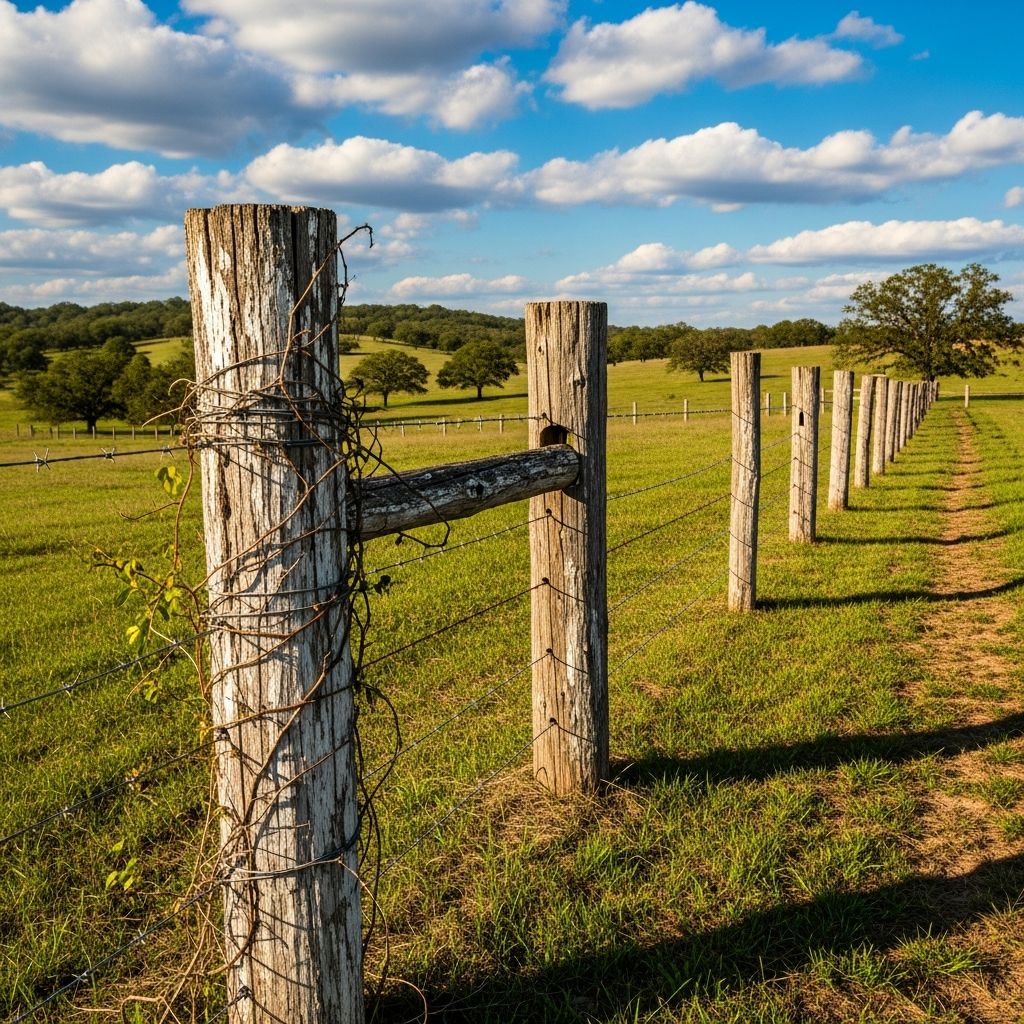
Understanding Property Lines and Fences in Oklahoma
For many Oklahoma landowners, the fence along the property line is more than just a physical barrier—it’s a symbol of ownership, privacy, and responsibility. But when fences don’t align with legal boundaries, or when neighbors disagree about who pays for or controls a shared fence, confusion and conflict can quickly arise. Oklahoma law provides a framework for how property lines are defined, how fences should be handled between neighbors, and what options exist when a fence crosses onto someone else’s land.
How Property Lines Are Legally Defined
A property line is not created by a fence, a driveway, or even years of informal use. It is established by a legal description in a deed, plat map, or recorded survey. These documents define the exact dimensions and location of a parcel of land, and they are what courts rely on when disputes arise.
In Oklahoma, property boundaries are governed primarily by Title 60 of the Oklahoma Statutes, which covers property rights and ownership. Under this title, coterminous (adjoining) landowners are responsible for maintaining both the boundary line itself and any fence that separates their properties, unless an agreement says otherwise.
Because fences are often built based on informal understanding rather than precise measurements, it’s common for a fence to be slightly off the true property line. This doesn’t automatically make it illegal, but it does create potential legal exposure if the true boundary is later surveyed and challenged.
Shared Fences and Neighbor Responsibilities
When two properties share a boundary line, Oklahoma law generally treats the fence along that line as a shared responsibility. This means both landowners are expected to contribute to the construction and upkeep of a division fence, unless one party has agreed to take on the full cost or has chosen to leave their land open.
Key principles under Oklahoma law include:
- Adjoining landowners are equally responsible for maintaining boundary fences.
- If one owner has left their land open and the other built a fence, the first owner must later reimburse a fair share of the fence’s value if they decide to enclose their land.
- Neither owner can unilaterally remove or significantly alter a shared fence without notice and, in some cases, agreement from the other party.
This shared responsibility applies regardless of which side of the fence the posts are on or who originally paid for the fence. The law focuses on the functional role of the fence as a boundary marker between two properties, not on who installed it.
Building a Fence on the Property Line
Many Oklahoma landowners want to build a fence directly on the property line, and in most cases, this is allowed. However, doing so legally and without creating future disputes requires careful planning and communication.
Before any construction begins, it’s strongly recommended to:
- Hire a licensed land surveyor to confirm the exact location of the property line.
- Notify adjacent landowners in writing of the intent to build or replace a fence on the boundary.
- Discuss cost-sharing, design, and maintenance responsibilities with the neighbor.
- Check local zoning ordinances and any homeowners association (HOA) rules that may limit fence height, materials, or placement.
While Oklahoma law does not require written permission from a neighbor to build a fence on your own property, building directly on the line involves a shared boundary. A cooperative approach reduces the risk of conflict and can prevent costly legal action later.
What Happens When a Fence Crosses the Property Line?
It’s not uncommon for a fence to be built slightly over the legal boundary, either by mistake or based on an old, inaccurate understanding of where the line runs. When a fence encroaches onto a neighbor’s property, several legal issues may arise:
- The encroaching owner may be trespassing on the neighbor’s land.
- The neighbor may have the right to require removal or relocation of the fence.
- If the encroaching fence remains in place for many years under certain conditions, it could support a claim of adverse possession.
Encroachment becomes especially serious when the fence is used to assert ownership of the land it crosses. Over time, this can create a legal argument that the encroaching party has effectively “took” that strip of land through continuous, open, and hostile use.
Adverse Possession and Fence Encroachments
Adverse possession, sometimes called “squatter’s rights,” allows someone to gain legal ownership of land they don’t own if they meet specific requirements over a set period. In Oklahoma, the general statutory period for adverse possession is 15 years.
For a fence encroachment to support an adverse possession claim, the person using the land must typically show that their use was:
- Actual – they physically used the land (for example, by maintaining a fence and yard on it).
- Open and notorious – the use was visible and obvious, not hidden.
- Exclusive – they treated the land as their own, not shared with the true owner.
- Hostile – they used the land without the owner’s permission, even if they didn’t intend to “steal” it.
- Continuous – the use lasted for the full statutory period (15 years in Oklahoma).
If all these elements are met, a court could award legal title to the encroached strip of land to the person who built and maintained the fence. This is why it’s important for property owners to address encroachments early, rather than ignoring them for years.
Legal Steps When a Neighbor’s Fence Crosses Your Line
If you discover that a neighbor’s fence is on your property, there are several steps you can take, ranging from informal discussion to formal legal action.
1. Confirm the Boundary with a Survey
The first step is to obtain a current, professional land survey. A survey will show the exact location of your property lines and whether the fence is actually encroaching. Relying on old property lines, memory, or informal markers is not sufficient in a legal dispute.
2. Talk to Your Neighbor
Before taking legal action, it’s often wise to have a calm, respectful conversation with the neighbor. Explain what the survey shows and discuss possible solutions, such as:
- Relocating the fence to the correct boundary.
- Leasing or selling the encroached strip of land.
- Formally agreeing that the fence marks the boundary going forward (a boundary line agreement).
3. Send a Formal Notice
If the neighbor is unwilling to cooperate, sending a written notice (often called a “demand letter”) can help protect your rights. This letter should:
- Identify the encroachment using the survey.
- State that the fence is on your property.
- Request that the fence be removed or relocated within a reasonable time.
- Warn that failure to act may result in legal action.
4. Consider a Boundary Line Agreement
Instead of forcing removal, some neighbors choose to formalize the current fence line as the new legal boundary. A boundary line agreement is a written, recorded document that adjusts the property lines between two owners. This can be a practical solution when moving the fence would be expensive or disruptive.
5. File a Lawsuit if Necessary
If the neighbor refuses to address the encroachment, you may need to file a lawsuit. Common legal claims in these situations include:
- Trespass – for the unauthorized use of your land.
- Quiet title – to establish clear ownership of the disputed area.
- Injunction – to stop the neighbor from continuing to use or maintain the encroaching fence.
Oklahoma law generally gives property owners two years from the time they discover a boundary violation to file a lawsuit, so it’s important not to delay.
What If You Want to Move or Remove a Shared Fence?
Removing or relocating a fence that separates two properties is not as simple as tearing it down. Because the fence is often considered a shared boundary structure, Oklahoma law requires certain steps to avoid liability.
Under Title 4, Section 4-150.1 of the Oklahoma Statutes, if a new survey shows that the property line runs across an existing boundary or division fence, the landowner must:
- Provide written notice to the adjacent owner.
- Include a copy of the survey and a description of the proposed changes.
- Inform the neighbor that legal action may be filed and that the court could award attorney fees to the prevailing party.
Until this notice is given and a reasonable time has passed (typically 30 days), the landowner cannot damage, remove, or authorize new construction on the disputed strip of land. This protects the neighbor’s interest and ensures that any changes are made through a legal process, not by self-help.
Local Rules and HOA Restrictions
In addition to state law, Oklahoma landowners must also comply with local zoning ordinances and any homeowners association (HOA) rules that apply to their property.
Common local restrictions include:
- Maximum fence height (often 4 feet in front yards, 6–8 feet in back and side yards).
- Setback requirements from streets, sidewalks, and utility easements.
- Prohibited materials (for example, chain-link in certain front yard areas).
- Requirements for permits before construction begins.
HOAs may impose additional rules, such as:
- Architectural review of fence design.
- Restrictions on color, style, or materials.
- Rules about where fences can be placed on corner lots.
Violating these rules can result in fines, orders to remove or modify the fence, or even legal action by the HOA. Always check with your city or county planning department and HOA (if applicable) before building or modifying a fence.
Practical Tips for Avoiding Fence Disputes
Most fence and boundary disputes can be avoided with a little planning and communication. Here are some practical steps Oklahoma landowners can take:
- Survey before building: Always confirm property lines with a licensed surveyor before installing a new fence.
- Communicate early: Talk to neighbors about fence plans before construction begins.
- Put agreements in writing: If neighbors agree to share costs or adjust the fence line, document the agreement in writing and consider recording it with the county.
- Respect easements: Avoid building fences on utility easements, drainage areas, or public rights-of-way.
- Act promptly on encroachments: If a neighbor’s fence crosses your line, address it sooner rather than later to avoid adverse possession claims.
When to Consult an Attorney
While many fence issues can be resolved through conversation, some situations require legal advice. Consider consulting an attorney if:
- A neighbor refuses to remove or relocate an encroaching fence.
- You are being asked to pay for a fence you don’t want or use.
- A dispute involves a large area of land or significant construction.
- You are considering filing a lawsuit or defending against one.
- You want to create a formal boundary line agreement or easement.
An experienced real estate or property attorney can help you understand your rights, draft letters or agreements, and represent you in court if necessary.
Frequently Asked Questions
Can I build a fence right on the property line in Oklahoma?
Yes, you can build a fence on the property line, but it’s best to first confirm the exact boundary with a survey, notify your neighbor, and check local zoning and HOA rules. Building on the line often creates a shared responsibility for maintenance.
Who is responsible for a fence between two properties?
Under Oklahoma law, adjoining landowners are generally equally responsible for maintaining a boundary fence unless one has left their land open and later decides to enclose it. Neighbors can also agree to different arrangements in writing.
What should I do if my neighbor’s fence is on my property?
First, get a current land survey to confirm the encroachment. Then, talk to your neighbor about moving or adjusting the fence. If they won’t cooperate, send a written notice and consider consulting an attorney about legal options.
Can a neighbor lose land because of a fence?
Yes, if a fence has been on the land for 15 years or more under conditions that meet the requirements for adverse possession, the encroaching party could potentially gain legal ownership of the strip of land. This is why it’s important to address encroachments early.
How long do I have to sue over a boundary dispute in Oklahoma?
Oklahoma generally gives property owners two years from the time they discover a boundary line violation to file a lawsuit. Waiting too long can weaken or even bar your legal claim.
Do I need a permit to build a fence in Oklahoma?
Permit requirements depend on your city or county. Many municipalities require permits for fences, especially if they exceed certain heights or are in specific zones. Always check with your local planning department before starting construction.
References
- Oklahoma Statutes Title 4, Section 4-150.1 — Oklahoma Legislature. 2024. https://law.justia.com/codes/oklahoma/title-4/section-4-150-1/
- Oklahoma Statutes Title 60, Section 60-70 — Oklahoma Legislature. 2024. https://law.justia.com/codes/oklahoma/title-60/section-60-70/
- Oklahoma Adverse Possession Law — Oklahoma Statutes Title 12, Section 12-526. 2024. https://law.justia.com/codes/oklahoma/title-12/section-12-526/
- Oklahoma Statutes of Limitations for Real Property — Oklahoma Statutes Title 12, Section 12-526. 2024. https://law.justia.com/codes/oklahoma/title-12/section-12-526/
- Oklahoma Land Surveying Standards — Oklahoma Society of Land Surveyors. 2024. https://www.osls.org/
Similar Articles








Read full bio of Sneha Tete


