
Oklahoma Home Funeral Regulations: 5 Practical Steps For Families
Navigate Oklahoma's rules for home funerals: family-led care, legal requirements, and practical steps for dignified farewells.
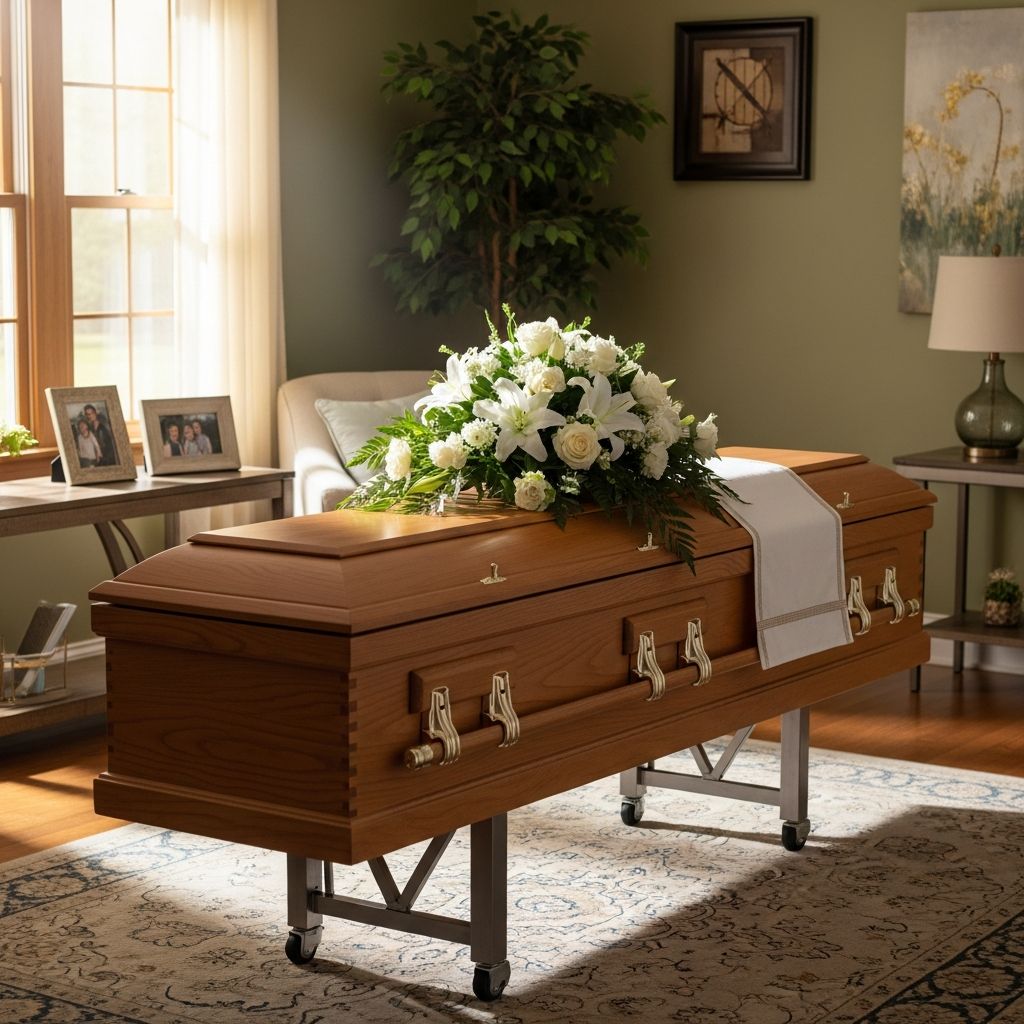
Conducting a home funeral in Oklahoma allows families to personally manage the care and farewell of a loved one, bypassing conventional funeral services. This approach emphasizes dignity, personalization, and cost savings while adhering to state statutes on body handling, documentation, and disposition.
Understanding Family Rights in Home Funerals
Families in Oklahoma hold the legal authority to care for a deceased loved one at home without mandatory involvement from licensed funeral professionals. State laws recognize the right to private family care, provided all health and safety regulations are followed. This includes washing, dressing, and vigil-keeping in a home setting.
- Legal Basis: No statute requires a funeral director for initial body custody if family assumes responsibility promptly.
- Time Frame: Unembalmed bodies must be disposed of within 24 hours unless refrigerated, ensuring public health standards.
- Exceptions: Certain deaths, like those in custody or planned for cremation/transport out-of-state, trigger investigations or notifications.
This flexibility empowers families to create meaningful rituals, from bedside vigils to community gatherings, as long as sanitary practices are maintained.
Key Legal Requirements for Body Care
Oklahoma prioritizes sanitation and timely disposition to prevent health risks. Families must either embalm or refrigerate the body if disposition exceeds 24 hours post-death.
| Option | Timeline | Details |
|---|---|---|
| Embalming | Within 24 hours if no refrigeration | Performed by licensed professional; not required for immediate burial. |
| Refrigeration | Below 45°F after 30 hours | Home units acceptable if compliant; no public viewing of unembalmed bodies after 24 hours. |
| Immediate Disposition | Within 24 hours | Burial or cremation without preservation if conditions met. |
For contagious diseases, consult a physician immediately. Refrigeration units must maintain temperatures to avoid decomposition, and records of care should be kept for authorities.
Securing Death Certificates and Permits
Filing a death certificate is mandatory within 10 days via the Oklahoma State Department of Health. Typically, a funeral director handles this, but families can if no director is involved.
- Obtain medical certification from the attending physician, PA, APRN, or medical examiner.
- Family or acting custodian signs and submits the certificate electronically.
- Include personal data from next-of-kin; transmit partial certificate within 24 hours of death.
Additional permits are needed for burial, cremation, or transport. The authorizing agent—usually spouse, adult child, parent, or sibling per succession statutes—oversees this process.
Options for Final Disposition
Families have multiple paths for laying a loved one to rest, each with specific rules.
Burial Practices
Home burials on private property are generally restricted by local zoning, ordinances, or deed restrictions within city limits. Rural properties may allow it after attorney consultation and cemetery establishment under Title 8 statutes. Approved sites include licensed cemeteries or historical family graveyards.
- Ensure casket in sound coffin and outer case for shipments.
- No intermingling without consent.
Cremation Procedures
Cremation requires a licensed crematory and special permit. Families authorize via written consent; remains cannot be divided without permission.
- Process: Identification maintained throughout; operator attests to identity post-cremation.
- Unclaimed Remains: After 60 days, facilities may dispose humanely per local laws.
- Liability: Directors not liable if following agent instructions reasonably.
Direct cremation skips services, ideal for simple home funerals.
Transporting Remains Within and Out of State
Domestic transport demands compliance with timelines: embalm or refrigerate if over 48 hours to destination. Airtight containers required for decomposed or non-embalmed bodies.
- In-state: Signed transit permits from registrar.
- Out-of-state: Notify receiving state; file death certificate first.
Families can self-transport in private vehicles if body is secured and legal documents accompany.
Practical Steps for a Successful Home Funeral
Planning ensures smoothness amid grief.
- Immediate Actions: Pronounce death, notify physician for certification.
- Body Preparation: Bathe, dress; use dry ice or rented coolers for preservation.
- Vigil and Viewing: Host private gatherings; limit unembalmed viewings to 24 hours.
- Disposition Coordination: Secure cemetery plot, crematory slot, or transport.
- Documentation: Retain all certificates, permits for estate settlement.
Consider hiring for specific tasks like filing paperwork to ease burden.
Costs and Financial Considerations
Home funerals cut expenses dramatically, avoiding facility fees.
| Item | Typical Cost | Home Funeral Savings |
|---|---|---|
| Death Certificate & Permits | $20-50 | Minimal; self-filing free. |
| Refrigeration/Embalming | $500-1,500 | DIY refrigeration ~$100. |
| Casket/Urn | $1,000-5,000 | Direct purchase $200-1,000. |
| Disposition (Burial/Cremation) | $1,000-3,000 | Basic cremation ~$800. |
Total home funeral: often under $2,000 vs. $8,000+ traditional.
Common Obstacles and Resolutions
- Hospital Release: Request ‘family care’ paperwork; no embalming needed initially.
- Local Variations: Check county health departments for burial rules.
- Disputes: Succession laws prioritize; court order if contested.
Frequently Asked Questions
Can I keep the body at home indefinitely?
No, unembalmed bodies require disposition within 24 hours or refrigeration below 45°F.
Do I need a funeral director?
Not for care, but recommended for certificates if complex; families can file independently.
Is home burial legal in Oklahoma?
Rarely in cities due to zoning; possible on private rural land with legal setup.
What if cremation is delayed?
Remains held 60 days; then dignified disposal by facility.
Who authorizes disposition?
Spouse first, then adult children, parents, siblings per 21 O.S. §1158.
Recent Developments in Oversight
Governor’s 2025 veto impacted funeral regulations, potentially affecting licensing; verify current rules via official channels.
References
- Oklahoma – NATIONAL HOME FUNERAL ALLIANCE — National Home Funeral Alliance. Accessed 2026. https://www.homefuneralalliance.org/oklahoma.html
- Oklahoma Statutes §59-396.29 (2025) – Cremation — Justia Law. 2025. https://law.justia.com/codes/oklahoma/title-59/section-59-396-29/
- Quick Guide to Legal Requirements for Home Funerals — National Home Funeral Alliance. Accessed 2026. https://www.nhfuneral.org/uploads/1/1/7/5/117550115/quick_guide_to_home_funerals_by_state.pdf
- Rules of the Oklahoma Funeral Board — Oklahoma Funeral Board. 2021-09-11. https://oklahoma.gov/content/dam/ok/en/funeral/documents/rules-and-statutes/OFB%20RULES%202021%20.pdf
- Funerals in Oklahoma — U.S. Army JAG. Accessed 2026. https://tradocfcoeccafcoepfwprod.blob.core.usgovcloudapi.net/usag/jag/doc/LAOInfoPapers/EP/Funerals%20in%20Oklahoma.pdf
- Oklahoma Funeral Planning Guide — US Funerals. 2020. https://www.us-funerals.com/wp-content/uploads/2020/11/Oklahoma-Funeral-Planning-Guide.pdf
- Rules and Statutes — Oklahoma.gov Funeral Board. Accessed 2026. https://oklahoma.gov/funeral/rules-and-statutes.html
Similar Articles








Read full bio of Sneha Tete


