
Ohio Car Accident Laws: Complete 2026 Guide For Drivers
Essential guide to Ohio's car accident rules, fault determination, insurance mandates, and claim deadlines for 2026 drivers.
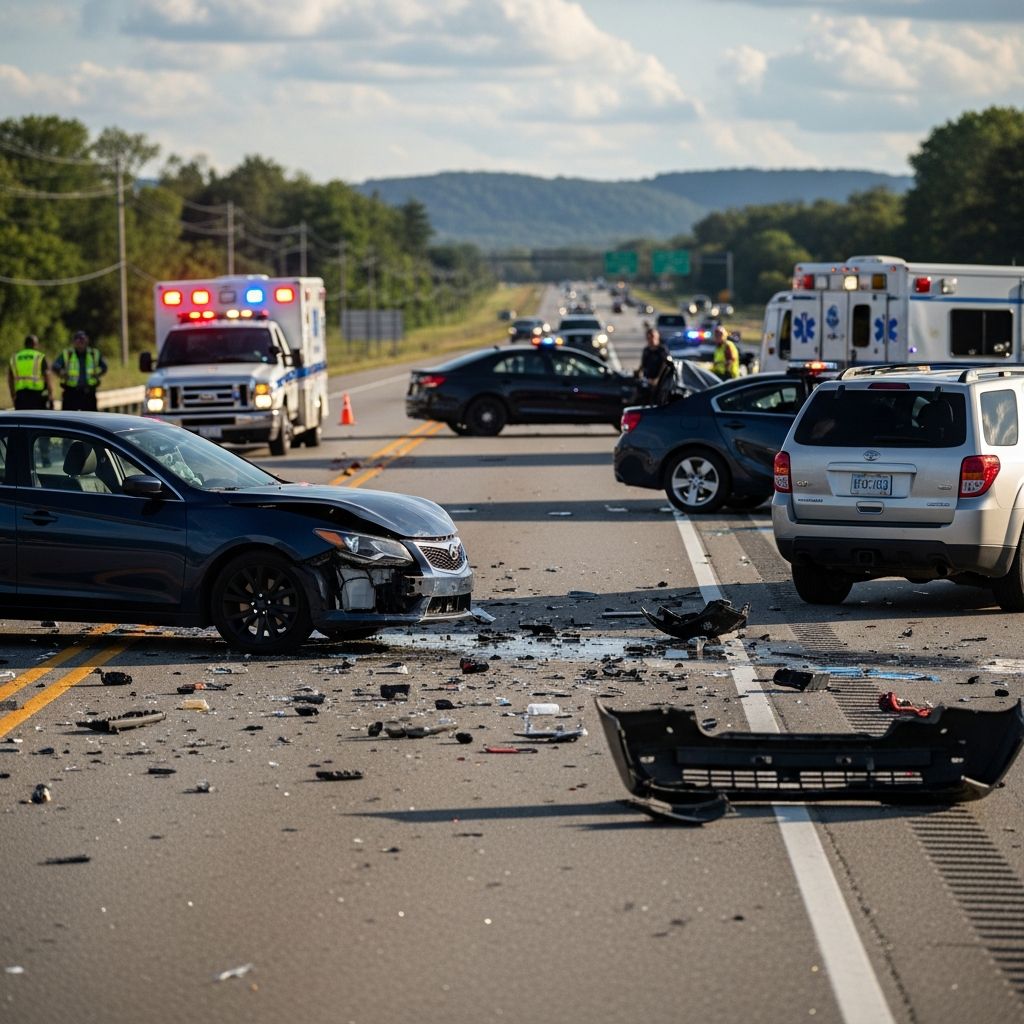
Car accidents disrupt lives across Ohio’s busy highways and urban streets. Understanding state-specific regulations helps drivers protect their rights, secure fair compensation, and avoid common pitfalls. This guide breaks down key aspects of Ohio’s legal framework for vehicle collisions, from immediate response protocols to long-term claim strategies.
Immediate Actions After an Ohio Vehicle Collision
Safety comes first following any crash. Ohio drivers must prioritize injury assessment and scene management. Check for harm among all parties and call 911 if serious injuries exist. The Good Samaritan Law shields helpful bystanders from liability when rendering aid at crash sites.
Exchange essential details with other involved drivers: full names, addresses, vehicle registration numbers, and insurance information. If you’re not the vehicle owner, provide the owner’s contact details too. Single-driver incidents require a diligent search for property owners and prompt law enforcement notification.
- Remain at the scene until authorities arrive or details are exchanged.
- Document the location with photos of vehicles, road conditions, and damage.
- Avoid admitting fault or signing documents on-site.
- Report incidents involving injury, death, or over $1,000 in property damage immediately to police, though minor crashes under this threshold don’t mandate notification.
Ohio’s Fault Determination System: Modified Comparative Negligence
Ohio employs a modified comparative negligence approach, often called the 51% bar rule. Injured parties can pursue damages if deemed less than 51% responsible for the incident. Recovery amounts decrease proportionally to assigned fault percentage.
For instance, if a court finds you 30% at fault, your award reduces by 30%. Exceeding 50% fault eliminates recovery eligibility entirely. Insurers frequently challenge fault in multi-state crashes, emphasizing the need for precise evidence collection.
| Fault Percentage | Recovery Eligibility | Example Reduction |
|---|---|---|
| 0-50% | Yes, reduced by fault % | 40% fault = 40% award cut |
| 51% or more | No recovery allowed | N/A |
Statute of Limitations: Critical Deadlines for Claims
Ohio Revised Code § 2305.10 establishes a two-year limit for most personal injury lawsuits stemming from car accidents, starting from the crash date. Missing this window typically results in case dismissal, regardless of injury severity.
Property damage claims extend to four years, while wrongful death actions begin from the date of death, also at two years. Special circumstances toll or pause these timelines:
- Minors: Clock halts until age 18, then runs two years.
- Disabilities: Pauses during mental incompetence periods.
- Absconded Defendants: Tolls if at-fault party flees the state.
- Government Entities: Often shorter notice periods apply.
- Discovery Rule: For latent injuries, timer starts upon reasonable discovery.
| Claim Type | Deadline | Starts From |
|---|---|---|
| Personal Injury | 2 years | Accident or discovery date |
| Property Damage | 4 years | Accident date |
| Wrongful Death | 2 years | Date of death |
| Minors | 2 years post-18th birthday | 18th birthday |
Mandatory Insurance Coverage in Ohio
Ohio mandates minimum liability insurance to cover damages caused in at-fault crashes: $25,000 per person for bodily injury, $50,000 per accident for bodily injury, and $25,000 for property damage. These limits frequently prove inadequate for severe incidents, prompting recommendations for higher coverage including uninsured/underinsured motorist (UM/UIM) protection.
UM/UIM must be offered but can be declined. Fault-based claims dominate, with multi-state accidents complicating primary policy determinations.
Limits on Compensation: Non-Economic Damage Caps
Ohio caps non-economic damages (pain, suffering, emotional distress) at the greater of $250,000 or three times economic damages, not exceeding $350,000 per plaintiff under Ohio Revised Code §2315.18. Exceptions apply for catastrophic injuries like limb loss or permanent deformities, removing these restrictions.
Special Considerations for Multi-State Incidents
Border crashes, such as those spanning Ohio and West Virginia, introduce complexities. Both states use modified comparative negligence, but Ohio bars recovery at 51% fault while West Virginia does so at 51% or more. Insurance priorities and statutes (both generally two years) vary procedurally.
Determine applicable law based on crash location, residency, and insurance domiciles. Early attorney involvement clarifies jurisdiction and prevents insurer disputes over governing rules.
When to Consult a Personal Injury Attorney
Seek legal counsel for disputed fault, severe injuries, denied claims, or approaching deadlines. Attorneys negotiate with insurers, gather evidence, and litigate if settlements fall short. Contingency fees align interests, with no upfront costs.
Government-involved crashes demand specialized knowledge due to strict notice rules and immunities.
Frequently Asked Questions About Ohio Car Accident Laws
What is Ohio’s car accident statute of limitations?
Generally two years for personal injury from the accident date, with exceptions for minors, discovery of injuries, and others.
Can I recover if partially at fault in Ohio?
Yes, if under 51% fault; damages reduce by your fault share.
What are Ohio’s minimum auto insurance requirements?
$25/50/25 for liability: $25K per person injury, $50K per accident injury, $25K property.
Do I need to call police after every Ohio crash?
No, only for injuries, death, or $1,000+ property damage; minor incidents exempt.
How long for wrongful death claims in Ohio?
Two years from death date.
Are non-economic damages capped?
Yes, up to $350K generally, higher for catastrophic cases.
This guide equips Ohio drivers with vital knowledge for 2026. Laws evolve; verify updates via official channels.
References
- What is the Statute of Limitations for Car Accidents in Ohio? — Lawrence Laws. 2026 (approx., recent). https://www.lawrencelaws.com/blog/ohio-car-accident-statute-of-limitations/
- West Virginia vs. Ohio Car Accident Laws — How They Differ in Tri-State Crashes in 2026 — Woelfel Personal Injury. 2026-01. https://woelfelpersonalinjury.com/west-virginia-vs-ohio-car-accident-laws-how-they-differ-in-tri-state-crashes-in-2026/
- Car Accident in Ohio? What to Do & When to Hire a Lawyer (2026 Guide) — Pencheff & Fraley. 2026. https://pencheffandfraley.com/car-accident-ohio-what-to-do-lawyer-guide/
- Statute of Limitations for Car Accidents in Ohio: Complete Guide — Pencheff & Fraley. 2026 (recent). https://pencheffandfraley.com/statute-of-limitations-car-accidents-ohio/
- A Basic Guide to Ohio Car Accident Laws — Bey & Associates, LLC. Recent. https://beyandassociates.com/a-basic-guide-to-ohio-car-accident-laws/
- Ohio Car Accident Laws – All You Need To Know — Czack Law. Recent. https://www.czacklaw.com/blog/ohio-car-accident-laws/
Similar Articles








Read full bio of medha deb


