
North Dakota Vehicle Collision Regulations
Comprehensive guide to North Dakota's no-fault auto insurance rules, injury claims, fault rules, and driver obligations after crashes.
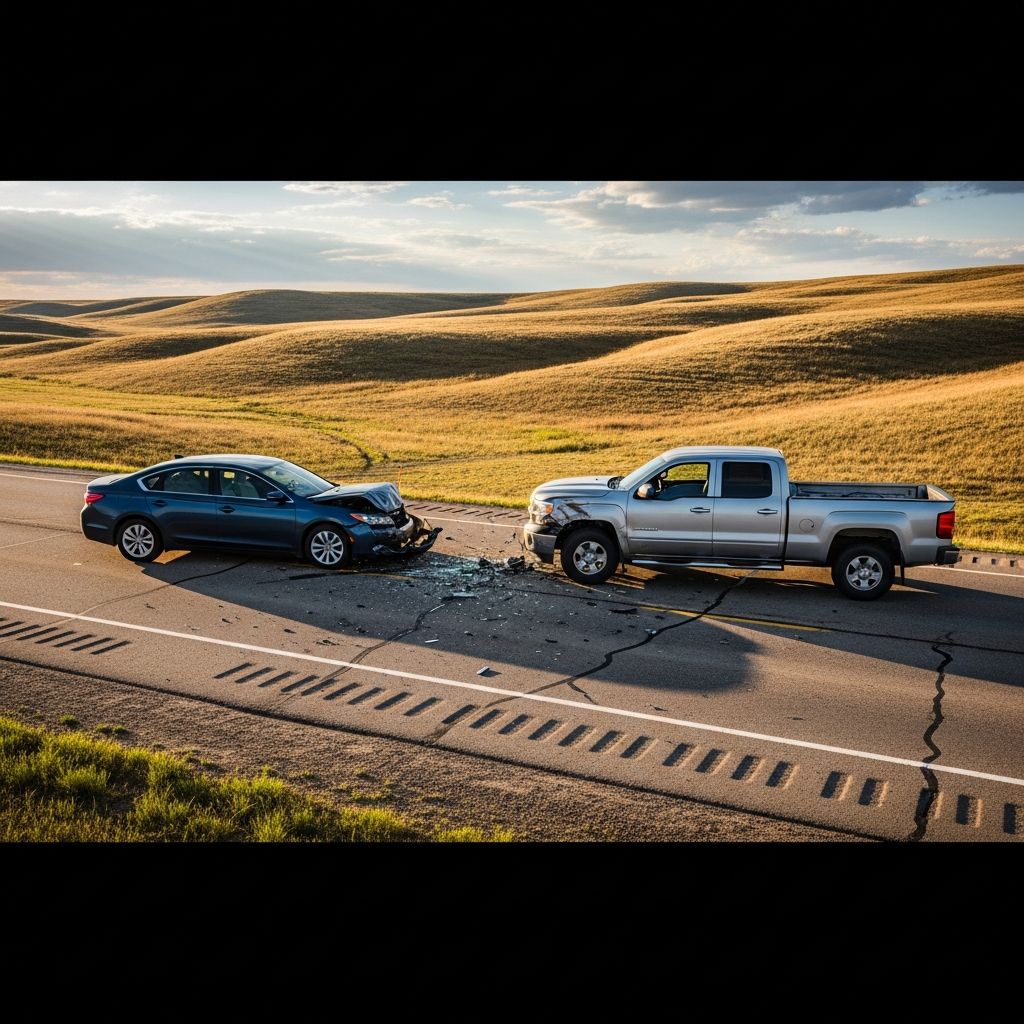
Vehicle collisions in North Dakota operate under a structured legal framework designed to ensure swift compensation for victims while holding drivers accountable. As a no-fault jurisdiction, the state prioritizes personal injury protection (PIP) coverage from your own insurer before pursuing claims against others. This system streamlines medical and wage reimbursements but includes strict thresholds for lawsuits seeking pain and suffering damages.
Core Principles of North Dakota’s No-Fault System
North Dakota mandates no-fault insurance, meaning drivers file initial claims with their own policies regardless of fault. This covers medical expenses, lost wages, and related costs up to policy limits, reducing disputes over blame early on. Basic no-fault benefits provide a $30,000 pool for economic losses, including up to $15,000 for medical costs (covering 85% of expenses after a $200 deductible), $15,000 for wage loss (up to 85% of actual loss), and essential services like household help.
Optional excess coverage can extend benefits, but stacking multiple policies is prohibited—coverage is limited to the vehicle involved in the incident. Uninsured/underinsured motorist (UM/UIM) coverage is required and pays if the at-fault driver lacks sufficient insurance.
Mandatory Insurance Coverage Requirements
All registered vehicles must carry minimum liability limits set by state law. These ensure protection for others in collisions:
- Bodily Injury Liability: $25,000 per person / $50,000 per accident—covers injuries caused to others.
- Property Damage Liability: $25,000 per accident—pays for vehicle repairs or replacement value if totaled.
- Personal Injury Protection (PIP): Basic no-fault benefits as outlined above.
- Uninsured/Underinsured Motorist: Matches bodily injury limits to protect against inadequately insured drivers.
Owners without required security face absolute liability for basic no-fault benefits and suspension of driving privileges until compliance. Ride-sharing services (TNCs) have elevated requirements, such as $50,000/$100,000 bodily injury during app-on periods and $1 million combined during rides.
| Coverage Type | Minimum Limit | Purpose |
|---|---|---|
| Bodily Injury | $25K/person, $50K/accident | Injuries to others |
| Property Damage | $25K/accident | Vehicle/other property repairs |
| PIP/No-Fault | $30K pool (basic) | Your medical/wages regardless of fault |
| UM/UIM | Matches BI limits | Uninsured driver protection |
Stepping Outside No-Fault: Injury Thresholds for Lawsuits
No-fault does not bar all lawsuits. Victims can pursue the at-fault driver for damages exceeding PIP if they meet a verbal threshold:
- Medical expenses over $2,500; or
- Serious, permanent disfigurement or disability lasting more than 60 days.
Qualifying claims allow recovery for non-economic damages like pain and suffering, emotional distress, loss of enjoyment of life, and consortium. Proof of the other driver’s negligence remains essential.
Fault Determination and Comparative Negligence Rules
North Dakota follows a modified comparative negligence doctrine. Plaintiffs recover damages reduced by their fault percentage if under 50% responsible. At 50% or more fault, no recovery is allowed for personal injury.
For property damage under $5,000 direct/$1,000 indirect, recovery is not reduced by fault if multiple parties are involved and defendant is over 50% at fault. Crash reports (Form DOT 2356) detail factors like vehicle movement, citations, and damage extent, serving as key evidence.
Immediate Post-Collision Responsibilities
Drivers must stop immediately after any crash involving injury, death, or over $1,000-$4,000 in property damage (thresholds vary by source). Notify law enforcement on-scene for serious incidents; file a DOT report for damages ≥$4,000 or injuries.
Hit-and-run laws require stopping, aiding injured parties, and exchanging information—failure constitutes a crime. Incorrect crash report details can harm claims, emphasizing accurate reporting.
Statutes of Limitations for Claims and Lawsuits
Time limits protect evidence integrity:
- Personal Injury: 6 years from crash date.
- Wrongful Death: 2 years from death.
- Property Damage: 6 years, with no-fault claims processed promptly via insurer.
Delays risk evidence loss, so consult professionals early.
Types of Recoverable Compensation
Beyond PIP, lawsuits target:
- Economic: Medical bills, lost income, future care.
- Non-Economic: Pain, suffering, disfigurement.
UM/UIM fills gaps from underinsured at-fault parties.
Special Circumstances and Exclusions
No-fault benefits exclude injuries while unlawfully occupying vehicles or in uninsured owned vehicles. Convicted drunk drivers without insurance face heightened liability for non-economic losses. TNC drivers have period-specific coverages.
Frequently Asked Questions
What if my damages exceed PIP limits?
If medical costs surpass $2,500 or you have serious permanent injury lasting over 60 days, sue the at-fault driver for excess economic and all non-economic damages.
Does my partial fault bar recovery?
No, if under 50% at fault; damages reduce proportionally. Over 50%, recovery barred for injury claims.
Do I need to report all crashes?
Yes, for injuries, fatalities, or $4,000+ damage via DOT form. Immediate police for $1,000+ damage or injury.
What are the minimum insurance amounts?
$25K/$50K bodily injury, $25K property damage, plus PIP and UM/UIM.
How long to file a lawsuit?
6 years for injuries, 2 years for wrongful death.
Navigating Claims: Practical Steps
1. Ensure safety and call emergency services.
2. Exchange info, document scene.
3. File police/DOT report.
4. Notify your insurer for PIP.
5. Seek medical care; track bills.
6. If threshold met, consult attorney for fault claim.
This framework balances quick payouts with accountability, but complexities like fault disputes require expertise.
References
- Is North Dakota a No-Fault State for Car Accidents? — Larson Law. Accessed 2026. https://ndakotalaw.com/is-north-dakota-a-no-fault-state-for-car-accidents/
- How to Handle a North Dakota Car Crash — Enjuris. Accessed 2026. https://www.enjuris.com/north-dakota/vehicle-accident-laws/
- Auto Insurance — North Dakota Insurance Department. Accessed 2026. https://www.insurance.nd.gov/consumers/insurance/auto
- Chapter 26.1-41 North Dakota Century Code — North Dakota Legislative Branch. Accessed 2026. https://ndlegis.gov/cencode/t26-1c41.pdf
- North Dakota Car Accident Laws, Lawsuits, and Lawyers — Your Legal Justice. Accessed 2026. http://www.yourlegaljustice.com/car-accident-lawyers/state/north-dakota/
- How to Read Your North Dakota Accident Report — Law.com. Accessed 2026. https://lawyers.law.com/article/how-to-read-your-north-dakota-accident-report.html
Similar Articles








Read full bio of Sneha Tete


