
NC Service Dogs and Support Animals Guide
Comprehensive guide to North Carolina laws protecting service dogs, animals in training, and emotional support animals in housing and public spaces.
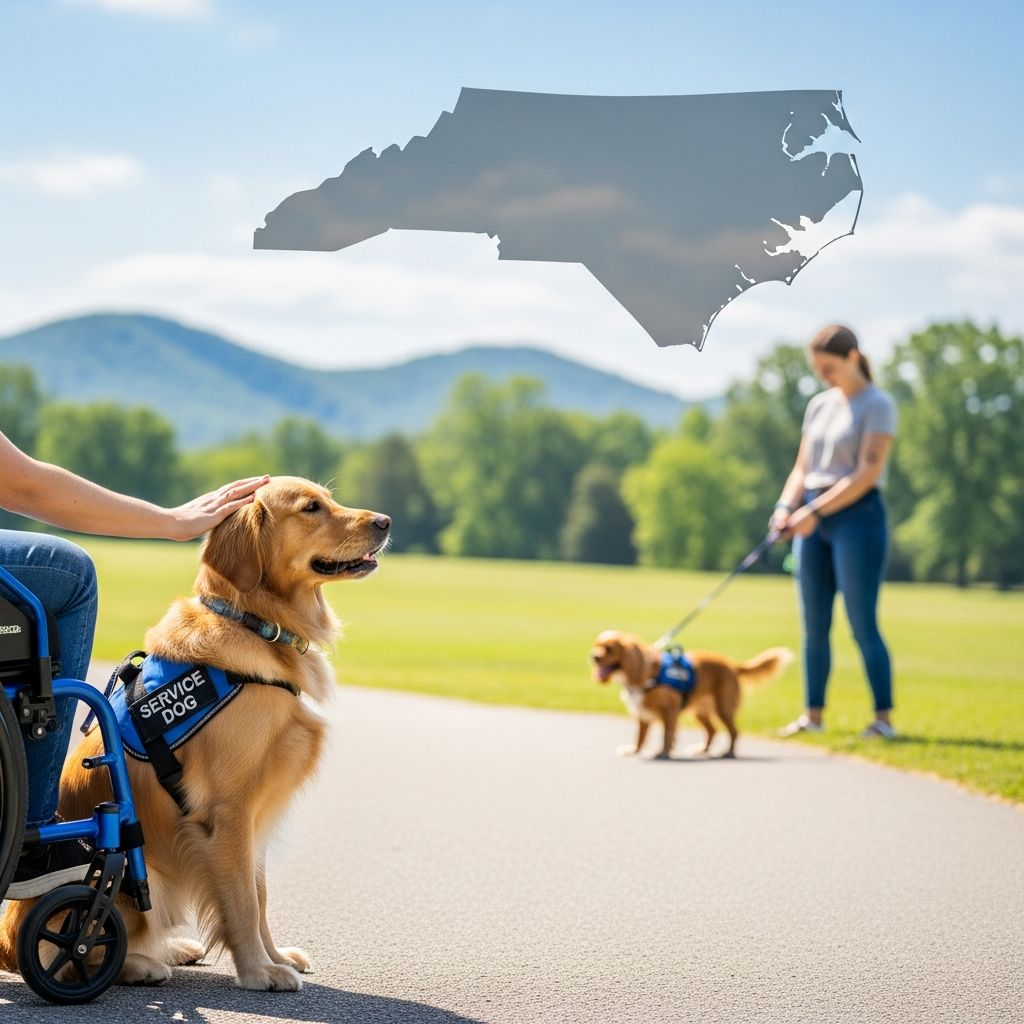
North Carolina residents with disabilities rely on service dogs and other assistance animals for essential daily support. State laws, aligned with federal protections like the Americans with Disabilities Act (ADA), grant these animals broad access to public spaces and housing. This guide breaks down definitions, rights, responsibilities, and common challenges.
Defining Service Animals Under NC and Federal Law
A
service animal
in North Carolina is primarily a dog—or in rare cases, a miniature horse—individually trained to perform specific tasks directly related to a person’s disability. These tasks might include guiding the blind, alerting to seizures, or retrieving items for those with mobility impairments.Unlike pets, service animals focus on work or tasks, not just emotional comfort. Emotional support animals (ESAs) and therapy animals do not qualify as service animals under public access laws but may receive housing protections.
- Dogs: No breed or size restrictions apply.
- Miniature horses: Must meet size standards for safety in public areas.
- Other species: Generally excluded from service animal status for public access.
Training can come from professional programs, owner-trainers, or even family members—no formal certification is required.
Public Access Protections for Service Dogs
North Carolina statutes ensure service animals accompany their handlers in all public accommodations, including restaurants, stores, hotels, theaters, medical offices, and government buildings.
Key rights include:
- Entry to any place open to the public where the handler is allowed.
- No extra fees or deposits for the animal’s presence.
- Protection from discrimination or denial of service.
Businesses may only inquire about the animal’s task performance or request removal if the animal is out of control or not housebroken. Staff cannot demand proof of training, vests, or IDs.
| Allowed Inquiry | Not Allowed |
|---|---|
| What tasks does the dog perform? | Requesting certification or vest. |
| Is the dog a service animal required for a disability? | Asking about the handler’s disability. |
| Observing behavior (e.g., aggressive). | Petting or distracting the animal. |
Service Animals in Training: Equal Access
North Carolina uniquely extends full public access rights to service animals under training. These dogs must wear a collar, leash, and identifying gear like a harness or cape marking them as ‘in training.’
Trainers bear liability for any damage caused during training visits to public places. This provision supports the pipeline of skilled service dogs by allowing real-world exposure.
“It is unlawful to deprive a person with a disability or a person training a service animal of any rights granted…” — NC General Statute § 168-4.2
Housing Accommodations for Assistance Animals
The federal Fair Housing Act (FHA) mandates reasonable accommodations for assistance animals in rental housing, overriding ‘no pets’ policies. North Carolina follows suit, treating ESAs as valid for housing needs.
Landlords may request:
- Confirmation of the tenant’s disability.
- Evidence the animal provides disability-related support (no task training required for ESAs).
No pet fees, deposits, or breed bans apply to verified assistance animals. However, landlords can deny if the animal poses a direct threat or causes undue burden.
Distinctions in Housing vs. Public Access
| Category | Public Access (ADA/NC Law) | Housing (FHA) |
|---|---|---|
| Animal Type | Dog or mini horse, task-trained | Any common domestic animal, including ESAs |
| Proof Needed | None required | Disability verification letter |
| Fees | Prohibited | Waived |
Voluntary Registration with NC DHHS
The NC Department of Health and Human Services (DHHS) offers free, voluntary registration for service animals. Handlers or trainers submit an application with signatures verifying the animal’s status.
Registered animals receive a permanent tag stamped ‘NORTH CAROLINA SERVICE ANIMAL PERMANENT REGISTRATION.’ This aids quick identification but is not mandatory for rights.
Registration rules ensure the animal is trained or in training, with no renewal fees.
Responsibilities of Handlers and Trainers
Owners must maintain control via voice commands, leash, or harness (except when it interferes with tasks). Animals should be housebroken and well-behaved.
- Cleanup waste promptly.
- Prevent aggressive behavior.
- Liable for damages or injuries caused.
Trainers cover costs during public training sessions.
Obtaining a Legitimate Service Dog in North Carolina
With over 1.4 million disabled residents, demand for service dogs is high. Reputable programs follow standards from groups like Assistance Dogs International (ADI).
Training timelines vary: minimum six months, often 12-24 months. Costs range widely, but accredited nonprofits prioritize need over profit.
Red flags for scams:
- Sites selling ‘certificates’ online without training.
- Guarantees without client references.
- High-pressure sales ignoring assessment.
Seek ADI-accredited programs for vetted quality, though non-accredited trainers can be excellent. Post-placement support is crucial for success.
Challenges and Enforcement
Common issues include untrained pets misrepresented as service animals, leading to risks for legitimate handlers. Recent crackdowns target fraudulent sellers.
Violations of NC laws (e.g., denying access) are Class 3 misdemeanors. Contact Disability Rights NC or local authorities for complaints.
Airlines require DOT forms for service dogs, but no universal certification exists.
Frequently Asked Questions
Can any dog be a service dog in NC?
No, it must be trained for disability-related tasks. Basic obedience alone doesn’t qualify.
Do service dogs need vests or IDs?
Not required by law, though useful for identification. Animals in training need visible markers.
Are emotional support animals allowed in restaurants?
No, ESAs lack public access rights under ADA/NC law—only housing.
What if my service dog is aggressive?
Businesses can exclude it for safety, but not based on breed alone.
How do I register my service animal?
Apply free via NC DHHS; includes tag but isn’t mandatory.
State Support for Service Dog Programs
NC law requires donating unredeemed impounded dogs to nonprofit trainers upon request, bolstering supply. Programs often use prison training for cost-effective, skilled preparation.
Types of service dogs include mobility (nearly 50%), autism support (23%), psychiatric, and PTSD aids.
References
- Legal Guidelines for Service Animals in NC — Disability Rights NC. Accessed 2026. https://disabilityrightsnc.org/resources/legal-guidelines-for-service-animals-in-nc/
- Service and Emotional Support Animals — Wake Forest University Residence Life and Housing. Accessed 2026. https://rlh.wfu.edu/current-students/service-and-emotional-support-animals/
- NC General Statutes – Chapter 168 — North Carolina General Assembly. 2005-450, s. 1 (last relevant update). https://www.ncleg.net/enactedlegislation/statutes/pdf/bychapter/chapter_168.pdf
- What to know before getting a service dog in NC — North Carolina Health News. 2026-01-06. https://www.northcarolinahealthnews.org/2026/01/06/service-dog-nc-training-disabilities/
- NO DOGS ALLOWED The FHAA, the ADA, and exceptions to no-pet policies — NC Real Estate Commission. 2016-05. https://bulletins.ncrec.gov/no-dogs-allowed-the-fhaa-the-ada-and-exceptions-to-no-pet-policies/
Similar Articles








Read full bio of medha deb


