
Senior Driver License Requirements in North Carolina
Understanding renewal schedules, vision testing, and safety measures for drivers 66 and older in NC.
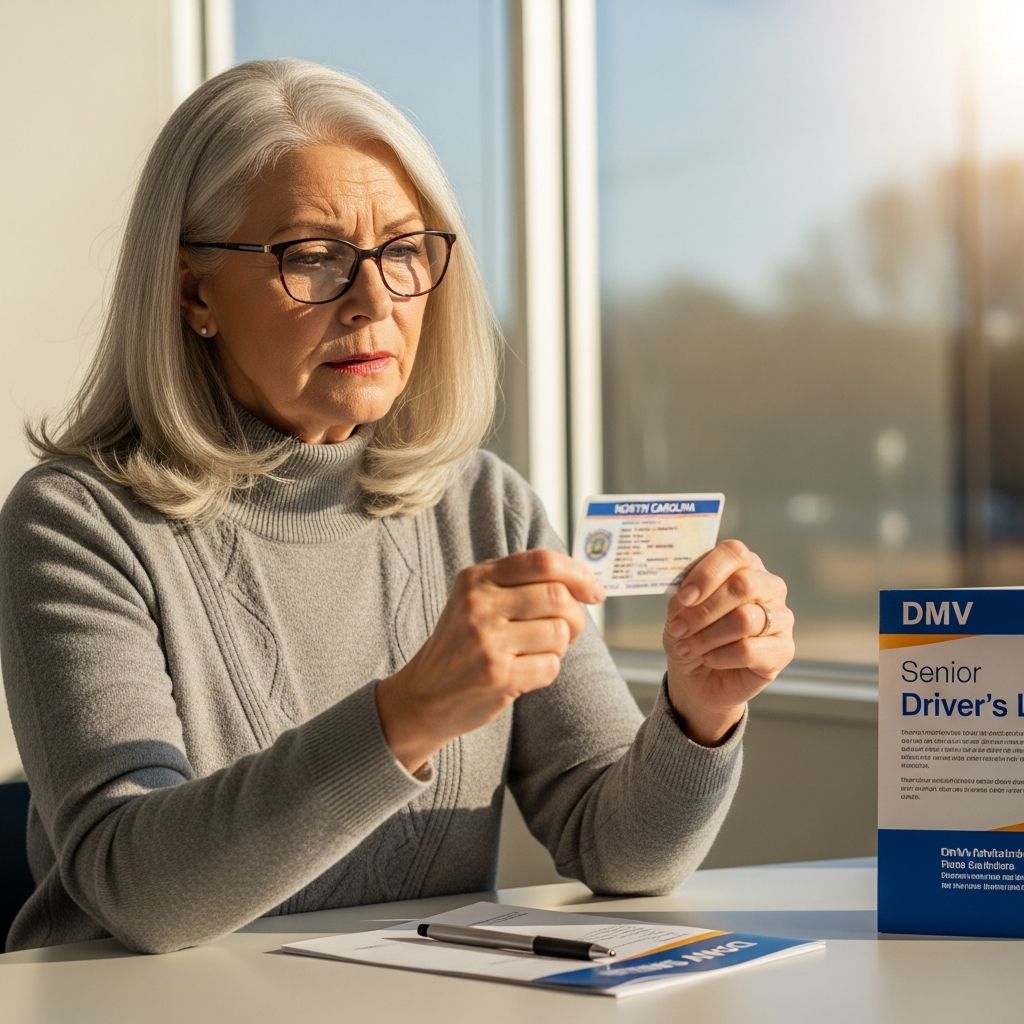
Understanding License Renewal for Mature Drivers in North Carolina
As drivers age, they may encounter different administrative requirements when managing their driving privileges. In North Carolina, the Department of Motor Vehicles (NCDMV) recognizes that senior citizens represent a significant portion of the driving population and have implemented specific protocols to address their unique needs while maintaining road safety standards.
Unlike some states that impose hard age limits on driving, North Carolina takes a more individualized approach. The state does not automatically revoke licenses at any specific age, but instead implements structured renewal schedules and assessment procedures designed to identify any medical conditions that might affect driving ability.
Renewal Timeline: How Often Seniors Must Renew Their Licenses
The frequency of license renewal in North Carolina differs significantly based on a driver’s age group. This tiered system ensures that older drivers receive more regular check-ins with the motor vehicle administration while still respecting their independence.
Drivers between the ages of 18 and 65 enjoy the longest renewal cycle, with their licenses remaining valid for eight years before requiring renewal. However, once a driver reaches the age of 66, this timeline changes substantially. At that point, the renewal period shortens to five years, meaning seniors must renew their licenses more frequently than their younger counterparts.
It’s important to note that eligible residents of any age can initiate the renewal process up to six months before their current license expires. This advance notice period provides seniors with adequate time to prepare for their renewal appointment and gather any necessary documentation.
Online Renewal Options for Seniors: Convenience with Limitations
Technology has made some aspects of vehicle administration more accessible. North Carolina offers an online renewal platform through the state’s official myNCDMV.gov website, which allows eligible seniors to renew their licenses without visiting a physical office.
However, this convenience comes with an important restriction. While online renewal is available to seniors, it can only be used every other time a license is renewed. For example, if a 66-year-old driver completes their renewal online, they must appear in person at a DMV office for their next renewal five years later at age 71. This alternating pattern continues throughout the driver’s life.
This requirement ensures that seniors receive periodic in-person evaluations, which allows DMV staff to observe driving-related capabilities and conduct necessary physical assessments that cannot be completed through digital channels.
Vision Assessment Requirements and License Restrictions
Visual acuity plays a critical role in safe driving. During in-person license renewals, seniors are subject to vision testing that evaluates their ability to perceive road signs, vehicles, and hazards. When these tests reveal potential vision difficulties, the NCDMV may impose specific restrictions on the license.
The most common restriction placed on senior drivers involves the requirement to wear corrective lenses—such as eyeglasses or contact lenses—while operating a motor vehicle. This straightforward accommodation allows drivers with refractive errors to continue driving safely as long as they use appropriate vision correction.
Additional Vision-Related Accommodations
Beyond standard corrective lens requirements, the NCDMV recognizes that some seniors face specific medical conditions affecting their visual comfort and capability. In certain cases, drivers may need to use window tinting that exceeds normal regulatory limits to manage light sensitivity or other ocular conditions.
To obtain approval for non-standard window tinting, seniors must provide documentation including a completed Tinted Window Waiver Application Form and verification from a licensed physician confirming the medical necessity for the specialized tinting. Once approved, this accommodation appears on the driver’s license record, and the vehicle can legally operate with the enhanced tinting.
Medical Concerns and Re-examination Procedures
The NCDMV maintains a comprehensive system for addressing concerns about a driver’s ability to operate a vehicle safely. Multiple parties can initiate this process, recognizing that different people may observe warning signs from different perspectives.
Doctors, family members, law enforcement officers, and other concerned individuals can submit information about a senior driver whose safety may be compromised. To formally request a re-examination, the concerned party must complete a Medical Request for Driver Re-Examination form and submit it to the NCDMV’s Medical Review Program at the address specified on the form.
An important safeguard exists within this system: anonymous or unsigned requests are not processed by the state. This requirement ensures accountability and prevents frivolous submissions. Additionally, chronological age alone—without specific evidence of impaired driving ability—is not considered sufficient grounds for mandatory re-examination.
What Triggers a Medical Re-examination
The NCDMV typically initiates re-examination when specific concerns are documented, such as:
- Recent traffic violations or accidents
- Medical conditions affecting cognitive function or reaction time
- Observations from healthcare providers indicating declining capacity
- Concerns from family members regarding unsafe driving behaviors
- Evidence of vision impairment not previously documented
Disability Accommodations and Accessible Parking
Seniors with mobility limitations or certain medical conditions may qualify for specialized parking accommodations. North Carolina’s disabled parking placard and license plate program provides these benefits to individuals who meet specific criteria.
Eligibility for disability parking accommodations extends to individuals who:
- Are unable to walk without assistance
- Experience mobility impairment from lung disease
- Have defective vision affecting travel capability
- Have cardiac, arthritic, neurological, or orthopedic conditions limiting mobility
To obtain a disability parking placard, seniors must work with an authorized medical provider who will complete and submit the Medical Certification for Application & Renewal of Disability Parking Placard form to the NCDMV. Once approved, this accommodation allows the driver to access specially designated parking spaces that reduce walking distances.
Federal Driving Law Changes and State Compliance
The landscape of senior driving regulations continues to evolve at both state and federal levels. Recent federal legislation has introduced new requirements for drivers aged 70 and older, affecting how states structure their renewal and testing procedures. These federal changes, effective in July 2025, establish age-based renewal schedules with vision screening at all renewals, cognitive testing when concerns arise, and mandatory road tests for drivers aged 87 and older.
North Carolina is in the process of aligning its existing regulations with these federal requirements. The state previously implemented Senate Bill 391, which established a moratorium on driver license expirations beginning July 1, 2025. This temporary measure provides flexibility while the state works to address increased demand for DMV services and updates its renewal infrastructure to comply with federal standards.
Drivers should note that while the moratorium allows presentation of expired Class C licenses for in-state driving purposes if they expired on or after July 1, 2025, the NCDMV still recommends maintaining a valid license for identification purposes, such as air travel, vehicle rental, banking transactions, and other official uses.
Safety Considerations and Driving Ability Assessment
Research on aging and driving safety provides important context for understanding these regulations. Older drivers aged 70 and older actually drive fewer miles than younger drivers, and studies have shown that older drivers rank among the safest of all driver groups by certain measures. However, age-related changes in vision, reaction time, and cognitive function can increase crash risk in certain driving scenarios.
North Carolina’s approach balances these realities by implementing regular assessments without categorical age-based prohibitions. This framework allows seniors to continue driving while ensuring that those with conditions affecting safety receive appropriate accommodations or limitations.
Moving Between States and License Recognition
Seniors who relocate to or from North Carolina should be aware that driving license requirements vary significantly among states. A license valid in one state may require re-evaluation when moving to another jurisdiction, and renewal schedules differ substantially across the country.
When relocating, drivers should contact their new state’s DMV to understand any differences in renewal requirements, testing procedures, and restrictions that may apply. Conversely, seniors moving to North Carolina from other states should familiarize themselves with the state’s five-year renewal schedule for drivers aged 66 and older.
Important Considerations for Senior Drivers
Maintaining a valid driver’s license involves more than simply renewing documentation. Seniors should take proactive steps to ensure they can successfully navigate the renewal process:
- Schedule regular eye exams with an ophthalmologist or optometrist to monitor vision changes
- Keep updated medical records and documentation of relevant health conditions
- Be aware of medication side effects that might impair driving ability
- Understand local DMV office hours and wait times to plan renewal appointments efficiently
- Maintain awareness of any license restrictions or special conditions
- Consider taking defensive driving courses, which some insurance companies recognize with premium discounts
Legal Assistance and Traffic Matters
Seniors dealing with traffic violations, suspension of driving privileges, or accidents may benefit from legal guidance. Attorneys specializing in motor vehicle law can help drivers understand their rights, challenge unfair restrictions, or navigate insurance claims resulting from traffic incidents.
Frequently Asked Questions
Q: Does North Carolina have an age limit for driving?
A: No. North Carolina does not automatically revoke driver’s licenses at any specific age. Instead, the state uses a tiered renewal system and assessment procedures to evaluate individual driving ability.
Q: How often must drivers aged 66+ renew their licenses in North Carolina?
A: Drivers aged 66 and older must renew their licenses every five years, compared to every eight years for younger drivers aged 18-65.
Q: Can seniors renew their licenses online in North Carolina?
A: Yes, online renewal is available through myNCDMV.gov, but only every other time. Seniors must alternate between online and in-person renewals.
Q: What restrictions might be placed on a senior’s license following a vision test?
A: The most common restriction is the requirement to wear corrective lenses. Other accommodations may include daytime-only driving or restrictions on highway travel, depending on individual circumstances.
Q: Can family members request that a senior driver be re-examined?
A: Yes. Family members, doctors, law enforcement, and others can submit a Medical Request for Driver Re-Examination to the NCDMV Medical Review Program, though requests must be signed and specific concerns documented.
Q: What medical conditions qualify for disability parking placards in North Carolina?
A: Conditions affecting mobility or vision—such as inability to walk without assistance, lung disease, defective vision, cardiac conditions, arthritis, neurological conditions, or orthopedic limitations—may qualify for accommodations.
Q: How have federal law changes affected North Carolina’s senior driving regulations?
A: Federal legislation enacted in 2025 established new age-based renewal schedules and testing requirements for drivers aged 70+. North Carolina is aligning its procedures with these federal standards while managing increased DMV demand.
References
- New Federal Driving Rules for Seniors Take Effect July 2025 — NMJ Injury Law Firm. 2025. https://nmjfirm.com/news/new-federal-driving-rules-for-seniors-take-effect-july-2025-what-older-drivers-in-south-carolina-and-georgia-should-know/
- North Carolina Driving Laws for Seniors and Older Drivers — Nolo. https://www.nolo.com/legal-encyclopedia/north-carolina-driving-laws-seniors-older-drivers.html
- NCDMV Announces Moratorium on Driver License Expirations — North Carolina Department of Transportation. 2025-07-08. https://www.ncdot.gov/news/press-releases/Pages/2025/2025-07-08-driver-license-expiration-moratorium.aspx
- License Renewals: What Are the New Rules for Senior Drivers? — ElderLawAnswers. https://www.elderlawanswers.com/aging-drivers-and-the-law-1094
- Older drivers: License renewal procedures — Insurance Institute for Highway Safety. https://www.iihs.org/research-areas/older-drivers/license-renewal-laws-table
Similar Articles








Read full bio of medha deb


