
Understanding North Carolina Property Line and Fence Rules
Learn how property lines, fences, and neighbor responsibilities work under North Carolina law before you build or buy.
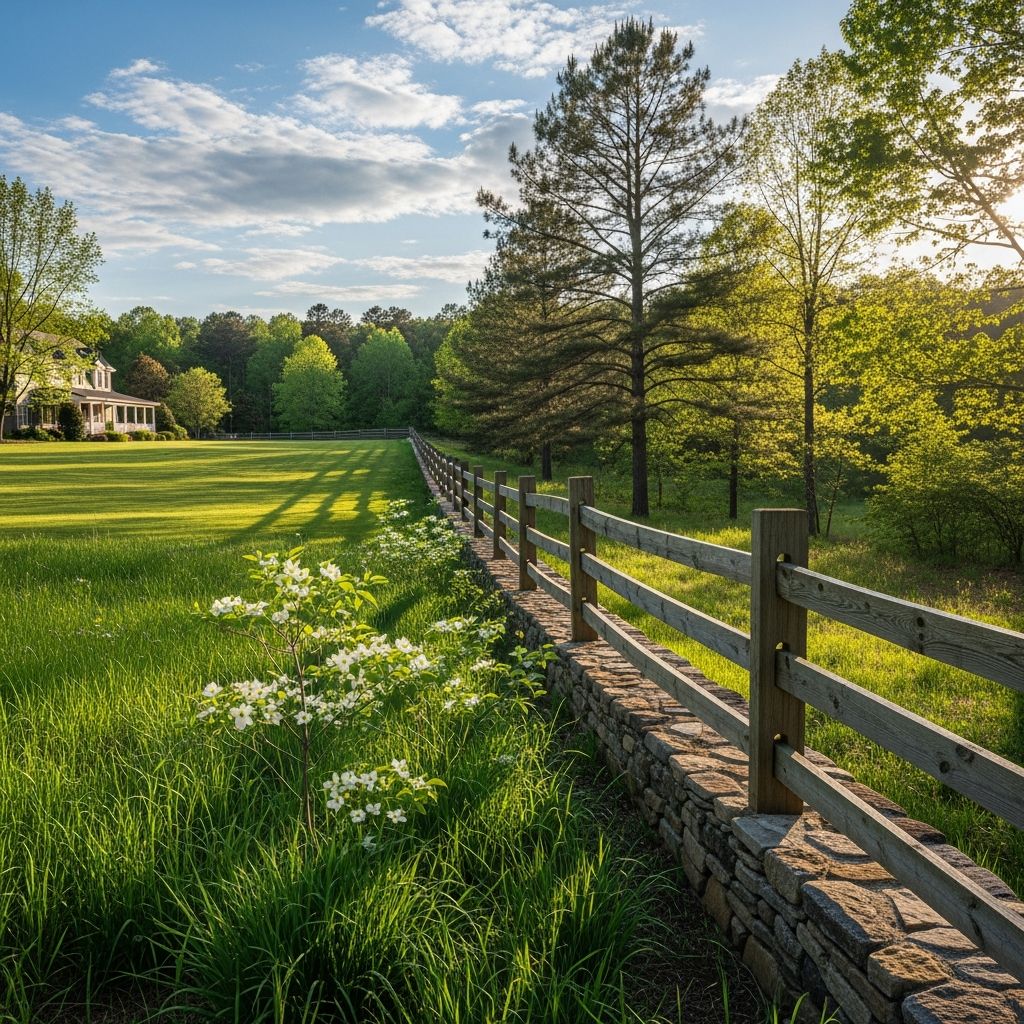
Buying a home, adding a fence, or improving your yard in North Carolina all depend on where your exact property lines are and what the law allows near those boundaries. Understanding the basics before you dig postholes can save you from costly disputes with neighbors and even court action.
This guide explains how property boundaries are determined, what North Carolina law says about fences, how local ordinances and homeowners’ associations (HOAs) fit in, and what to do if a disagreement arises.
1. How Property Lines Are Legally Established in North Carolina
Property lines in North Carolina are not defined by where a fence happens to stand or how a yard has been used informally over time. Instead, they are set by legal descriptions and recorded plats prepared according to state law.
1.1 Role of surveys and plats
When land is surveyed in North Carolina, the surveyor must create a plat that follows detailed technical requirements set out in state statute. Among other things, a compliant plat must:
- Show the exact course and distance of each property line in feet or meters.
- Identify monuments or natural objects used as corners, such as iron pins, stakes, or marked trees.
- Depict visible rights-of-way, watercourses, utilities, and roadways where they cross or form a boundary line.
- Include names of adjoining landowners or lot numbers where they can be determined.
These recorded plats and the surveyor’s measurements form the legal basis courts rely on when deciding where one property ends and another begins.
1.2 Why an up-to-date survey matters
Even if a fence or hedge has been in place for many years, North Carolina courts give strong weight to the property lines shown on a valid survey rather than informal historical use. If you are:
- Purchasing real estate
- Building a fence or retaining wall near the line
- Planning an addition, garage, or pool close to the edge of your lot
it is wise to obtain a current boundary survey and confirm that any proposed structure will sit entirely within your land.
1.3 Legal process to resolve a boundary dispute
When neighbors cannot agree on the exact location of a property line, state law provides a formal procedure. Under North Carolina boundary statutes, a landowner may file a special proceeding in court to have the disputed line established. In such a case:
- The owner files a sworn petition describing the line as they claim it should be located.
- All adjoining owners who might be affected must be named as defendants.
- If the dispute is contested, the court can order a surveyor to measure the line according to both sides’ contentions and report back with a map.
This process emphasizes how central professional surveying is to resolving property line conflicts.
2. General Principles of North Carolina Fence Law
North Carolina does not have a single statewide code section that comprehensively regulates all fences between neighbors. Instead, state law offers some general property and boundary rules, while cities, counties, and HOAs often add their own specific height and placement requirements.
2.1 No statewide duty to build or share a fence
In many cases, there is no automatic legal requirement that you or your neighbor construct or maintain a boundary fence in North Carolina. Likewise, unless a contract, HOA covenant, or local rule says otherwise, neighbors are typically not forced by state law to share construction or maintenance costs for a fence one of them chooses to build.
2.2 Boundary vs. personal fences
While North Carolina lacks a specific statewide “boundary fence” statute, legal sources often distinguish between:
- Boundary fences that sit right on or very close to the property line and serve both properties.
- Personal fences built entirely within one owner’s property and controlled solely by that owner.
In practice, whether a fence is truly on the line or just near it can affect who can repair or remove it and whether crossing it is trespass. A survey can clarify if a supposed “shared” fence actually encroaches on a neighbor’s land.
2.3 Local ordinances and zoning rules
Many of the specific rules that owners care about—such as maximum heights and setbacks—come from local zoning codes rather than statewide law. For example, one North Carolina municipality allows:
- Fences up to 8 feet in a rear yard along the lot line.
- Fences up to 6 feet in front and side yards along the lot line.
- Higher fences in certain industrial or special-use areas, subject to additional setbacks and safety restrictions.
- Prohibitions on fences that block driver visibility at intersections or encroach into a public right-of-way.
Because these rules are highly local, checking your city or county code—and any HOA declaration—before building is critical.
3. Placement, Height, and Design: Practical Rules to Consider
While the details vary by jurisdiction, several common principles show up repeatedly in North Carolina fence regulations and guidance.
3.1 Typical height limits
Many communities in North Carolina use similar maximum heights, especially in residential areas. Typical patterns (which may vary where you live) include:
| Yard Area | Common Maximum Height | Notes |
|---|---|---|
| Front yard | 4–6 feet | More restrictive for visibility and neighborhood appearance. |
| Side yard | 6 feet | May have extra limits on corner lots. |
| Rear yard | 6–8 feet | Often most flexible, especially away from streets. |
In some counties, there may be no formal setback requirement for a residential fence as long as it stays on your land and below a prescribed height.
3.2 Corner lots and sight triangles
Properties located at street corners usually face tighter restrictions. Local codes may:
- Limit fence height closer to intersections, often to preserve drivers’ view of cross traffic.
- Require fences above a certain height to be set back several feet from the property line.
- Prohibit solid fences within a defined “sight triangle” near street corners.
These rules are primarily about traffic safety and apply regardless of how two neighbors might otherwise agree to share a fence.
3.3 Material and safety restrictions
Some North Carolina ordinances restrict potentially dangerous fence materials. One example local code:
- Prohibits barbed wire, razor wire, and electric fencing in most zoning districts, allowing them only in certain industrial zones under strict conditions.
- Requires hazardous features to be set at least six feet above the ground and angled away from nearby sidewalks or streets if allowed.
- Requires the finished side of the fence to face outward toward neighboring property or the street, with support posts on the inside.
Always verify whether your city or county imposes similar rules before selecting materials or a fence style.
4. Marking Property Lines and Preventing Trespass
Your property line is not only important for locating fences; it also defines where trespass begins and how you may lawfully warn people away from your land.
4.1 Signage and “purple paint” markings
North Carolina law allows landowners to use signs or specific paint markings to indicate that entry is restricted. According to guidance based on state statute:
- Owners may post signs or posters at least 120 square inches in size at intervals along the boundary, including at corners where they can be identified.
- Alternatively, owners may place purple paint marks on trees or posts forming a vertical line at least eight inches long, between three and five feet above the ground, at regular intervals around the property.
- For streams, lakes, or ponds, paint marks can be used specifically to prohibit fishing along shorelines.
These markings help define the edge of your property in wooded or rural areas where a fence may not be practical, and they strengthen your position if trespass issues arise.
4.2 Liability and duties to visitors
Even with fences and postings in place, North Carolina landowners still have legal obligations toward certain visitors. Extension guidance summarizing state law notes that:
- Owners generally must warn or protect against attractive nuisances that might draw children, such as dangerous machinery or unsecured pools.
- They must inform invited guests of unusual or hidden hazards they know about.
- Certain recreational uses, even if allowed without charge on a particular day, may affect how liability limitations apply.
Fences and boundary markers help manage risk but do not completely remove an owner’s duty to act reasonably toward others on the property.
5. Neighbor Disputes Over Fences and Boundaries
Many disagreements between neighbors stem from unclear expectations about where a fence belongs, who should repair it, or what happens when one owner wants more privacy than the other.
5.1 Common areas of conflict
Typical friction points include:
- Encroachment: A fence or retaining wall is discovered to sit over the property line after a new survey.
- Height or appearance disputes: One neighbor believes a fence is too tall or unsightly under local rules or HOA standards.
- Maintenance issues: Boards fall, posts rot, and the question arises who must fix a shared fence.
- Spite fences: A structure is built mainly to block a neighbor’s view or cause annoyance.
5.2 Spite fences and unreasonable conduct
While there is no single North Carolina statute labeled “spite fence,” courts can address fences that serve no legitimate purpose and are primarily meant to harass a neighbor. Legal commentary on North Carolina property law notes that fences erected with clear malicious intent may be ordered removed as a nuisance. Evidence that the fence provides no practical utility and was constructed solely to block light, air, or a view can play a role in such cases.
5.3 Steps to resolve a boundary or fence conflict
Before resorting to litigation, many disputes can be managed through a series of practical steps:
- Check documents: Review your deed, subdivision plat, HOA covenants, and any existing surveys.
- Obtain a modern survey: Hire a licensed surveyor to stake the line if its location is uncertain or disputed.
- Talk with your neighbor: Share survey results, local ordinance information, and proposed solutions.
- Explore mediation: Many communities and attorneys offer mediation services to craft an agreement about fence location, height, and cost sharing.
- Use boundary proceedings if needed: As a last resort, use the special proceeding process to have a court formally establish the line.
6. Special Situations: Pools, Animals, and HOAs
Certain uses of property often trigger additional fence or boundary requirements that go beyond general residential rules.
6.1 Pools, hot tubs, and safety enclosures
Local building codes and sometimes state safety regulations typically require barriers around swimming pools and hot tubs to prevent accidental drowning, especially involving children. Legal guides for North Carolina owners emphasize that:
- Fences for pools often must meet specific height and latch standards.
- Permits are commonly required for pool installation and associated fencing.
- Failure to install and maintain a compliant barrier may increase liability risk.
6.2 Livestock and containment
Rural and semi-rural owners who keep livestock may be required by local ordinance or state law to confine animals so they do not damage neighboring property or wander into roads. Fencing used to contain animals must be sturdy and configured appropriately for the species, and some zoning districts impose minimum setbacks or special standards for agricultural uses.
6.3 HOA and subdivision rules
In planned communities, HOA covenants can be stricter than local law. HOA rules commonly address:
- Acceptable fence materials (for example, banning chain link in front yards).
- Maximum heights and preferred designs for a consistent look.
- Approval procedures before construction.
Even if a city or county would otherwise allow a certain type of fence, violating HOA rules can result in fines or demands to modify or remove the structure.
7. Practical Checklist Before You Build a Fence in North Carolina
To reduce the chance of a dispute or expensive correction, consider this pre-construction checklist:
- Confirm your property lines with a recent survey or at minimum a careful review of your plat and markers.
- Review local ordinances for height limits, setback requirements, and material restrictions for your zoning district.
- Check HOA rules and obtain written approval if required.
- Discuss plans with neighbors before installation, particularly for fences near shared boundaries or on slopes.
- Verify underground utilities before digging post holes.
- Consider long-term maintenance responsibilities and how storm damage or aging materials will be handled.
Frequently Asked Questions (FAQs)
Q1: Does my neighbor have to pay for half of a boundary fence in North Carolina?
Under North Carolina law, neighbors are generally not automatically required to share fence construction or maintenance costs unless a contract, HOA rule, or specific local ordinance creates that obligation. Voluntary written agreements can allocate costs if both sides agree.
Q2: Can I build my fence directly on the property line?
Many local codes allow fences on or very near the property line so long as they do not extend onto someone else’s land and meet height and safety rules. Because a mistake can create an encroachment, owners often place the fence slightly inside their boundary or obtain a survey and neighbor consent before building on the line itself.
Q3: What can I do if my neighbor’s fence is clearly on my property?
If a survey shows your neighbor’s fence encroaches on your land, you can start by sharing the survey and requesting relocation. If informal discussions fail, options may include mediation, a boundary proceeding to establish the line, or a civil action seeking removal or an easement, depending on the circumstances and advice from a North Carolina attorney.
Q4: Are there statewide rules on fence height in North Carolina?
No single statewide height limit applies to all fences. Instead, cities and counties set their own height and setback rules through zoning ordinances. Always consult your local code and any neighborhood covenants before choosing a fence height.
Q5: Is it legal to use barbed wire or electric fences in my yard?
Many North Carolina municipalities restrict barbed wire, razor wire, and electric fences to certain industrial or agricultural zones and prohibit them in typical residential settings, especially near streets and sidewalks. Check local regulations and, in rural areas, any special rules for containing livestock.
References
- 5 Real Estate Laws in North Carolina That You Should Know — Raleigh Realty. 2022-03-15. https://raleighrealty.com/blog/real-estate-laws-nc
- G.S. 47-30: Plats and Subdivisions — North Carolina General Assembly. 2019-10-01. https://www.ncleg.gov/enactedlegislation/statutes/html/bysection/chapter_47/gs_47-30.html
- Sec. 6-5.2. Fences and walls — Code of Ordinances, City of Marion, North Carolina. 2018-06-30. https://codelibrary.amlegal.com/codes/marionnc/latest/marion_nc/0-0-0-17704
- Land Ownership, Liability, and the Law in North Carolina — North Carolina Cooperative Extension. 2016-11-01. https://content.ces.ncsu.edu/land-ownership-liability-and-the-law-in-north-carolina
- Chapter 38: Boundaries — North Carolina General Assembly. 2011-01-01. https://www.ncleg.gov/EnactedLegislation/Statutes/PDF/ByChapter/Chapter_38.pdf
- How far off my property line does a fence have to be? — Iredell County, North Carolina, Official Website. 2020-05-01. https://www.iredellcountync.gov/FAQ.aspx?QID=108
- North Carolina Laws on Property Disputes Between Neighbors — Nolo. 2021-07-01. https://www.nolo.com/legal-encyclopedia/north-carolina-laws-neighbor-property-disputes-65247.html
Similar Articles








Read full bio of Sneha Tete


