
North Carolina Burial and Cremation Regulations
Comprehensive guide to North Carolina's rules on burials, cremations, home funerals, and final disposition options for families.
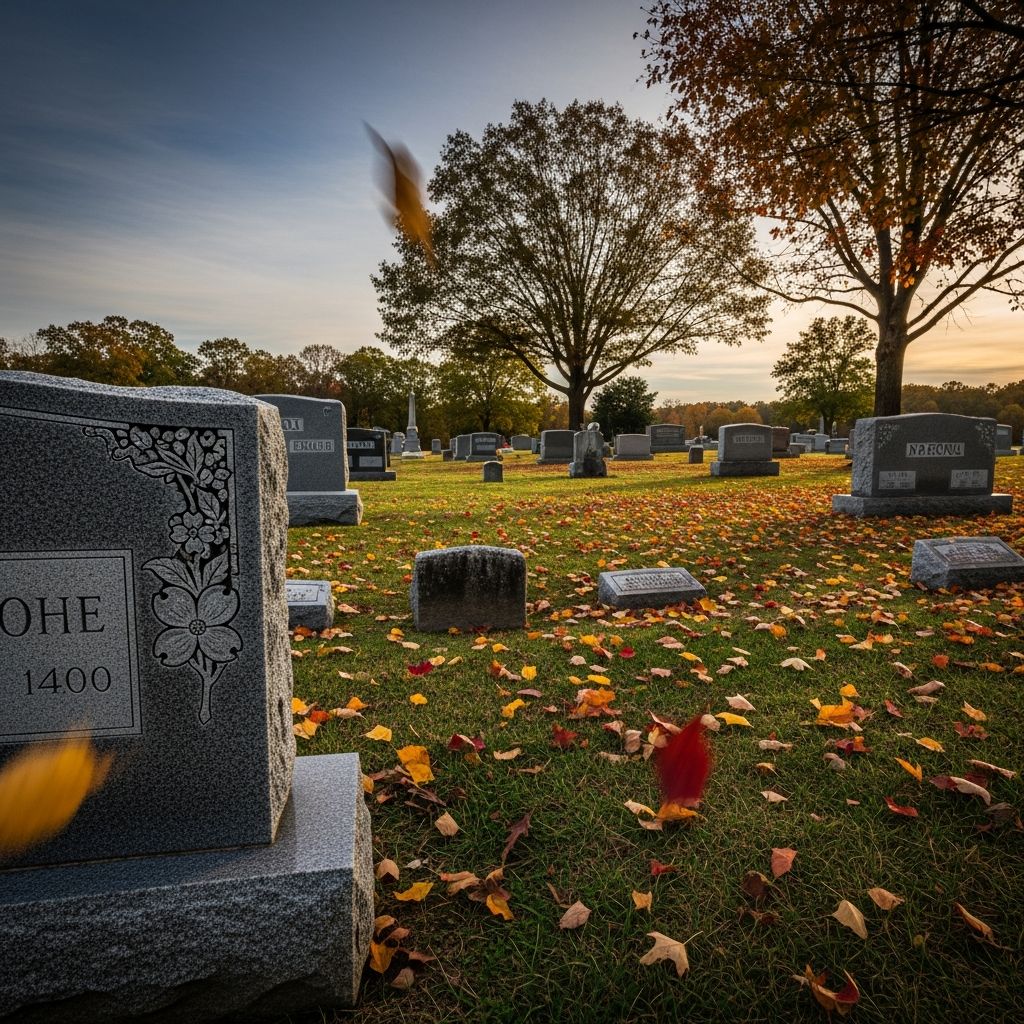
North Carolina provides a structured legal framework for managing the final disposition of human remains, balancing family autonomy with public health safeguards. Families have flexibility in choices like home funerals or traditional services, but must adhere to state statutes on permits, waiting periods, and location restrictions.
Legal Authority for Final Arrangements
In North Carolina, the right to control a deceased person’s body and arrange their final services follows a clear hierarchy defined by law. This ensures decisions align with the deceased’s wishes when possible or fall to close relatives otherwise. The sequence prioritizes those with the closest relationship or designated responsibility.
- Spouse, if any.
- Adult children of the deceased.
- Parents of the deceased.
- Adult siblings.
- Other adult kin in order of relation proximity.
- In the absence of kin, a public administrator or county authority may step in.
Individuals can appoint a specific agent to handle these matters through a simple written document. This appointment requires the creator’s signature and attestation by two adult witnesses, without needing notarization. Such directives empower trusted persons to execute personalized plans, including home-based vigils or alternative dispositions.
Handling Remains at Home: Home Funeral Options
North Carolina permits families to keep a loved one’s body at home post-death without mandatory involvement of licensed professionals. This supports intimate, personal farewells often called home funerals. No state law compels hiring a funeral director, allowing families to manage care, refrigeration, or transportation independently, provided health regulations are met.
Families must secure medical certification for the death certificate from a physician, physician assistant, nurse practitioner, or medical examiner within three days. This electronic process details cause, time, and date of death. For final removal, authorization comes from the certifying professional, with transit permits required only if the case falls under medical examiner review or involves out-of-state transport.
| Scenario | Permit Issuer | Timeline |
|---|---|---|
| Medical examiner jurisdiction | Medical examiner | Within 5 days |
| Out-of-state transport (non-examiner case) | Local registrar | Prior to transport |
| Local disposition, natural death | Physician/PA/NP | No separate permit needed |
Burial Requirements and Home Interment Guidelines
While North Carolina does not ban home burials outright, local zoning ordinances often dictate feasibility, particularly in urban settings. Rural properties typically offer more leeway for backyard graves or family plots. Key statewide rules focus on environmental and safety protections.
All burial sites must maintain a 300-foot buffer from public water sources to prevent contamination. Graves require encasements or vaults buried at least 18 inches below ground surface, ensuring stability and hygiene. Families planning home interments should consult county planning offices early to confirm land use permissions and avoid disputes.
- Verify property zoning allows private cemeteries.
- Ensure compliance with water supply setbacks.
- Document the site for future property records.
Cemeteries may impose additional mandates, such as outer burial containers, though state law does not universally require them. Always review specific cemetery policies alongside statutes.
Cremation Procedures and Authorizations
Cremation in North Carolina demands specific approvals and timelines to uphold investigative needs and public safety. A 24-hour waiting period applies post-death before cremation, waivable by the medical examiner for infectious risks. Authorization hinges on the death circumstances: hospital deaths from natural causes often bypass examiner involvement, while unattended or suspicious cases require it.
Many crematories accept direct family deliveries, bypassing funeral directors if pre-arranged. Preneed cremation forms, signed with witnesses, allow advance planning. Recent legislative updates, like Session Law 2025-76, refine preneed processes, including amendments and cancellations.
Facilities must feature secure preparation areas and adhere to Board of Funeral Service standards. Human remains stay in licensed venues except during services or transit.
Disposition Options for Cremated Remains
North Carolina law offers broad latitude for scattering or placing cremated remains (cremains). Permissible methods include burial, entombment, placement in niches, scattering on private land with permission, or at sea. Public scattering requires landowner or authority approval, with no state prohibition on air dispersal from suitable altitudes.
Families retain full control post-cremation, subject to these guidelines:
- Scattering on owned or consented private property.
- In designated scattering gardens or cemeteries.
- Retention in urns at home or columbariums.
- Incorporation into memorial objects or reefs.
Statute § 90-210.130 explicitly endorses these flexible approaches, updated via 2025 legislation.
Role of Funeral Establishments and Licensing
Funeral homes operate under strict oversight by the North Carolina Board of Funeral Service. Establishments require licensed directors in ownership or leadership roles and must include private preparation rooms compliant with health codes. No more than two chapels per site, within 50-mile radii, and all under registered names.
Preneed contracts cover funeral and cremation plans, with rules for substitutions, amendments, and fund handling upon beneficiary death. Board rules mandate record-keeping, pacemaker removal protocols, and monthly reporting for crematories.
Special Circumstances: Exhumations and Unclaimed Bodies
Exhuming remains demands permits under § 130A-113, with medical examiner or coroner oversight for cause investigations. Unclaimed bodies fall to guardianship councils or public disposition after notice periods. Migrant worker provisions ensure dignified handling.
Autopsies require limitations and reporting, preserving evidence value.
Frequently Asked Questions
Can I conduct a home funeral in North Carolina without a funeral director?
Yes, state law allows families to manage home vigils and arrangements independently, without requiring licensed professionals, as long as permits and certifications are obtained.
Is a burial permit always needed for home burials?
No, but transit permits apply for examiner cases or interstate moves; check local zoning for site approval.
What is the cremation waiting period in NC?
24 hours minimum, waivable for health risks by the medical examiner.
Where can cremated remains be scattered legally?
On private property with permission, at sea, or in approved public areas with consent.
Do cemeteries require vaults in North Carolina?
State law does not mandate them universally, but individual cemeteries may enforce this rule.
How do I appoint someone for my final arrangements?
Write a dated document naming the agent, signed before two witnesses.
This guide synthesizes key regulations as of 2025 updates, advising consultation with local authorities or legal experts for case-specific advice. Families benefit from advance planning to honor wishes smoothly.
References
- North Carolina Home Funeral Laws — Nolo. 2024. https://www.nolo.com/legal-encyclopedia/north-carolina-home-funeral-laws.html
- Statutes & Rules — North Carolina Board of Funeral Service. 2025. https://ncbfs.org/statutes-and-rules/
- North Carolina General Statutes § 90-210.27A (2024) – Funeral Establishments — Justia. 2024. https://law.justia.com/codes/north-carolina/chapter-90/article-13a/section-90-210-27a/
- Session Law 2025-76 House Bill 1003 — North Carolina General Assembly. 2025. https://www.ncleg.gov/EnactedLegislation/SessionLaws/PDF/2025-2026/SL2025-76.pdf
- Laws & Rules — North Carolina Board of Funeral Service. 2025. https://ncbfs.org/laws-rules/
- NC General Statutes – Chapter 90 Article 13A — North Carolina General Assembly. 2025. https://www.ncleg.net/EnactedLegislation/Statutes/PDF/ByArticle/Chapter_90/Article_13A.pdf
- Frequent Questions — North Carolina Funeral Directors Association. 2025. https://ncfda.org/resources/frequent-questions
Similar Articles








Read full bio of medha deb


