
Non-Binary Gender: Legal Status Worldwide
Exploring the evolving legal landscape for non-binary gender recognition across nations and key U.S. states.
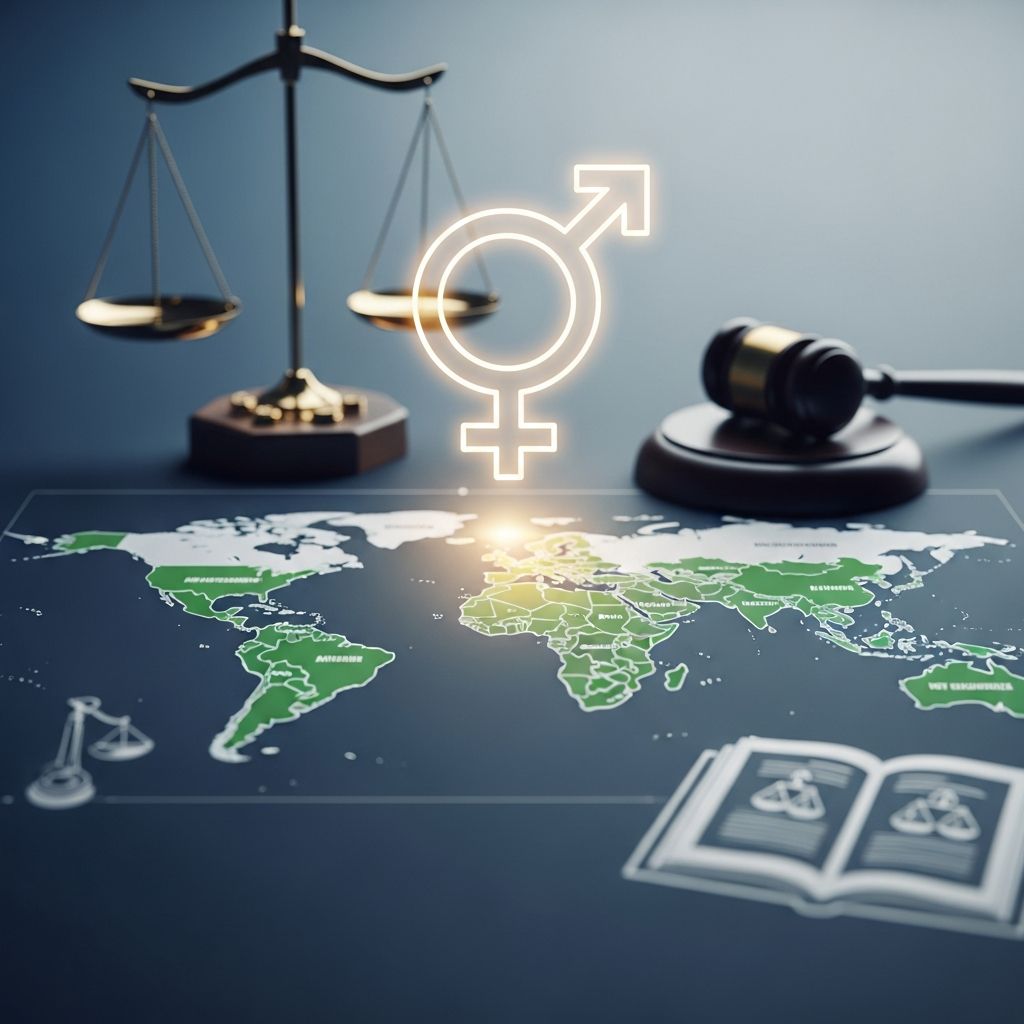
Non-binary gender refers to identities that exist outside the traditional male-female binary, encompassing a spectrum of experiences where individuals may identify as neither, both, or fluid in their gender expression. This concept challenges longstanding societal norms and has prompted significant legal developments in recent years. While many jurisdictions still adhere to binary classifications on official documents, a growing number of countries and U.S. states now offer options like an “X” marker or third gender category, driven by human rights arguments and court decisions.
Defining Non-Binary and Related Terms
At its core,
non-binary
describes a gender identity that does not exclusively align with male or female categories. It serves as both an umbrella term and a specific label for those whose sense of self defies binary constraints. Related terms include genderqueer, which often implies a rejection or blending of gender norms, and intersex, referring to physical variations in sex characteristics at birth that may not fit typical male or female definitions.Gender identity is an internal, deeply held sense of one’s gender, distinct from biological sex assigned at birth. Non-binary people may use pronouns like they/them, xe/xir, or others, and their recognition in law aims to align official records with this self-perception. Globally, this push reflects broader efforts to respect diverse human experiences and reduce discrimination.
Global Pioneers in Non-Binary Recognition
Several nations have led the way in legally acknowledging non-binary genders, often through landmark judicial rulings or legislative reforms. These precedents emphasize self-identification and human rights over medical gatekeeping.
- India: In 2014, the Supreme Court recognized a third gender category, affirming rights for hijras, eunuchs, and transgender individuals. This ruling mandated legal recognition based on self-identification and reservations in education and jobs, marking a human rights milestone.
- Nepal: A 2007 Supreme Court decision required citizenship IDs to include a “third gender” or “other” option, solely based on self-declaration. Despite census challenges, this laid groundwork for broader inclusion.
- Germany: Since 2018, a “diverse” marker has been available, initially for intersex individuals. The 2024 Self-Determination Act expanded this to non-intersex non-binary people aged 14+, simplifying the process without surgical requirements.
- Chile: Court rulings in 2022 ordered birth certificates to reflect non-binary status with an “X” marker for both minors and adults, setting national precedents.
- Colombia: In 2022, the Constitutional Court mandated “no binario” or “NB” markers on birth certificates and IDs, urging legislative updates for full implementation.
These examples illustrate a trend toward depathologizing gender diversity, prioritizing personal autonomy.
Non-Binary Rights in the United States
In the U.S., recognition varies by state and federal level, with courts and agencies gradually expanding options. Federal policy has fluctuated, but state innovations provide models for change.
| State/District | Key Developments | Available Markers | Year |
|---|---|---|---|
| Oregon | First state to allow non-binary on IDs; court petition granted to Jamie Shupe | X | 2016-2017 |
| California | Gender Recognition Act permits changes on birth certificates | Female, Male, Non-binary | 2017 |
| Colorado | Federal court ruled for passport with no gender marker for Dana Zzyym | X or None | 2018 |
| District of Columbia | Gender-neutral driver’s licenses | X | 2017+ |
Oregon’s 2016 ruling for retired Army sergeant Jamie Shupe was groundbreaking, legally classifying them as non-binary after prior female recognition. Similarly, a 2018 federal court in Colorado ordered the State Department to issue Dana Zzyym a passport without a binary marker, citing the Passport Act’s lack of authority to deny based on identity. Today, over a dozen states plus D.C. offer “X” on driver’s licenses or IDs, with birth certificate changes in places like California, New York, and Washington.
Federal passports now allow an “X” marker following the 2021 State Department policy, though earlier Trump-era directives limited options. These shifts underscore ongoing tensions between administrative policies and judicial affirmations of rights.
Challenges and Barriers to Recognition
Despite progress, non-binary individuals face hurdles. Many countries lack third options, forcing binary choices that misalign with identity and exacerbate discrimination. In the U.S., not all states permit changes, and processes may require court orders or fees.
- Logistical issues in censuses, as seen in Nepal, where fear and enumerator bias sidelined non-binary respondents.
- Intersex exclusions in some laws, like early German provisions, prompting further litigation.
- Workplace and daily life mismatches, where binary documents create barriers to employment, healthcare, and travel.
Advocates argue that legal gender recognition upholds human rights by preventing forced conformity. Outright International emphasizes that non-binary markers ensure governments respect diverse identities.
Implications for Daily Life and Society
Legal recognition impacts practical areas: accurate IDs facilitate banking, voting, and travel. The International Civil Aviation Organization endorses “X” markers, aiding global mobility. In workplaces, non-binary inclusion fosters equity, reducing misgendering and harassment.
Societally, these changes normalize gender diversity, influencing education and policy. However, backlash persists, with some regions reversing gains via executive orders.
Future Directions and Advocacy
Looking ahead, self-identification models like Germany’s 2024 law may proliferate. In the U.S., federal standardization could harmonize state variances. Advocacy groups like Lambda Legal and Transgender Europe push for barrier-free recognition.
Ultimately, expanding non-binary options aligns law with lived realities, promoting inclusion.
Frequently Asked Questions (FAQs)
What countries fully recognize non-binary gender?
A: Nations like India, Nepal, Germany, Chile, and Colombia offer third gender or “X” markers on official documents, often via court rulings or laws.
Can I get an X marker on my U.S. passport?
A: Yes, since 2021, the U.S. State Department allows “X” on passports for those who do not identify as male or female.
Which U.S. states allow non-binary on birth certificates?
A: States including California, Oregon, New York, and others permit non-binary designations; check local vital records for specifics.
Is non-binary recognition available for minors?
A: In places like Germany (ages 14+) and Chile, yes, with parental involvement; U.S. varies by state.
What if my state doesn’t offer non-binary options?
A: Court petitions have succeeded in some cases; consult legal aid like Lambda Legal for guidance.
References
- Legal recognition of non-binary gender — Wikipedia. 2024-11-01. https://en.wikipedia.org/wiki/Legal_recognition_of_non-binary_gender
- Is Non-Binary Gender Identity Recognized Legally? — Leslie A. Farber, Esq. 2023-09-01. https://www.lfarberlaw.com/post/is-non-binary-gender-identity-recognized-legally
- Legal Gender Recognition – FAQs — Outright International. 2023-10-01. https://outrightinternational.org/sites/default/files/2023-10/Legal_Gender_Recognition_%20FAQs_0.pdf
- Legal recognition of non-binary gender by country — Equaldex. 2024-01-01. https://www.equaldex.com/issue/non-binary-gender-recognition
- Div. 44 nonbinary gender identities fact sheet — APA Divisions. 2022-01-01. https://www.apadivisions.org/division-44/resources/nonbinary-fact-sheet.pdf
Similar Articles








Read full bio of Sneha Tete


