
Non‑Automobile DUI: Laws, Risks, and Consequences
Understand how DUI laws apply to boats, scooters, ATVs, and other non‑traditional vehicles, and what legal penalties you may face.
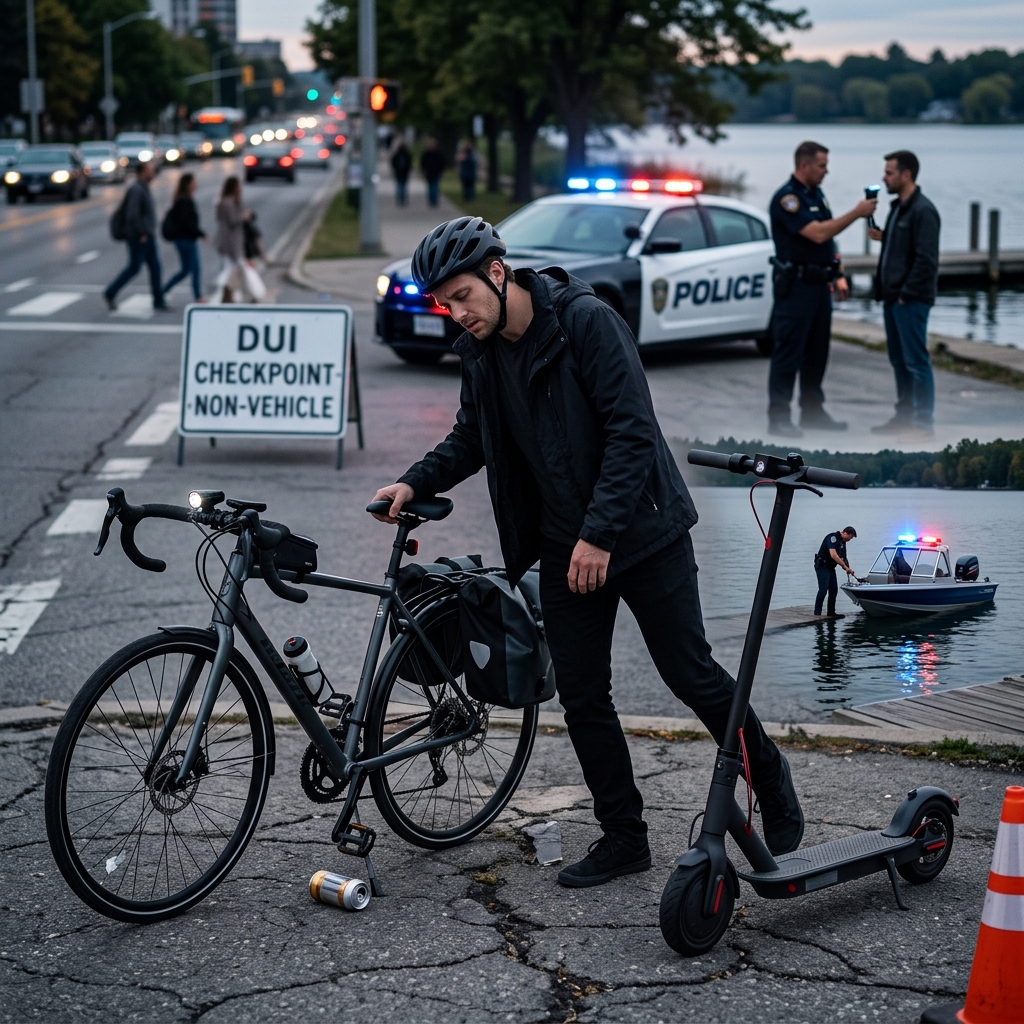
Many people assume drunk driving laws only apply when you are behind the wheel of a car or truck. In reality, DUI and DWI statutes often cover a wide range of motorized and sometimes non‑motorized vehicles, including boats, scooters, ATVs, and even certain off‑road machines. Understanding how these laws work is crucial if you use any kind of vehicle while consuming alcohol or drugs.
This article explains how impaired‑driving rules extend beyond traditional automobiles, what counts as a “vehicle” or “operation,” and the penalties you may face for non‑automobile DUI. It is a general guide and cannot replace tailored advice from a licensed attorney in your state.
Impaired Driving Is About Behavior, Not Just Cars
Across the United States, DUI and DWI laws are designed to prevent impaired operation of vehicles in public spaces, not merely drunk driving in passenger cars. Legislatures have deliberately drafted statutes broadly so people cannot avoid consequences by switching from a car to a boat, ATV, or motorized scooter.
- DUI (Driving Under the Influence) usually refers to impairment from alcohol, drugs, or both.
- DWI (Driving While Intoxicated or Driving While Impaired) is a similar concept, and in some states the terms are used interchangeably.
- Many states also create separate offenses like boating under the influence (BUI) or operating while intoxicated (OWI) for non‑roadway vehicles.
In practice, the focus is on whether your ability to safely operate a vehicle has been affected and whether you are in a place where your behavior could endanger others.
How States Define “Vehicle” and “Operation”
The reach of non‑automobile DUI depends heavily on the words used in state law. Two issues are especially important: the definition of vehicle and what it means to operate or be in “actual physical control” of that vehicle.
What Counts as a Vehicle?
Many statutes define a vehicle broadly as any device by which a person or property may be transported on a highway or public place, often including motor‑driven and sometimes human‑powered devices. Some states explicitly include watercraft and aircraft, while others address them in separate laws.
As a result, impaired driving rules may apply to:
- Passenger cars and pickup trucks
- Motorcycles and mopeds
- Motorized scooters, e‑bikes, and similar devices, depending on state law
- All‑terrain vehicles (ATVs) and off‑road vehicles
- Boats and other powered watercraft, often under BUI statutes
- Snowmobiles and recreational vehicles
Because definitions vary, an activity that triggers DUI charges in one jurisdiction might be treated differently elsewhere. For example, some states treat a non‑motorized bicycle as a vehicle for DUI purposes, while others do not.
What Does It Mean to “Operate” a Vehicle?
Another key concept is “operation.” In several states, you can be convicted of an impaired‑driving offense even if no one saw the vehicle moving, as long as prosecutors prove you were operating or in “actual physical control” of it while intoxicated.
Courts frequently look at factors such as:
- Whether you were in the driver’s seat or at the controls
- Whether the engine was running or the vehicle was ready to move
- Where the vehicle was located (roadway, parking lot, boat ramp, public waterway)
- Signs you had recently driven or navigated while impaired
For example, a person found asleep in the driver’s seat of a parked car with the engine running may still be treated as operating the vehicle. Similarly, a person at the helm of a boat drifting in a public waterway could be considered operating the watercraft even if it is not under power.
Types of Non‑Automobile DUI Situations
Non‑automobile DUI scenarios typically arise when people assume impaired‑driving rules do not apply outside ordinary road traffic. Below are common situations where DUI or related charges may be filed.
Boating Under the Influence (BUI)
Many states have specific statutes making it illegal to operate a boat or other watercraft while intoxicated. These laws often mirror standard DUI rules, including blood alcohol concentration (BAC) thresholds and penalties.
Key points about BUI include:
- Legal intoxication is commonly defined as a BAC of 0.08% or higher for adult operators, similar to roadway DUI limits.
- Operators may also be charged if alcohol or drugs impair their ability to safely navigate, even below 0.08%.
- Enforcement often occurs on lakes, rivers, coastal waters, and other public waterways.
- Penalties may include fines, jail time, suspension of boating privileges, and in serious cases, loss of driver’s license.
Because boating commonly involves social drinking, BUI patrols are frequent in popular recreational areas, especially during holidays.
ATVs, Off‑Road Vehicles, and Recreational Machines
All‑terrain vehicles, off‑road motorcycles, and similar machines are often subject to DUI rules when used on public land or rights‑of‑way. Even when operated on private property, charges may arise if the vehicle enters a public road or if injuries prompt law‑enforcement involvement.[10]
Risks include:
- Loss of control on uneven terrain when judgment and reaction times are slowed.
- Collisions with other riders or obstacles, causing serious injuries.
- Criminal liability if someone is hurt or killed while you are impaired.
Some states allow enhanced penalties when impaired operation of an ATV or recreational vehicle causes injury or death, similar to vehicular assault or homicide statutes.[10]
Motorized Scooters, E‑Bikes, and Small Devices
In jurisdictions that classify motorized scooters and certain e‑bikes as vehicles, using them while intoxicated can lead to DUI‑type charges. College campuses and urban areas where shared scooters are common sometimes see impaired‑riding incidents that result in arrest or citation.
Where these devices are not treated as vehicles for DUI purposes, they may still trigger other charges, such as:
- Public intoxication
- Disorderly conduct
- Local ordinance violations
Because classification varies widely, it is important to check local law before assuming a scooter or similar device is exempt from impaired‑driving rules.
Riding Animals and Non‑Motorized Vehicles
Some states have debated or adopted laws addressing intoxicated operation of non‑motorized vehicles or animals, such as bicycles or horses on public roads. In many jurisdictions, these situations are handled under separate statutes (public intoxication, animal‑cruelty laws, or traffic offenses) rather than traditional DUI.
However, if a statute defines “vehicle” broadly and has been interpreted to include such devices, riders may face DUI‑type charges. Case law and local legal practice are crucial in understanding how your state treats these scenarios.
Legal Standards: BAC Limits and Impairment
Most states rely on two overlapping approaches to determine whether someone has committed a DUI or similar offense.
Per Se BAC Limits
Under per se laws, it is a criminal offense to operate a vehicle with a BAC at or above a specified level, usually 0.08% for drivers ages 21 and older.
| Group | Common BAC Limit | Notes |
|---|---|---|
| Adult drivers (cars/trucks) | 0.08% | Widely used standard; some states set lower limits for specific circumstances. |
| Commercial drivers | 0.04% | Often required under federal and state regulations for CDL holders. |
| Boat operators | 0.08% | Common BUI threshold; some states add impairment‑based standards. |
| Drivers under 21 | Near‑zero (e.g., 0.02% or any detectable amount) | Zero‑tolerance policies for underage drinking and driving. |
Meeting or exceeding a per se limit typically allows conviction even if the driver appears to function normally, as the law presumes impairment at that BAC.
Impairment‑Based Standards
Many states also criminalize operating a vehicle when alcohol or drugs impair the person’s normal mental or physical faculties, even below the per se BAC level. In these cases, prosecutors rely on evidence such as:
- Officer observations of slurred speech, poor coordination, or confusion
- Field sobriety test performance
- Witness testimony about dangerous or erratic operation of the vehicle
This approach is especially important for non‑automobile DUI where drug use, mixed substances, or unusual vehicles make standardized BAC limits less informative.
Penalties and Collateral Consequences
Non‑automobile DUI penalties are often similar to standard roadway DUI penalties, though specific sanctions vary widely by state and by whether prior offenses are involved.
Criminal Penalties
For many first‑time impaired‑driving offenses, penalties can include:
- Fines ranging from several hundred to several thousand dollars
- Jail time, often from a few days to several months, with longer terms for repeat offenses
- Probation, which may require substance‑abuse assessment and treatment
- Community service obligations
When impaired operation of any vehicle causes serious injury or death, charges may be elevated to felonies, such as vehicular homicide or similar offenses, with multi‑year prison sentences.[10]
License Suspensions and Administrative Actions
In addition to criminal penalties, many states impose administrative license suspensions if a driver fails or refuses a chemical test for alcohol or drugs. These suspensions can occur even if the criminal case is unresolved or ultimately dismissed.
Key features of administrative actions include:
- Automatic license suspension for a defined period (e.g., 90 days to 2 years), depending on prior history and whether the person refused or failed testing.
- Possible eligibility for restricted or occupational licenses allowing limited driving to work or treatment.
- Separate hearing procedures, often with short deadlines to request review.
In some states, licenses can also be suspended or revoked for certain BUI offenses, especially when a person has a history of DUI or when the incident involves serious harm.
Other Long‑Term Impacts
Beyond immediate penalties, non‑automobile DUI can carry significant collateral consequences:
- Criminal record: Convictions may appear in background checks, affecting employment and housing opportunities.[10]
- Insurance costs: Auto and sometimes boat or recreational‑vehicle insurance premiums can rise dramatically after an impaired‑driving incident.
- Professional licensing: Certain professions (e.g., transportation, healthcare, law) may require disclosure of DUI‑related convictions and can impose discipline.
These impacts can last years, making it essential to take non‑automobile DUI charges seriously.
Zero‑Tolerance Policies for Underage Operators
States commonly enforce zero‑tolerance rules for drivers and sometimes boat operators under age 21, meaning any detectable alcohol can trigger penalties. These rules reflect a policy judgment that young people should not mix drinking with vehicle operation.
Under zero‑tolerance schemes, minors may face:
- Fines and mandatory alcohol‑education courses
- Community service hours
- License suspensions, even when the offense does not involve driving a traditional car
In some jurisdictions, alcohol‑related offenses that do not involve vehicle operation (such as possession or public intoxication) still lead to license consequences, further emphasizing the seriousness of any alcohol misuse by minors.
Practical Safety and Compliance Tips
Because non‑automobile DUI can be counterintuitive, a few practical strategies can help you avoid legal trouble and keep others safe.
- Assume any motorized vehicle can trigger DUI laws. If it has an engine and you are in a public place, act as though impaired‑driving statutes apply.
- Plan a sober operator for boats and recreational vehicles. Designate someone who will abstain from alcohol or drugs for the entire outing.
- Be cautious with parked vehicles. Avoid sitting in the driver’s seat of a car or at the controls of a boat while intoxicated, especially with the engine running.
- Understand testing and implied‑consent rules. Refusing a breath or blood test can lead to license suspensions, even if you are later acquitted.
- Seek legal advice promptly. If you are arrested or cited, deadlines to challenge license actions or file necessary documents can be very short.
Frequently Asked Questions (FAQs)
Can I get a DUI on a boat?
Yes. Many states have specific laws making it illegal to operate a boat or other watercraft while intoxicated, often with the same 0.08% BAC standard used for drivers. Penalties can include fines, jail time, and in some cases suspension of boating or driver’s license privileges.
Do DUI laws apply to scooters or e‑bikes?
They can. If state law defines these devices as vehicles and you operate them on public roads or paths while impaired, you may face DUI charges or similar offenses. Where they are not defined as vehicles for DUI, you may still be charged with public intoxication or other infractions.
Can I be charged even if an officer never saw me driving?
In some jurisdictions, yes. If prosecutors can prove you were operating or in actual physical control of a vehicle while intoxicated, you may be convicted without direct observation of driving. Evidence may include your position in the vehicle, engine status, location, and witness reports.
Are penalties for non‑automobile DUI the same as for car DUI?
Often they are similar, though details depend on state law and whether the vehicle is covered under general DUI statutes or a separate regime like BUI. Fines, jail time, license suspensions, and treatment requirements may all apply.
Does a non‑automobile DUI affect my driver’s license?
It can. In many states, impaired‑driving or boating offenses can trigger administrative suspensions or revocations of a regular driver’s license, especially if chemical testing is refused or failed. You may have a limited period to contest these actions.
References
- DUI & DWI Laws: 50-State Survey — Justia. 2023-05-01. https://www.justia.com/50-state-surveys/drunk-driving-dui-dwi/
- Louisiana DUI Laws and Penalties — Delgado Community College. 2022-08-10. https://www.dcc.edu/student-life/health-services/drug-alcohol-prevention/students/dui-laws-penalties.aspx
- DWI Laws and Consequences — Texas Impaired Driving Task Force (TxDOT). 2023-09-15. https://www.texasimpaireddrivingtaskforce.org/about/dwi-laws-and-consequences/
- Alcohol Related Laws for Minors (DL-20) — Texas Department of Public Safety. 2021-01-01. https://www.dps.texas.gov/DriverLicense/documents/DL-20.pdf
- DUI/DWI — Maryland People’s Law Library. 2022-11-30. https://www.peoples-law.org/duidwi
- Impaired Driving and Penalties — Texas Department of Transportation. 2023-07-01. https://www.txdot.gov/safety/driving-laws/impaired-driving.html
- Criminal Status of State Drunken Driving Laws — National Conference of State Legislatures. 2020-06-26. https://www.ncsl.org/transportation/criminal-status-of-state-drunken-driving-laws
Similar Articles








Read full bio of Sneha Tete




