
No Heat in a Rental: What Tenants Can Legally Do
Understand your rights, your landlord’s duties, and the safe legal steps to take when your rental has no heat.
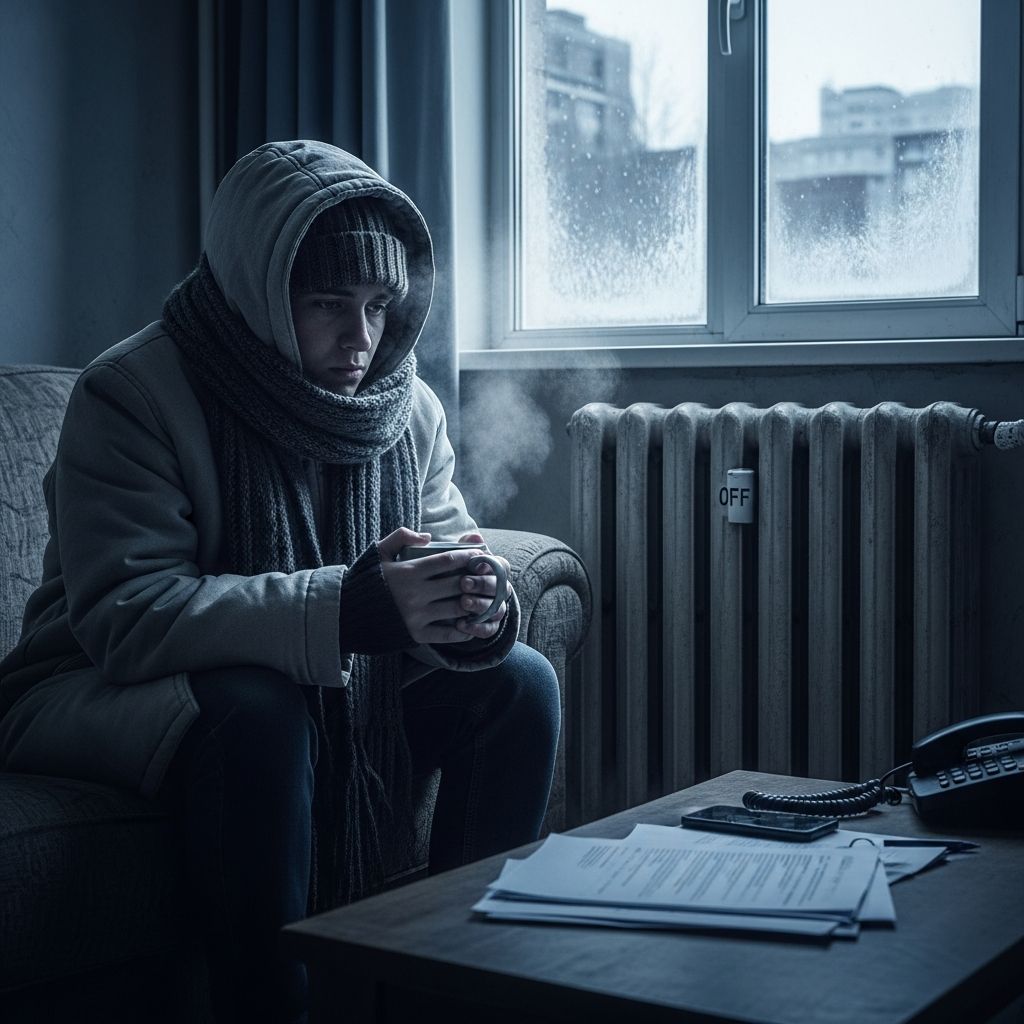
Living without heat in a rental property is more than an inconvenience. In many places, it is a legal problem that can trigger duties for your landlord and give you enforceable rights as a tenant. This guide explains how habitability laws work, what your landlord must do, and which legal and practical steps you can take when the temperature drops but your radiators stay cold.
1. Why Heat Is a Legal Issue, Not Just a Comfort Issue
Most landlord–tenant laws classify heat and hot water as essential services. Laws on habitability generally require landlords to provide safe, sanitary housing that can be heated to a reasonable indoor temperature in cold weather.
Typical rules include:
- Minimum indoor temperatures: Many cities and states require landlords to maintain specific minimum temperatures during defined “heat seasons”. For example, New York City law requires building owners to provide heat when outdoor temperatures fall below certain thresholds during the cold months.
- Continuous hot water: Landlords are often required to provide hot water year-round at or above a legally defined minimum temperature.
- Safe, habitable conditions: Housing laws in several countries and states require that rentals be fit for human habitation, which includes adequate heating and functioning hot water systems.
Because these rules are tied to health and safety, a lack of heat can move your problem from a mere complaint into a potential legal violation.
2. Understanding Habitability and Essential Services
The legal concept that usually applies is known as the implied warranty of habitability (or similar language, depending on your jurisdiction). In practice, this means:
- Your rental must be safe and reasonably comfortable to live in.
- Core building systems—such as heat, hot water, plumbing, and basic electrical service—must function properly.
- Your landlord cannot avoid these duties in most standard residential leases, even if the contract language appears to limit repairs.
| Essential Service | Usually Legally Protected? | Examples |
|---|---|---|
| Heat & hot water | Yes, in most jurisdictions | Boiler, radiators, central heating, hot water supply |
| Basic plumbing & sanitation | Yes | Toilet, sink, shower, drainage |
| Electricity for lighting | Yes | Safe wiring, working outlets and lighting circuits |
| Luxury or convenience items | Usually no | Dishwasher, cable TV, air conditioning (varies) |
When heat or hot water fails, you may be dealing with a breach of habitability protections rather than an ordinary maintenance issue.
3. First Response: Safety Checks and Immediate Documentation
Before diving into legal options, take two immediate steps: protect your health and create a record.
3.1 Protect your health and safety
- Check for dangerous conditions: If you suspect a gas leak, electrical burning smell, or carbon monoxide risk, leave the building and contact emergency services or your local gas utility right away. Many safety agencies treat these as emergencies.
- Use safe heat sources only: Follow fire and carbon monoxide guidance from local authorities; space heaters must be used carefully and according to manufacturer instructions.
- Consider vulnerable household members: Infants, older adults, and those with medical conditions may be more at risk from cold temperatures.
3.2 Start thorough documentation
- Record the date and time when the heat stopped working.
- Take photos or video of thermostats, radiators, and any visible damage.
- Use a simple thermometer to log indoor temperatures at different times of day.
- Keep copies or screenshots of all messages to and from your landlord or property manager.
This evidence may become crucial later if you need to seek government help, negotiate a rent reduction, or pursue compensation.
4. Notifying Your Landlord the Right Way
Most repair and habitability laws only fully apply once the landlord has been given a reasonable opportunity to fix the problem. To protect yourself:
4.1 Give clear and prompt notice
- Report the issue as soon as you notice it. Use the method specified in your lease if there is one.
- Put it in writing: Even if you call or text, follow up with an email or letter stating that you have no heat and describing the impact (for example, indoor temperatures and how long the heat has been off).
- Describe it as urgent: State that lack of heat is an urgent or emergency repair and may affect the habitability of the home.
4.2 Ask about timelines and temporary solutions
- Request a specific response time or repair appointment.
- Ask whether the landlord will provide temporary heating (such as electric heaters) or access to alternative facilities if hot water is also out.
- Clarify how extra costs (like higher electricity bills if you run space heaters) will be handled.
Be polite but firm. You want a quick fix, but you also want a clear paper trail.
5. What the Law Typically Expects from Landlords
Landlord obligations vary by country and state, but common legal expectations include:
- Maintaining heating systems: Landlords are generally responsible for boilers, radiators, central heating systems, and associated pipes and controls.
- Repairing in a reasonable time: Laws often require repairs to be made within a “reasonable” time after notice, with no long delays when health or safety might be at risk.
- Keeping the property fit for human habitation: In some jurisdictions, specific legislation requires that rental properties remain free from serious hazards, including prolonged lack of heat or hot water.
- Complying with local housing codes: Municipal codes and building standards often set minimum heat and hot water requirements that landlords must meet.
Housing agencies and courts may look at factors such as outdoor temperatures, the season, the duration of the outage, and whether the property is otherwise safe when deciding if a landlord has breached the law.
6. If Your Landlord Fails to Act: Escalation Options
When a landlord ignores your requests or moves too slowly, you may have options beyond simply waiting. The options below are common patterns; always check the exact rules in your location.
6.1 Contact local housing or code enforcement authorities
In many cities, tenants can report lack of heat or hot water to a local government office or housing inspector. For example, New York City tenants can file a heat and hot water complaint through the city’s 311 system, which can lead to inspections and enforcement.
Government agencies may be able to:
- Inspect the property and confirm that there is no heat.
- Issue violation notices or orders requiring the landlord to restore service.
- Impose fines or, in some systems, arrange emergency repairs and charge the landlord.
6.2 Request temporary solutions or a rent reduction
Depending on your laws and lease, you may be able to negotiate:
- Provision of temporary heaters or alternative accommodation while repairs are made.
- A temporary rent reduction for each day or week you are without heat.
- Reimbursement of provable extra costs, such as higher energy bills if you must rely on electric heaters.
Put any agreement in writing and keep receipts for all related expenses.
6.3 Legal claims and compensation
If the problem continues for a significant period, or if you suffer health issues or property damage because of the cold, you may have grounds for a legal claim for housing disrepair or breach of habitability.
Possible outcomes in some jurisdictions include:
- Compensation for financial losses, such as damaged belongings, hotel costs, or increased utility bills.
- Rent abatements or refunds for the period when the home was partially or wholly uninhabitable.
- Court orders requiring your landlord to complete repairs within a specified timeframe.
Because procedures vary widely, consider consulting a local housing lawyer, legal aid office, or tenant support organization for tailored advice.
7. Withholding Rent or Repair-and-Deduct: Why Caution Is Essential
Tenants often ask whether they can stop paying rent if the heat is off. This feels intuitive—why pay for a home that is not fully usable? But it can be risky.
7.1 Rent withholding risks
In some jurisdictions, tenants are allowed to withhold rent if the landlord seriously breaches habitability obligations, but the process is usually tightly regulated. Missteps can lead to eviction proceedings for nonpayment, even when your complaint about no heat is valid.
Common legal requirements, where rent withholding is allowed, may include:
- Providing clear written notice and giving the landlord an opportunity to repair.
- Placing withheld rent into a separate account or court-controlled escrow, not simply spending it.
- Strict local procedures that must be followed exactly.
7.2 Repair-and-deduct options
Some places allow tenants, under narrow conditions, to pay for essential repairs themselves and subtract the cost from future rent. Even where that is legal, it normally requires:
- Written notice of the problem and your intent to arrange repairs if the landlord does not act.
- A reasonable opportunity for the landlord to fix the problem first.
- Using a qualified, licensed contractor and keeping invoices.
Because both rent withholding and repair-and-deduct can backfire if done incorrectly, many legal organizations recommend getting legal advice before taking either route.
8. Special Situations: Shared Systems, Short-Term Rentals, and Roommates
8.1 Shared or central heating systems
In buildings with a central or collective heating system, tenants often have less individual control. The building owner or management typically decides when the system is turned on and off for the season. Laws or building codes may still obligate the owner to maintain minimum temperatures during official heating periods.
8.2 Short-term rentals and sublets
For short-term stays, your contract terms may differ from standard residential leases, but health and safety rules may still apply. Check:
- Whether local housing or hotel-type regulations require heat at certain times of year.
- Whether the booking platform or sublease agreement includes a habitability or essential services clause.
8.3 Roommates and shared leases
If you share a lease, all named tenants typically remain responsible for the full rent, even when heat is out. Coordinate your strategy with roommates, especially before considering any legal steps that affect rent payments.
9. Practical Checklist: What to Do When You Have No Heat
- Step 1 – Confirm the problem: Check the thermostat, radiators, and breakers. Make sure it is not a simple user issue.
- Step 2 – Document everything: Note dates, times, indoor temperatures, and take photos or videos.
- Step 3 – Notify your landlord in writing: Describe the problem, mention that it affects habitability, and mark it as urgent.
- Step 4 – Ask about temporary measures: Request space heaters, a repair timeline, and how extra costs will be handled.
- Step 5 – Escalate if needed: If there is no meaningful response, contact your local housing or code enforcement office to make a formal complaint.
- Step 6 – Seek legal advice: For serious or prolonged outages, or if you are considering rent withholding or a claim, speak with a housing lawyer or legal aid office.
Frequently Asked Questions (FAQs)
Q: How long can a landlord leave a tenant without heat?
A: Laws rarely specify an exact number of hours or days, but they almost always require that landlords restore essential heat within a reasonable time, especially during cold weather. What is considered reasonable depends on factors like temperature, repair complexity, and local standards.
Q: Is a landlord always responsible for fixing the heating system?
A: In most residential rentals, yes. Landlords are commonly responsible for maintaining and repairing boilers, central heating systems, pipes, and fixtures that supply heat and hot water, except where a lease or law clearly states otherwise and still complies with habitability rules.
Q: Can I move out immediately if my rental has no heat?
A: In extreme situations, long-term lack of heat can justify ending a lease under local habitability rules, but tenants are usually expected to give the landlord notice and a chance to fix the problem first. Leaving without following proper procedures can expose you to claims for unpaid rent, so obtain legal advice before you move out for good.
Q: Will I automatically get a rent reduction for days without heat?
A: Not usually. Rent reductions or abatements are often the result of negotiation, legal action, or decisions by a court or housing authority. That is why documenting conditions and keeping a record of all communication with your landlord is important.
Q: What if my landlord blames the utility company?
A: Utility outages can complicate matters, but landlords still have obligations to maintain safe and habitable housing. If the problem is on the landlord’s side of the meter—for example, a broken boiler or internal wiring—the landlord remains responsible for repairs. Where the fault is entirely with a public utility, contact both the utility and your local housing office for guidance.
References
- UK Tenants Rights When There Is No Hot Water/Heating — Tenant Support Helpline. 2023-10-12. https://tenantsupporthelpline.co.uk/tenants-rights-when-there-is-no-hot-water-boiler/
- I Have No Heating or Hot Water – What Are My Rights? — Graham Coffey & Co. Solicitors. 2024-01-15. https://www.gcoffey.co.uk/our-services/housing-disrepair-claims-solicitors/housing-disrepair-resources/i-have-no-heating-or-hot-water-what-are-my-rights
- Heating, hot water and power problems — Shelter England. 2023-06-01. https://england.shelter.org.uk/professional_resources/legal/housing_conditions/responsibility_for_repairs/heating_hot_water_and_power_problems
- Heat or Hot Water Complaint in a Residential Building — NYC311, City of New York. 2024-02-20. https://portal.311.nyc.gov/article/?kanumber=KA-01036
Similar Articles








Read full bio of Sneha Tete


