
Ninth Circuit and the Battle Against Warrantless NSA Spying
Civil liberties advocates fight to end warrantless upstream surveillance.
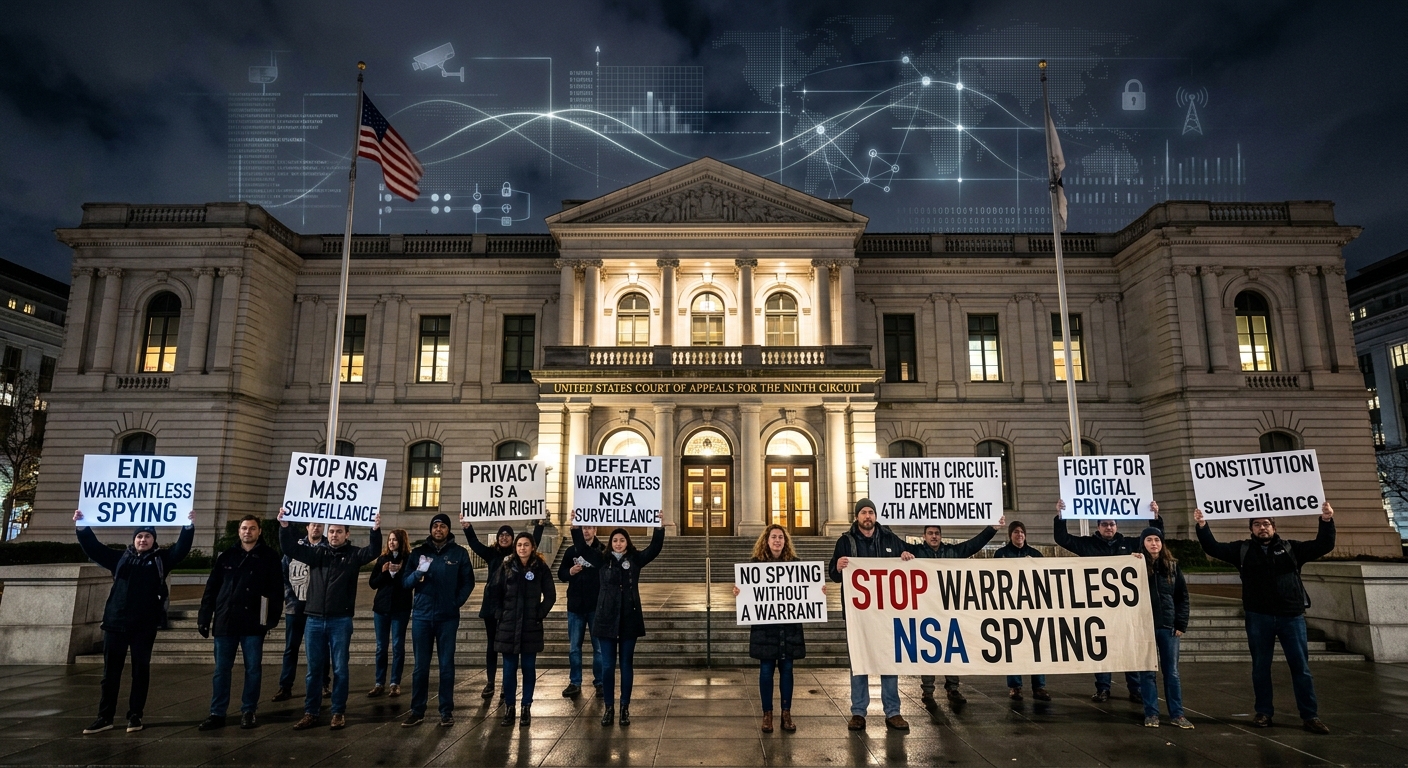
The tension between maintaining national security and preserving civil liberties is nowhere more pronounced than in the ongoing legal battles over the United States’ digital surveillance apparatus. For more than a decade, following sweeping disclosures about the government’s mass data collection programs, privacy advocates have fought relentlessly in federal courts to curb warrantless spying. At the heart of these disputes is the assertion that sweeping surveillance tactics inherently violate the constitutional rights of innocent people. Consequently, federal appellate courts, including the historically pivotal Ninth Circuit Court of Appeals, have found themselves serving as the ultimate battlegrounds for defining the boundaries of digital privacy. The fundamental question presented before these judicial panels is whether the federal government’s expansive interpretation of its intelligence-gathering authority can be reconciled with the bedrock privacy protections guaranteed by the Constitution.
The Mechanics of Modern Mass Surveillance: Upstream and Section 702
The cornerstone of the government’s foreign intelligence gathering is Section 702 of the Foreign Intelligence Surveillance Act (FISA). Originally passed as an amendment in 2008, Section 702 permits intelligence agencies to acquire the communications of non-U.S. persons reasonably believed to be located outside the United States. However, the modern internet is not neatly segmented by geographic borders or citizenship status. Global communications networks route domestic and international data through the same fiber-optic cables and servers. As a direct result, when intelligence entities target foreign actors, they inevitably collect a massive volume of emails, text messages, and internet history belonging to everyday Americans—a phenomenon the intelligence community refers to as “incidental collection.” Civil rights groups argue that this label deliberately minimizes the severe impact of what is, in practice, a warrantless domestic dragnet.
How Upstream Differs from Traditional Surveillance
Within the broad scope of Section 702, one of the most controversial mechanisms deployed is “Upstream” surveillance. Unlike programs that involve obtaining stored communications directly from technology companies, Upstream surveillance requires the active assistance of telecommunications providers to intercept data as it flows across the physical backbone of the internet. By tapping into high-capacity cables and internet switches, the government is able to scan the content of data packets in transit. Agencies use specific “selectors,” such as email addresses or phone numbers associated with foreign targets, to flag relevant communications. Yet, because the system must inherently scan the contents of countless unrelated messages to find a match, critics equate it to the digital equivalent of law enforcement opening and reading every piece of mail at a post office just to find a single suspicious letter.
The State Secrets Privilege: Shielding the Government from Scrutiny
Filing a lawsuit against a covert intelligence program presents an extraordinary legal paradox. When advocacy organizations attempt to bring these cases to trial, the Department of Justice frequently invokes the “state secrets privilege.” This legal doctrine allows the executive branch to petition a court to exclude certain evidence, or dismiss the case entirely, on the grounds that proceeding with the litigation would expose classified information and endanger national security. For plaintiffs challenging mass surveillance, this creates a formidable hurdle that frequently blocks access to justice.
To have standing to sue in federal court, plaintiffs must prove they have suffered a concrete injury, which in this context means proving their specific communications were intercepted. However, because the government refuses to confirm whose data has been collected, and courts often accept the state secrets privilege, civil lawsuits are routinely dismissed before the merits of the constitutional arguments are ever heard. This procedural blockade effectively insulates broad surveillance operations from meaningful adversarial review, a point of intense friction in appellate courts across the nation.
Constitutional Clashes in the Appellate Courts
Civil liberties defenders maintain that Upstream surveillance fundamentally conflicts with the Fourth Amendment, which protects citizens against unreasonable searches and seizures. The constitutional standard traditionally requires law enforcement to demonstrate probable cause to a judge to obtain a warrant before searching an individual’s private communications. By contrast, Section 702 relies on broad, programmatic approvals issued annually by the secretive Foreign Intelligence Surveillance Court (FISC). These sweeping authorizations lack the individualized suspicion required for a traditional warrant. When these programs are challenged in appellate venues, plaintiffs—ranging from human rights activists to major media organizations—argue that the chilling effect on free speech and association is profound. Journalists cannot guarantee source confidentiality, and activists fear their international communications are constantly monitored by the state.
Key Arguments in the Appellate Showdowns
When civil liberties organizations face off against government attorneys, the legal arguments generally fall into several distinct categories:
- The “General Warrant” Prohibition: Advocates argue that Section 702 operates as a general warrant, mirroring the broad colonial-era “writs of assistance” that the Fourth Amendment was specifically drafted to outlaw. Because the FISC approves programmatic surveillance rather than individualized warrants, it bypasses the requirement of probable cause.
- The First Amendment Chill: Beyond privacy, plaintiffs assert that mass surveillance damages free expression. When journalists, lawyers, and human rights defenders know their communications might be monitored, they are less likely to discuss sensitive topics or communicate with vulnerable sources, chilling democratic participation.
- Executive Branch Defenses: The government counters that the foreign intelligence exception to the warrant requirement justifies these programs. They argue that the speed and volume of modern digital threats require agile intelligence gathering and that internal minimization procedures sufficiently protect the privacy of U.S. persons.
- The Privilege of Secrecy: Government lawyers consistently rely on the assertion that confirming or denying the specifics of Upstream surveillance would provide adversarial nations with a roadmap to bypass American intelligence infrastructure.
The Reforming Intelligence and Securing America Act (RISAA) of 2024
The legislative framework governing these programs is constantly shifting, most notably with the passage of the Reforming Intelligence and Securing America Act (RISAA) in April 2024. As Section 702 approached its sunset date, Congress faced immense pressure from both intelligence agencies demanding a renewal and privacy advocates demanding comprehensive reforms. Intelligence officials vigorously argued that allowing Section 702 to lapse would severely blind the United States to critical foreign threats. They cited its instrumental role in thwarting international terrorism networks, disrupting state-sponsored cyberattacks, and dismantling global fentanyl trafficking rings. RISAA extended the surveillance authority for another two years but remained a deeply polarizing piece of legislation. Proponents of the act pointed to the implementation of dozens of reform mandates, primarily aimed at curbing the ability of domestic law enforcement agencies to query the foreign intelligence database for Americans’ data without justification. Specifically, the new law instituted stricter internal compliance metrics and auditing requirements.
However, these national security arguments did little to assuage the fears of civil libertarians, as the legislation failed to include the one safeguard privacy advocates most fervently requested: a strict judicial warrant requirement for searching the communications of U.S. persons. Furthermore, legal analysts raised alarms over provisions in RISAA that expanded the definition of an “electronic communication service provider.” This subtle legislative shift potentially forces a much wider array of commercial entities—such as data centers, commercial landlords, or building security providers—to assist in facilitating government surveillance operations.
| Surveillance Feature | Traditional FISA (Title I) | FISA Section 702 (Upstream) |
|---|---|---|
| Target Location | Inside or outside the United States | Strictly outside the United States |
| Target Identity | Foreign powers or agents of foreign powers (can include U.S. persons) | Non-U.S. persons only |
| Judicial Oversight | Individualized warrant requiring probable cause | Annual programmatic approval; no individualized warrants |
| Data Collection Method | Targeted wiretaps or physical searches | Compelled assistance from internet service providers and network backbones |
Broader Implications for Global Digital Privacy
The reach of American surveillance infrastructure does not merely affect those residing within the United States; it has profound global ramifications. Because a massive portion of the world’s internet traffic routes through servers and network switching stations located on U.S. soil, foreign citizens are disproportionately subject to domestic data collection. International allies and foreign businesses have repeatedly expressed concerns over data sovereignty and corporate espionage. When the government sweeps up digital communications without strict oversight, it undermines global trust in American technology companies. In response, foreign jurisdictions have enacted stringent data protection regimes and struck down major international data transfer agreements precisely because of the unchecked reach of these surveillance laws. Thus, the legal battles in federal appellate courts echo far beyond the courtroom walls, heavily influencing international trade and the global governance of the internet.
The Future Outlook for Civil Liberties
Because legislative compromises often leave civil liberties questions unresolved, the burden inevitably falls back onto the federal judiciary. The appellate courts will continue to interpret whether the implementation of tools like Upstream surveillance and the new provisions under RISAA violate the fundamental tenets of the Fourth Amendment. When these courts review such cases, they must carefully balance the executive branch’s mandate to protect the nation against the judicial obligation to uphold civil liberties. Furthermore, the widespread adoption of end-to-end encryption complicates the technical realities of mass interception. As tech companies design platforms that are inherently resistant to outside eavesdropping, the government’s reliance on compelling assistance from network operators will likely intensify, sparking entirely new rounds of litigation. Legal scholars emphasize that the rulings emerging from these appellate courts do not just impact a handful of individuals; they establish the jurisprudential baseline for digital privacy in the modern era. As the nature of global communications becomes increasingly interconnected, the distinction between foreign and domestic data becomes nearly impossible to maintain, making the legal precedents set by these courts critical to the future of the internet.
Frequently Asked Questions (FAQ)
What is Section 702 of the Foreign Intelligence Surveillance Act?
Section 702 is a provision of U.S. law that allows intelligence agencies to collect the digital communications of non-U.S. persons located abroad without obtaining an individualized warrant. However, it often incidentally captures the communications of Americans communicating with foreign targets.
What is the difference between Title I of FISA and Section 702?
Title I of FISA deals with traditional intelligence surveillance, requiring the government to seek an individualized warrant from the FISA Court by showing probable cause that the target is a foreign power or an agent of a foreign power. In contrast, Section 702 allows for programmatic collection of non-U.S. persons’ communications abroad without individualized warrants.
How does Upstream surveillance function?
Upstream surveillance involves intercepting internet traffic directly from the physical infrastructure of the internet, such as major fiber-optic cables and switches. The system scans the data flowing through these channels to identify communications linked to specific foreign intelligence targets.
Why is the State Secrets Privilege controversial?
The government uses the state secrets privilege to request the dismissal of lawsuits against its surveillance programs, arguing that defending the case in court would expose classified information. Critics argue this creates an unfair loophole that prevents courts from ever ruling on the constitutionality of the surveillance.
Did the Reforming Intelligence and Securing America Act (RISAA) end warrantless surveillance?
No. While RISAA introduced new compliance measures and restricted certain queries by law enforcement, it did not institute a requirement for intelligence agencies to obtain a warrant before searching their databases for the communications of U.S. persons. Additionally, it expanded the types of businesses that can be compelled to assist in surveillance.
References
- Public Law 118 – 49 – Reforming Intelligence and Securing America Act — U.S. Government Publishing Office. 2024-04-20. https://www.govinfo.gov/app/details/PLAW-118publ49
- Report on the Surveillance Program Operated Pursuant to Section 702 — Privacy and Civil Liberties Oversight Board (PCLOB). 2023-09-28. https://documents.pclob.gov/prod/Documents/OversightReport/1352f782-eb01-4dd9-a5e1-8848466e3fb2/2023_Report_on_Section_702_Surveillance_Program.pdf
- Section 702: Targeting Under FISA Section 702 — Office of the Director of National Intelligence (ODNI). 2023. https://www.odni.gov/files/FISA_Section_702/Targeting_Under_Section_702_FISA.pdf
- Section 702 – National Security Division — Department of Justice. 2024-04. https://www.justice.gov/nsd/fisa-section-702
Similar Articles








Read full bio of medha deb


