
New York Workplace Smoking Regulations: Employer Guide
Comprehensive guide to New York's strict no-smoking policies in offices, vehicles, and public spaces for employer compliance.
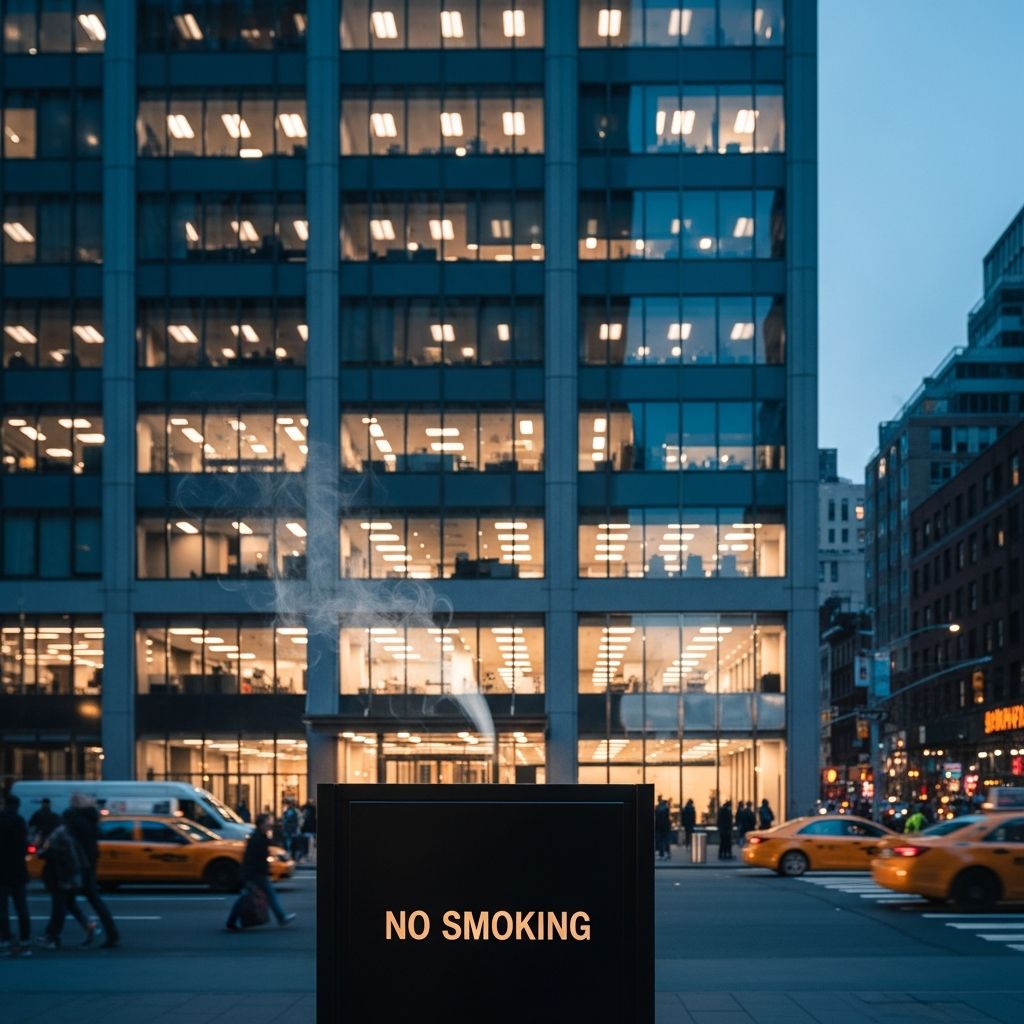
New York maintains some of the nation’s strictest rules against tobacco and vapor product use in professional settings, prioritizing worker health by eliminating secondhand smoke exposure. These regulations, rooted in state and city statutes, apply broadly to indoor areas and extend to specific outdoor zones in urban centers.
Core Statewide Prohibitions on Tobacco Use
The foundational legislation, known as the Clean Indoor Air Act (CIAA), enacted in 2003 and strengthened in 2017, forbids smoking and e-cigarette use in all enclosed workplaces across New York State. This encompasses offices, factories, restrooms, break rooms, and shared equipment zones like photocopier alcoves. Company-provided vehicles also fall under this ban, ensuring no tobacco exposure during work-related travel.
Public health authorities emphasize that secondhand smoke harbors over 40 cancer-causing agents with no safe exposure threshold, justifying these comprehensive restrictions. Businesses in bars, restaurants, and retail outlets must adhere equally, fostering uniform protection statewide.
- Indoor Coverage: Every enclosed space used for work, regardless of private or public designation.
- Vehicle Mandate: All employer-owned or leased transport, including vans and trucks.
- Vaping Inclusion: Electronic cigarettes and similar devices prohibited since 2017 amendments.
Urban Enhancements: New York City Mandates
In addition to state rules, New York City’s Smoke Free Air Act (SFAA) of 2002 imposes even tighter controls, rendering nearly all city workplaces tobacco-free. This covers diverse venues from corporate towers to entertainment arenas, theaters, banks, and childcare centers.
Exceptions exist sparingly, such as qualified tobacco bars or promotional events with special permissions from the Department of Health and Mental Hygiene (DOHMH). Private residences or outdoor areas generally escape these rules unless tied to business operations.
| Venue Type | State CIAA Coverage | NYC SFAA Coverage |
|---|---|---|
| Office Buildings | Full indoor ban | Full indoor ban + signage |
| Restaurants/Bars | Indoor ban post-2003 | Comprehensive, incl. lounges |
| Retail Stores | Enclosed areas | Malls and shops included |
| Health Facilities | All indoor spaces | Strict enforcement |
Employer Responsibilities for Compliance
Business leaders must actively enforce these bans through visible signage and proactive oversight. State law requires ‘no smoking’ notices at entrances and prohibited zones, while NYC demands multilingual signs explicitly barring cigarettes, e-cigarettes, and smokeless products.
Failure to comply invites fines and potential permit suspensions. Employers should train staff on policies, respond to violations, and document efforts to prevent tobacco use. Many opt for voluntary outdoor tobacco-free buffers around entryways to curb drifting smoke, aligning with public health recommendations.
- Install compliant signage immediately upon policy adoption.
- Conduct regular inspections of indoor and vehicle spaces.
- Educate new hires during onboarding about zero-tolerance rules.
- Partner with health departments for free signage and support resources.
Employee Rights and Nondiscrimination Protections
While workplaces ban on-site tobacco use, New York safeguards off-duty behaviors. Labor Law Section 201-d prevents retaliation against workers for lawful personal smoking or vaping away from company premises or equipment. Job applicants cannot face inquiries about these habits.
Wellness programs offering smoker-differentiated insurance rates are permissible if transparently based on actuarial data and disclosed in writing. Nonsmokers lack a statutory right to special accommodations beyond the blanket bans.
These provisions balance public health imperatives with individual privacy, prohibiting adverse actions like termination or benefit denial tied to private lawful conduct.
Health and Economic Advantages of Smoke-Free Policies
Implementing robust no-tobacco rules yields measurable gains. Reduced secondhand exposure lowers respiratory illnesses, cutting absenteeism and healthcare costs. Cleaner facilities mean less maintenance for ash residue and fire hazards.
Productivity rises as healthier teams report fewer sick days, and properties attract tenants preferring smoke-free environs. State initiatives like Tobacco Free New York State assist with policy rollout, cessation referrals, and custom signage at no charge.
- Health Impact: Shields against carcinogens, per Surgeon General findings.
- Financial Savings: Diminished cleaning, insurance premiums, and downtime.
- Workplace Appeal: Supports majority preference for clean air environments.
Enforcement Processes and Violation Reporting
State health departments oversee CIAA compliance, issuing warnings or penalties for persistent breaches. In NYC, anonymous tips via 311 trigger DOHMH investigations, potentially leading to fines scaling with infraction severity.
Businesses can mitigate risks by self-auditing and correcting issues swiftly. Special exemptions require rigorous applications, granted only to entities like registered tobacco retailers meeting strict criteria.
Strategic Policy Development for 2026
As of 2026, no major overhauls to core smoking bans appear, though employers monitor tangential updates like wage thresholds or sick leave expansions that indirectly affect policy contexts. Forward-thinking companies expand beyond minimums, designating full-campus tobacco-free zones to enhance corporate image and employee satisfaction.
Drafting an effective policy involves clear language on prohibitions, disciplinary steps, and support for quitting. Sample frameworks from compliance experts outline breaks without smoking allowances, emphasizing indoor and vehicle cleanliness.
Frequently Asked Questions
Does the ban cover outdoor company patios?
State law focuses on indoors, but NYC and voluntary policies often restrict entryways to prevent smoke infiltration. Best practice: Implement 15-25 foot buffers.
Can employers discipline for off-site smoking?
No, Labor Law protects lawful non-work conduct unless it impacts job performance or uses company assets.
What signs are required in NYC workplaces?
Prominent notices stating ‘No Smoking, E-Cigarette, or Smokeless Use’ in English and Spanish, per SFAA.
Are there penalties for employee violations?
Yes, fines up to $2,000 per incident in NYC; employers face liability for non-enforcement.
How to support employees wanting to quit?
Link to free state cessation programs via Tobacco Free NY; offer incentives without discrimination.
Navigating Exemptions and Special Cases
Rare carve-outs apply to pre-existing tobacco bars generating significant sales from such products or registered retail tobacco stores. Membership clubs may qualify if no minors access and tobacco defines their primary function. Applications demand detailed proofs, reviewed annually by health officials.
Performance venues like theaters restrict to backstage non-public areas, always with ventilation safeguards. Workplaces hosting compliant promotional events gain temporary leeway under DOHMH oversight.
Best Practices for Policy Implementation
Successful rollouts feature leadership buy-in, all-staff communications, and visual cues. Distribute policy handbooks, host Q&A sessions, and track compliance metrics. Integrate with broader wellness initiatives to encourage quitting, leveraging employer-provided resources.
Regular policy refreshers during 2026 orientations ensure alignment with any procedural tweaks, maintaining a proactive compliance stance.
References
- New York Laws on Smoking in the Workplace — Nolo. 2023. https://www.nolo.com/legal-encyclopedia/workplace-smoking-laws-new-york-46918.html
- Keeping the Workplace Smoke-Free — Tobacco Free New York State. 2024. https://tobaccofreenys.org/our-initiatives/tobacco-free-workplaces/
- Smoke Free Air Act Information — NYC.gov Business. 2024. https://nyc-business.nyc.gov/nycbusiness/description/smoke-free-air-act-information
- Employer Compliance Watchlist: Key State Laws Effective January 1, 2026 — Ogletree Deakins. 2026-01-01. https://ogletree.com/insights-resources/blog-posts/employer-compliance-watchlist-key-state-laws-effective-january-1-2026/
- New Year, New Employment Laws – What Takes Effect January 1, 2026 — Littler Mendelson. 2026-01-01. https://www.littler.com/news-analysis/asap/new-year-new-employment-laws-what-takes-effect-january-1-2026
Similar Articles








Read full bio of medha deb




