
New York Paid Family Leave 2026: Complete Guide
Essential guide to New York's Paid Family Leave benefits, eligibility rules, 2026 updates, and employee rights for work-life balance.
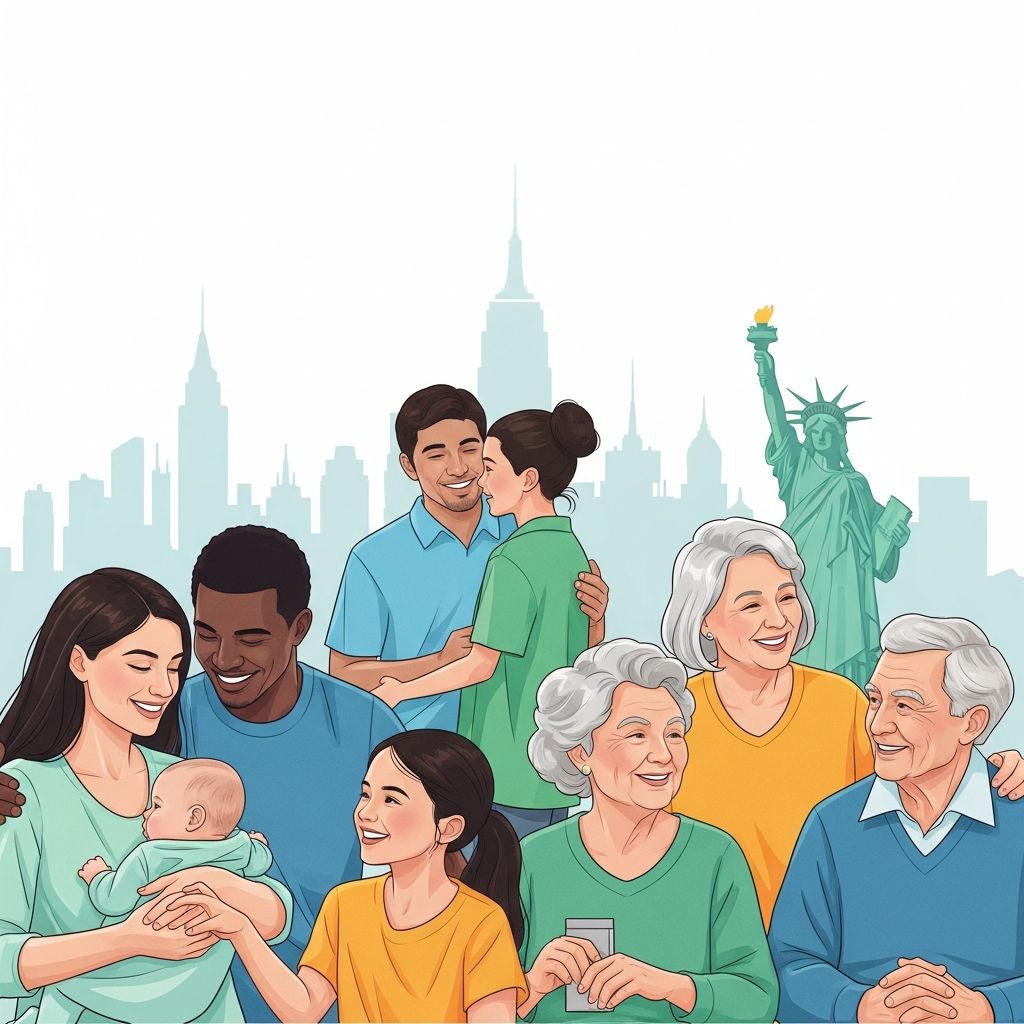
New York’s Paid Family Leave (NY PFL) program stands as one of the nation’s most robust support systems for workers balancing family responsibilities with employment. Enacted in 2016 and fully implemented by 2019, it guarantees eligible employees up to 12 weeks of partially paid, job-protected time off each year. This benefit covers bonding with newborns, caring for relatives facing serious health issues, or aiding family members during military deployments. As 2026 approaches, key adjustments to contribution rates and benefit caps enhance accessibility while maintaining fiscal sustainability.
Core Purposes and Covered Scenarios
The NY PFL program addresses critical life events that demand time away from work without sacrificing financial stability or job security. Primary uses include:
- Bonding with a new child: Time off to welcome and care for a newborn, newly adopted, or fostered child during the initial bonding phase.
- Caregiving for serious health conditions: Supporting a qualifying family member through inpatient care, ongoing treatment, or recovery from significant medical events.
- Military family support: Assisting immediate family during a spouse’s, domestic partner’s, child’s, or parent’s active military deployment abroad.
A serious health condition under NY PFL encompasses illnesses, injuries, or impairments requiring inpatient hospital stays, continuing medical treatment, or incapacity lasting over three days with physician involvement. This definition ensures broad coverage for genuine needs without abuse.
Who Qualifies for NY PFL Benefits?
Eligibility hinges on employment duration and employer coverage rather than citizenship or immigration status. Full-time employees (20+ hours weekly) become eligible after 26 consecutive weeks with a covered employer. Part-time workers (under 20 hours weekly) qualify after 175 days of employment. Most private sector employers participate, with exclusions for specific roles like religious leaders or certain nonprofit educators.
| Employee Type | Eligibility Threshold | Examples of Exclusions |
|---|---|---|
| Full-time (≥20 hrs/week) | 26 consecutive weeks | Licensed ministers, golf caddies |
| Part-time (<20 hrs/week) | 175 days worked | Professional nonprofit teachers |
| All others | Case-by-case | Independent contractors (if misclassified) |
Covered family members extend to spouses, domestic partners, children, parents, grandparents, grandchildren, and siblings, promoting inclusive support networks.
Duration, Scheduling, and Notice Requirements
Employees access up to 12 weeks per rolling 52-week period, calculated from the first day of leave. Leave may be taken continuously, in full-day increments, or intermittently for ongoing needs like weekly treatments. Foreseeable events, such as planned births or surgeries, require 30 days’ advance notice. Unforeseeable situations demand notification “as soon as practicable,” typically within one business day for intermittent use.
Intermittent leave for family care must include daily notice where feasible, ensuring employers can plan coverage effectively.
Financial Benefits and 2026 Updates
NY PFL delivers 67% of an employee’s average weekly wage, capped at 67% of the New York State Average Weekly Wage (NYSAWW). For 2026, the NYSAWW rises to $1,833.63, setting the maximum weekly benefit at $1,228.53—a $51.21 increase from 2025’s $1,177.32. This adjustment reflects economic growth and inflation, providing greater support for higher earners.
Funding occurs via employee payroll deductions at 0.432% of gross wages (up 11.31% from 2025’s 0.388%), capped annually at $411.91 per employee (previously $354.53). Once the cap is met, no further deductions apply that year. The wage base for contributions aligns with the NYSAWW at $95,348.76 annualized.
- Benefit Calculation: Lesser of 67% AWW or 67% NYSAWW ($1,228.53 in 2026).
- Contribution Cap: $411.91 max per employee annually.
- Rate Increase Rationale: Annual review by NYS Department of Financial Services ensures program solvency.
Job Security and Additional Protections
NY PFL mandates job protection, requiring employers to restore employees to equivalent positions with identical pay, benefits, and terms upon return. Health insurance coverage continues during leave as if actively employed. Anti-retaliation provisions shield workers from discipline, demotion, or termination for requesting or using benefits.
Interplay with other programs is key: NY PFL excludes personal serious health conditions (covered by Disability Benefits Law), limiting combined use to 26 weeks in 52. It complements federal FMLA, workers’ compensation, and employer PTO without overlap penalties.
Application Process and Required Documentation
To claim benefits, employees submit forms to their employer’s NY PFL insurer. Essential documents include:
- Employee request form with leave details.
- Employer acknowledgment.
- Health care provider certification for medical leaves.
- Military orders for deployment support.
Processing typically completes within 18 days, with payments issued biweekly. Employers must display NY PFL posters and include policy details in handbooks.
Employer Responsibilities and Compliance
Businesses collect and remit contributions quarterly, purchase insurance if self-insured thresholds aren’t met, and respond promptly to claims. Non-compliance risks fines up to 200% of owed benefits plus interest. Model notices from the state aid seamless integration into HR practices.
Recent Evolutions and Future Outlook
Since inception, NY PFL has expanded inclusivity, such as post-2025 sibling coverage extensions and post-COVID adjustments. The 2026 rate hikes ensure sustainability amid rising claims, with over 500,000 approvals annually demonstrating demand. As workforce demographics shift toward multigenerational caregiving, enhancements like potential benefit expansions loom on legislative horizons.
Frequently Asked Questions (FAQs)
Can I use NY PFL for my own medical needs?
No, personal serious health conditions fall under New York Disability Benefits, not PFL. They may run consecutively up to 26 weeks combined.
How is the 52-week period measured?
It’s rolling: from your first PFL day, recounting 52 weeks for next eligibility.
Does NY PFL cover surrogacy or adoption?
Yes, bonding leave applies to newborns via birth, adoption, or foster placement, including surrogacy arrangements.
What if my employer has fewer than five employees?
All sizes are covered unless specifically exempt; contributions scale accordingly.
Is intermittent leave paid the same?
Yes, benefits prorate based on days taken, maintaining the 67% wage replacement.
Can I combine NY PFL with FMLA?
Yes, NY PFL often runs concurrently, providing pay atop federal unpaid protections.
This FAQ section addresses common queries to empower users navigating NY PFL confidently.
References
- New York Releases Paid Family Leave Rates for 2026 — Risk Strategies. 2025-12. https://www.risk-strategies.com/blog/new-york-releases-paid-family-leave-rates-for-2026
- New York State Paid Family Leave — NYS Workers’ Compensation Board. Accessed 2026. https://paidfamilyleave.ny.gov
- New York Employers: Prepare for Paid Family Leave Adjustments for 2026 — Workforce Bulletin. 2025. https://www.workforcebulletin.com/new-york-employers-prepare-for-paid-family-leave-adjustments-for-2026
- NY Paid Family Leave Rate for 2026 — ShelterPoint. 2025. https://info.shelterpoint.com/Blog/ny-paid-family-leave-rate-2026
- New York Paid Leave Laws — Unum Compliance Resources. 2026. https://www.unum.com/employers/resources/compliance-resources/paid-leave-laws/new-york-paid-leave-laws
Similar Articles








Read full bio of Sneha Tete


