
New York Car Crash Regulations Explained
Master New York's unique no-fault rules, insurance mandates, and claim pathways for vehicle collisions in 2026 and beyond.
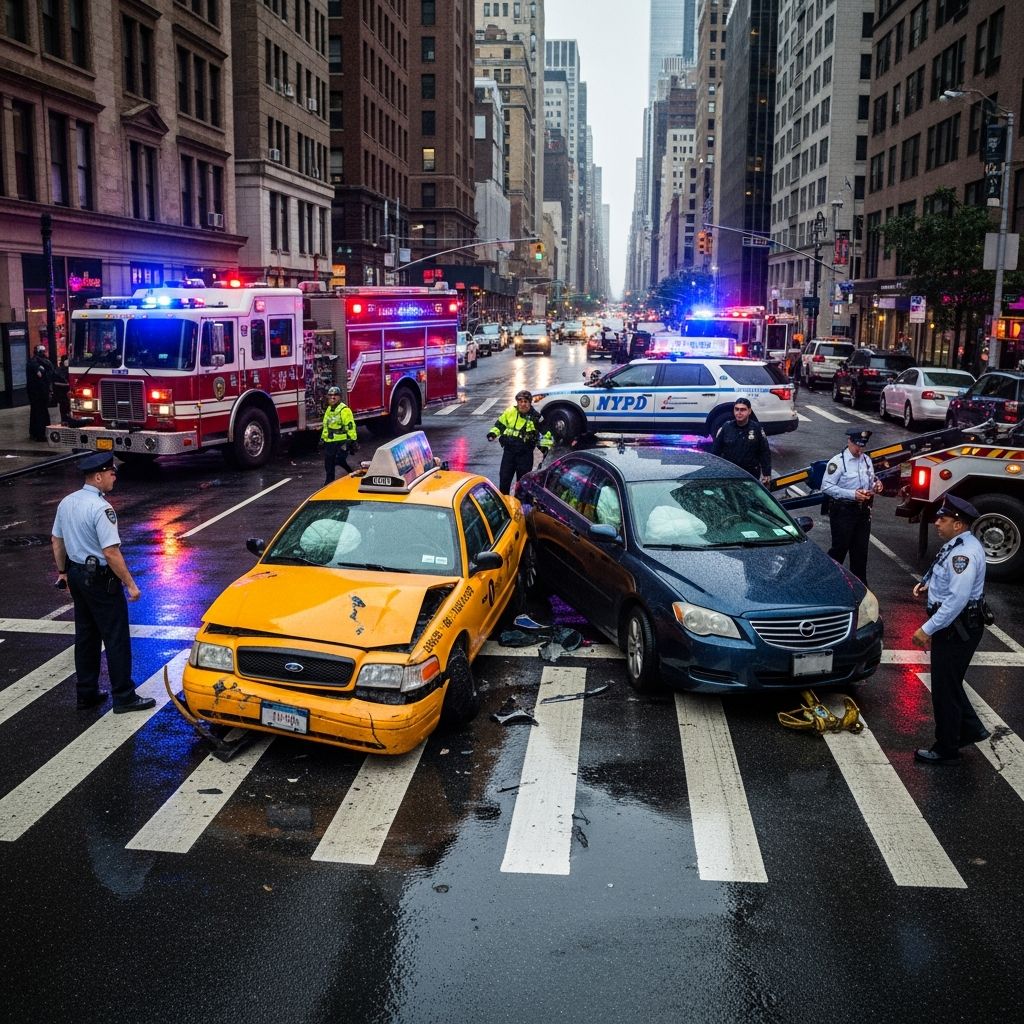
New York’s vehicle collision framework prioritizes rapid medical and wage reimbursements through a no-fault system, limiting lawsuits to cases of significant harm. This approach minimizes court battles while ensuring basic coverage for all involved parties.
Core Principles of New York’s No-Fault Framework
New York’s no-fault insurance model requires each driver’s policy to cover their own medical bills, lost income, and select rehabilitation costs irrespective of fault. This system accelerates claim processing and reduces litigation volume compared to traditional fault-based states where victims pursue the at-fault party’s insurer immediately.
Implemented to promote efficiency, the no-fault rules apply broadly to passenger vehicles, occupants, and pedestrians in state crashes, excluding motorcycles and deliberate acts. Drivers receive Personal Injury Protection (PIP) benefits up to policy limits, typically $50,000, without proving negligence.
- Medical costs: Hospital stays, doctor visits, therapies.
- Lost earnings: Up to 80% of wages for three years.
- Other essentials: Household services if incapacitated.
While PIP handles initial needs, it excludes pain and suffering compensation unless injuries surpass a defined severity level, preserving the system’s goal of quick resolutions for minor incidents.
Defining Serious Harm: Unlocking Lawsuit Options
The pivotal “serious injury” benchmark, outlined in New York Insurance Law Section 5102(d), determines eligibility for suing beyond no-fault limits. Courts interpret these criteria rigorously to curb frivolous claims.
Nine distinct categories qualify:
- Death from the incident.
- Loss of a body member (dismemberment).
- Irreversible disfigurement or scarring.
- Any bone break or fracture.
- Pregnancy termination.
- Irrecoverable organ or member failure.
- Lasting restriction of a body function, verified quantitatively.
- Irreversible organ/function loss.
- Substantial activity curtailment for 90 of the first 180 days post-crash, medically substantiated.
Medical affidavits and objective tests like MRIs strengthen threshold arguments. Minor strains or temporary discomfort rarely suffice, protecting insurers from minor disputes.
Insurance Mandates for New York Drivers
All registered vehicles must carry minimum liability coverage of 25/50/10: $25,000 per person/$50,000 per accident for bodily harm, and $10,000 for property destruction. Violations trigger DMV suspensions, $1,500 fines, and $750 reinstatement fees.
| Coverage Type | Minimum Limit | Purpose |
|---|---|---|
| Bodily Injury (Per Person) | $25,000 | Covers injuries to one individual |
| Bodily Injury (Per Accident) | $50,000 | Total for multiple injured parties |
| Property Damage | $10,000 | Repairs to vehicles or structures |
Uninsured/underinsured motorist protection matches liability minima, vital given prevalent uninsured drivers. Optional collision/comprehensive safeguards personal vehicles.
Post-Collision Immediate Responsibilities
State law mandates halting at crash scenes, aiding injured parties, and swapping details with other drivers, passengers, and property owners. Failure constitutes a misdemeanor, escalating for serious harm.
- Ensure safety: Activate hazards, relocate if viable.
- Check for injuries: Call 911 for needs.
- Notify police: Required for property damage over $1,000, injuries, or deaths.
- Exchange info: Names, contacts, insurance, licenses, registrations.
- Document: Photos of damage, scenes, injuries.
- Report DMV within 10 days for over $1,000 damage.
Hit-and-runs demand instant police reports; pursue via uninsured coverage if unidentified.
Compensation Pursuit Timelines
No-fault claims demand filing within 30 days of accidents. Lawsuits face a three-year statute from injury dates, or two years for wrongful death.
Delays risk benefit denials or case dismissals. Prompt medical records, wage statements, and expert opinions fortify positions.
2026 Driver Accountability Updates
Effective February 2026, DMV lowers suspension triggers to 10 points over 24 months (from 11/18). Heightened penalties target speeding (1-10 mph over), cell distractions, yield failures, plus novel infractions like faulty lights, U-turns, traffic obstruction, and emergency lane non-compliance.
These shifts heighten liability proofs in claims, as violation records sway fault determinations. Safer habits mitigate both penalties and crash risks.
Common Collision Types and Legal Angles
Rear-end, intersections, and pedestrian strikes dominate. Distracted/aggressive maneuvers amplify disputes. No-fault handles basics; fault governs excess liability/property claims.
Comparative fault apportions awards: Under 50% culpable parties recover proportionally; pure contributory bars none, but New York adopts modified rules capping severe offenders.
Seeking Legal and Medical Aid
Consult attorneys early for threshold navigation, insurer negotiations, and litigation. Independent exams validate injuries against insurer challenges.
Governor-proposed reforms aim to refine thresholds, curbing fraud while aiding genuine severe cases.
Frequently Asked Questions
What triggers no-fault benefits?
No-fault activates for medical, wage losses regardless of fault, up to $50,000 typically.
Can I sue for vehicle repairs?
No-fault omits property; pursue at-fault liability or collision coverage.
How to handle hit-and-runs?
Report police immediately; claim uninsured motorist benefits.
What if injuries seem minor initially?
Monitor; delayed symptoms may qualify as serious with proof.
Do out-of-state drivers follow NY rules?
Yes, for NY incidents.
Impact of 2026 point changes?
Increased violation points ease suspensions, influencing fault in claims.
References
- NY Car Accidents in 2026: Are You Really Covered? — Law Office of Jason Tenenbaum. 2025-10. https://jtnylaw.com/2025/10/ny-car-accidents-in-2026-are-you-really-covered/
- Understanding the 2026 New York Driver Point System Overhaul — LawAMP.M. 2026. https://www.lawampm.com/understanding-the-2026-new-york-driver-point-system-overhaul-what-every-motorist-should-know/
- New York Auto Insurance Laws: What Drivers Must Know for 2026 — Nicris Insurance. 2026. https://nicrisinsurance.com/new-york-auto-insurance-laws-what-drivers-must-know/
- FAQ: Car Accident & Auto Insurance Laws in New York State — Ferrante & Koenig. 2026. https://fkfirm.com/article/new-york-car-accident-insurance-laws/
- Money in Your Pockets: Governor Hochul Proposes Measures — Governor.ny.gov. 2025. https://www.governor.ny.gov/news/money-your-pockets-governor-hochul-proposes-measures-bring-down-crushingly-expensive-auto
- SECTION 3420 Liability insurance — New York State Senate. 2026. https://www.nysenate.gov/legislation/laws/ISC/3420
Similar Articles








Read full bio of medha deb


