
Service Animals and Support Pets in New Mexico
Comprehensive guide to service animal rights and housing protections under New Mexico and federal law.
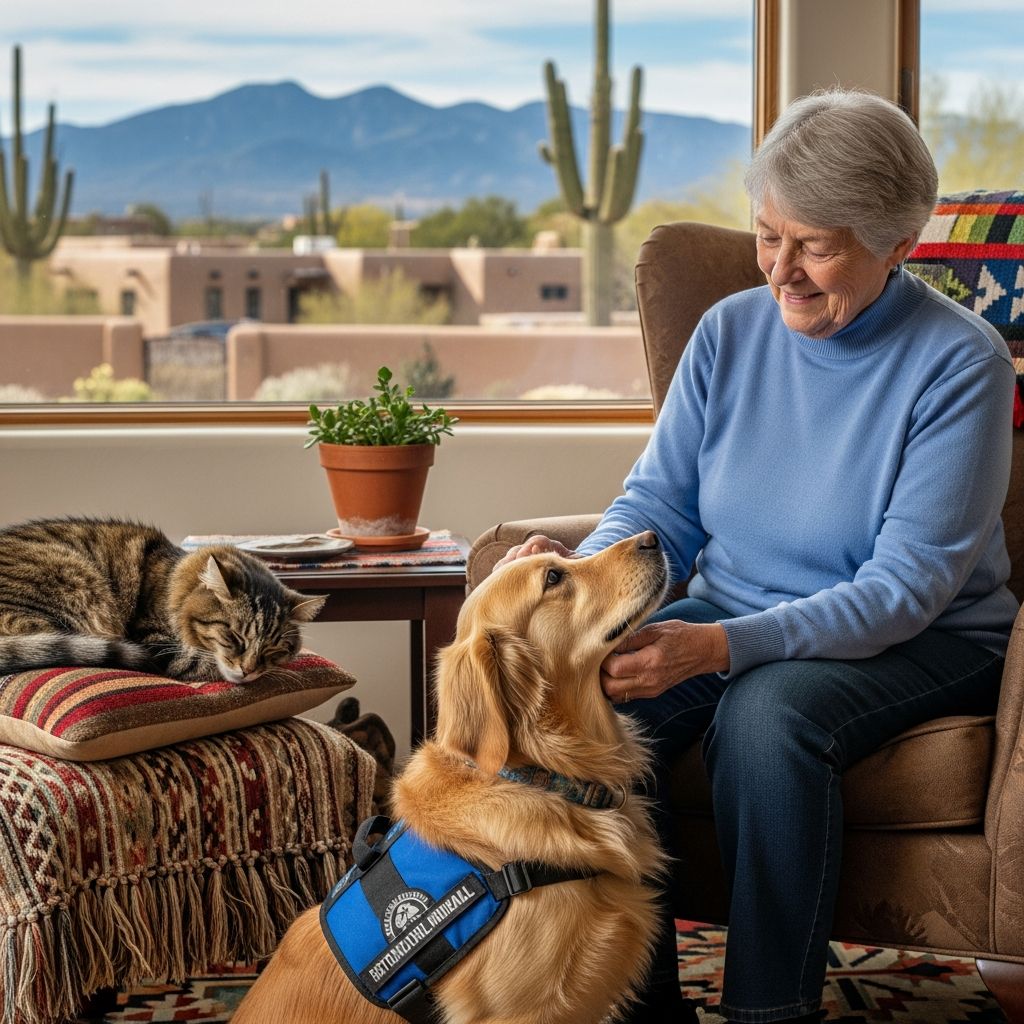
Understanding Service Animals Under New Mexico Law
New Mexico residents with disabilities have significant legal protections regarding service animals, establishing clear rights to public access and housing accommodations. These protections stem from both state legislation and federal law, creating a comprehensive framework that ensures individuals with disabilities can live, work, and conduct business with the assistance their animals provide. The New Mexico Service Animal Act, passed in 2013, aligned state law with federal Americans with Disabilities Act (ADA) standards, offering robust protections while also establishing penalties for misuse and fraud.
The foundation of these protections rests on distinguishing between qualified service animals and other types of assistance animals. Understanding this distinction is crucial for both individuals with disabilities seeking accommodations and business owners navigating compliance requirements. New Mexico law recognizes the critical role that properly trained service animals play in enabling individuals with disabilities to achieve independence and participate fully in community life.
Defining Qualified Service Animals in New Mexico
Under New Mexico statute and federal ADA guidelines, a qualified service animal must meet specific criteria to receive legal protections. The animal must be a dog or miniature horse that has been individually trained to perform work or tasks directly related to a person’s disability. These tasks represent the defining characteristic that separates service animals from pets or emotional support animals, regardless of how deeply bonded an individual may be with their animal companion.
The types of work and tasks service animals perform are diverse and reflect the wide range of disabilities they assist. Common examples include guiding individuals who are blind or have low vision, pulling wheelchairs, alerting individuals to seizures before they occur, reminding individuals to take medication, and responding to individuals in crisis by providing comfort and grounding. Some service animals assist people with psychiatric disabilities by creating protective space during anxiety episodes, while others are trained to detect changes in blood sugar for individuals with diabetes.
An important provision in New Mexico law allows service animals in training to access the same public accommodations as fully trained service animals. This recognition acknowledges that training is an ongoing process and that animals being prepared for service roles should not face barriers during their development. This provision, effective since June 14, 2013, reflects New Mexico’s commitment to supporting the full lifecycle of service animal training.
Public Access Rights and Accommodations
New Mexico law guarantees that individuals with qualified service animals can access all public buildings and facilities where members of the general public are permitted. This includes restaurants, hotels, retail stores, theaters, government offices, and transportation systems. Notably, these rights apply regardless of whether a business maintains a general “no pets” policy. Service animals are not classified as pets under the law, and therefore standard pet restrictions cannot be used to exclude them.
The breadth of public accommodations protected under New Mexico law is extensive:
- Retail establishments and shopping centers
- Dining and food service establishments
- Hotels, motels, and lodging facilities
- Theaters, cinemas, and entertainment venues
- Government buildings and public offices
- Medical facilities and healthcare providers
- Educational institutions
- Transportation services and public transit
- Recreational facilities and parks
- Libraries and cultural institutions
Handlers and owners of service animals cannot be charged additional fees for their animal’s presence, though they remain liable for any damage the animal causes to the facility. This protection ensures that individuals with disabilities are not subjected to discriminatory pricing practices while maintaining accountability for actual harm.
Legitimate Exclusion and Behavioral Standards
While public accommodations must generally allow service animals, New Mexico law recognizes limited circumstances where exclusion is appropriate. A service animal may be excluded if its behavior poses a direct threat to the health and safety of others, or if the animal exhibits behaviors indicating it is not under adequate control by its handler. The determination must be based on the animal’s actual conduct, not on assumptions about breed, size, or appearance.
Examples of behavior that may justify exclusion include:
- Aggressive barking or snapping at other patrons
- Attempting to eat food from tables or customers
- Jumping on or lunging at other people
- Running away from the handler or becoming uncontrolled
- Urinating or defecating indoors despite the animal’s training
- Behavior that disrupts the normal operation of the facility
However, if a service animal is excluded for behavioral reasons, the handler retains the right to remain on the premises without the animal and receive the same services or accommodations available to other customers. Additionally, certain specialized environments such as operating rooms or burn units may appropriately exclude animals due to sterile environment requirements, though these situations represent rare exceptions.
Distinguishing Service Animals from Emotional Support Animals
A critical distinction in New Mexico law separates service animals from emotional support animals, comfort animals, and therapy animals. While service animals are trained to perform specific disability-related tasks, emotional support animals provide comfort through their presence alone, without specialized training or task performance. This distinction carries significant legal implications regarding access rights and housing protections.
New Mexico law explicitly excludes emotional support animals from the public access rights granted to service animals. This means that emotional support animals cannot legally accompany their owners in restaurants, stores, or other public accommodations where pets are typically prohibited, even though the animal may be essential to the owner’s emotional wellbeing. This limitation represents a fundamental difference from service animal protections and reflects the state’s approach to distinguishing between animals trained for specific tasks and those providing psychological comfort.
Therapy animals, which are trained to provide therapeutic benefits to multiple individuals in settings such as hospitals, schools, or nursing homes, likewise do not qualify for service animal protections under New Mexico law. The absence of individual disability-related task training disqualifies them from legal recognition as service animals.
Housing Rights for Emotional Support Animals
While emotional support animals lack public access protections, federal and state housing law provides substantial protections for renters with emotional support animals. The Fair Housing Act (FHA), a federal law that applies to New Mexico, prohibits housing discrimination against individuals with disabilities and requires landlords to provide reasonable accommodations for assistance animals, including both service animals and emotional support animals.
Under FHA protections, landlords must allow tenants with emotional support animals to keep these animals in their rental units, even if the lease contains a “no pets” clause. This accommodation represents a reasonable modification of housing policies to enable individuals with disabilities to fully enjoy their housing. Additionally, landlords cannot charge pet fees, pet deposits, or additional rent for the presence of an emotional support animal, though they may hold tenants responsible for any actual damage the animal causes.
To require documentation of an emotional support animal’s necessity, landlords must follow specific procedures. If the disability or need for the animal is not apparent, the landlord may request reliable documentation establishing the connection between the person’s disability and their need for the animal. However, landlords cannot ask for excessive documentation or make unreasonable requests. For example, a landlord cannot require a person with an obvious mobility disability to document their need for a service dog, but may request documentation regarding a less apparent emotional support animal.
Situations Where Housing Providers Can Deny Assistance Animals
Federal housing law establishes narrow exceptions to the requirement to accommodate assistance animals. A landlord may deny or terminate housing based on an animal’s behavior or threat to safety, but this determination must be made on an individual basis and cannot be based on breed, size, or type of animal. The exclusion must be justified by the specific animal’s conduct or demonstrated threat.
Valid grounds for exclusion include:
- The animal poses a direct threat to the health or safety of others in the housing complex
- The animal has caused or is likely to cause substantial property damage
- The animal demonstrates aggressive behavior toward other residents
- The animal’s presence creates an unsafe living environment
If a landlord seeks to deny housing or evict a tenant based on an assistance animal, the determination must be specific to that animal’s behavior and documented appropriately. Blanket policies excluding certain breeds or sizes of animals, even if they might be more likely to pose threats, violate fair housing law.
New Mexico’s Specific Protections Against Fraud
New Mexico law contains provisions that distinguish it from federal ADA standards, providing specific protections against service animal fraud and misrepresentation. New Mexico statute explicitly prohibits individuals from falsely representing a dog as a service animal. This provision recognizes the proliferation of fraudulent service animal claims and the negative impact such fraud has on legitimate service animal teams and businesses accommodating genuine service animals.
Penalties for misrepresenting a dog as a service animal include fines up to $1,000 and potential jail time. This enforcement mechanism reflects New Mexico’s commitment to protecting the integrity of service animal protections while preventing abuse of these important accommodations. The misrepresentation prohibition applies regardless of whether the false claim occurred in a public accommodation, housing setting, or other context.
Control and Management Requirements
Both New Mexico and federal law require that service animals be maintained under effective control by their handlers. Control typically requires that the animal be harnessed, leashed, or tethered unless the individual’s disability prevents such control or the task the animal performs requires unrestricted movement. The control requirement ensures that service animals do not pose unpredictable risks in public spaces while allowing flexibility for animals whose tasks necessitate freedom of movement.
Handlers bear responsibility for managing their animals’ behavior and ensuring they do not disrupt public spaces or endanger others. An animal that cannot be effectively controlled by its handler may be excluded from public accommodations regardless of its official service animal status. This requirement balances the rights of individuals with disabilities with the legitimate interests of businesses and the general public in maintaining safe, orderly environments.
Housing Discrimination Protections
New Mexico’s Human Rights Act also prohibits housing discrimination based on disability, providing additional state-level protection for individuals with disabilities seeking housing. While this law does not specifically address service animals, it establishes the foundational protection against disability discrimination that underlies housing accommodations for assistance animals. Combined with federal Fair Housing Act protections, New Mexico residents with disabilities have robust defenses against discriminatory housing practices.
These protections ensure that disability status alone cannot be used as a basis for denial of housing. However, housing providers may still enforce legitimate, non-discriminatory rules and may require documentation of disability when the need for an accommodation is not apparent.
Frequently Asked Questions
Q: Can service animals be any breed or size of dog?
A: Yes, New Mexico law and the ADA do not restrict service animal breeds or sizes. Any dog can be a service animal if it is trained to perform disability-related tasks. However, some miniature horses may also qualify as service animals under both laws.
Q: What should I do if a business denies my service animal access?
A: You can inform the business that service animals are required by law to be permitted. If they continue to deny access, you may file a complaint with the ADA or pursue other legal remedies. Document the incident and contact disability rights organizations for guidance.
Q: Can my landlord charge a pet deposit for my service animal?
A: No. Landlords cannot charge additional fees, deposits, or rent for service animals or emotional support animals under federal Fair Housing Act protections. They may only hold you responsible for actual damage the animal causes.
Q: Is an emotional support animal the same as a service animal in New Mexico?
A: No. New Mexico law explicitly distinguishes between them. Service animals are trained to perform specific tasks, while emotional support animals provide comfort through presence alone. Service animals have public access rights; emotional support animals do not but receive housing protections.
Q: What documentation can landlords request for an emotional support animal?
A: If the disability is not apparent, landlords may request reliable documentation establishing the person’s disability and the need for the specific animal. They cannot request excessive documentation or unreasonably burden tenants.
Q: Can a service animal be excluded from a public place?
A: Yes, only if the animal’s behavior poses a direct threat to health or safety, the animal is not housebroken, or the handler cannot control it. Exclusion must be based on the individual animal’s conduct, not breed or size assumptions.
References
- New Mexico Governor’s Commission on Disability – Service Animal Information — New Mexico GCD. Accessed 2026. https://www.gcd.nm.gov/technical-assistance/service-animals/
- New Mexico Statutes Chapter 28, Article 11, Section 28-11-3 – Admittance of Qualified Service Animal — New Mexico Legislature. Updated 2024. https://law.justia.com/codes/new-mexico/chapter-28/article-11/section-28-11-3/
- Service Animal Policy – ADA Requirements — New Mexico State Capitol. https://www.nmlegis.gov/AccessibilityAccommodations/pdfs/Animal%20Policy.pdf
- Service Animals: A Pocket Guide — Disability Rights New Mexico (DRNM). 2022. https://drnm.org/wp-content/uploads/2022/02/DRNM-Service-Animal-Brochure.pdf
- Fair Housing Act Regulations – Assistance Animals and Service Animals — U.S. Department of Housing and Urban Development. https://www.hud.gov/program_offices/fair_housing_equal_opp
- Service Animals Information and FAQ — New Mexico Courts. Updated 2023-12-08. https://nmcourts.gov/wp-content/uploads/2023/12/Service-Animals-information-and-FAQ-08-01-2023.pdf
Similar Articles








Read full bio of Sneha Tete


