
The Vanguard of Ballot Access: Analyzing New Mexico’s Electoral Reforms
How sweeping legislative changes are redefining ballot access and civic participation.
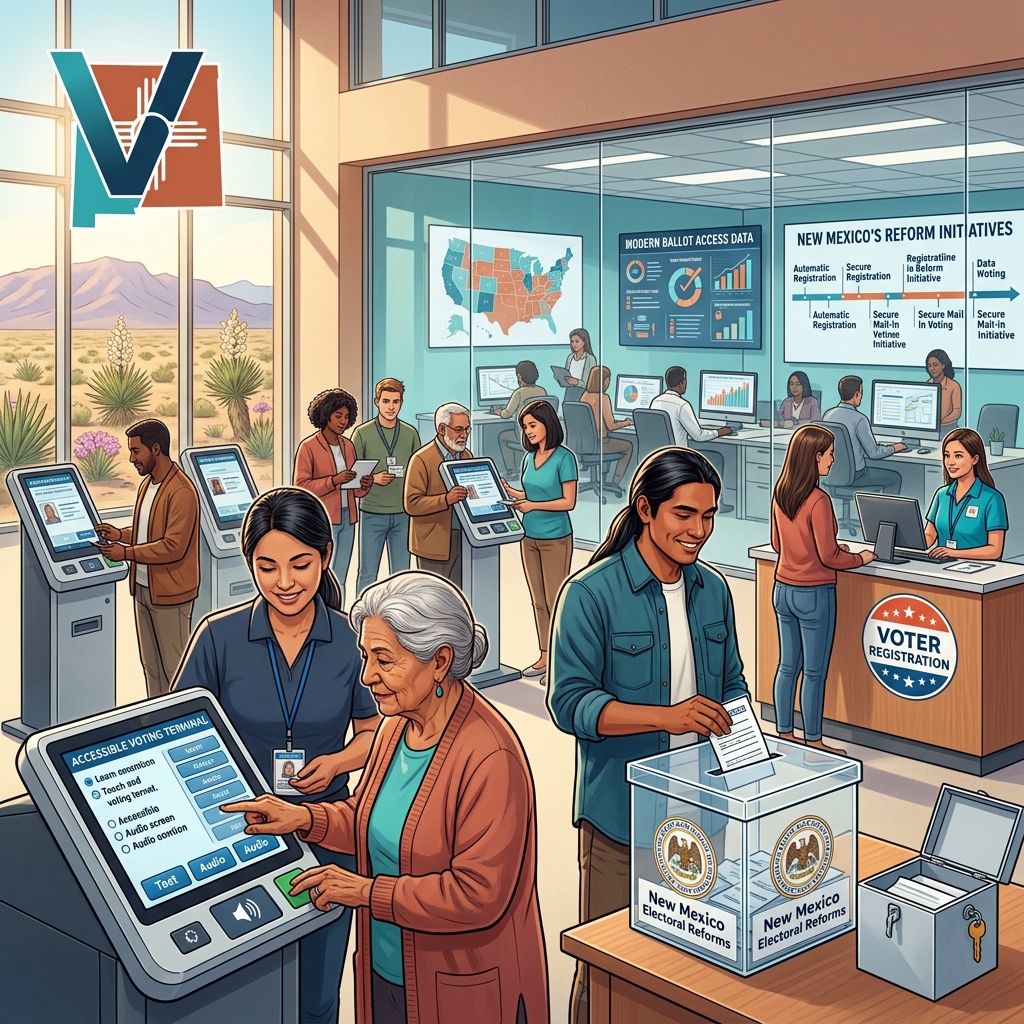
The landscape of American democracy is characterized by a constant, systemic push and pull regarding access to the ballot. While several legislative bodies across the nation have recently introduced measures that increase administrative friction and actively narrow the pathways to the voting booth, other jurisdictions have chosen a fundamentally different trajectory. In 2023, the state of New Mexico emerged as a definitive case study in expanding civic participation. By enacting a comprehensive package of electoral reforms, lawmakers in the southwestern state overhauled decades of restrictive practices, aiming to create a highly inclusive democratic framework.
This sweeping legislation addressed multiple facets of the electoral process, fundamentally altering the way residents interact with their government. From the enfranchisement of formerly incarcerated individuals to addressing the unique logistical challenges faced by sovereign tribal nations within the state’s borders, the reforms touched nearly every demographic . Understanding the depth and the gravity of these changes requires an examination of the broader historical context. For generations, specific populations have faced systemic barriers that effectively silenced their voices in local, state, and federal elections.
Complex registration requirements, strict absentee ballot rules, and highly punitive disenfranchisement laws created an environment where voting was often treated as a privilege to be earned, rather than an inherent constitutional right. The legislative pivot in New Mexico represents a structural repudiation of that restrictive philosophy. Instead, it establishes a robust framework that proactively integrates marginalized groups into the civic fold, recognizing that a government derives its true legitimacy only from the broad and unhindered participation of its populace .
Erasing the Civic Stigma: Reforming Felony Disenfranchisement
One of the most profound and socially impactful shifts initiated by the recent electoral overhaul centers entirely on the restoration of voting rights for justice-impacted individuals. Historically, the United States has maintained some of the developed world’s most severe felony disenfranchisement laws. Many states, including New Mexico prior to these reforms, required individuals to complete their full sentences—which critically included arduous, multi-year periods of probation and parole—before regaining the ability to cast a ballot.
This extended period of civic exclusion disproportionately affected minority communities and created massive bureaucratic confusion regarding eligibility. Because the lines of eligibility were blurred, many individuals who were technically eligible to vote chose to abstain out of profound fear of accidental illegal voting and subsequent legal repercussions. The new legal standard abolishes this extended waiting period. Under the updated framework, any individual who is not currently incarcerated in a correctional facility is eligible to register and vote immediately .
The moment a person is released from prison and reenters society, their fundamental democratic rights are restored without delay. This precise policy shift immediately enfranchised an estimated 11,000 individuals in the state who were already living in their communities, working, and paying taxes, but were previously barred from participating in the democratic process . Beyond the immediate mathematical increase in eligible voters, criminal justice advocates, social workers, and sociologists emphasize the immense reintegrative power of this policy.
Research consistently indicates that civic participation is a critical component of successful societal reentry. When formerly incarcerated individuals are actively welcomed back into the democratic process, they are far more likely to develop prosocial identities and a vested interest in the health of their communities. By intentionally eliminating the civic stigma associated with past convictions, the state is leveraging democratic participation as an essential tool for reducing recidivism and enhancing long-term public safety .
| Policy Area | Prior Disenfranchisement Framework | Modernized Framework (Post-2023) |
|---|---|---|
| Voting Eligibility | Restored only after complete fulfillment of incarceration, probation, and parole. | Restored immediately upon release from a physical correctional facility. |
| Registration Process | Required complex documentation proving sentence completion, often involving multiple state agencies. | Standard registration process allowed; state manages internal data to verify non-incarceration status. |
| Community Impact | Thousands of tax-paying residents on probation/parole locked out of local and federal elections. | Immediate enfranchisement of over 11,000 justice-impacted individuals actively living in the state. |
Empowering Tribal Sovereignty Through Election Law
New Mexico is home to twenty-three sovereign tribal nations, pueblos, and tribes. Despite their deep historical roots and significant population presence across the state, Indigenous communities have frequently encountered severe logistical, administrative, and geographic barriers to voting. The tyranny of distance is a primary factor in voter suppression in the American Southwest; many rural tribal lands are located dozens, if not hundreds, of miles from the nearest county-designated polling place.
Furthermore, the reliance on non-traditional residential addressing in rural areas often led to voter registration applications being systematically rejected by inflexible, standardized bureaucratic databases. The electoral reforms directly address these historical inequities by embedding essential principles of tribal sovereignty directly into election administration. The legislation mandates unprecedented and legally binding cooperation between state election officials and tribal governments.
Rather than relying on county clerks to unilaterally determine the placement of polling infrastructure without community input, the law empowers tribal leaders to formally designate their own voting resources. This collaborative approach recognizes that tribal leaders are the most qualified individuals to assess the unique logistical needs of their specific communities.
- Sovereign Designation of Infrastructure: Tribal governments now have the explicit legal authority to request and secure specific early voting locations, Election Day polling places, and secure ballot drop boxes within their territorial boundaries, drastically reducing travel times for Indigenous voters.
- Address Flexibility and Recognition: The law solves a persistent bureaucratic nightmare by allowing voters to use designated tribal government buildings as their official residential address for voter registration purposes, accommodating the lack of standard street addressing in many rural Native communities.
- Mandated Collaboration Protocols: County clerks and state election officials are now legally required to consult with tribal leaders prior to making any administrative changes to election procedures that would impact tribal lands, ensuring that state decisions do not inadvertently disenfranchise Native voters.
Administrative Friction and the Modernization of the Ballot
While the restoration of rights for the formerly incarcerated and the robust protections for Native American voters represent highly targeted interventions for specific, historically marginalized communities, the legislation also implemented broad, systemic modernizations designed to benefit the entire statewide electorate. A central, unifying theme of the reform package is the aggressive reduction of “administrative friction”—the tedious bureaucratic hurdles and paperwork that deter otherwise eligible voters from completing the registration and voting process.
Chief among these systemic modernizations is the dramatic enhancement of the state’s Automatic Voter Registration (AVR) capabilities. By seamlessly integrating voter registration into routine transactions at the motor vehicle department and various other state agencies, the government effectively shifts the burden of registration from the individual citizen to the state apparatus . Unless an individual explicitly chooses to opt out during their transaction, their interaction with the state agency automatically updates or creates their voter registration profile.
This automated data flow ensures that voter rolls remain exceptionally accurate, secure, and up-to-date, minimizing the likelihood of eligible voters being turned away on Election Day simply due to outdated paperwork or forgotten deadlines. Furthermore, the establishment of a permanent absentee voter list revolutionized the mail-in voting process for the state. Previously, voters who preferred or needed to cast their ballots from the safety and convenience of their homes had to submit a brand new application for every single election cycle.
Under the modernized system, eligible voters can sign up just once and automatically receive a mail-in ballot for all future statewide elections. This is particularly beneficial for elderly voters, individuals with severe mobility issues or disabilities, and rural residents who face significant travel times to traditional polling places, ensuring that their ability to vote is not contingent on their physical ability to travel on a specific Tuesday in November.
The Reality of Reform: Implementation Hurdles and Litigation
The passage of progressive, sweeping legislation is only the first foundational step in expanding democratic access; the true test of any law lies in its execution. The transition from statutory text on a legislative floor to real-world application at a local polling place is rarely frictionless. Shortly after these ambitious laws went into effect, significant administrative hurdles emerged, underscoring the intense complexities of overhauling entrenched, legacy bureaucratic systems.
The most prominent and publicly scrutinized challenge involved the execution of the felony rights restoration provisions. The law explicitly requires seamless, accurate data sharing between the state’s Corrections Department and the Secretary of State’s office to ensure that only those currently incarcerated are kept off the active voter rolls. However, inaccurate data transfers, poor database management, and historically flawed records resulted in fully eligible individuals—who had already completed their prison sentences—being wrongfully flagged by the system and denied registration .
Election officials, relying heavily on this faulty data pipeline, initially required these flagged individuals to appear in person at a clerk’s office with documentation to prove their eligibility. This bureaucratic error effectively nullified the convenient online and mail-in registration options that the law was supposed to guarantee, creating a discriminatory burden. This systemic failure necessitated immediate intervention from major civil rights organizations .
Legal action was initiated to force the state government to urgently correct its data-sharing protocols, update its databases, and formally reprocess the wrongly denied applications. This litigation serves as a crucial, ongoing reminder that protecting the right to vote requires constant, vigilant oversight. Even when the legislative intent is pure and the goal is to massively expand access, the administrative machinery of the state must be properly calibrated, adequately funded, and fiercely monitored to ensure that the promises made in the statehouse are actually honored at the local registrar’s office .
Looking Forward: A Blueprint for Democratic Participation
As the nation continues to grapple with profound, deeply polarized questions regarding the integrity, security, and accessibility of its electoral systems, the comprehensive reforms undertaken in the American Southwest offer a distinct, actionable blueprint. By consciously treating ballot access not as a suspicious hurdle to be cleared, but as a vital civic imperative to be actively facilitated, the state has fundamentally altered its philosophical relationship with the electorate.
The long-term socio-political impacts of these changes will likely be studied by political scientists, legal scholars, and civil rights advocates for years to come. Whether observed through the enfranchisement of justice-impacted individuals returning to society, the long-overdue elevation of Indigenous sovereignty in election administration, or the technical streamlining of voter registration through automation, the core philosophy remains fiercely consistent: a modern democracy derives its strength and its legitimacy entirely from the broad, unhindered, and equitable participation of all its people.
Frequently Asked Questions
How does the new legislative framework handle voting rights for individuals with past felony convictions?
The updated legislation completely eliminates the punitive waiting period that previously required individuals to complete their full terms of probation or parole. Now, voting rights are automatically and immediately restored the moment an individual is released from a physical correctional facility. If a person is currently living in the community, they are fully eligible to register and cast a ballot .
What specific electoral protections are included for Native American communities?
The law explicitly empowers tribal governments to designate their own polling locations and secure ballot drop boxes within their sovereign territories. It also solves a major registration hurdle by legally allowing voters to use designated tribal government buildings as their official residential address, accommodating the widespread lack of standard street addressing in many rural Indigenous communities.
What exactly is the permanent absentee voter list?
This administrative update allows registered voters to opt-in to automatically receive an absentee mail-in ballot for all future statewide elections. Instead of navigating the bureaucracy to request a ballot prior to every single election, voters can sign up once, significantly reducing the burden for those who prefer or physically need to vote by mail.
Does automatic voter registration (AVR) force citizens to register against their will?
No. Automatic Voter Registration operates strictly on an “opt-out” basis. When conducting business with state agencies, such as renewing a driver’s license at the motor vehicle division, eligible citizens are automatically registered to vote or have their records updated, unless they explicitly decline the registration during the transaction process .
References
- House Bill 4 (New Mexico Voting Rights Act) — New Mexico Legislature. 2023-03-30. https://www.nmlegis.gov/Legislation/Legislation?Chamber=H&LegType=B&LegNo=4&year=23
- New Mexico Should Restore Voting Rights to Over 5300 Citizens — The Sentencing Project. 2025-03-10. https://www.sentencingproject.org/reports/new-mexico-should-restore-voting-rights-to-over-5300-citizens/
- The New Mexico Voting Rights Act Unpacked — Democracy Docket. 2023-03-22. https://www.democracydocket.com/analysis/the-new-mexico-voting-rights-act-unpacked/
- Ensuring Fair Voter Registration Practices in New Mexico — Campaign Legal Center. 2025-03-21. https://campaignlegal.org/cases-actions/ensuring-fair-voter-registration-practices-new-mexico-millions-prisoners-new-mexico
- Election policy in New Mexico — Ballotpedia. 2023-03-30. https://ballotpedia.org/Election_policy_in_New_Mexico
Similar Articles








Read full bio of medha deb


