
New Jersey Tipped Worker Wage Laws: 2026 Guide
Understand New Jersey's tipped employee regulations, minimum cash wages, tip credits, and employer obligations for fair pay.
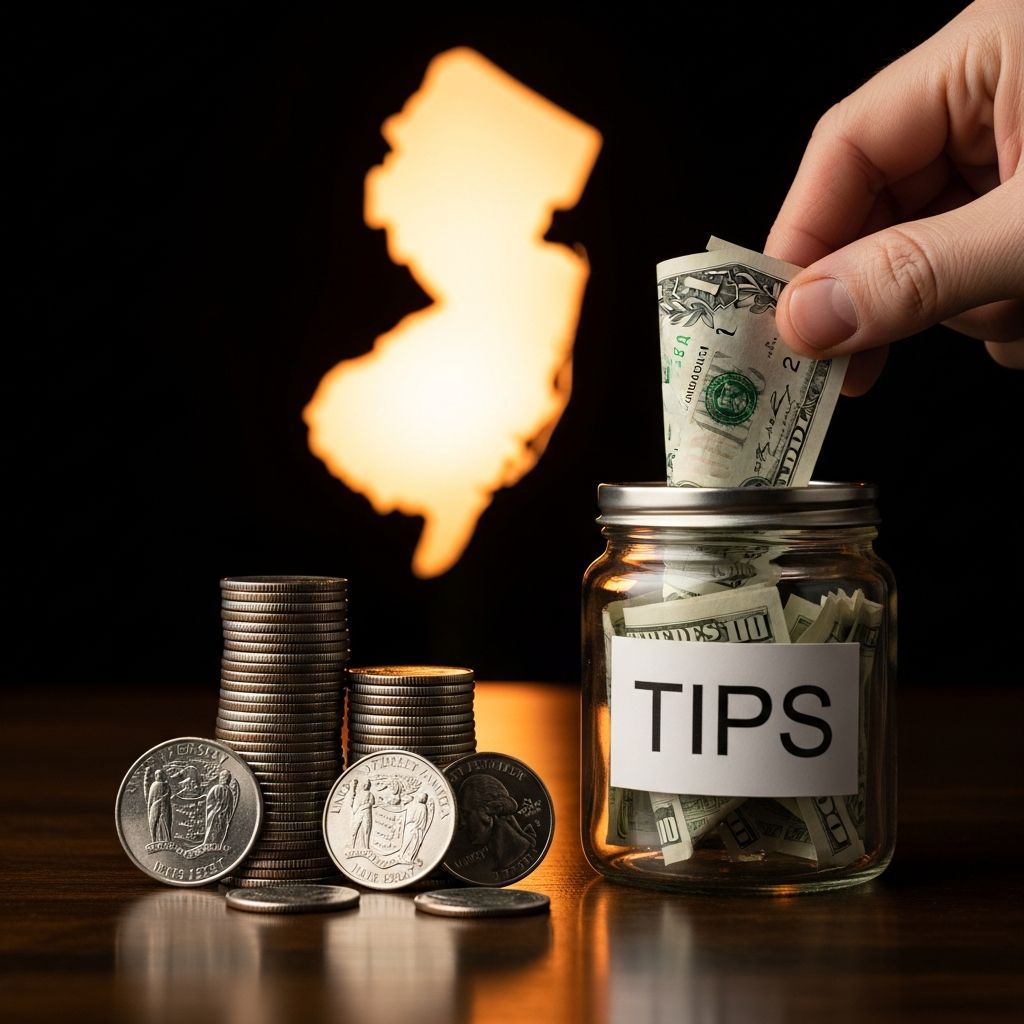
Workers in service industries across New Jersey, such as servers, bartenders, and delivery personnel, operate under specific wage regulations designed to balance employer costs with fair employee compensation. These rules center on a dual structure of cash wages and tips, ensuring total earnings meet or exceed the state minimum wage. As of January 1, 2026, key adjustments raise the minimum cash wage for tipped employees to $6.05 per hour while maintaining a maximum tip credit of $9.87 per hour against the full minimum wage of $15.92 per hour.
Core Principles of Tipped Employment Compensation
The foundation of New Jersey’s approach lies in the tip credit mechanism, which permits employers to pay a reduced cash wage, offset by employee tips. This system applies only to those who customarily receive more than $30 in tips monthly, classifying them as tipped workers under state law. Total compensation—cash pay plus tips—must always equal at least the statewide minimum wage. Employers bear responsibility for any shortfall, calculating it at the end of each pay period.
For instance, a server working 40 hours might earn $6.05 per hour in cash ($242 total) plus tips. If tips total $400 ($10 per hour), combined earnings reach $16.05 per hour, surpassing the $15.92 minimum. However, if tips drop to $200 ($5 per hour), totaling $10.05 per hour, the employer must add $5.87 per hour ($234.80 for the week) to meet the threshold.
2026 Wage Rate Updates and Implications
Annual adjustments reflect economic changes, with the 2026 increases signaling continued support for workers amid inflation. The table below outlines the progression:
| Category | 2025 Rate | 2026 Rate |
|---|---|---|
| Full Minimum Wage | $15.49/hour | $15.92/hour |
| Tipped Cash Wage | $5.62/hour | $6.05/hour |
| Maximum Tip Credit | $9.87/hour | $9.87/hour |
These rates exclude seasonal or small businesses (under six employees) at $15.23/hour and agricultural labor at $14.20/hour, but tipped subsets within them follow the standard credit rules. Employers must update payroll systems promptly to avoid violations, which carry penalties including back wages and fines.
Eligibility Criteria for Tip Credits
Not all tipped roles qualify automatically. Employers may claim the credit solely for employees averaging over $30 monthly in tips, a threshold verified through records. Advance notification is mandatory, detailing:
- The cash wage amount.
- The tip credit value, not exceeding actual tips received.
- Tips belong exclusively to the employee, barring valid tip pooling among tipped staff only.
- All tips plus cash must hit the minimum wage, with employer makeup if needed.
Failure to inform voids the credit, requiring full minimum wage payment. Tip pooling is lawful if limited to tipped employees like bussers and servers, but managers or supervisors cannot participate.
The 80/20 Rule for Dual Duties
Tipped workers often handle side tasks like cleaning or setup. New Jersey enforces an 80/20 rule: employers lose the tip credit for time exceeding 20% on related non-tipped duties. Full minimum wage applies to those excess hours.
Example: A waiter spending 6 of 30 weekly hours (20%) on table setting retains credit for all hours. Beyond that, say 7 hours (23%), the extra hour demands $15.92 cash pay. “Related duties” include bussers’ clearing or hosts’ seating, but not maintenance or cooking.
Overtime Calculations for Tipped Staff
Overtime kicks in at 1.5 times the full minimum wage for hours over 40 weekly, not the cash wage. The tip credit caps at the regular-hour maximum ($9.87 in 2026). For a 45-hour week at $15.92 minimum:
- 40 hours: $636.80 (full minimum).
- 5 overtime hours: $119.40 (1.5 x $15.92 x 5).
- Total base before tips: $756.20.
Tips supplement but do not alter the overtime base rate. Employers compute makeup on total hours if needed.
Protections and Employer Prohibitions
Tips are employee property; retention by employers or improper pooling violates law. Participation in pools must be transparent and exclusive to tipped roles. Discrimination in tip distribution based on protected traits is illegal.
Recordkeeping is crucial: employers track hours, cash wages, tips, and makeups via pay stubs. Workers retain rights to minimum wage even in slow tip periods.
Potential Legislative Shifts Ahead
Proposed bills aim to phase out tip credits entirely by 2030, starting with reduced credits:
| Year | Proposed Cash Wage |
|---|---|
| 2026 | $7.90/hour |
| 2027 | $5.92/hour |
| 2028 | $3.95/hour |
| 2029 | $1.97/hour |
| 2030 | Full minimum, no credit |
If enacted, tips become pure extras atop full wages, boosting take-home pay but raising employer costs, especially in hospitality.
Steps for Compliance and Worker Advocacy
Employers should:
- Notify staff of rates and credits in writing.
- Maintain detailed payroll records for audits.
- Conduct weekly tip reconciliations for makeups.
- Train managers on 80/20 tracking.
Workers suspecting violations—underpayment, tip theft, or improper credits—can file complaints with the New Jersey Department of Labor and Workforce Development. Remedies include owed wages, liquidated damages, and attorney fees.
Frequently Asked Questions
What is the 2026 minimum cash wage for tipped employees in New Jersey?
The cash wage rises to $6.05 per hour, with employers covering any gap to the $15.92 full minimum via tips.
Can my employer keep part of my tips?
No, tips are yours alone, except in lawful pools limited to tipped coworkers.
How does overtime work if I’m tipped?
Overtime is 1.5 times the full $15.92 minimum wage rate, not your cash wage.
What if I do more than 20% non-tip work?
Full minimum wage applies to excess time; track duties carefully.
Am I eligible if tips are under $30/month?
No tip credit; full minimum wage required from the start.
What happens if tips fall short weekly?
Employer pays the difference on your next paycheck.
This framework empowers New Jersey’s service workforce while guiding businesses toward legal compliance. Stay informed on updates via official channels.
References
- New Jersey Minimum Wage Rate to Increase on January 1, 2026 — Ogletree Deakins. 2025-approx. https://ogletree.com/insights-resources/blog-posts/new-jersey-minimum-wage-rate-to-increase-on-january-1-2026/
- My Work Rights | Tipped Workers — New Jersey Department of Labor and Workforce Development (NJ.gov). 2025-01-01. https://www.nj.gov/labor/myworkrights/worker-protections/tipped_workers/
- NJ Bill to Eliminate Tip Credit – What Restaurant Workers Need to Know — Red Bank Legal. 2025-06-10. https://www.redbanklegal.com/2025/06/10/nj-bill-to-eliminate-tip-credit-what-restaurant-workers-need-to-know/
- New Jersey’s 2026 laws take effect, raising wages, fuel taxes, and tolls — Law Commentary. 2026-approx. https://www.lawcommentary.com/articles/new-jerseys-2026-laws-take-effect-raising-wages-fuel-taxes-and-tolls-while-shifting-public-notices-online
- Tipped Employees | Newark, New Jersey Wage & Hour Lawyers — NJ Employment Law Firm. Undated. https://www.njemploymentlawfirm.com/employment-law/wage-and-hour-disputes/tipped-employees/
- January 1, 2026 Minimum Wage Increase and Tipped Workers — USA Employment Lawyers. 2025-12-approx. https://www.usaemploymentlawyers.com/blog/2025/december/what-the-january-1-2026-minimum-wage-increase-me/
Similar Articles








Read full bio of medha deb




